Key Takeaways
- Zapier leads for AI-agent readiness with MCP support across 9,000+ app integrations
- Workato and MuleSoft target regulated enterprises with SOC 2, GDPR, and HIPAA compliance
- Code-first teams should evaluate Nango's GitHub-based AI Integration Builder
API integration platforms have moved beyond simple point-to-point connectors. The 2026 crop handles authentication, data transformation, AI agent orchestration, and MCP (Model Context Protocol) support. For RevOps and operations teams managing dozens of SaaS tools, picking the right platform determines whether your workflows hum or collapse under manual data entry.
Disclosure
Some links in this post are affiliate links — Logicity earns a commission if you sign up, at no extra cost to you. We only link products we have used or actively recommend.
Zapier's team tested the leading options and narrowed the field to six. Each platform serves a distinct use case: AI-first builders, blended-skill teams, regulated industries, and code-heavy engineering squads. Here's how they stack up.
How these platforms were evaluated
Four criteria separated the winners from the also-rans. First, connector ecosystem: does the platform offer broad out-of-the-box integrations plus the ability to handle custom APIs and niche tools? Second, data transformation: can it map fields, handle conditional logic, and process complex JSON without requiring a developer on standby?
Third, enterprise security. An integration platform sits at the center of your data flows. SOC 2 Type II, GDPR, HIPAA compliance, access controls, and audit logging all matter. Fourth, AI agent readiness. Native MCP support, SDKs, and governance controls for exposing integrations as callable tools for AI agents separate 2026 platforms from legacy middleware.
Zapier: best for building safely with AI
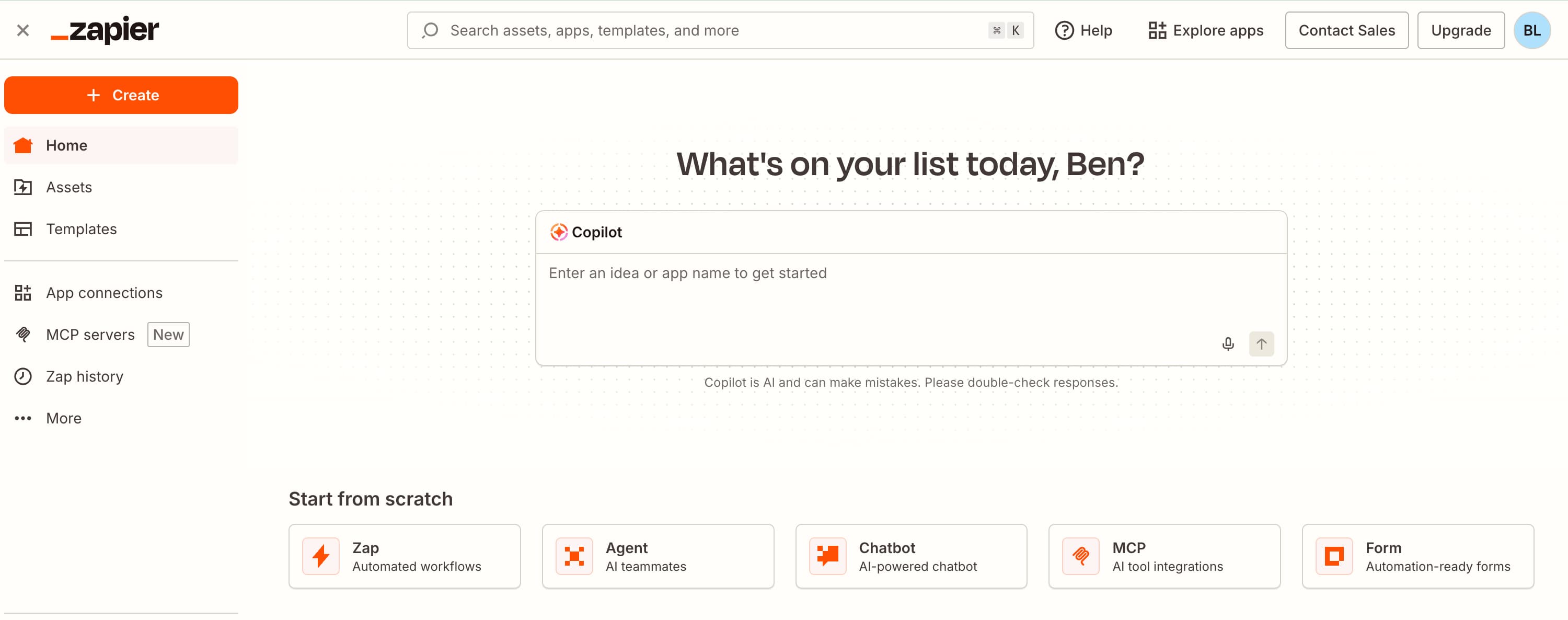
Zapier connects to over 9,000 apps and now offers MCP support, letting AI agents call any of those integrations as tools. The platform provides SDK and CLI interfaces for developers who want programmatic control, while the visual builder keeps workflows accessible to ops teams.
Pricing starts free for basic automation. Paid plans begin at $19.99 per month. For RevOps teams already using Zapier for lead routing or CRM syncs, the AI agent features add meaningful capability without switching platforms.
Tray: best for blended skill-level teams
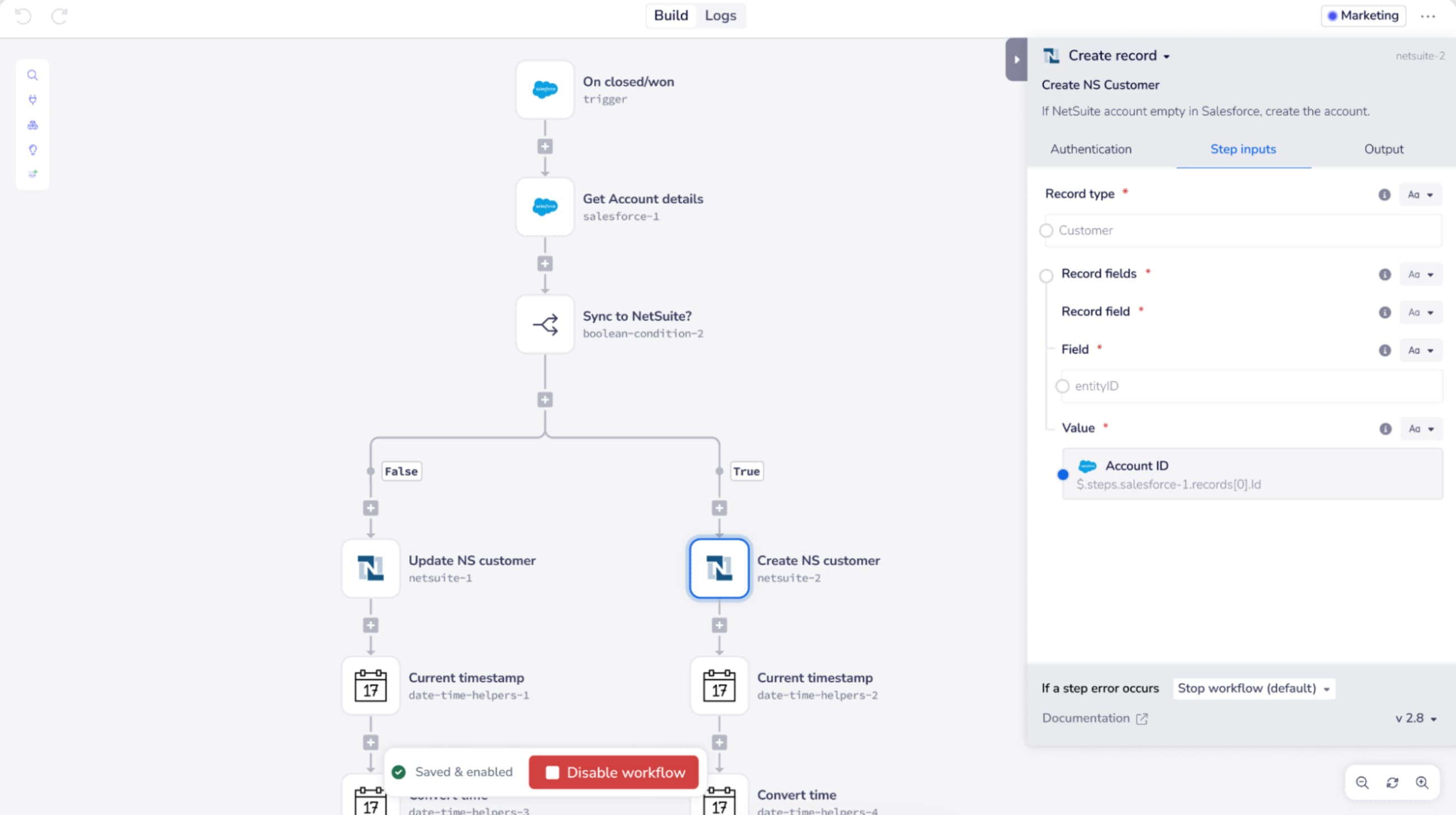
Tray's standout feature is Agent Gateway, a governance layer for MCP that lets admins control which AI agents can access which integrations. This matters when you have both technical and non-technical users building automations.
The platform bridges the gap between low-code builders and developers who need custom logic. Pricing requires contacting Tray directly, which signals enterprise positioning.
MuleSoft: best for enterprise API management
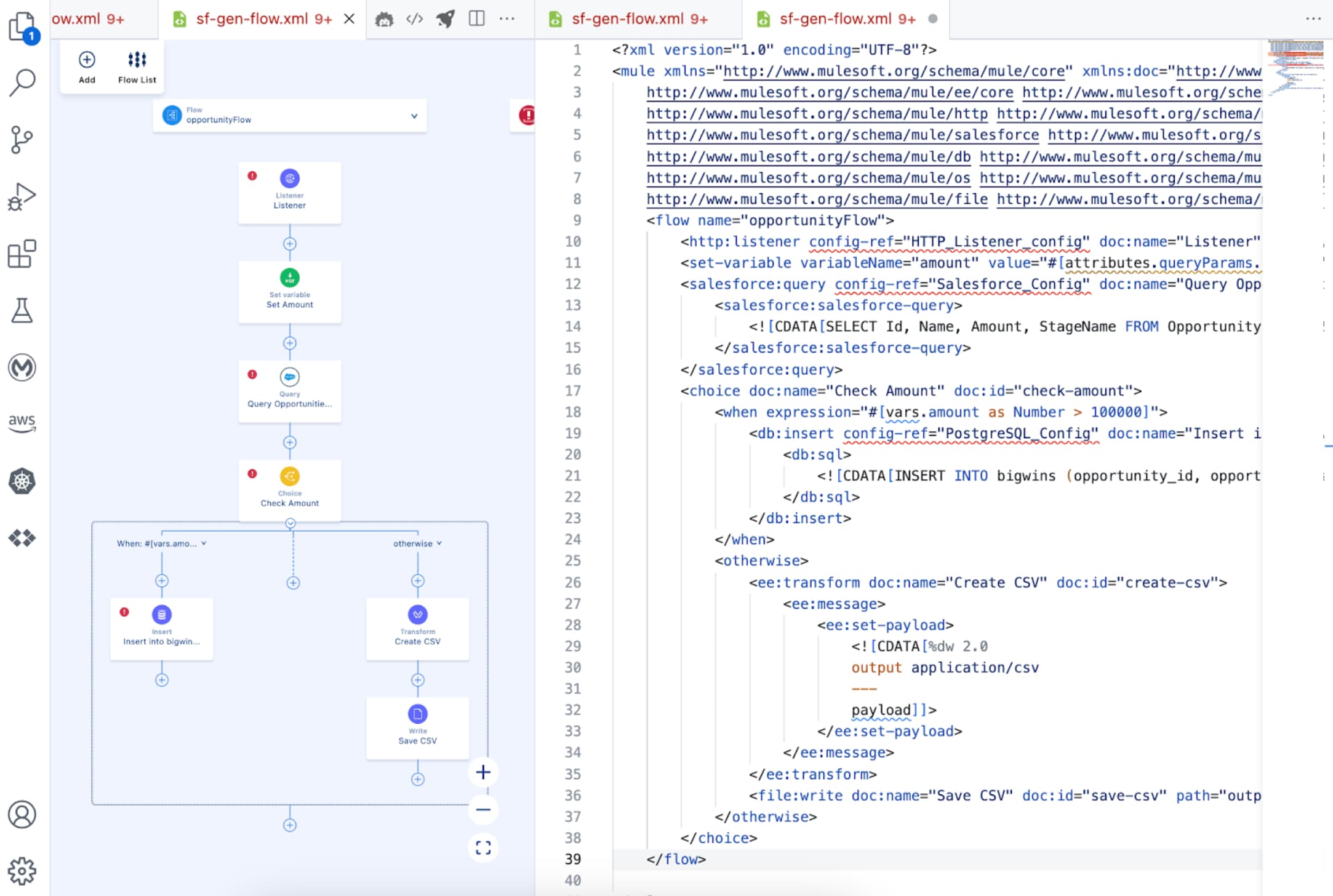
MuleSoft, owned by Salesforce, targets large enterprises with its Anypoint Platform. The proprietary DataWeave transformation language handles complex data mapping that would choke simpler tools.
If your organization already runs on Salesforce and needs full API lifecycle management, MuleSoft integrates tightly. Contact MuleSoft for pricing. The platform assumes you have dedicated integration developers on staff.
Workato: best for regulated industries
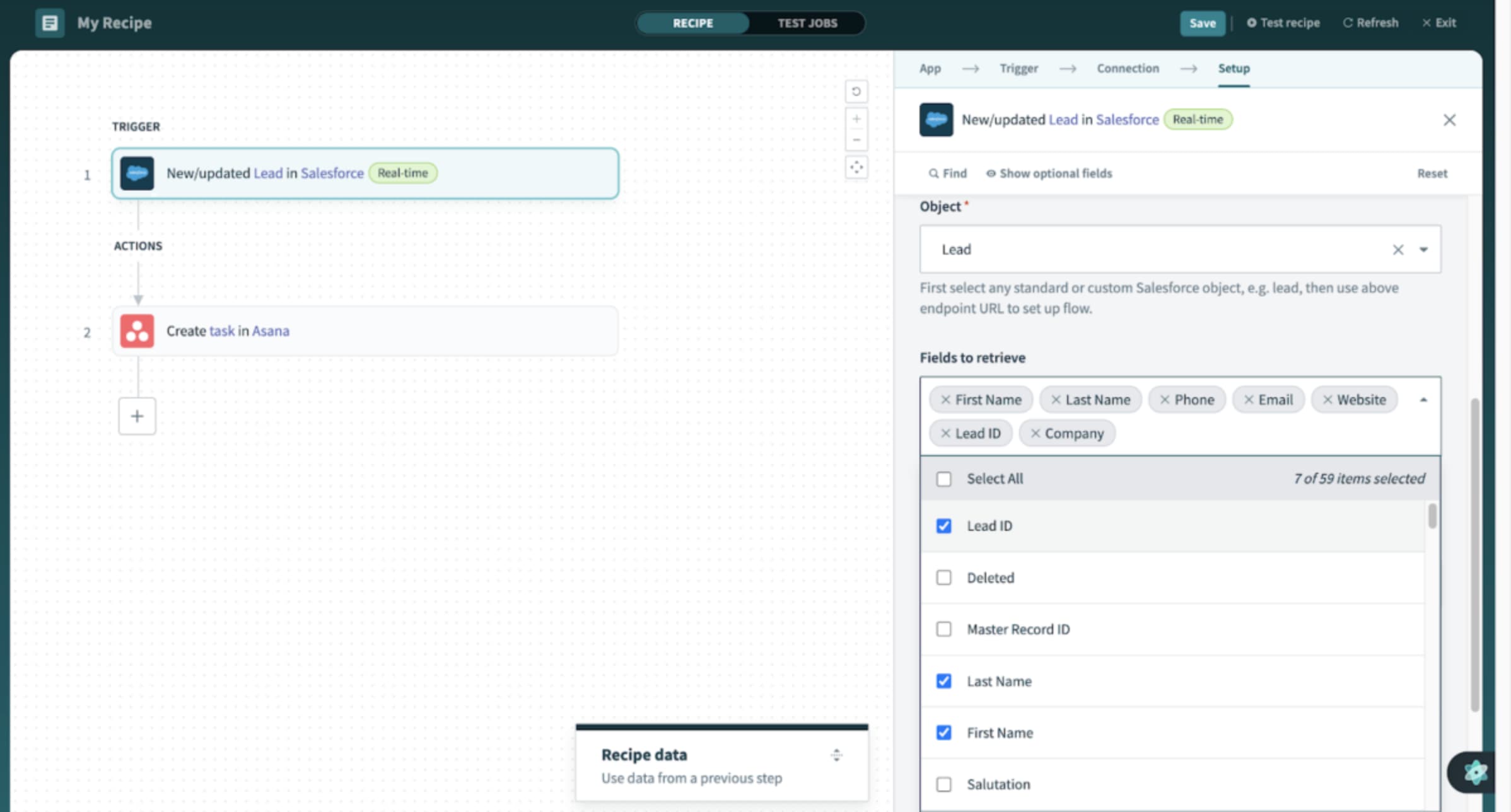
Workato differentiates on security with BYOK (Bring Your Own Key) and EKM (Enterprise Key Management) for custom encryption. Healthcare, finance, and government teams that cannot store credentials on vendor infrastructure get the control they need.
The platform also handles complex approval workflows common in regulated environments. Pricing is custom. Teams evaluating Workato often compare it against Make for mid-market use cases or MuleSoft for enterprise scale.
Paragon: best for customer-facing integrations
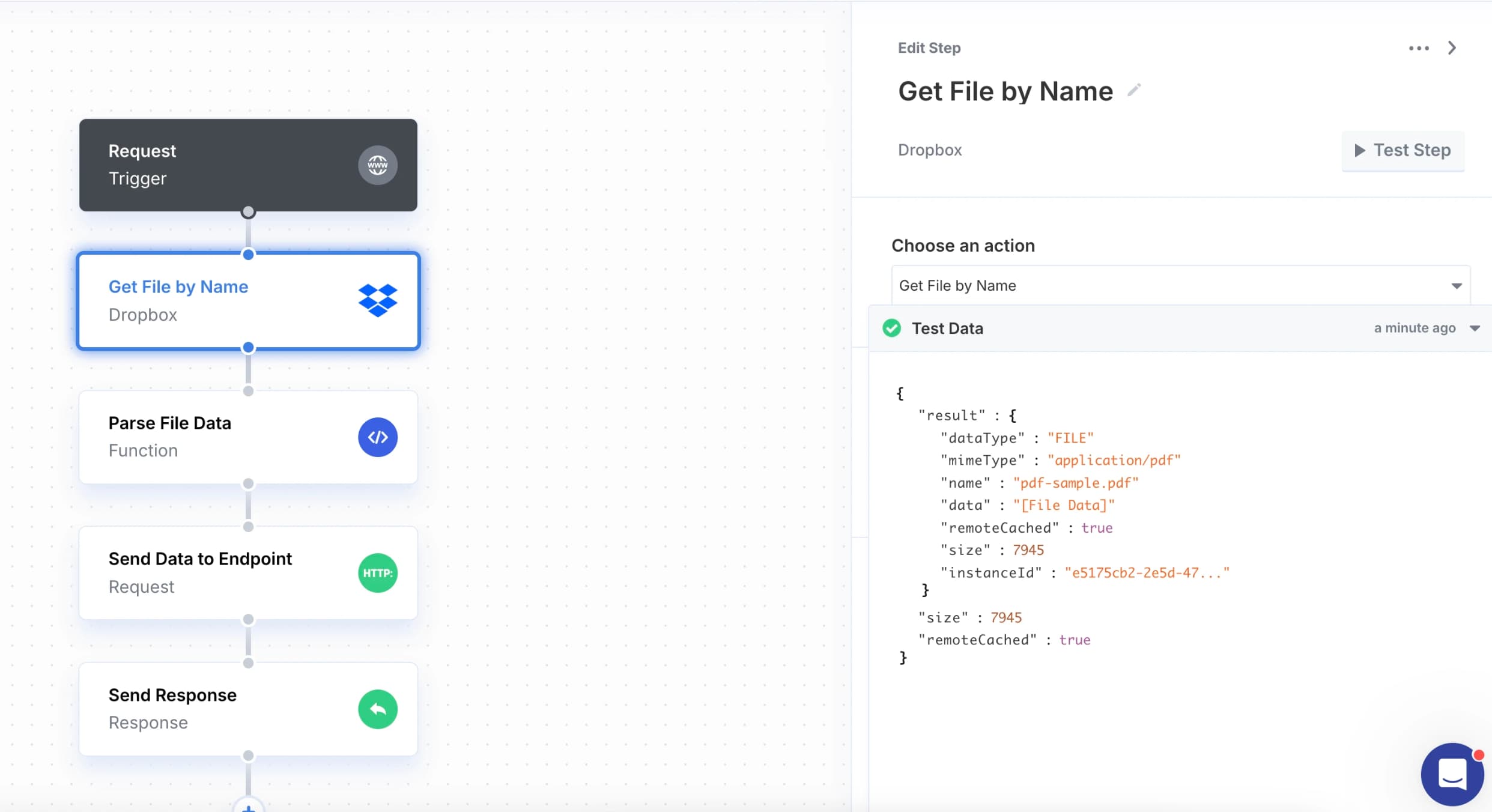
Paragon focuses on embedded integrations, the kind SaaS companies build into their products for end users. ActionKit lets AI agents execute actions inside a customer's connected tools, enabling scenarios like "sync this deal to the customer's CRM" without custom development.
For product and RevOps teams building integration marketplaces or in-app connectors, Paragon handles the OAuth flows, credential storage, and action execution. Contact Paragon for pricing.
Nango: best for code-first integration
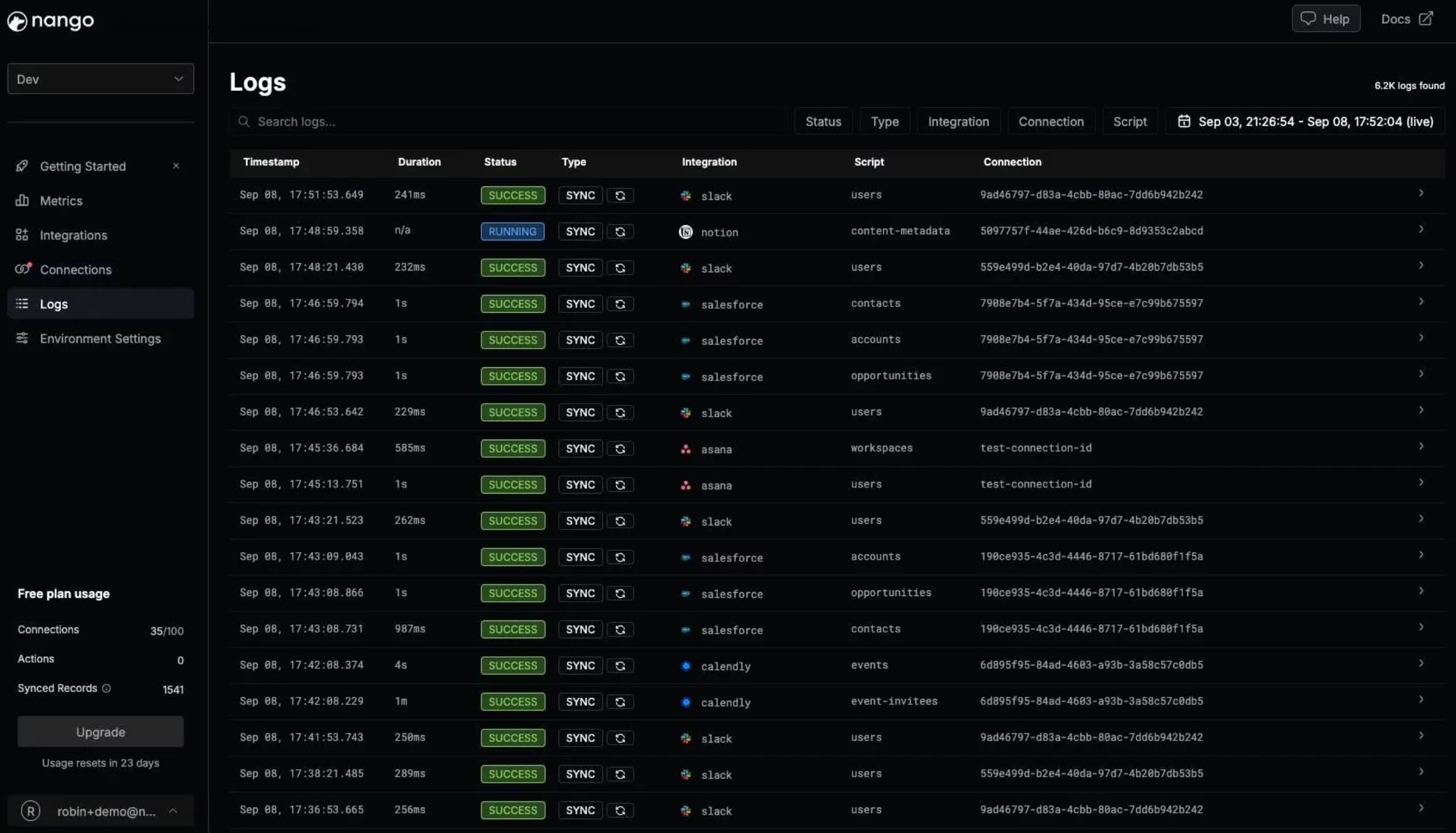
n8n users who want even more developer control should look at Nango. The AI Integration Builder installs as a GitHub skill, letting engineers define integrations in code and version-control everything.
Free plans are available. Paid plans start at $50 per month. The platform suits teams that want to own their integration logic without a visual builder's constraints.
Quick comparison
| Platform | Best for | MCP support | Starting price |
|---|---|---|---|
| Zapier | AI-first automation | Yes, 9,000+ apps | $19.99/month |
| Tray | Mixed skill teams | Agent Gateway governance | Contact sales |
| MuleSoft | Enterprise API lifecycle | Via Salesforce ecosystem | Contact sales |
| Workato | Regulated industries | Available | Contact sales |
| Paragon | Customer-facing integrations | ActionKit | Contact sales |
| Nango | Code-first teams | GitHub-based | $50/month |
Logicity's Take
For most RevOps teams, the choice comes down to three tiers. Zapier or Make handle 80% of use cases at predictable costs. Workato and Tray serve mid-market teams needing governance without MuleSoft complexity. MuleSoft and Paragon target enterprises with dedicated integration developers. The AI agent features appearing across all six platforms signal where iPaaS is headed: integrations as callable tools, not just scheduled data syncs. Teams investing in AI copilots for sales or support should prioritize MCP support now rather than retrofitting later.
Which platform fits your team?
Start with your constraints. Regulated industry? Workato's encryption controls matter. Building integrations into your product? Paragon solves that specific problem. Need 9,000 pre-built connectors with AI agent support? Zapier covers the broadest surface area.
Developer-heavy teams should trial Nango's GitHub workflow. Mixed teams where marketers and engineers both build automations will appreciate Tray's governance layer. Enterprise shops already deep in Salesforce can evaluate MuleSoft as part of their existing contracts.
Frequently Asked Questions
What is MCP support in API integration platforms?
MCP (Model Context Protocol) lets AI agents call integrations as tools. A platform with MCP support can expose its connectors to LLM-based agents, enabling automations triggered by natural language instructions.
How much do enterprise API integration platforms cost?
Entry-level platforms like Zapier start at $19.99/month. Enterprise tools like MuleSoft, Workato, and Tray require custom quotes, typically starting in the thousands per month depending on volume and features.
What's the difference between iPaaS and API management?
iPaaS (Integration Platform as a Service) connects applications and automates workflows. API management focuses on designing, publishing, and securing APIs. MuleSoft offers both; Zapier focuses on iPaaS.
Do I need developers to use these platforms?
Zapier, Tray, and Workato offer visual builders for non-developers. Nango and MuleSoft assume coding ability. Paragon sits in between, with embeddable components that require some technical setup.
Explores automation options beyond traditional robotic process automation
Need Help Implementing This?
Choosing an API integration platform is one decision. Architecting your workflows, mapping data models, and training your team is the real work. Reach out to Logicity's advisory team for vendor-neutral guidance on your integration stack.
Source: The Zapier Blog
Huma Shazia
Senior AI & Tech Writer
Produced with AI assistance and reviewed by the Logicity editorial team. Learn more in our Editorial Policy.