Key Takeaways
Top 5 BEST Smart Notebooks (2026) Watch Before You Buy!
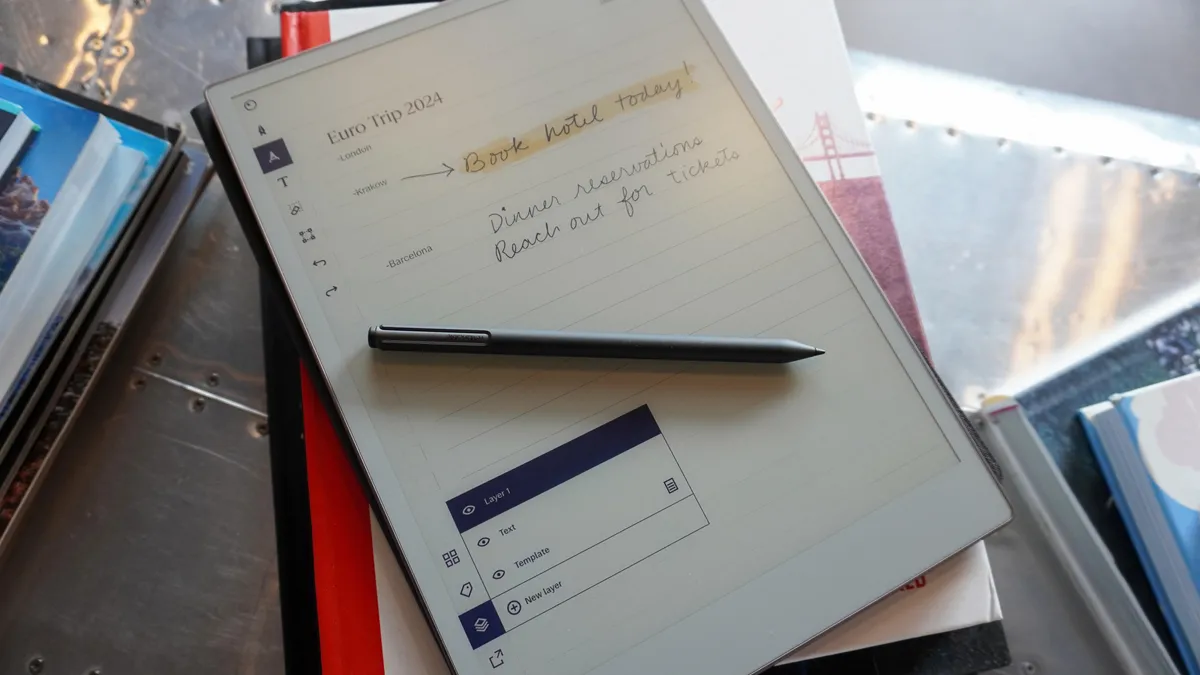
- Boox Note Air5 C ranks as the best overall digital notebook for its color display and transcription tools
- ReMarkable Paper Pure offers the most distraction-free writing experience for focused work
- Kindle Scribe stands out for readers who want to annotate books with Microsoft Suite compatibility
ZDNET's July 2026 roundup of digital notebooks tested eight devices head-to-head, with the Boox Note Air5 C claiming the top spot. The device scored highest for its paper-like writing feel, built-in transcription, and a smooth color e-ink display that handles both notes and documents. For executives and engineers who cycle through meetings, the practical question isn't whether digital notebooks work. It's which one fits how you actually think.
The category has matured since reMarkable launched the first serious e-ink writing tablet in 2017. Today's devices range from $140 Rocketbook hybrids to $649 premium options. Battery life stretches weeks, not hours. Latency has dropped below what most users can perceive. The market is projected to hit $8.5 billion by 2027, driven partly by enterprises seeking distraction-free tools for knowledge workers.
Which digital notebook won overall?
The Boox Note Air5 C earned the top pick for its balance of features. It runs Android, which means access to apps like Notion and other productivity tools directly on the device. Color e-ink displays have historically lagged monochrome panels in refresh rate and contrast. ZDNET's testers found the Air5 C handled this tradeoff well enough for daily use. Handwriting-to-text transcription worked reliably in testing, a feature that matters if your notes need to end up in searchable digital systems.
Disclosure
Some links in this post are affiliate links — Logicity earns a commission if you sign up, at no extra cost to you. We only link products we have used or actively recommend.
The device's portability also factored into the ranking. At 10.3 inches and under 450 grams, it fits in a messenger bag without the heft of a laptop. For CTOs or founders who move between offices, that weight difference adds up across a week.
How does Kindle Scribe compare for readers?
Amazon's Kindle Scribe won the category for reading. The included pen removes an extra purchase, and battery life stretches weeks with typical use. Microsoft Suite compatibility means annotations sync with Word documents, which matters for teams already inside that ecosystem. The downside: it's locked to Amazon's content store and lacks the app flexibility of Android-based competitors.
For pure reading with occasional markup, the Scribe makes sense. For heavy note-takers who want their tablet to replace a notebook entirely, the Boox devices offer more flexibility.
What's the best option for distraction-free work?
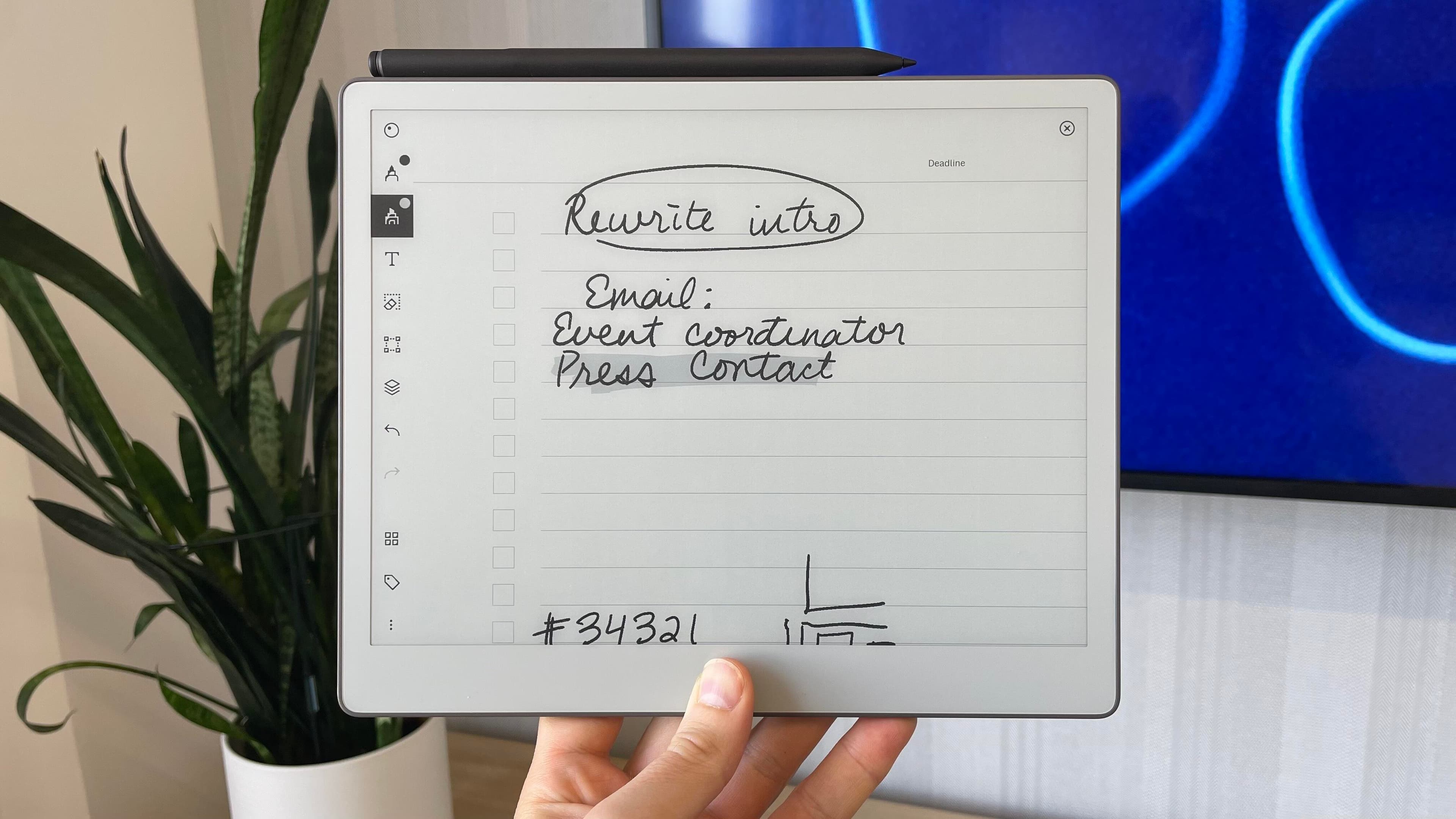
The ReMarkable Paper Pure took this category. ReMarkable has built its brand on doing less. No apps, no browser, no notifications. The device writes and syncs notes. That's it. For engineers or executives who find themselves pulled into email every time they open an iPad, the constraint is the feature.
ReMarkable reportedly saw a 300% increase in enterprise inquiries since 2023, suggesting companies are specifically seeking tools that limit distraction for knowledge workers. The Paper Pro model offers a premium alternative with a larger display and faster processor, but the Paper Pure handles most use cases at a lower price point.
What about budget options?
The Rocketbook Pro won for budget buyers. It's a hybrid approach: you write on reusable paper, scan pages with your phone, and the app sends notes to cloud storage. At $140, it's a fraction of the e-ink devices. The tradeoff is obvious. You're still carrying a physical notebook and pulling out your phone to digitize.
For someone testing whether paperless workflows suit them before committing $400+, the Rocketbook is a reasonable starting point. Teams already using Zapier or Make can automate the scan-to-storage step, sending pages directly to project management tools like Asana or ClickUp.
Full comparison: 8 devices tested
| Device | Best For | Display | Starting Price |
|---|---|---|---|
| Boox Note Air5 C | Overall | 10.3" color e-ink | $449 |
| ReMarkable Paper Pure | Distraction-free work | 10.3" mono e-ink | $399 |
| Kindle Scribe | Reading | 10.2" mono e-ink | $339 |
| Rocketbook Pro | Budget | Reusable paper | $140 |
| Boox Palma 2 Pro | Portability | 6.13" mono e-ink | $329 |
| ReMarkable Paper Pro | Premium alternative | 11.8" mono e-ink | $649 |
| Kindle Scribe Colorsoft | Color display reading | 10.2" color e-ink | $449 |
| Boox Gen-2 Go 10.3 | Android flexibility | 10.3" mono e-ink | $379 |
What should buyers prioritize?
The testing surfaced a few decision points. Color displays cost more and refresh slightly slower, but they're essential if you mark up diagrams or review documents with colored annotations. Android-based devices like the Boox line offer app flexibility but require more setup. ReMarkable's locked ecosystem means less tinkering but fewer options.
Storage matters less than you'd expect. Most devices offer 32-64GB, and text notes compress small. A year of daily notes might consume 2GB. Battery life across all tested devices exceeded two weeks with typical use, removing the anxiety that comes with tablets that die mid-afternoon.
Logicity's Take
The digital notebook market has segmented clearly. ReMarkable owns the minimalist end, Boox dominates flexibility, and Kindle Scribe locks in Amazon's reading ecosystem. For tech decision-makers evaluating team deployments, the ReMarkable Paper Pure's enterprise interest spike suggests organizations are actively seeking tools that enforce focus rather than enable it. At $399, the Paper Pure costs less than two months of productivity lost to context-switching. The Supernote A5X, absent from this roundup, remains a strong alternative in the mid-range with a reputation for build quality and a less aggressive sync model.
Frequently Asked Questions
Can digital notebooks replace paper completely?
For most note-taking and document markup, yes. The main gaps are quick sticky notes and sharing physical pages with someone in the room. Transcription features now handle the digitization step automatically.
Do digital notebooks work with handwriting recognition?
The Boox Note Air5 C and ReMarkable devices include built-in handwriting-to-text conversion. Accuracy varies with handwriting clarity but handles most print-style writing reliably.
How long do digital notebook batteries last?
All devices tested by ZDNET lasted 2-4 weeks on a single charge with typical use. E-ink displays consume power only when refreshing, unlike LCD or OLED screens.
Which digital notebook works best with Microsoft Office?
Kindle Scribe offers native Microsoft Suite compatibility, syncing annotations with Word documents. Boox devices running Android can install the full Office apps.
Are color e-ink displays worth the premium?
For document review, diagram annotation, or any workflow involving color-coded content, yes. For pure text notes, monochrome displays offer better contrast and lower prices.
Covers productivity tool selection for teams evaluating workflow automation
Need Help Implementing This?
Evaluating digital notebooks for your team? Contact Logicity for vendor-neutral guidance on productivity hardware that fits your existing workflows.
Source: Latest news
Huma Shazia
Senior AI & Tech Writer
Produced with AI assistance and reviewed by the Logicity editorial team. Learn more in our Editorial Policy.