Key Takeaways
- Zapier connects to 9,000+ apps versus Workato's ~1,200, launching in hours instead of weeks
- Zapier starts at $19.99/month while Workato typically requires $1,000+/month minimum
- The real choice is organizational philosophy: democratized building with guardrails versus IT-controlled access
Building with AI has never been easier. Governing it? That's the hard part. Your IT team now tracks the operations manager adding AI steps to workflows, the sales rep connecting Claude to the CRM, and somewhere in HR, a new hire is vibe coding an internal app that touches your Workday account.
Zapier and Workato both tackle this AI governance challenge. But they answer a fundamental question differently: who's allowed to build?
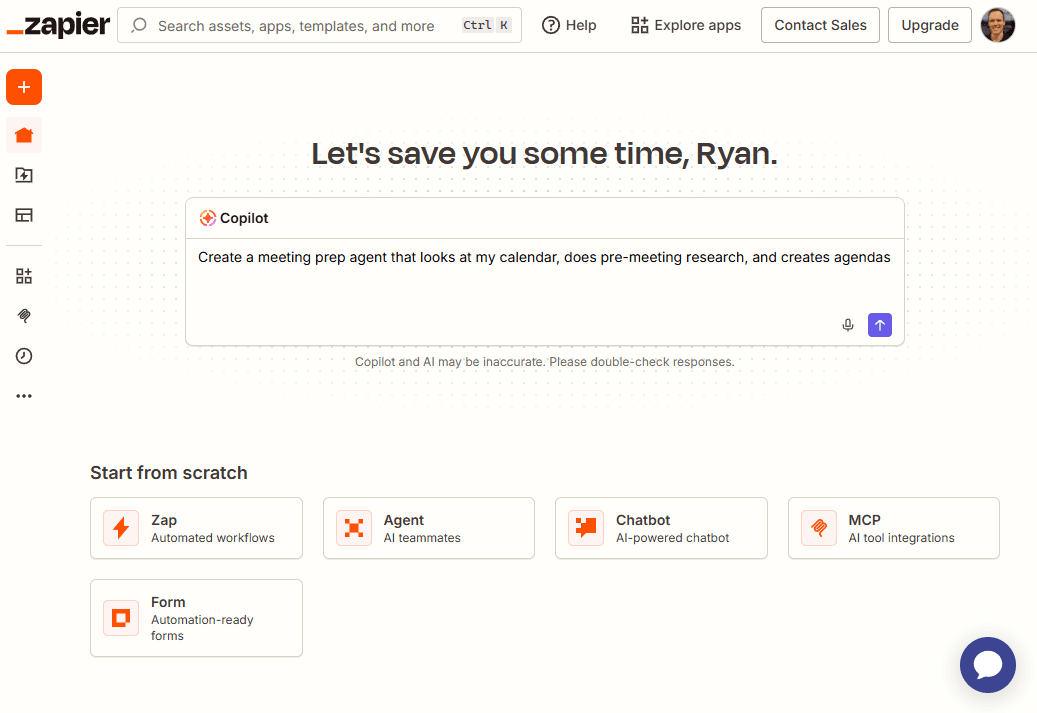
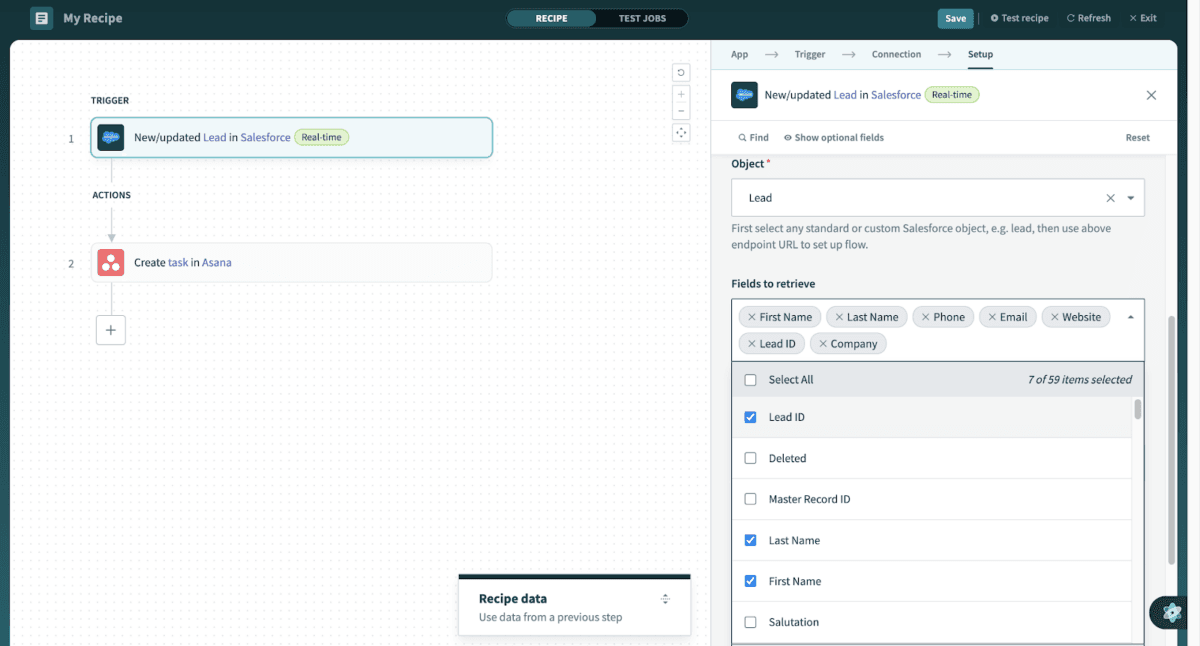
Workato is an enterprise iPaaS with deep integrations across enterprise systems. It's built for IT and dedicated automation teams, with some tools for non-technical users. Zapier is an AI orchestration platform that gives agents safe, OAuth-managed access to 9,000+ apps. IT sets the guardrails. Anyone can build without waiting for permission.
The Quick Comparison
| Feature | Zapier | Workato |
|---|---|---|
| Best for | Governed AI at scale across teams | Complex enterprise integrations via IT |
| Implementation time | Minutes to hours | Weeks to months |
| App integrations | 9,000+ | ~1,200 |
| Starting price | $19.99/month | $1,000+/month (sales required) |
| Security certifications | SOC 2 Type II, GDPR, SSO | SOC 2 Type II, GDPR, SSO, HIPAA |
| Primary users | Anyone in the organization | IT teams and developers |
| AI capabilities | Copilot, agentic AI execution | AIRO copilot, Agent Studio, Otto agent |
Who Each Platform Is Built For
Zapier is built for your whole team. Workato is built for IT.
This isn't a knock on either platform. It's a design philosophy. Zapier's model assumes business users should build their own automations. IT's job is setting guardrails, not building every workflow. Workato's model assumes complex enterprise integrations need dedicated technical teams. Non-technical users get some tools, but IT maintains control.
Recent Workato updates have made it more accessible. But the platform's core architecture still favors IT teams and developers. If your organization wants marketing to automate their own lead scoring without filing a ticket, Zapier fits better. If you want IT to own every integration touching your ERP, Workato makes more sense.
Integration Ecosystem: 9,000 vs 1,200
Zapier connects to 9,000+ apps. Workato connects to approximately 1,200. That's a 7x difference.
The gap matters most for smaller or niche tools. Your main enterprise systems, like Salesforce, HubSpot, SAP, and Workday, exist on both platforms. But that industry-specific CRM your sales team loves? The project management tool your engineering team won't give up? More likely to be on Zapier.
Workato's smaller ecosystem isn't necessarily a weakness. If your organization standardizes on a smaller set of enterprise tools, you don't need 9,000 integrations. Workato's connectors for enterprise systems tend to be deeper, with more configuration options for complex use cases.
Implementation Speed
Zapier projects launch in hours. Workato implementations can take weeks to months for complex deployments.
The speed difference stems from those different design philosophies. Zapier's self-service model means a marketing manager can connect their email platform to their CRM during a lunch break. Workato's IT-centric model means that same connection might require scoping, security review, development, testing, and deployment cycles.
For simple automations, Zapier wins on speed. For enterprise-grade integrations touching financial systems or regulated data, Workato's slower process often reflects necessary due diligence rather than inefficiency.
AI Governance: The Real Battleground
In 2026, the automation market has moved past connecting apps. The challenge now is managing autonomous AI agents. Organizations struggle to balance letting employees quickly build AI-driven workflows against ensuring data security and compliance.
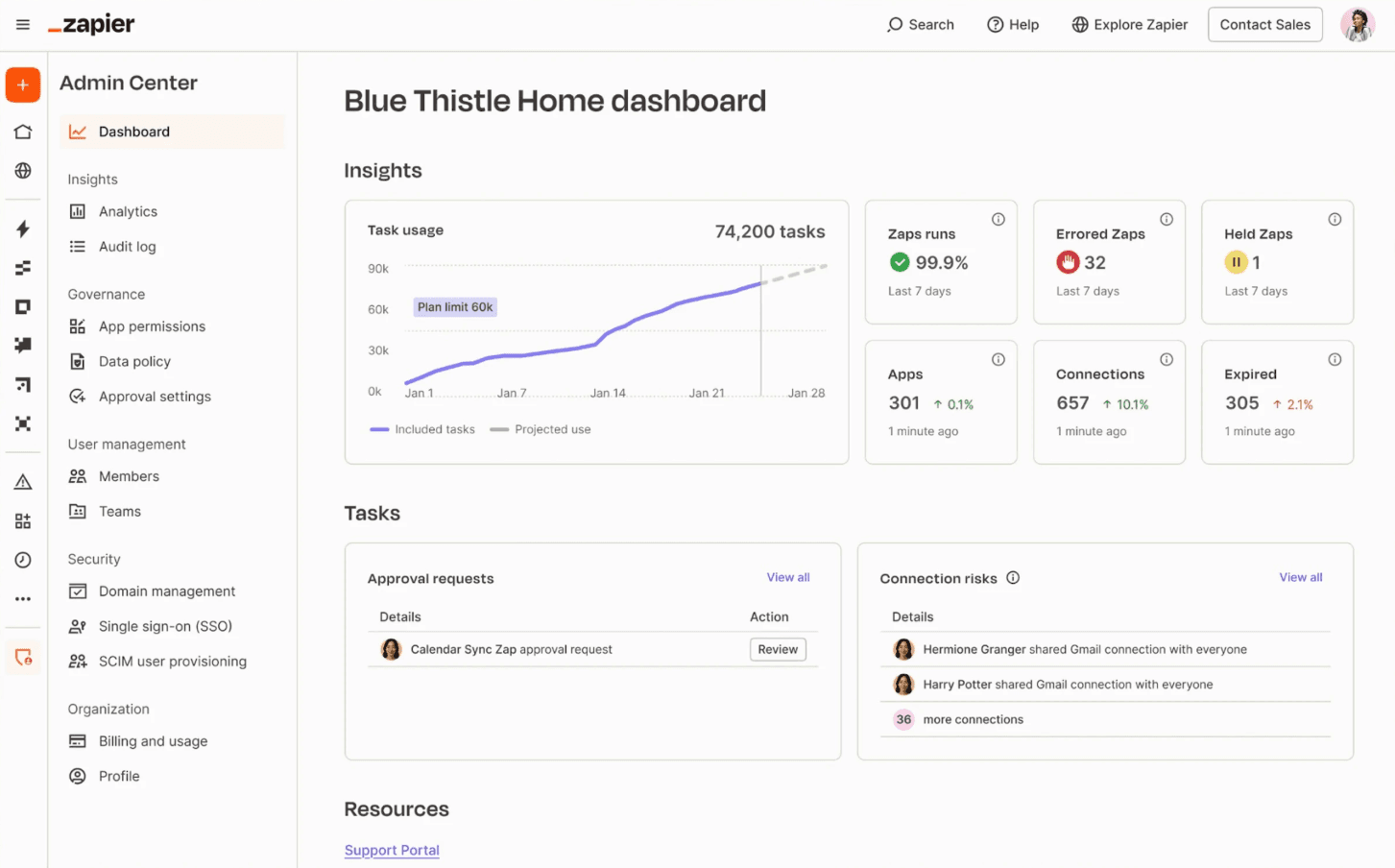
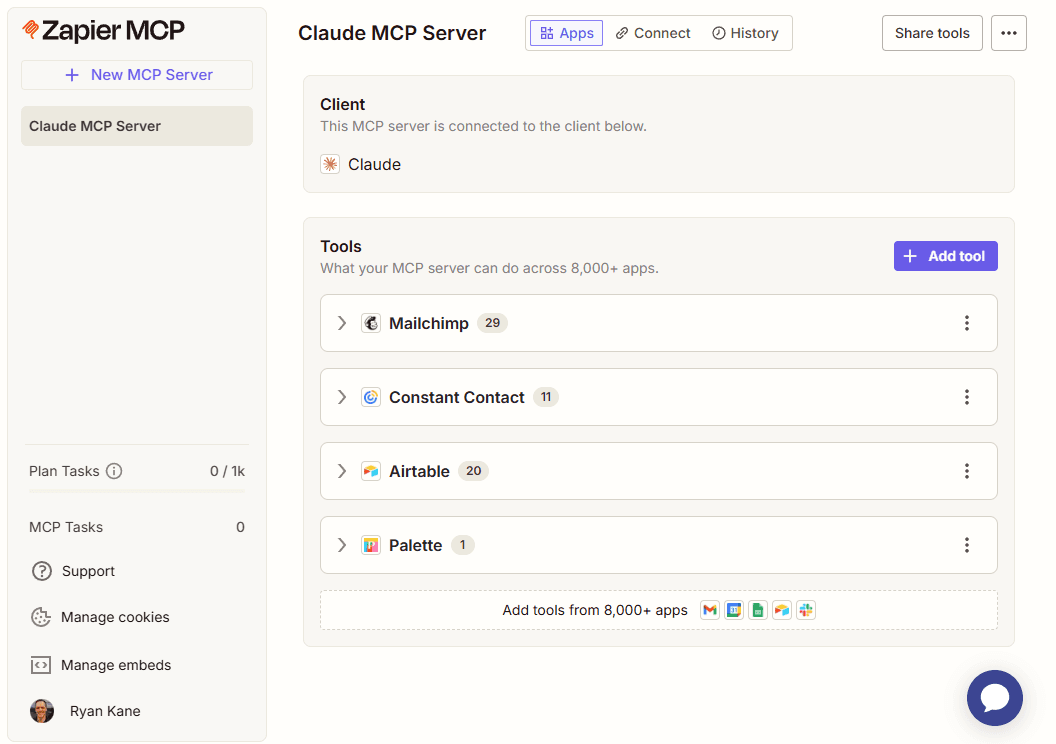
Zapier's approach: one governed layer controls access to all 9,000+ apps. Whether you build on Zapier directly or connect via MCP, SDK, or CLI, the same governance rules apply. IT sets permissions once. Users build freely within those boundaries.
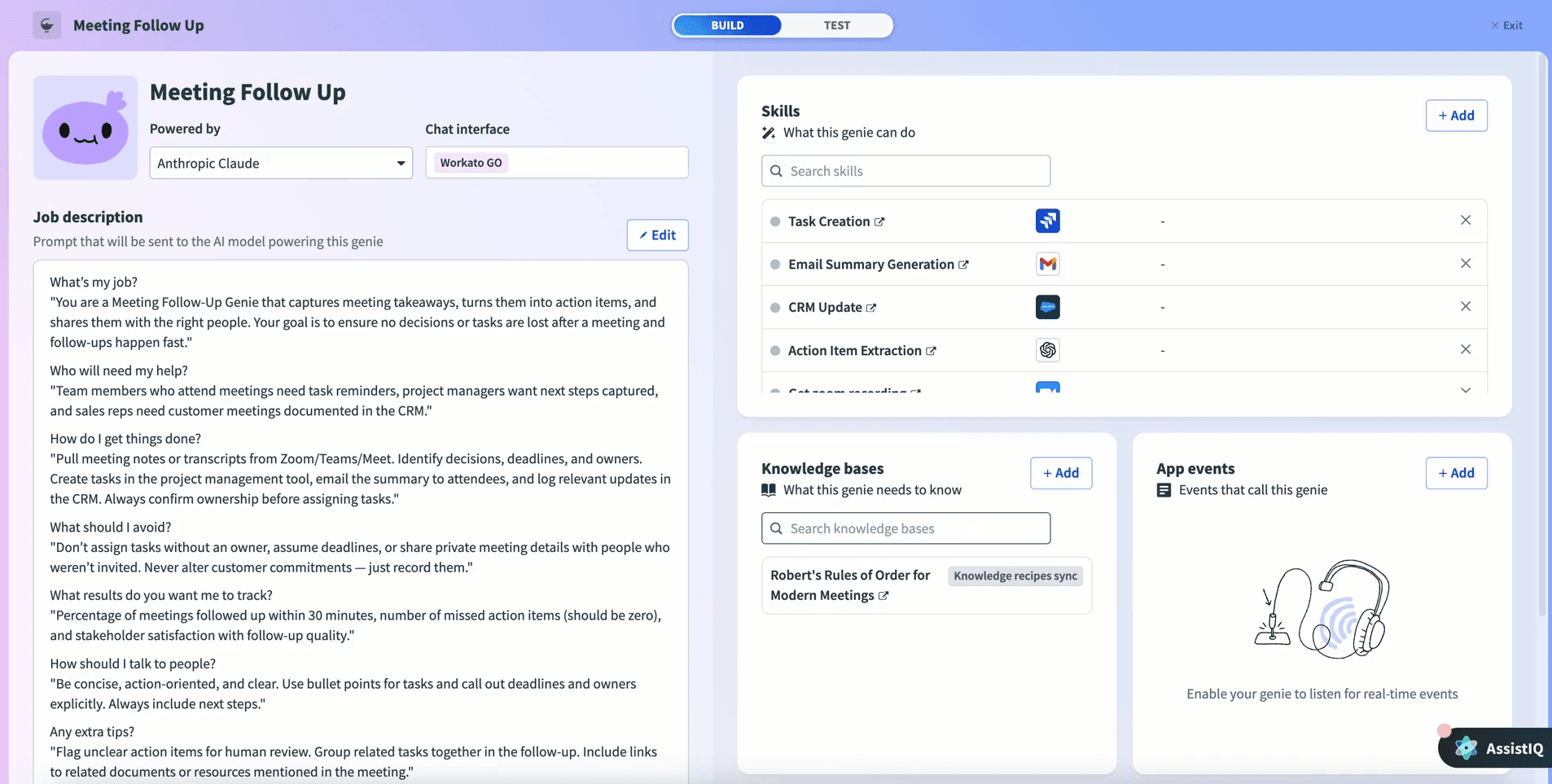
Workato's approach: governance controls apply to Workato-built workflows and agents. The platform now helps organizations achieve ISO/IEC 42001, the new AI management standard. Agent Studio lets IT build custom agents. Otto, their autonomous agent, is in early access.
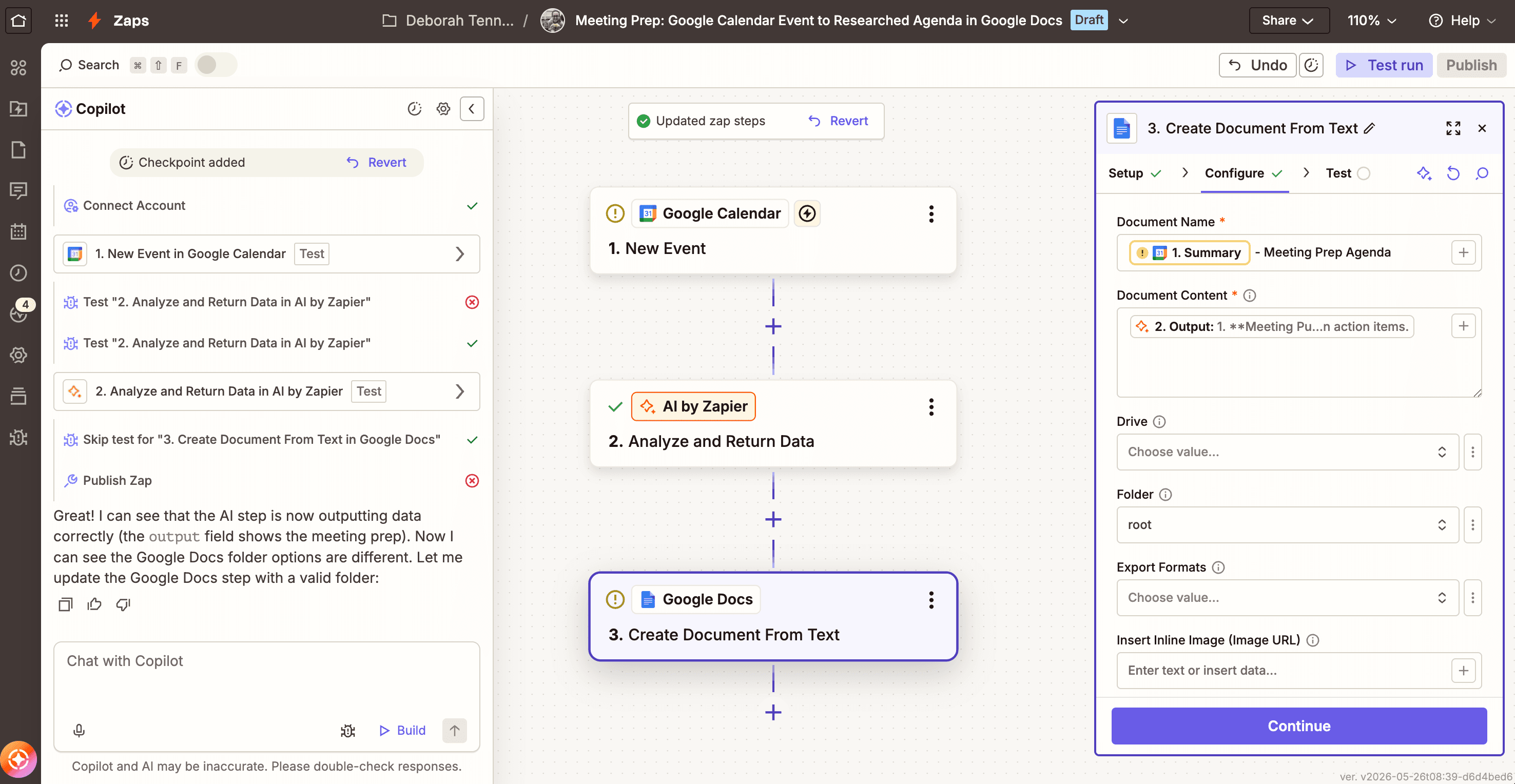
Zapier offers Copilot for building workflows conversationally, plus agentic AI for autonomous task execution. Their MCP server connects any AI tool to the full app ecosystem. Workato offers AIRO copilot for workflow generation and their Enterprise MCP Gateway for similar connectivity.
Security and Compliance
Both platforms carry SOC 2 Type II certification, GDPR compliance, and SSO support. Workato adds HIPAA compliance, making it the default choice for healthcare organizations handling protected health information.
Zapier offers audit logs and access controls starting on their $69/month Team plan. That's significant for small organizations needing compliance features without enterprise contracts. Workato bundles audit logs into their standard offering, but you're already paying enterprise prices.
The 42% year-over-year increase in enterprise adoption of automated AI guardrails shows how seriously organizations now take this space. Both platforms have responded with expanded governance features.
Pricing: Predictable vs Premium
Zapier starts at $19.99/month with predictable costs. Enterprise plans are available for larger organizations. Workato typically requires $1,000+/month minimum and requires sales engagement to get pricing.
The pricing models reflect the target customers. Zapier's tiered pricing lets a startup start small and scale. A five-person marketing agency can pay $69/month for Team features and grow from there. Workato's sales-driven pricing assumes enterprise budgets and enterprise needs.
Don't assume Workato is always more expensive at scale. For large enterprises with complex requirements, Workato's per-connection pricing can sometimes beat Zapier's per-task pricing. Run the numbers for your specific use case.
Community Perspective
HackerNews threads frequently debate the Shadow IT risks of citizen developers using Zapier versus Workato's high implementation costs and steep learning curve. The consensus splits predictably: technical users worry about ungoverned automation sprawl, business users worry about IT bottlenecks.
Reddit's r/automation community highlights Zapier as the go-to for startups and marketing teams needing speed. Workato is widely cited as the industry standard for complex, IT-managed enterprise architectures. Neither platform dominates the conversation. The right choice depends on organizational context.
Making the Decision
✅ Pros
- • Zapier: 7x more app integrations (9,000+ vs ~1,200)
- • Zapier: Hours to deploy vs weeks for Workato
- • Zapier: Starting price 50x lower ($19.99 vs $1,000+)
- • Zapier: Non-technical users can build independently
- • Workato: HIPAA compliance included
- • Workato: Deeper enterprise system connectors
- • Workato: IT maintains direct control over all workflows
❌ Cons
- • Zapier: No HIPAA compliance (healthcare limitation)
- • Zapier: Self-service model requires governance discipline
- • Workato: Smaller app ecosystem limits niche tool coverage
- • Workato: Implementation speed limits agility
- • Workato: Price point excludes smaller organizations
Choose Zapier if you want employees building automations independently while IT sets guardrails. Choose Workato if you want IT controlling every integration with deep enterprise system access.
Choose Zapier if you need to connect diverse tools across departments. Choose Workato if you've standardized on enterprise systems and need deep, configurable integrations.
Choose Zapier if you're budget-conscious or need to start small. Choose Workato if you have enterprise budgets and enterprise complexity.
Logicity's Take
Frequently Asked Questions
Frequently Asked Questions
Is Zapier or Workato better for small businesses?
Zapier. Starting at $19.99/month versus Workato's $1,000+ minimum, Zapier is accessible to small businesses. The self-service model also means you don't need dedicated IT staff to build automations.
Which platform has more integrations?
Zapier connects to 9,000+ apps. Workato connects to approximately 1,200. Zapier has roughly 7x more integrations, though Workato's enterprise connectors often offer deeper configuration options.
Can non-technical users build automations on Workato?
Recent updates have made Workato more accessible to non-technical users. However, the platform is still primarily built for IT teams and developers. Zapier is designed from the ground up for business users to build independently.
Which platform is better for healthcare organizations?
Workato. It includes HIPAA compliance, which Zapier does not offer. Healthcare organizations handling protected health information should default to Workato for regulatory compliance.
How long does implementation take for each platform?
Zapier projects typically launch in minutes to hours. Workato implementations can take weeks to months for complex enterprise deployments. The difference reflects their target users: self-service business users versus IT-managed enterprise teams.
Related: How Microsoft approaches automated security governance in enterprise environments
Need Help Implementing This?
Source: The Zapier Blog
Manaal Khan
Tech & Innovation Writer
Produced with AI assistance and reviewed by the Logicity editorial team. Learn more in our Editorial Policy.