Key Takeaways
- Your phone's microphone can measure decibel levels within 3-5 dB of professional equipment
- The ambient light sensor works as a lux meter for photography and workspace optimization
- Pixel Pro phones include an IR thermometer that measures surface and body temperatures
Your Android phone already contains a sound level meter, light meter, and thermometer. The hardware ships standard. You just need the right apps to access it.
Modern smartphones pack an impressive array of sensors beyond the obvious camera and GPS. The accelerometer, gyroscope, magnetometer, ambient light sensor, and microphone all collect raw environmental data that Android typically uses for system functions like screen rotation and adaptive brightness. But third-party apps can tap these sensors directly, turning your phone into a portable measurement toolkit.
How accurate is a phone microphone as a decibel meter?
Apps like Sound Meter use your phone's microphone as an acoustic sensor, displaying real-time decibel readings. The accuracy falls within 3-5 dB of professional equipment, according to testing data. That's not laboratory-grade precision, but it's good enough for practical purposes.
The use cases are surprisingly practical. Compare the noise output of two dishwashers. Check whether your new PC fans actually reduced system noise. Verify that your keyboard clacking stays below the 80-90 dB threshold where neighbors start complaining. Sound Meter displays minimum, maximum, and average values on a graph, so you can track noise over time rather than just catching a momentary spike.
For calibrating home theater speakers or checking music equipment levels, a phone app beats buying a standalone decibel meter from Amazon. Those cheap meters cost $15-30 and deliver similar accuracy to what your phone already provides for free.
Using the light sensor as a photography lux meter
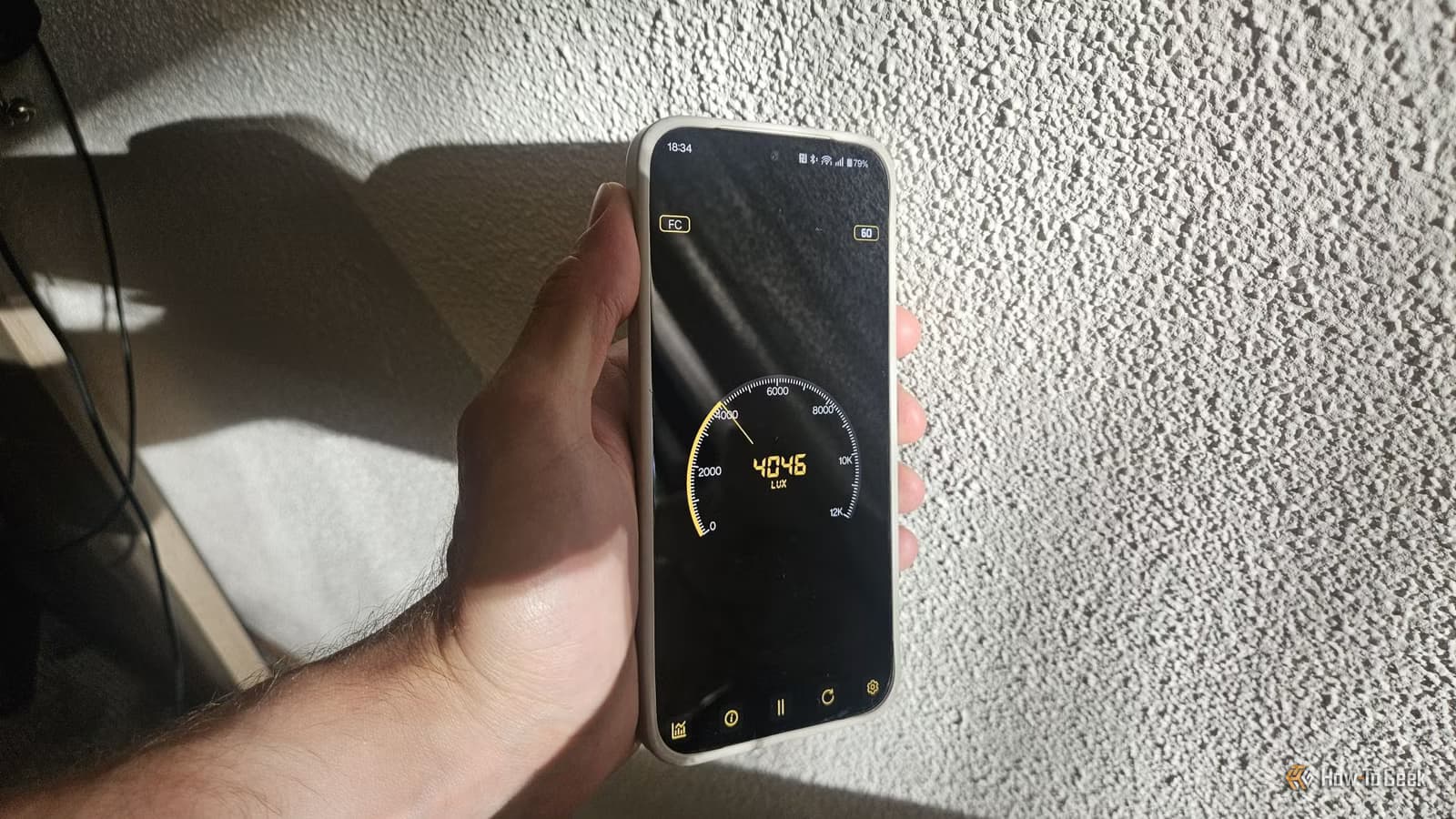
Every Android phone includes an ambient light sensor. It's the component that automatically adjusts screen brightness based on your environment. Apps can read the raw lux values from this sensor, giving you a functional light meter.
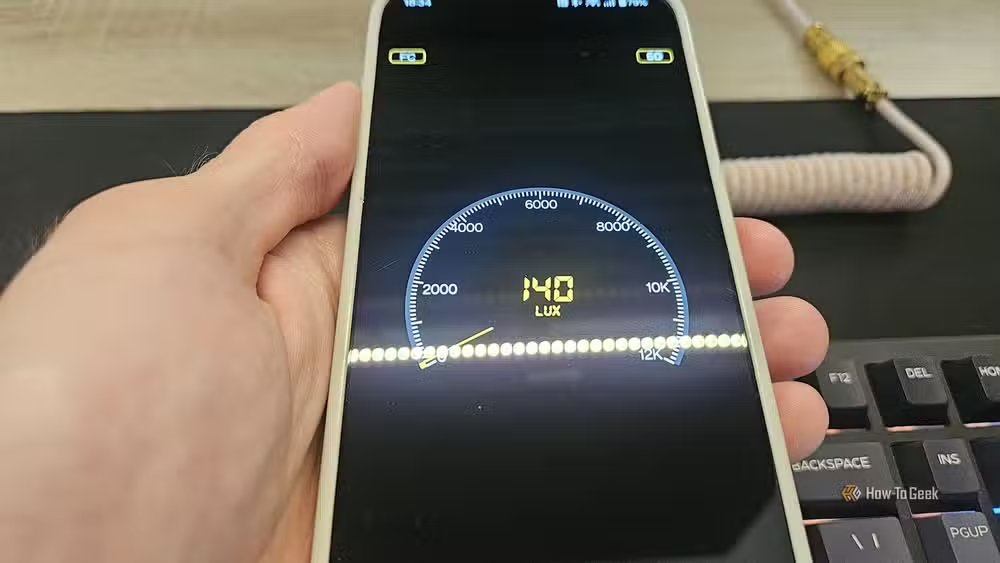
Photographers can use this to check exposure conditions before setting up a shot. Workspace designers can verify that desk lighting meets the 300-500 lux range recommended for office work. Plant enthusiasts can measure whether their houseplants receive adequate light. The sensor sits near the front camera, so point that area toward your light source for the most accurate reading.
The Pixel thermometer: IR sensor for surface and body temperature
Google's Pixel 8 Pro and newer Pro models include a dedicated infrared temperature sensor. This isn't a software trick. It's actual hardware, an IR emitter and receiver that measures thermal radiation from surfaces.
For surface measurements, the sensor works at a distance of about 0.5 inches. Point it at a frying pan, a radiator, or a laptop vent to check temperatures. For body temperature readings, you need to hold the sensor about 1.2 cm from the forehead.
The FDA clearance matters. Google obtained regulatory approval for the body temperature feature in the US, which means the sensor meets medical device standards for accuracy. Most phones lack this hardware entirely, so the thermometer feature remains exclusive to Pixel Pro models.
Why these sensors exist in the first place
Phone manufacturers don't install these sensors for measurement apps. The accelerometer and gyroscope handle screen rotation, step tracking, and motion controls in games. The magnetometer enables compass functionality in maps. The ambient light sensor manages adaptive brightness. The microphone, obviously, handles calls and voice commands.
But Android exposes sensor data through its API, allowing developers to build apps that repurpose the hardware. The result: your phone becomes a physics laboratory without any additional hardware purchases.
Gimmick or genuinely useful?
Community discussions on Reddit's r/Android and r/lifehacks split on this question. The consensus: these features work best for occasional DIY projects rather than professional measurement. Checking heat leaks around windows, measuring sound levels during a party, verifying light conditions for a video call. Useful, but not a replacement for dedicated tools if precision matters.
The Pixel thermometer gets more debate. Some users find it genuinely handy for quick fever checks. Others point out that a $10 forehead thermometer does the same job without needing a $1000 phone. The feature's value depends on whether you already own a Pixel Pro for other reasons.
Logicity's Take
The real story here isn't that phones can measure things. It's that phone manufacturers have quietly built sophisticated sensor arrays for mundane tasks like screen brightness, then left the raw data accessible to anyone willing to write an app. For engineers and makers who already carry a phone everywhere, this eliminates the need to haul separate meters to job sites. The 3-5 dB accuracy gap for sound measurement matters less than having a meter in your pocket when you need one.
Frequently Asked Questions
How accurate are phone sound meter apps?
Smartphone microphone-based sound meters typically fall within 3-5 dB of professional equipment. This accuracy works for household comparisons and general noise monitoring but may not meet regulatory or scientific standards.
Which Android phones have a built-in thermometer?
Google Pixel 8 Pro and newer Pixel Pro models include an infrared temperature sensor. Most other Android phones lack this hardware and cannot measure temperature directly.
Can I use my phone as a light meter for photography?
Yes. Apps can access the ambient light sensor near your front camera to display lux readings. Point the sensor toward your light source for measurement.
How close does the Pixel thermometer need to be?
About 0.5 inches (1.2 cm) from the surface for object measurements, and the same distance from the forehead for body temperature readings.
Are phone sensor measurements reliable enough for professional use?
Generally no. Phone sensors work for DIY projects and quick checks but lack the calibration and precision of dedicated measurement tools used in professional settings.
Another guide to unlocking hidden capabilities in devices you already own
Need Help Implementing This?
Building apps that tap into Android sensor APIs? Logicity covers the technical side of mobile development and hardware integration. Subscribe for weekly updates on practical tech guides.
Source: How-To Geek
Huma Shazia
Senior AI & Tech Writer
Produced with AI assistance and reviewed by the Logicity editorial team. Learn more in our Editorial Policy.