Key Takeaways
- Workato's agentic AI turns workflows into reasoning agents; Boomi's Agent Control Tower governs AI deployments across the enterprise
- Boomi leads hybrid deployments with on-premise Atoms; Workato is cloud-native only
- Both platforms face criticism for opaque pricing that can spike unexpectedly at scale
Two Philosophies, One Budget Line Item
Workato and Boomi both handle serious integration work. Both require IT involvement. Both will cost you real money. The difference is philosophy.
Workato has spent the last two years leaning hard into speed and AI execution. Its workflows can now reason and act as autonomous agents. Boomi takes the opposite path: control, governance, and playing nicely with infrastructure that predates half your engineering team.
“The integration era is dead; we've entered the intelligent automation era. Choosing a platform based on 2022 criteria is building future technical debt.”
— Tech Analyst, 2026 Integration Summit
That analyst isn't wrong. The iPaaS market is projected to grow at 25% CAGR through 2026. But growth doesn't help you pick the right tool. Let's get specific about what separates these two platforms.
The Quick Comparison
| Category | Workato | Boomi |
|---|---|---|
| Best for | IT and ops teams wanting fast, AI-driven automation | IT teams managing complex enterprise and hybrid environments |
| Ease of use | Low-code recipe builder; more accessible but still IT-heavy | Visual canvas (AtomSphere); powerful but built for technical teams |
| AI capabilities | Agentic orchestration; workflows reason and act | Boomi GPT for design; Agent Garden and Control Tower for governance |
| Integrations | 1,000+ connectors; strong with modern SaaS | 1,000+ connectors; legacy edge with SAP, Oracle, EDI |
| Pricing | Recipe + task-based; can spike at scale | Enterprise-tier; custom quotes |
| Deployment | Cloud-native only | Hybrid leader; on-premise via Atoms |
Who Actually Builds These Integrations?
This is the first question to answer honestly. Not who you wish would build them. Who actually will.
Workato's building block is the Recipe. It's a low-code workflow that feels closer to a modern SaaS app than a traditional integration tool. IT teams can configure complex logic. Seasoned citizen developers can typically get something running without looping in a developer.
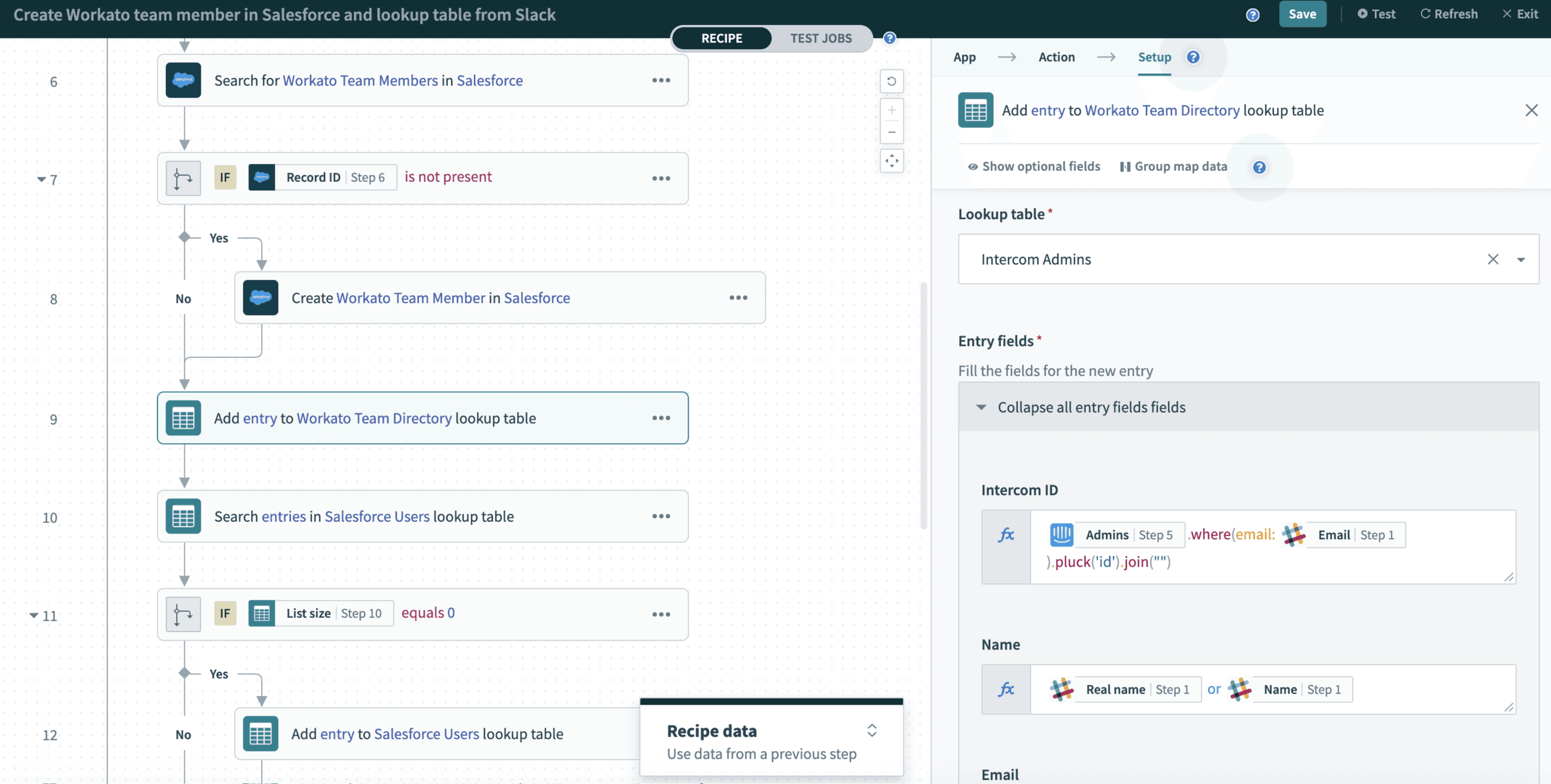
That said, Workato remains IT-forward. Any substantial workflow still calls for practiced hands. The low-code label can mislead business users into thinking they'll be self-sufficient. They usually won't be.
Boomi's AtomSphere uses a visual canvas, but don't let that fool you. It's built for IT teams dealing with complex data mapping and deep configuration. The kind that can take weeks to get right. Sometimes longer.
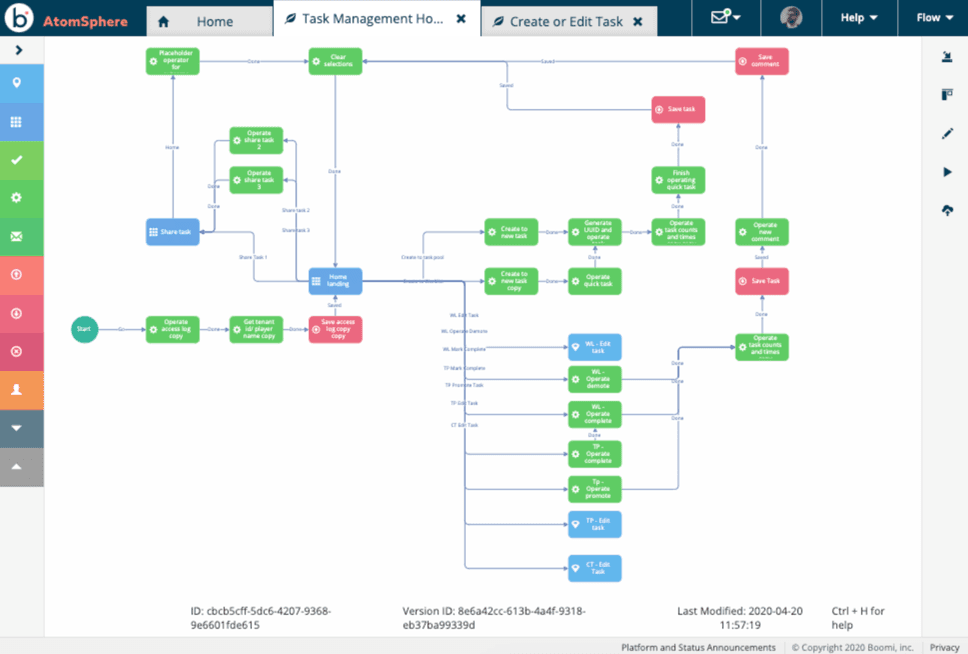
Once you're through Boomi's learning curve, the depth is there. Getting through it is the hard part. Plan accordingly when estimating implementation timelines.
AI Capabilities: Agents vs. Governance
Here's where the philosophical split becomes concrete.
Workato has moved toward what it calls agentic orchestration. Your workflows aren't just executing steps. They're reasoning about context and making decisions. The company's new Genie capabilities, announced in early 2026, push this further. Workflows can now adapt their execution paths based on real-time conditions.
This sounds powerful. It is. It's also a governance headache if you're not careful. Autonomous agents making decisions across your enterprise data require robust monitoring.
Boomi took the opposite approach. Instead of making workflows autonomous, Boomi built infrastructure to govern autonomous AI wherever it lives. The company's AgentStudio, Agent Garden, and Agent Control Tower form a stack specifically designed to manage AI agents across your enterprise.
Boomi GPT handles AI-assisted design within the platform. But the real story is the governance layer. If you're deploying AI agents from multiple vendors across your organization, Boomi wants to be the control plane.
Connectors: Modern SaaS vs. Legacy Systems
Both platforms claim 1,000+ pre-built connectors. The numbers are similar. The coverage isn't.
Workato's connector library leans toward modern SaaS. If you're integrating Salesforce, Slack, Workday, ServiceNow, and similar tools, Workato's connectors are polished and well-maintained.
Boomi's edge is legacy systems. SAP, Oracle, EDI, and the infrastructure that's been running since before cloud was a category. If you're a Fortune 500 company with decades of accumulated systems, Boomi's connector depth matters.
“Boomi remains the king of the heavy lift, perfectly suited for hybrid environments with legacy SAP or EDI requirements.”
— Senior Solutions Architect, Fortune 500 Enterprise
The practical question: look at your actual integration needs. Not aspirational architecture. What are you connecting today, and what will you connect in 18 months? Match the platform to that reality.
Deployment: Cloud-Native vs. Hybrid Leader
Workato is cloud-native. Full stop. If you need on-premise deployment, Workato isn't your platform.
Boomi leads the hybrid deployment space with its Atom architecture. Atoms are lightweight runtime engines you can deploy anywhere: cloud, on-premise, or at the edge. They connect back to Boomi's AtomSphere management layer in the cloud.
This matters for regulated industries. Healthcare, financial services, and government organizations often have data residency requirements that rule out pure cloud solutions. Boomi's Atoms let you process data where it needs to stay while maintaining centralized management.
Workato's 120% Net Revenue Retention signals rapid expansion within existing accounts. But that expansion happens within cloud-native environments. If hybrid is a requirement, not a preference, the decision is already made.
Pricing: The TCO Trap
Neither platform publishes transparent pricing. Both require custom quotes. This is where things get uncomfortable.
Workato uses a recipe-plus-task pricing model. You pay for the number of recipes (workflows) and the tasks those recipes execute. This sounds straightforward until your workflows start scaling. Tasks can multiply quickly. That PoC that ran 10,000 tasks in testing might run 10 million in production.
Boomi uses enterprise-tier pricing with custom quotes. Less variable, but also less predictable until you're in negotiations. Multi-year contracts are standard. Breaking them isn't cheap.
Community discussions on HackerNews and Reddit consistently flag a TCO trap with both platforms. Usage-based pricing creates surprise bills. Custom enterprise quotes create lock-in. Neither is ideal.
Shadow Integration Audits
The IntOps Trend: Decentralized Building, Centralized Guardrails
A growing movement in the integration community emphasizes what practitioners call IntOps: Integration Operations. The concept borrows from DevOps and applies it to integration platforms.
The core idea: let business units build integrations themselves, but protect them with centralized IT guardrails. Real-time observability becomes critical. You need to see what's running, what's failing, and what's consuming resources before the invoice arrives.
Both Workato and Boomi support this model, but differently. Workato's Recipe approach enables faster business-unit builds. Boomi's Control Tower provides stronger centralized governance. Your organization's culture determines which tradeoff fits.
Pros and Cons at a Glance
✅ Pros
- • Workato: Faster time-to-value with low-code Recipes and AI-native orchestration
- • Workato: Strong modern SaaS connector coverage
- • Boomi: 12 consecutive years as Gartner Magic Quadrant Leader for iPaaS
- • Boomi: Hybrid deployment via Atoms solves data residency requirements
- • Boomi: Enterprise-grade governance for multi-vendor AI agent deployments
❌ Cons
- • Workato: Cloud-native only; no on-premise option
- • Workato: Task-based pricing can spike unexpectedly at scale
- • Boomi: Steep learning curve; expect weeks for complex implementations
- • Boomi: Custom pricing creates negotiation overhead and potential lock-in
- • Both: Opaque pricing models criticized in community discussions
Decision Framework: Which Platform Fits?
Skip the feature matrix. Answer these five questions:
- Do you have mandatory on-premise or hybrid requirements? If yes, Boomi. Workato doesn't offer it.
- Is your integration portfolio dominated by legacy systems like SAP, Oracle, or EDI? Boomi's connector depth is stronger here.
- Do you want business units building integrations with IT oversight, or IT building everything? Workato enables the former faster. Boomi provides stronger controls for the latter.
- How predictable is your integration volume? High variability favors Boomi's enterprise pricing. Steady, known volume might work with Workato's task model.
- Are you deploying autonomous AI agents that need governance? Boomi's Agent Control Tower is built for this. Workato's agents are powerful but require you to build your own governance layer.
Neither platform is universally better. Both serve specific organizational profiles well. The mistake is choosing based on feature lists instead of operational reality.
The Third Option: Maybe Neither
Both Workato and Boomi are enterprise-grade tools with enterprise-grade complexity and pricing. If your integration needs are simpler than either platform assumes, you might be over-buying.
Zapier, the source of the original comparison, positions itself as an alternative for teams that don't need heavy IT involvement. Other options like Make (formerly Integromat), Tray.io, and n8n serve different points on the complexity spectrum.
Match the tool to your actual needs. Not your aspirational architecture diagram. Not your vendor's roadmap. Your reality today and your realistic plans for the next 18 months.
Frequently Asked Questions
Is Workato or Boomi easier to learn?
Workato's Recipe builder is more accessible for teams with some technical background. Boomi's AtomSphere offers more power but requires deeper technical expertise and longer onboarding.
Can Workato deploy on-premise?
No. Workato is cloud-native only. If you have data residency requirements that mandate on-premise processing, Boomi's Atom architecture is the better fit.
How does pricing work for Workato vs Boomi?
Workato charges based on recipes (workflows) and tasks executed. Boomi uses custom enterprise pricing. Both require quotes and neither publishes transparent pricing.
Which platform is better for legacy system integration?
Boomi has stronger coverage for legacy systems like SAP, Oracle, and EDI. Workato's connectors lean toward modern SaaS applications.
What is agentic orchestration in Workato?
Agentic orchestration means workflows can reason about context and make decisions autonomously, rather than just executing predefined steps. Workato's Genie capabilities push this further in 2026.
Logicity's Take
Enterprise integration platforms handle sensitive data flows. Understanding current breach patterns informs your security requirements.
Need Help Implementing This?
Source: The Zapier Blog
Huma Shazia
Senior AI & Tech Writer
Produced with AI assistance and reviewed by the Logicity editorial team. Learn more in our Editorial Policy.