Key Takeaways
- Samsung already sells Spectra 6 E-Ink displays in its Color E-Paper EMDX commercial signage line
- Current foldable phones like the Galaxy Z Fold 7 prove Samsung has the hardware expertise for book-style devices
- A foldable e-reader could differentiate Samsung in an increasingly stagnant smartphone market
Samsung Already Makes E-Paper Displays
The idea of Samsung building a foldable e-reader sounds far-fetched until you learn one fact: Samsung already sells e-paper displays. The company's Color E-Paper EMDX series offers digital signage with 13-inch or 32-inch Spectra 6 E-Ink screens. These displays use less energy than conventional screens and produce less waste than paper signs.
The catch? This hardware targets businesses, not consumers. The displays are closer in size to televisions than phones. And Spectra 6 screens take upwards of a dozen seconds to refresh. That refresh rate works fine for posters and digital picture frames. It's too slow for reading ebooks.
Still, the underlying technology exists. Samsung has the e-paper expertise. Miniaturizing and speeding up these displays for a consumer device would require engineering work, but it's not a leap into the unknown.
The Foldable Form Factor Makes Sense for Reading
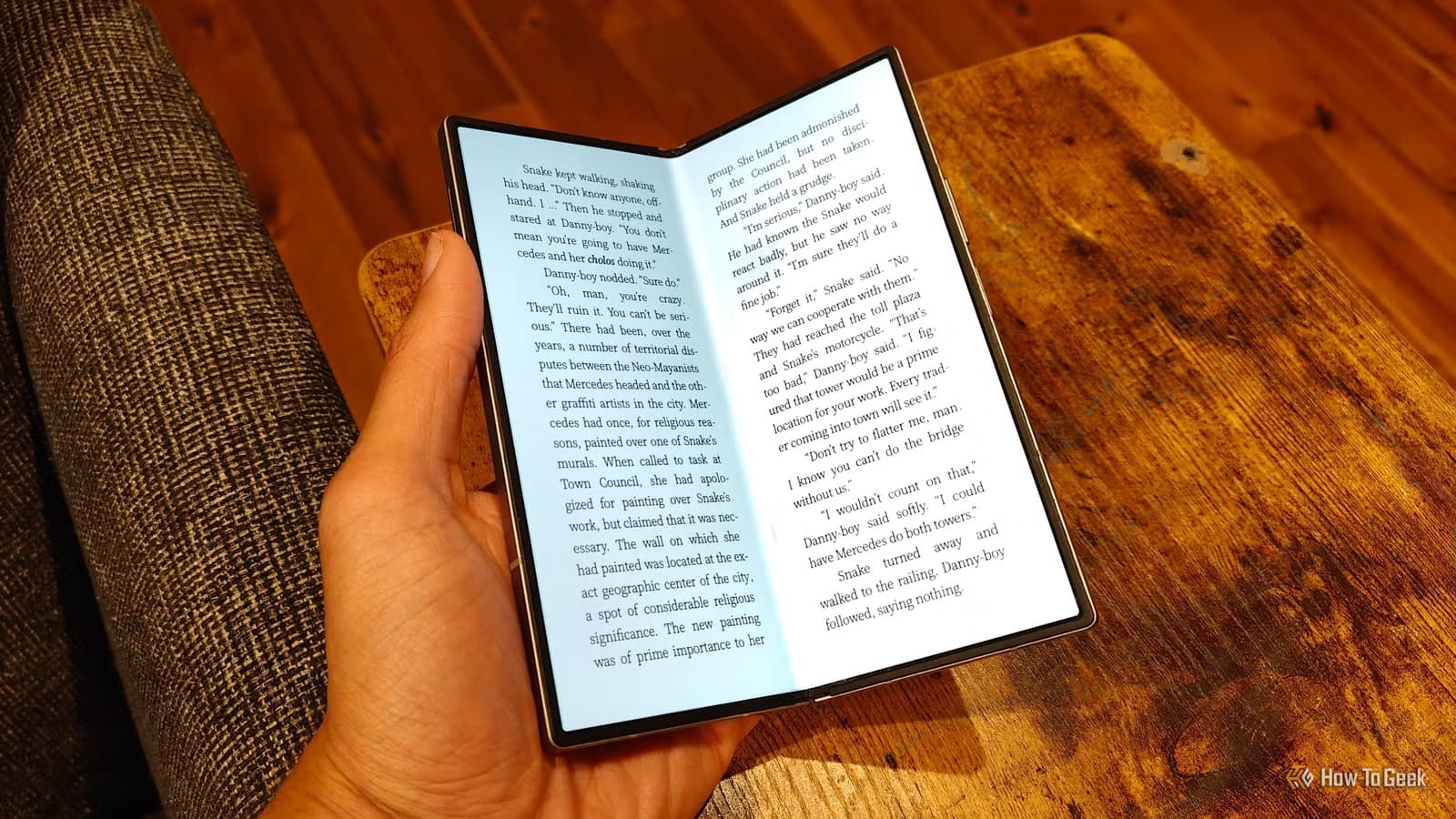
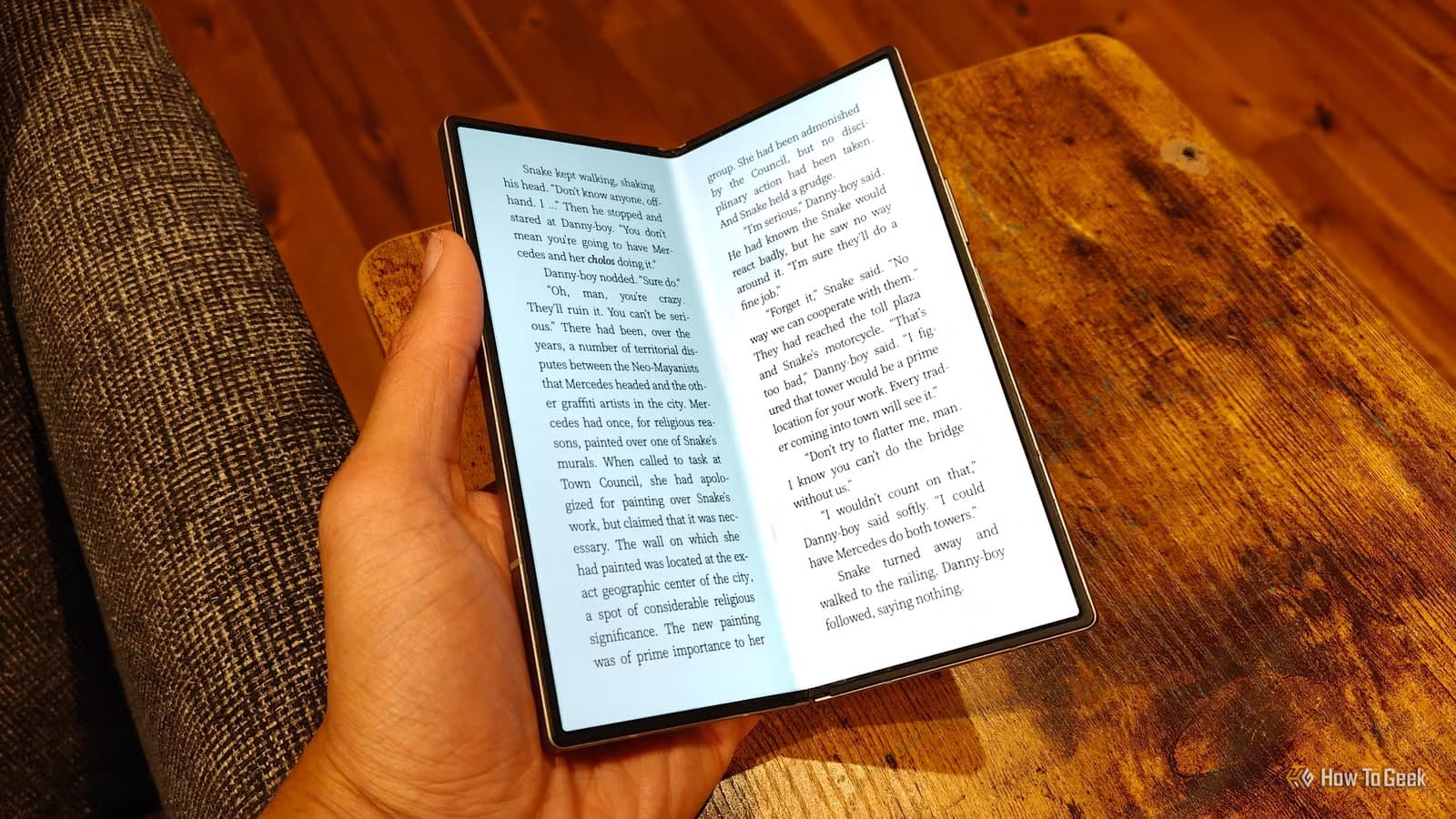
Samsung popularized book-style foldable phones. The name itself hints at the obvious use case: reading. A device that opens like a book should excel at displaying books.
The Galaxy Z Fold 7, Samsung's latest foldable, costs $2,000. It features a bright 8-inch display when unfolded and 12GB of RAM. The device is noticeably thinner than previous generations. But it's still a smartphone first, built for multitasking, games, and productivity. Not specifically for reading.
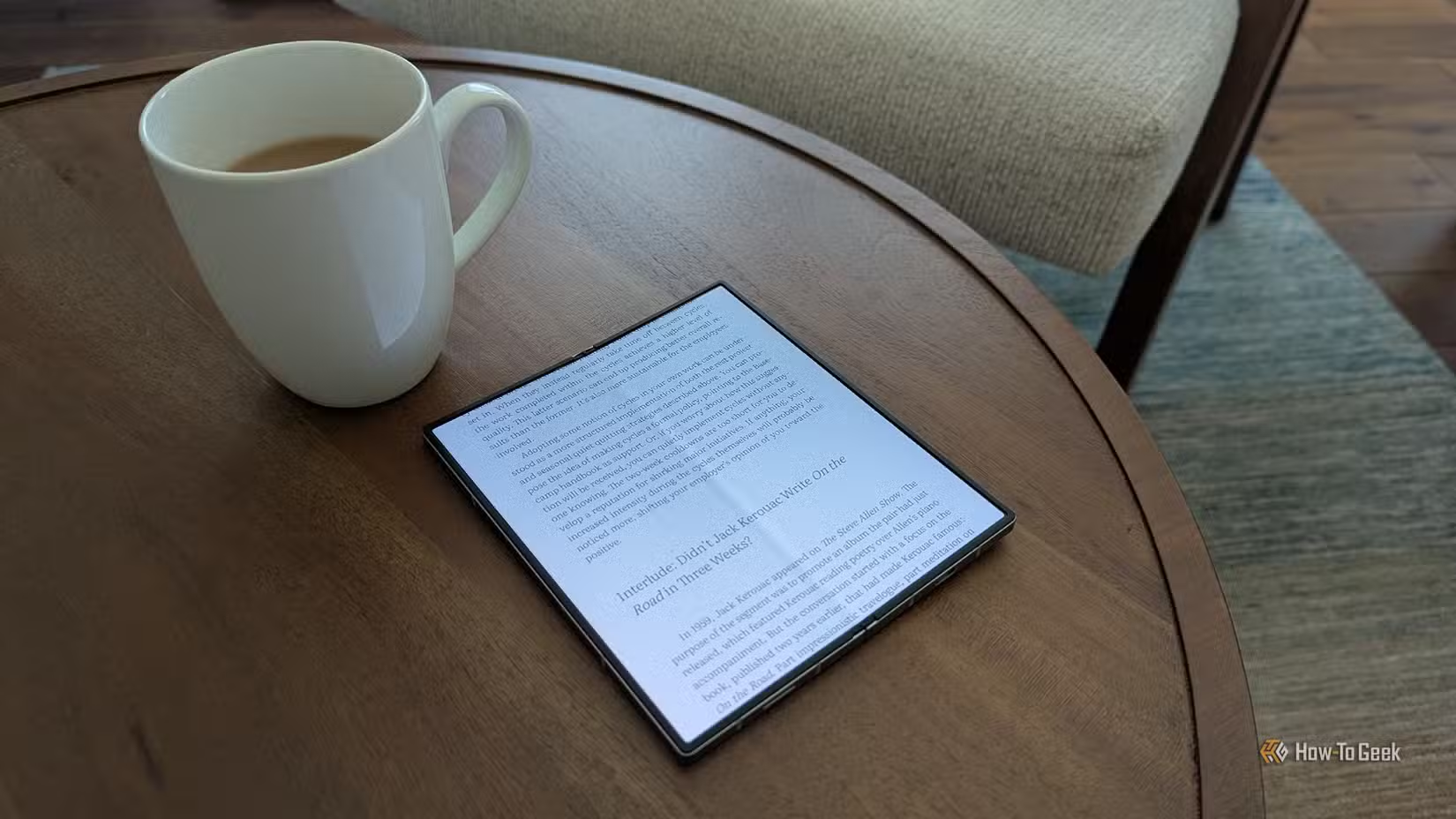
A dedicated foldable e-reader could optimize for what readers actually need: a large, easy-on-the-eyes screen, week-long battery life, and a form factor that disappears in a bag. E-paper displays deliver all three better than OLED.
Samsung Needs a Reason to Get Excited Again
Here's the business case. Samsung's recent product launches have felt incremental. The Galaxy Z Fold 7 is thinner than the Z Fold 6. Most Galaxy devices look and feel kind of the same. Enthusiasm has waned.
Samsung is a display company at its core. Apple buys iPhone screens from Samsung because few manufacturers can match their quality. A foldable e-paper consumer device would let Samsung flex that display expertise in a new market while differentiating from competitors making yet another smartphone.
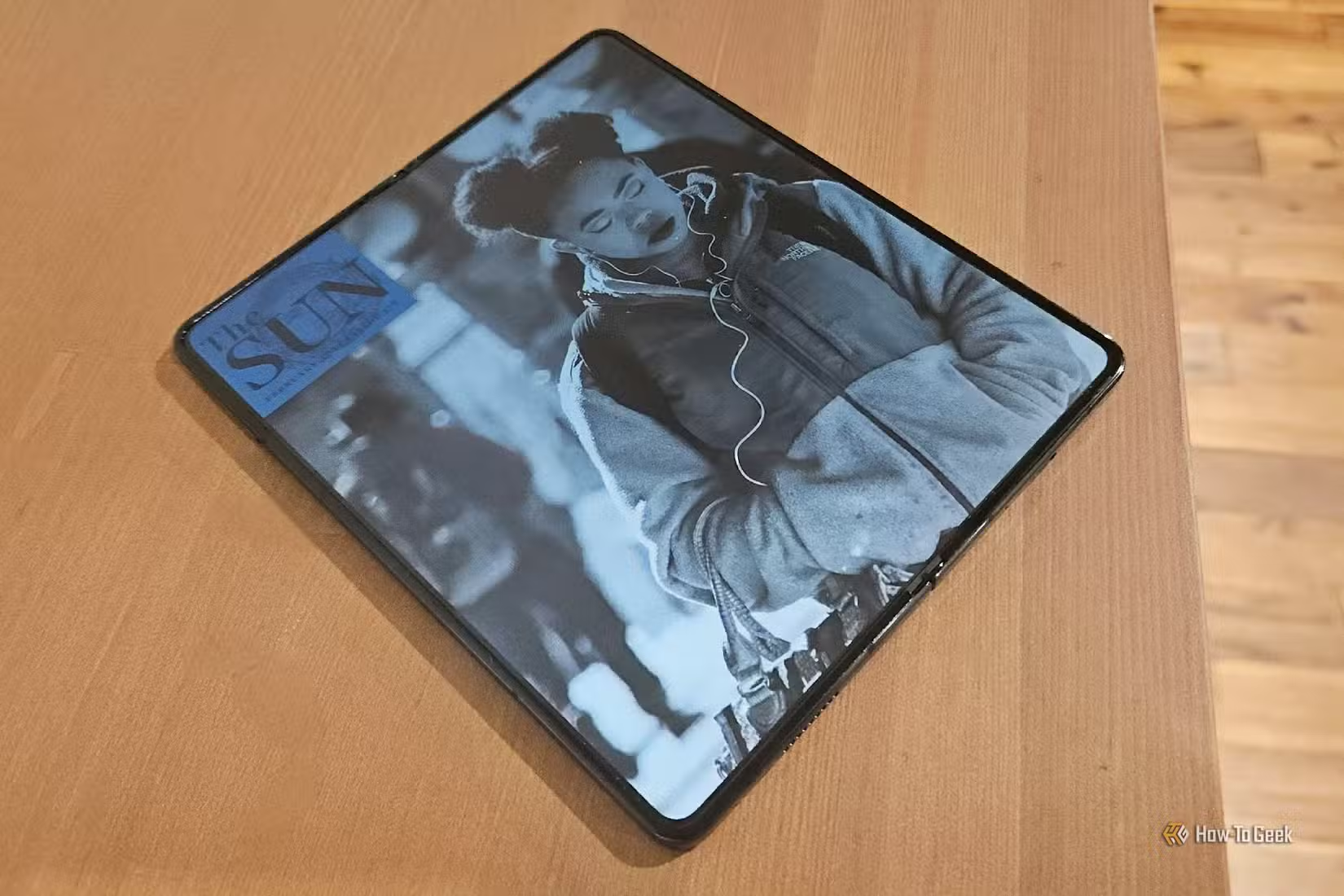
Samsung wouldn't be first to market. The Readmoo mooInk V, a foldable e-reader, was shown off about a year ago. But Samsung has the brand recognition, distribution, and manufacturing scale to make foldable e-readers mainstream. Existing e-reader manufacturers would have to respond.
What This Would Mean for Kindle
Amazon's Kindle line has dominated e-readers for over a decade. The devices are affordable, reliable, and deeply integrated with Amazon's ebook store. But Kindles haven't changed much. They're still single-screen slabs with e-paper displays.
A Samsung foldable e-reader would offer something Kindle can't: a large reading surface that folds small enough for a pocket. It would combine the portability of a Kindle Paperwhite with the screen real estate of a Kindle Scribe. That's a compelling pitch for readers who want both.
Logicity's Take
Samsung already has the display tech and foldable engineering. The missing piece is the will to pursue a niche market. But 'niche' is relative. Kindle sells millions of units yearly. If Samsung wants to generate genuine excitement again, building something that makes readers rethink e-readers would do it.
More ideas for interesting hardware projects
Frequently Asked Questions
Does Samsung make e-paper displays?
Yes. Samsung sells e-paper displays through its Color E-Paper EMDX series, which uses Spectra 6 E-Ink technology. These are currently sold as commercial digital signage in 13-inch and 32-inch sizes.
Can you read ebooks on a Samsung Galaxy Z Fold?
Yes. The Galaxy Z Fold series can display ebook apps on its 8-inch inner screen. However, it uses an OLED display rather than e-paper, which means shorter battery life and potential eye strain during long reading sessions.
Are there any foldable e-readers on the market?
The Readmoo mooInk V is a foldable e-reader that was demonstrated about a year ago. However, no major manufacturer has released a mainstream foldable e-reader yet.
How much does the Samsung Galaxy Z Fold 7 cost?
The Samsung Galaxy Z Fold 7 costs $2,000. It features 12GB of RAM and an 8-inch main display.
Need Help Implementing This?
Evaluating emerging display technologies or hardware strategies for your business? Logicity covers the enterprise implications of consumer tech trends. Contact us at hello@logicity.in to discuss how we can help you stay ahead.
Source: How-To Geek
Huma Shazia
Senior AI & Tech Writer
Produced with AI assistance and reviewed by the Logicity editorial team. Learn more in our Editorial Policy.