Key Takeaways
- Consolidating AI subscriptions requires honest assessment of your actual use cases
- Claude excels at context retention and coding tasks, making it ideal for technical workflows
- Free tiers from ChatGPT and Gemini can still handle occasional tasks like image generation
The $80-per-month AI problem
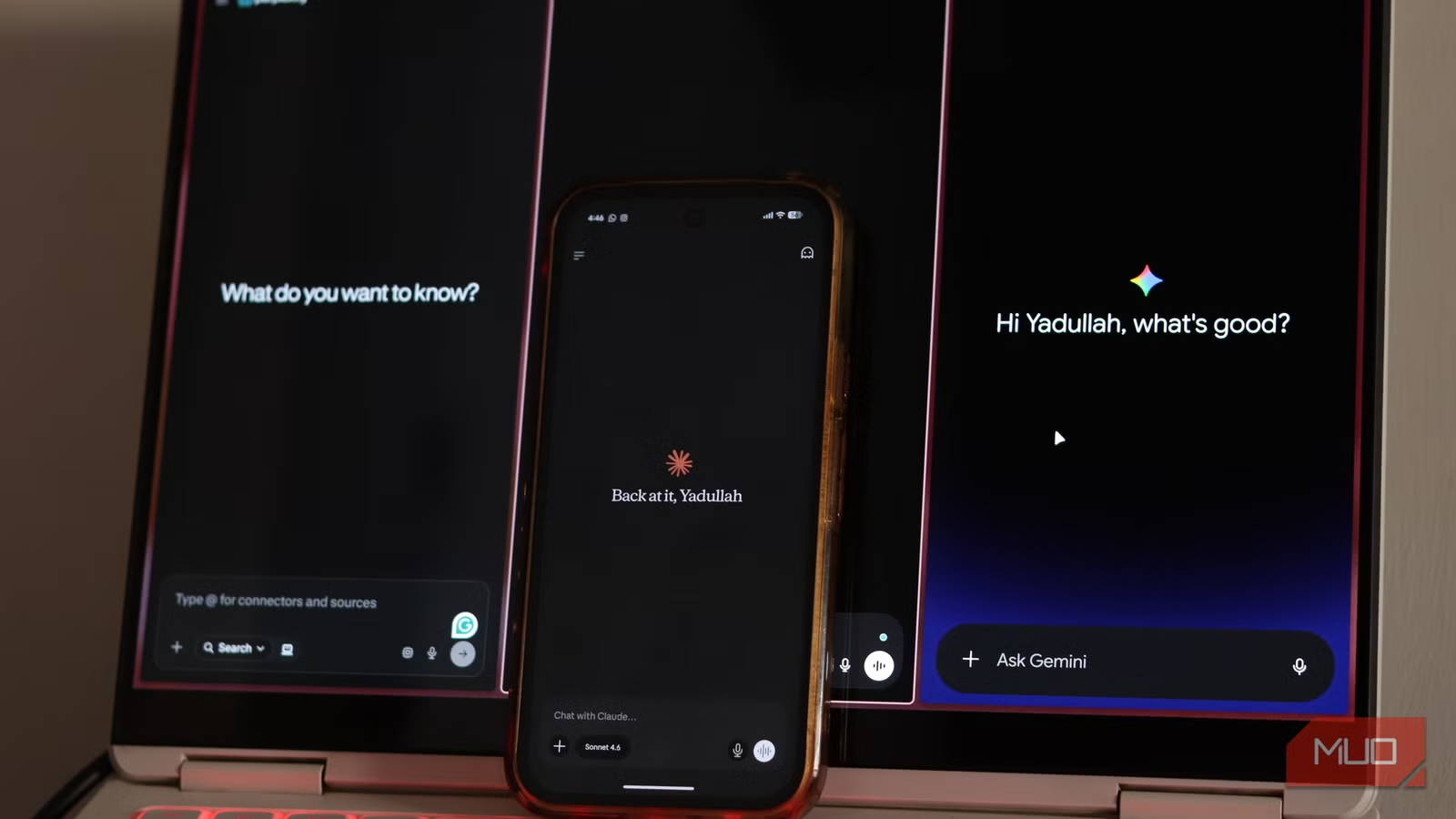
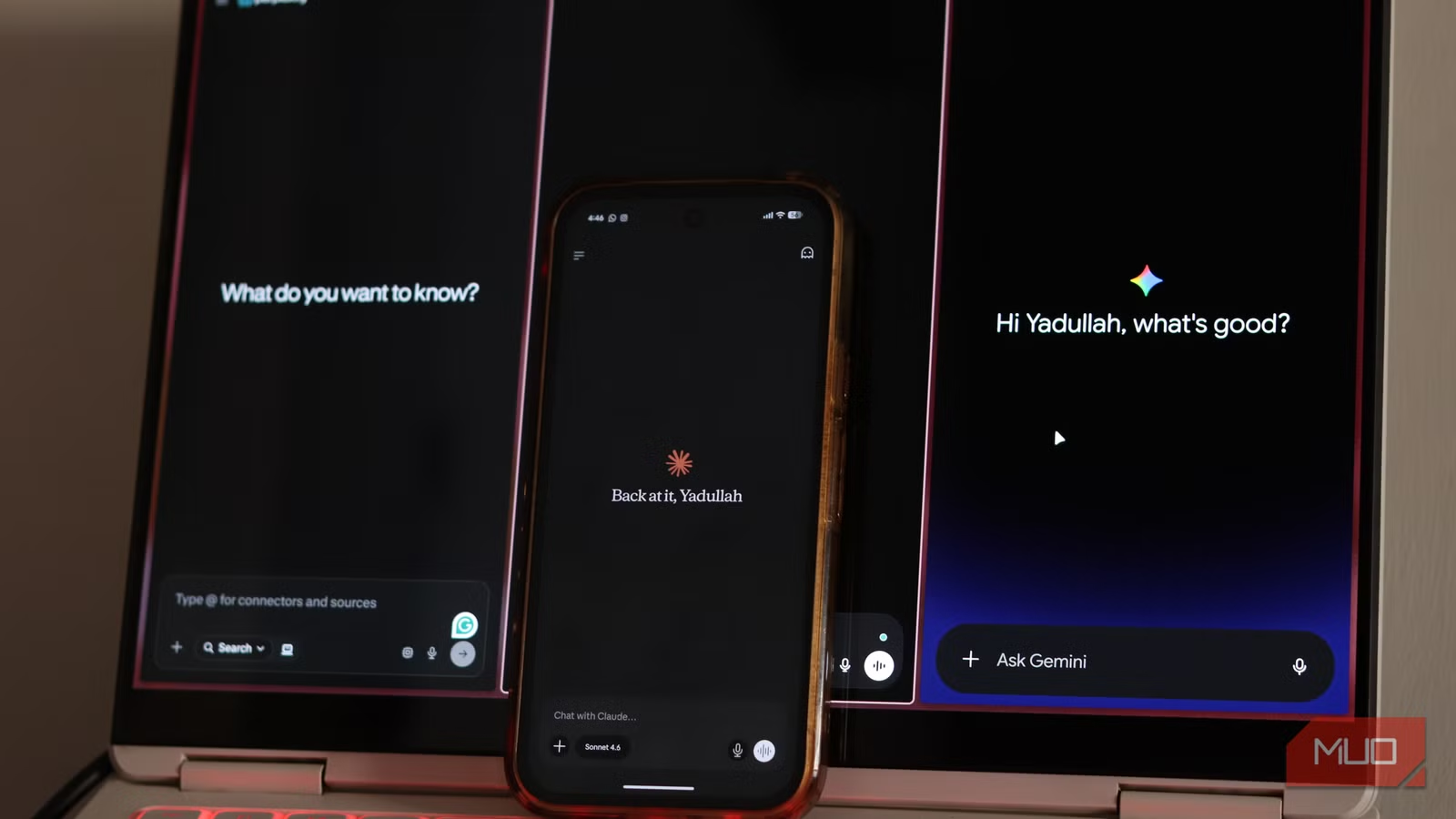
Yadullah Abidi, a staff writer at MakeUseOf, faced a familiar problem. He was paying for ChatGPT, Gemini, Perplexity, and Claude. Each subscription cost roughly $20 per month. Each tool filled a gap. None could be easily dropped.
Then he did drop them. All except Claude.
His decision wasn't based on benchmarks or feature comparisons. It came from asking a simpler question: what do I actually use AI for?
Mapping real workflows, not theoretical ones
Abidi's work involves writing code, working with hardware, designing 3D models, writing technical articles, and analyzing data. That's a specific set of demands. It requires an AI that can hold context over long conversations, reason through nuanced technical problems, and generate code that doesn't need hours of debugging.
The key insight isn't that Claude is objectively better. It's that Claude is better for this particular workflow.
"Being honest about what you really use your AI tools for will save you money," Abidi writes. He notes that canceling a subscription doesn't mean abandoning a tool entirely. ChatGPT and Gemini still have free tiers. They work fine for occasional small tasks.
The image generation exemption
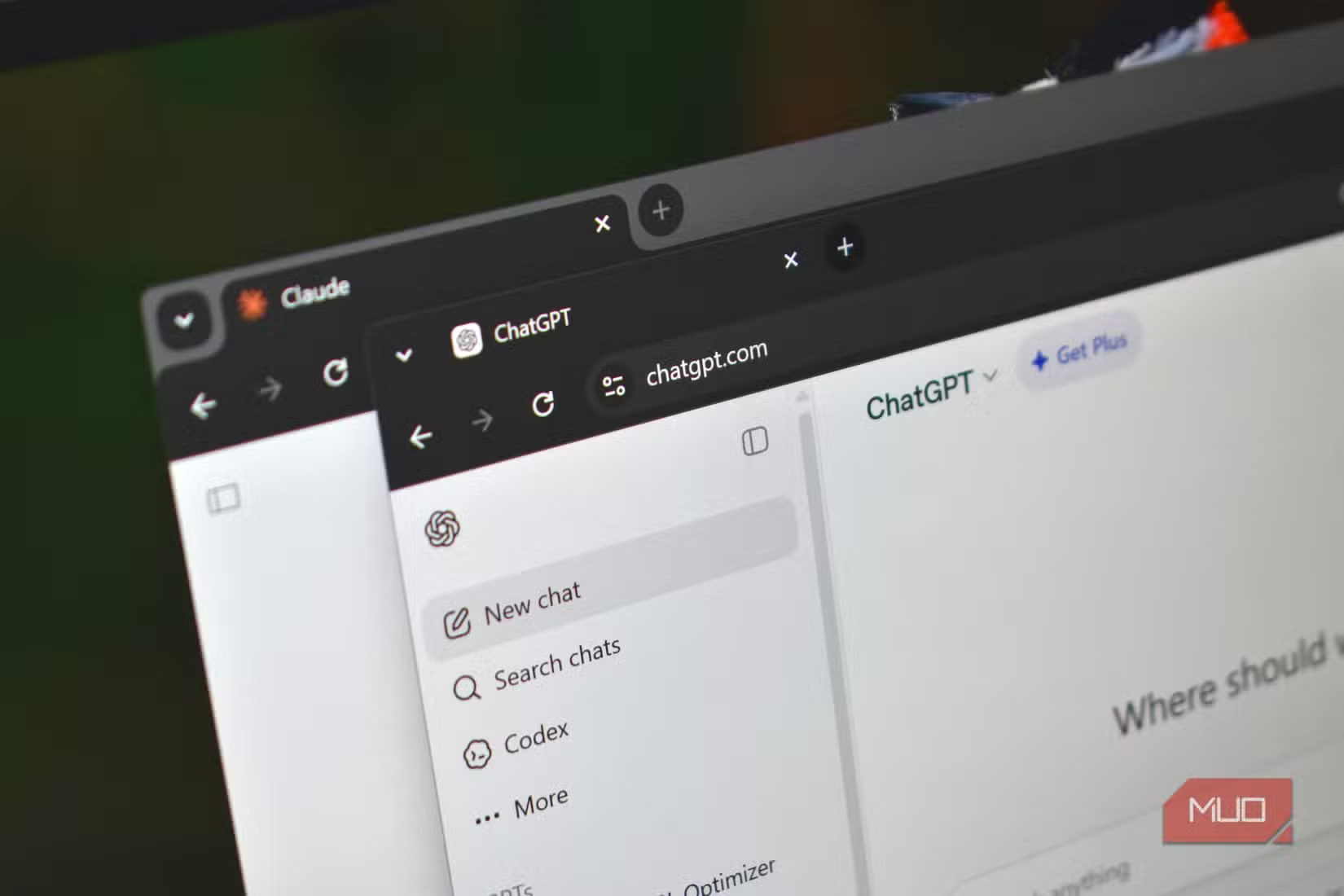
Abidi admits he doesn't care about AI image generation. This is convenient because Claude doesn't generate images in the first place. For the rare occasions when he needs an image, ChatGPT's free tier or Gemini Flash handles it.
This points to a broader principle: premium features you don't use aren't worth paying for. If you're paying $20 per month for DALL-E 3 access but generate one image every six weeks, that's expensive clip art.
Why Claude works for coders
The coding community has been vocal about Claude's advantages. Discussions on r/LocalLLaMA and Hacker News frequently cite Claude's "less robotic" and "more precise" coding outputs. Developers describe relief at working with a model that "doesn't fight them" when asked to write full, functional code files rather than partial snippets.
Claude's Artifacts feature has also changed workflows. It provides immediate, interactive rendering of code and documents directly in the chat interface. Instead of copying code to a separate editor to see what it does, you can preview it in place.
The broader trend: subscription fatigue meets consolidation
Abidi isn't alone. The AI subscription wars have shifted from "who has the best model" to "who has the best workflow." Users are consolidating their paid subscriptions, moving away from general-purpose assistants toward specialized tools that integrate directly into their development and design environments.
Anthropic's reported annualized revenue run rate hit $30 billion as of April 2026. The company claims 80x year-over-year revenue growth for Q1 2026. Whether those numbers hold up to scrutiny, they reflect real momentum.
The case against one-tool thinking
This isn't a universal recommendation to cancel everything for Claude. Abidi's workflow is specific. He codes, writes technical content, and doesn't need image generation. Someone who primarily uses AI for creative writing, marketing copy, or visual content might reach a completely different conclusion.
The real takeaway is the method, not the result. List what you actually use AI for. Track it for a week if you're not sure. Then ask which tool does those specific things best.
Deep dive into the Artifacts feature that makes Claude attractive for developers
Practical steps for subscription audits
- List every AI subscription you pay for and its monthly cost
- Track your actual usage for one week, noting which tool you reach for and why
- Identify which tasks could be handled by free tiers
- Pick the one paid tool that handles your most frequent, most demanding tasks
- Cancel the rest and revisit in three months
The last step matters. AI capabilities change fast. The right choice today might be wrong in six months. But paying for four subscriptions "just in case" is a $60 per month hedge against a problem that may never arrive.
Example of Claude's reasoning capabilities on complex problems

Logicity's Take
Frequently Asked Questions
Can Claude generate images like ChatGPT or Gemini?
No. Claude does not have image generation capabilities. Users who need AI-generated images can use ChatGPT's free tier or Gemini Flash for occasional tasks.
How much does a Claude subscription cost?
Claude Pro costs $20 per month, the same as ChatGPT Plus and comparable to other premium AI subscriptions.
What are Claude Artifacts?
Artifacts is Claude's feature that provides immediate, interactive rendering of code, documents, and other outputs directly in the chat interface, eliminating the need to copy content to external editors.
Is Claude better than ChatGPT for coding?
Many developers report that Claude produces more complete, functional code files and "fights" less when asked for specific implementations. However, the best choice depends on your specific coding workflow and language preferences.
Should I cancel all my AI subscriptions except one?
Only if one tool genuinely handles your most frequent and demanding tasks. Track your actual usage before deciding. Free tiers can cover occasional needs.
Need Help Implementing This?
Source: MakeUseOf
Huma Shazia
Senior AI & Tech Writer
Produced with AI assistance and reviewed by the Logicity editorial team. Learn more in our Editorial Policy.