Key Takeaways
- Traditional coding courses teach syntax but fail to develop the ability to build independently
- Claude Code bridges the context gap by handling environment setup, terminal commands, and testing
- The shift from 'autocomplete' to 'agentic engineering' lets learners focus on architecture over memorization
The Course Completion Trap
Mahnoor Faisal has been learning to code since she was 8 years old. She's completed courses on Udemy, Coursera, freeCodeCamp, and Codecademy. She's now majoring in computer science and holds the highest grade in her programming courses. And she still can't build anything on her own.
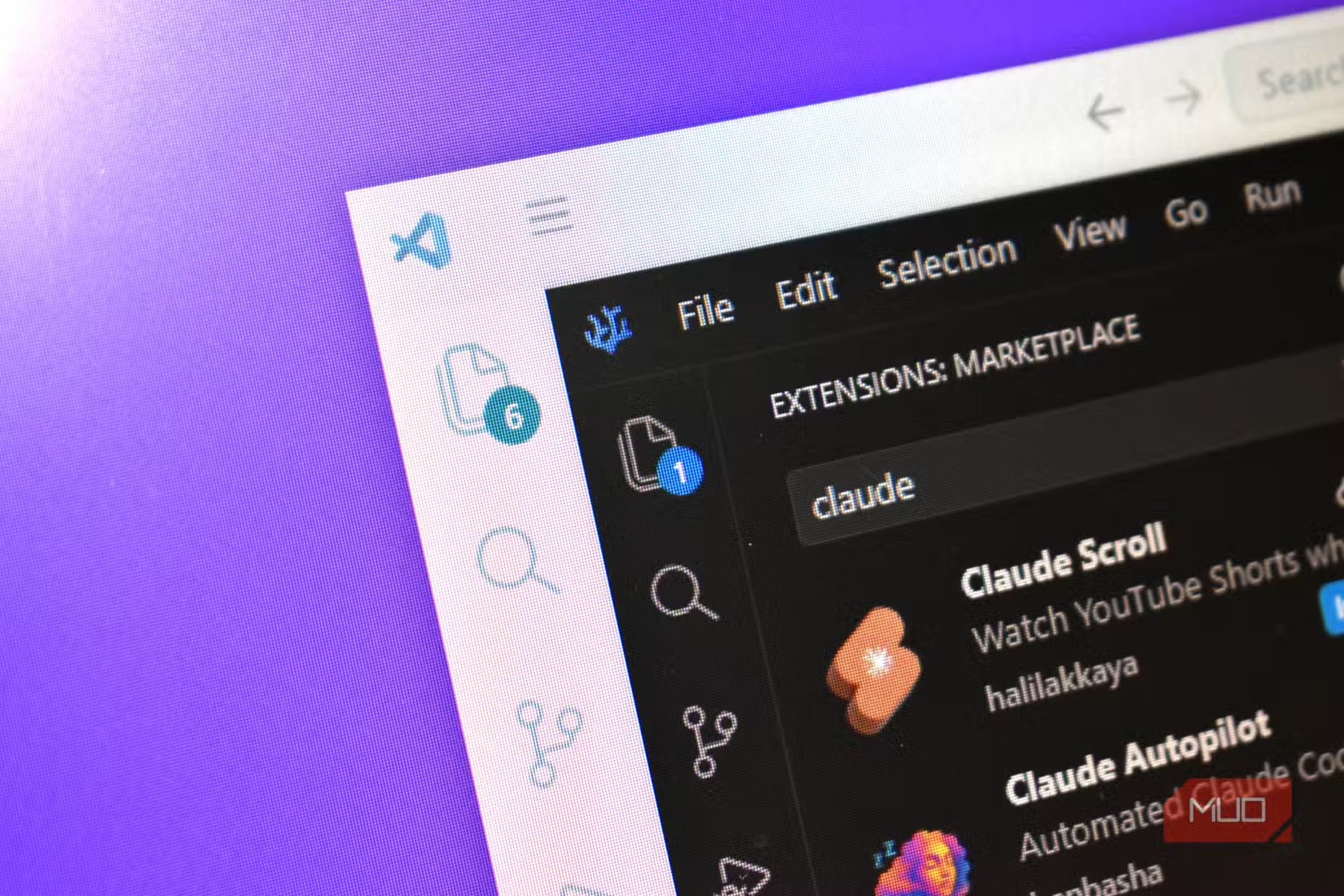
Writing for MakeUseOf, Faisal describes a pattern that will sound familiar to anyone who's tried to learn programming: follow a tutorial, finish a project, feel accomplished, then stare at a blank VS Code window when asked to create something original. The knowledge evaporates between semesters. The skills don't transfer.
"I could follow along, I could finish the project, but I couldn't build anything on my own," she writes. "When the semester ends and there's no assignment to follow, I'm right back to staring at a blank VS Code window."
After months of daily use with Claude Code, she finally understood what had been missing.
The Context Gap Nobody Talks About
Traditional coding education focuses on syntax and logic. Write a loop. Understand recursion. Build the exact project shown in the video. But real programming involves a sprawling set of decisions that tutorials skip entirely: environment setup, dependency management, terminal commands, debugging cryptic errors, and the architectural choices that determine whether your code will work in production.
This is what Faisal calls the context gap. Courses teach you what to type. They don't teach you how to think about building software from scratch.
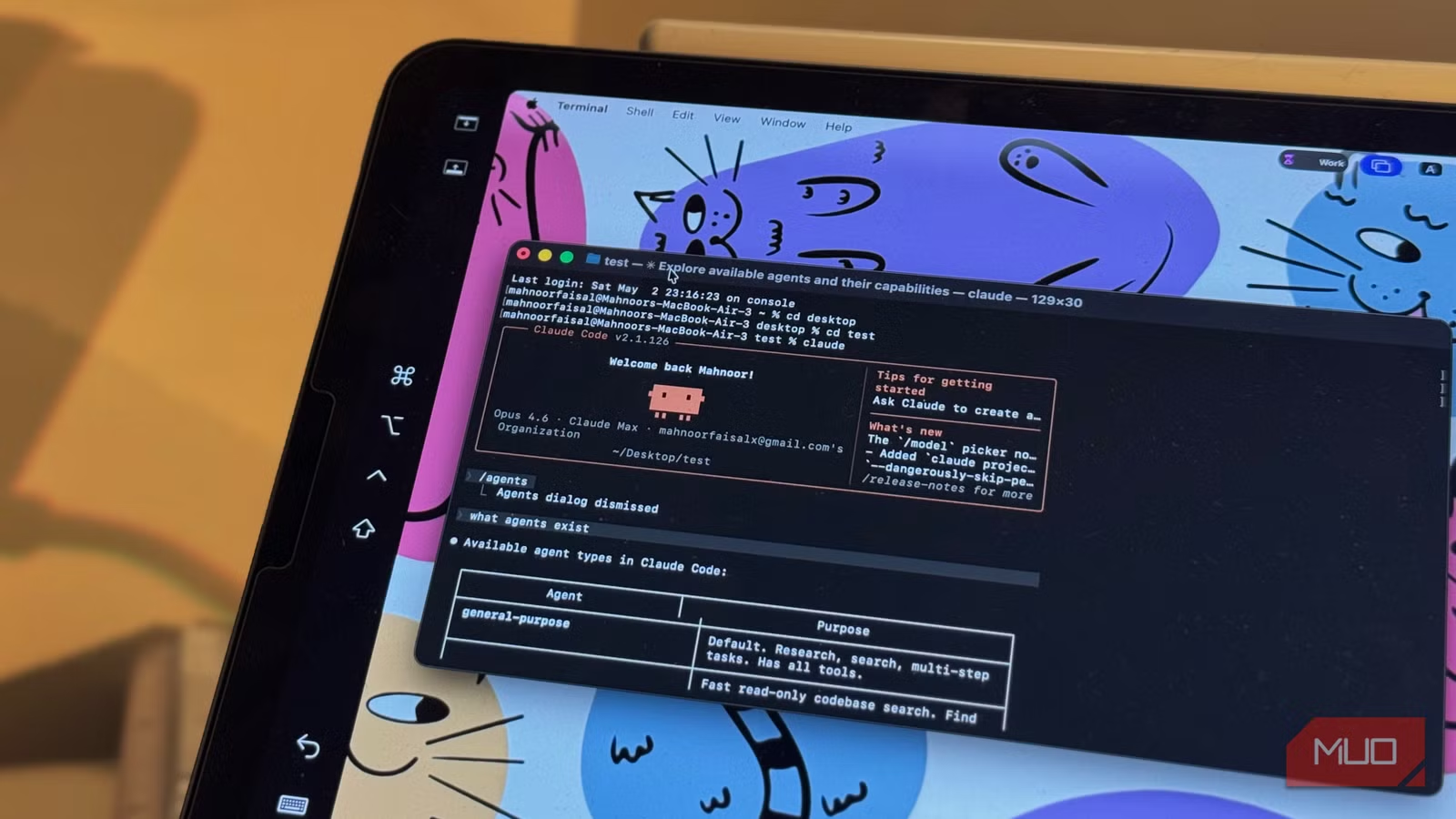
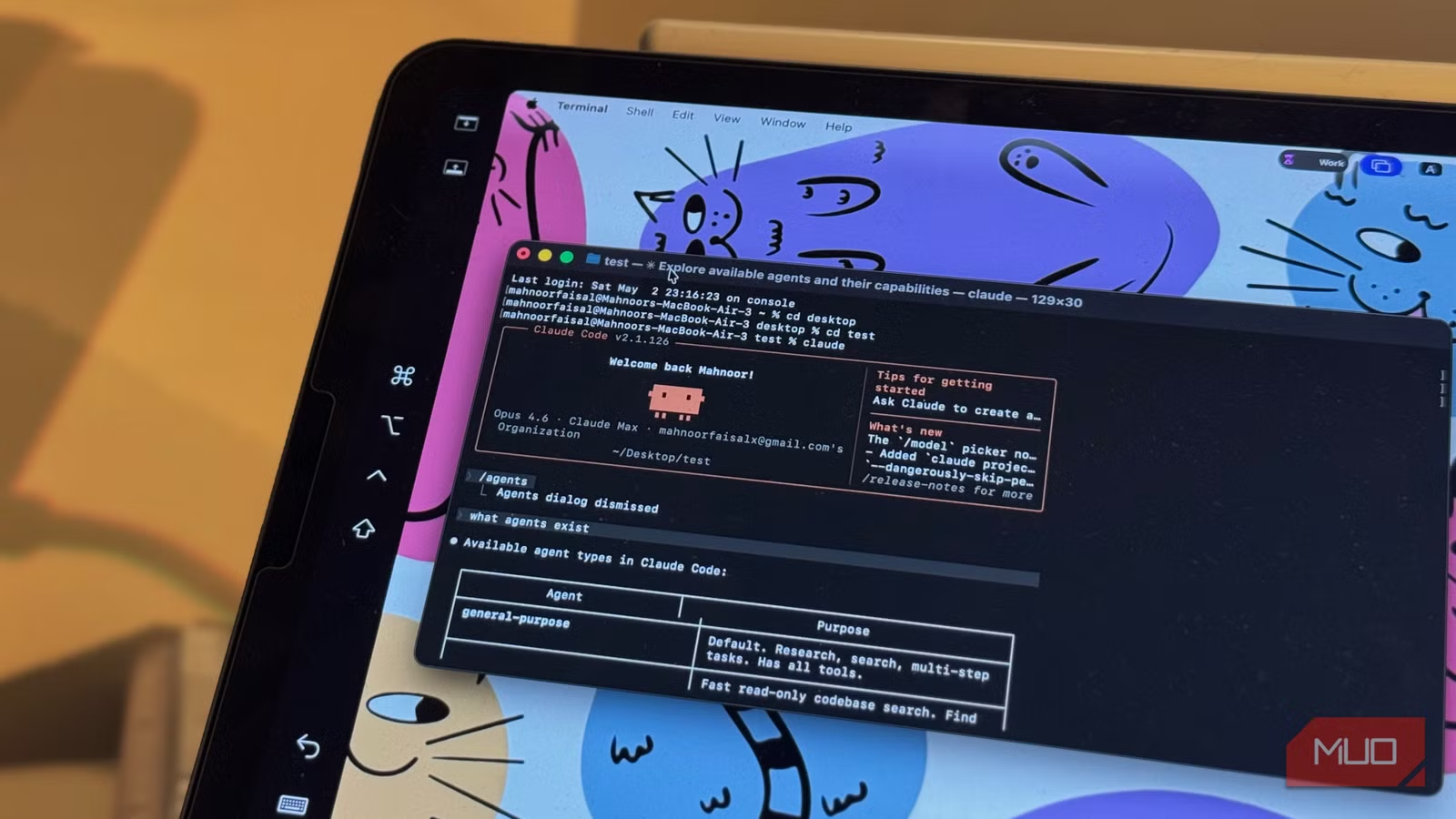
Claude Code operates differently. Instead of autocompleting lines of code, it handles the 'boring' infrastructure work that derails beginners: configuring environments, running terminal commands, writing tests, and fixing errors. This frees learners to focus on the higher-level question that matters: what am I trying to build?
From Autocomplete to Agentic Engineering
The shift Claude Code represents goes beyond smarter autocomplete. It's a move toward what the industry calls agentic engineering, where AI handles execution while humans focus on specification and design.
“The programmer still needs to specify what the overall app is, what the design decisions are, and how to have common sense on whether a design is secure.”
— Dario Amodei, CEO of Anthropic
This reframes the value of a developer. Writing syntactically correct code becomes less important. Understanding what to build, how to architect it, and whether it's secure becomes more important.
“Engineering is changing and great engineers are more important than ever. Someone has to prompt the Claudes, talk to customers, and decide what to build next.”
— Boris Cherny, Head of Claude Code at Anthropic
Mike Krieger, Head of Anthropic Labs, puts it more bluntly: "For most of our products, it is effectively 100% just Claude writing the code, with humans acting as reviewers and architects."
The Rise of Vibe Coding
This new paradigm has birthed a practice called "vibe coding." The term captures something real: instead of memorizing syntax, developers describe what they want and iterate on the results. The focus moves from how to write code to what the code should do.
For beginners, this inverts the learning curve. Traditional education front-loads the hardest part, syntax and tooling, before students understand why they're learning it. Vibe coding lets learners start with intent and work backward to implementation.
The numbers suggest this approach is scaling fast. Claude Code reached 29 million daily CLI installs in March 2026. Anthropic holds an estimated 54% share of the enterprise code generation market. The tool hit a $2.5 billion annualized revenue run-rate by February 2026.
What This Means for Learning
Faisal's experience suggests a different model for coding education. Instead of drilling syntax, learners could start by building real projects with AI assistance, then work backward to understand why the generated code works. The AI becomes a bridge, not a crutch.
This doesn't eliminate the need to understand programming. Amodei's point stands: someone needs to know whether a design is secure. Someone needs to specify what the app should do. Someone needs to review the code.
But it does suggest that the traditional sequence, learn syntax first, build later, might have it backward. Perhaps learning to code starts with building, and understanding follows.
A practical guide to using Claude as a personalized learning tool
Run Claude Code without a subscription using local alternatives
The Catch
There's an obvious risk here. If learners rely entirely on AI, they may never develop the foundational understanding needed to debug, architect, or secure their own systems. The context gap closes in one direction but could open in another.
Faisal's insight is valuable precisely because she has traditional training. She can recognize what Claude Code is doing because she's spent years studying the underlying concepts. Whether someone starting from zero could develop the same intuition remains an open question.
What's clear is that the old model wasn't working for a lot of people. Course completion rates and abandoned side projects tell that story. Tools like Claude Code offer a different path, one that starts with building and treats syntax as a detail rather than a prerequisite.

Logicity's Take
Frequently Asked Questions
What is Claude Code?
Claude Code is an AI-powered coding tool from Anthropic that operates as an agentic assistant, handling environment setup, terminal commands, testing, and code generation while developers focus on architecture and design decisions.
Why do traditional coding courses fail to teach independent building?
Traditional courses focus on syntax and guided projects. They rarely teach the context skills, like environment setup, debugging, and architectural decisions, that developers need to build from scratch.
What is vibe coding?
Vibe coding is a practice where developers describe what they want in natural language and iterate on AI-generated results, focusing on intent rather than syntax memorization.
Does using Claude Code mean you don't need to learn programming?
No. Developers still need to understand security, architecture, and design decisions. AI handles execution, but humans must specify what to build and review whether it's correct.
How popular is Claude Code in 2026?
Claude Code reached 29 million daily CLI installs in March 2026 and generates an estimated 4% of all global public GitHub commits. Anthropic holds 54% of the enterprise code generation market.
Need Help Implementing This?
Source: MakeUseOf
Huma Shazia
Senior AI & Tech Writer
Produced with AI assistance and reviewed by the Logicity editorial team. Learn more in our Editorial Policy.