Key Takeaways
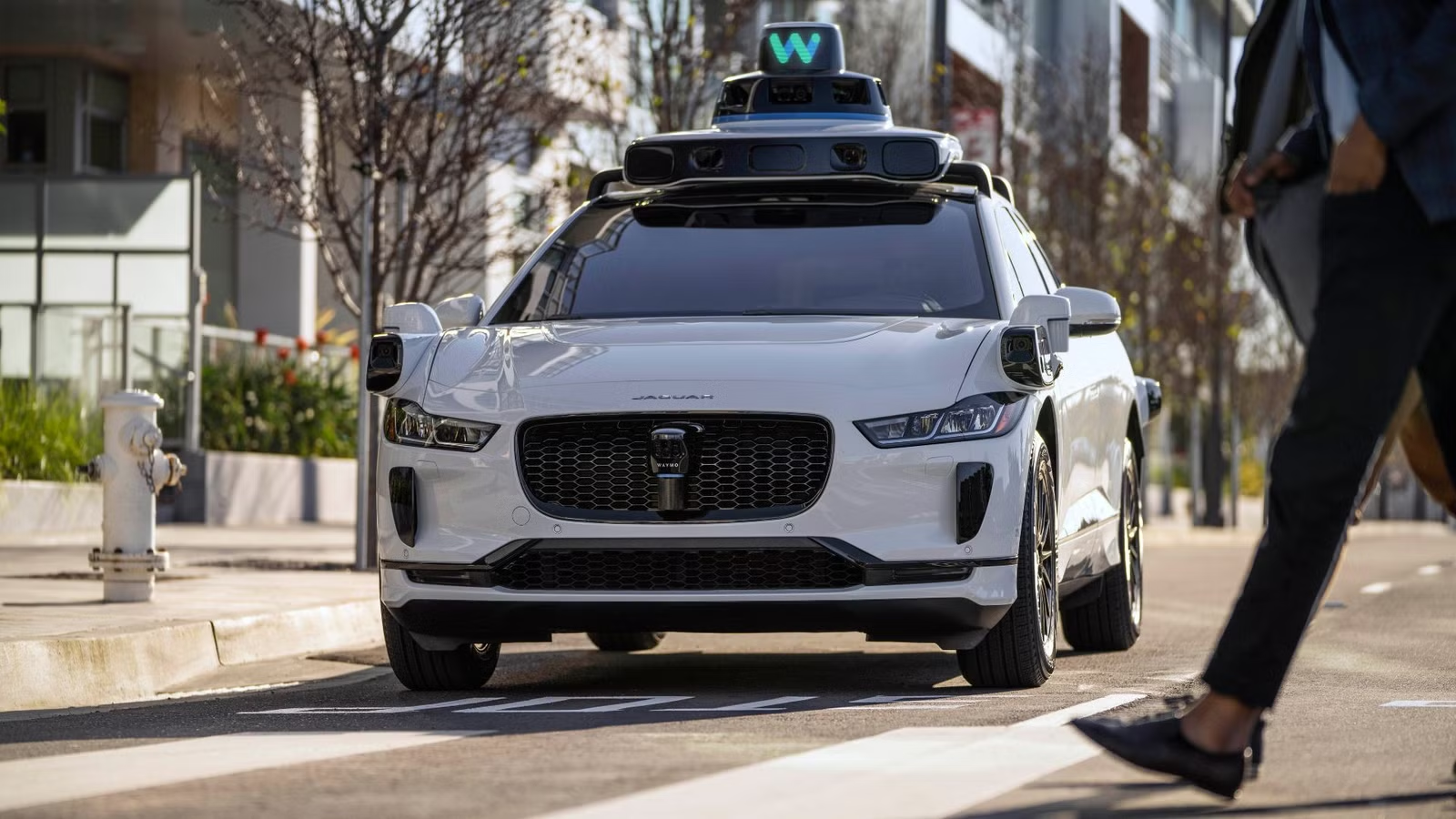
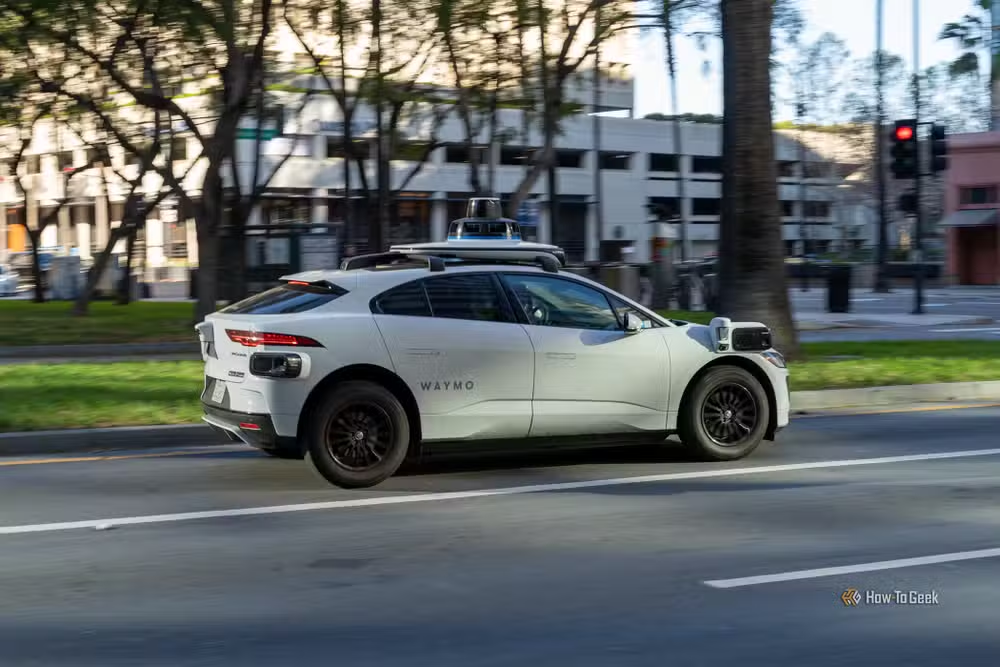
- Waymo recalled all 3,871 robotaxis after 13 incidents where cars drove into active freeway construction zones
- Six incidents occurred in Phoenix in April, seven in San Francisco in May, with at least one caught on video
- The cars remain on roads while Waymo develops a software fix; this marks the company's sixth recall
Waymo has recalled all 3,871 of its robotaxis after at least 13 vehicles drove into active freeway construction zones over the past several weeks. The Alphabet-owned company filed the voluntary recall with the National Highway Traffic Safety Administration and says a software fix is in development. The cars will stay on the road while that work continues.
Six of the incidents happened in Phoenix during April. Seven more occurred in San Francisco in May. Writer Elliot Slade recorded one of those San Francisco events on May 19th, when his Waymo ride appeared to ignore construction zone markings and even police presence.
Waymo attributed at least some of the incidents to cars focusing on avoiding "other freeway hazards" rather than recognizing the construction zones. The company characterized the problem as an "area of improvement" and emphasized that the recall was voluntary. No injuries were reported.
What exactly went wrong?
Freeway construction zones are notoriously difficult for autonomous vehicles. Unlike standard road conditions, these zones feature non-standard signage, shifting lane markings, human flaggers making real-time decisions, and physical barriers that change daily. The combination creates what AV engineers call an "edge case": a scenario that falls outside the patterns the system was trained to recognize.
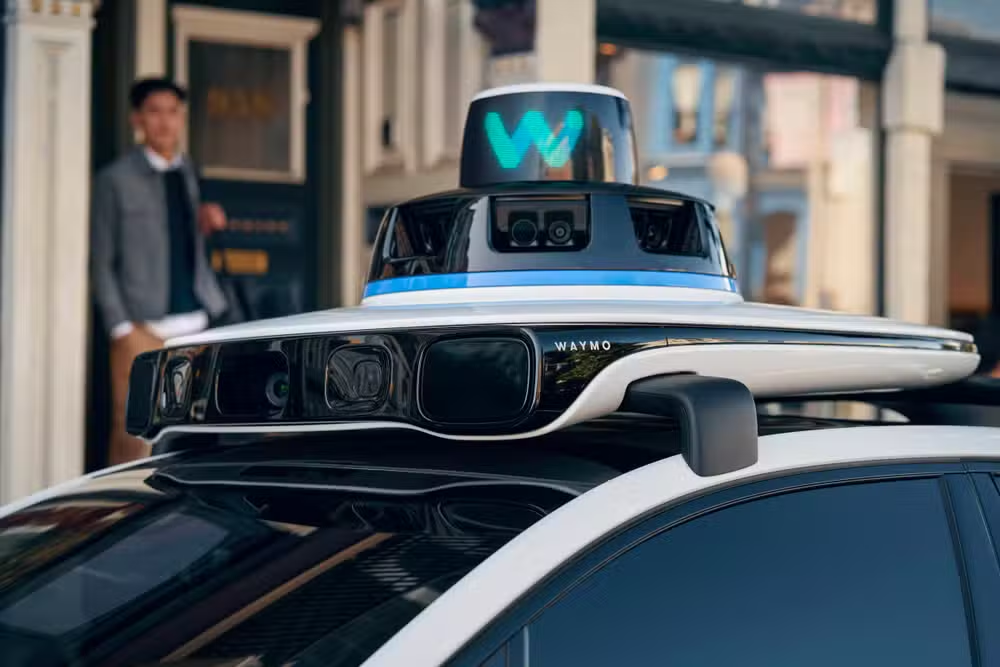
Waymo's filing with NHTSA doesn't explain why the vehicles failed to recognize these zones. The company said only that a solution is "currently under development." That vagueness is typical for these filings, but it leaves open questions about whether this was a sensor issue, a software logic problem, or something else entirely.
This is Waymo's sixth recall
The construction zone recall follows a pattern. In May, Waymo recalled its cars after they repeatedly drove into flooded streets. Earlier recalls addressed collisions with gates, phone poles, and tow trucks. Another fix targeted dangerous behavior around school buses.
Unlike traditional automotive recalls that require physical repairs, Waymo's recalls are software updates pushed remotely. The company doesn't need to bring vehicles into service centers. This makes the process faster but also raises a question: why didn't testing catch these issues before they reached customers?
Are Waymo robotaxis still safe?
Waymo points to its overall safety record. The company claims its driverless cars are 13 times less likely to be involved in collisions with serious injuries compared to human-driven vehicles. The cars are generally cautious, sometimes to a fault. They'll stop entirely if they don't know how to react to a situation.
But public perception doesn't work on averages. A Waymo car in Santa Monica hit a child near a school, causing minor injuries and triggering an NHTSA investigation. The broader robotaxi industry carries baggage too: an Uber autonomous vehicle killed a pedestrian in 2018, and a GM Cruise car struck and dragged a person in 2023. Cruise shut down its robotaxi operations entirely.
Waymo now handles over 700,000 paid rides per week across Phoenix, San Francisco, Los Angeles, and Austin. At that scale, even rare failures add up. Thirteen incidents out of millions of rides is statistically small. But those thirteen incidents involved vehicles entering active work zones where human workers were present.
Waymo's longer-term fix: a virtual human driver
Beyond the immediate recall, Waymo is changing how it develops its self-driving platform. The company recently unveiled a "virtual human driver" system designed to teach its cars to anticipate and react to situations the way a skilled human would. The idea is that human-like responses could help vehicles handle edge cases where standard robotaxi logic fails.
Whether that approach would have prevented these construction zone incidents is unclear. Waymo hasn't said when the virtual driver system will be deployed or how it will integrate with current safety protocols.
Frequently Asked Questions
Is my Waymo ride still safe to take?
Waymo says its cars remain on the road during the recall. The company has halted freeway service in areas where incidents occurred while it develops a fix. If you're in Phoenix or San Francisco, your ride may be rerouted to avoid freeways.
How many Waymo recalls have there been?
This is Waymo's sixth recall. Previous recalls addressed issues with flooded streets, gates, phone poles, tow trucks, and school bus safety behavior.
Do I need to do anything for the recall?
No. Waymo's recalls are software updates delivered remotely. You don't need to take any action.
Were there any injuries in these construction zone incidents?
Waymo and NHTSA have not reported any injuries from the 13 construction zone incidents that prompted this recall.
Logicity's Take
The pattern here is more interesting than the individual incident. Waymo keeps finding edge cases in the real world that didn't surface in testing. Flooded streets in one month, construction zones the next. Each recall fixes one problem, but the underlying question persists: can simulation and controlled testing ever anticipate the full chaos of public roads? Waymo's move toward a "virtual human driver" suggests the company thinks the answer is no, and that mimicking human intuition is the path forward. That's a significant shift in philosophy for a company that spent years arguing algorithms alone could outperform human drivers.
Another case where a company's software update strategy created friction with users over safety and control
Need Help Implementing This?
If you're building autonomous systems or edge-case detection pipelines, Logicity's consulting team works with mobility and robotics companies on safety architecture. Reach out at consulting@logicity.in.
Source: How-To Geek
Huma Shazia
Senior AI & Tech Writer
Produced with AI assistance and reviewed by the Logicity editorial team. Learn more in our Editorial Policy.