Key Takeaways
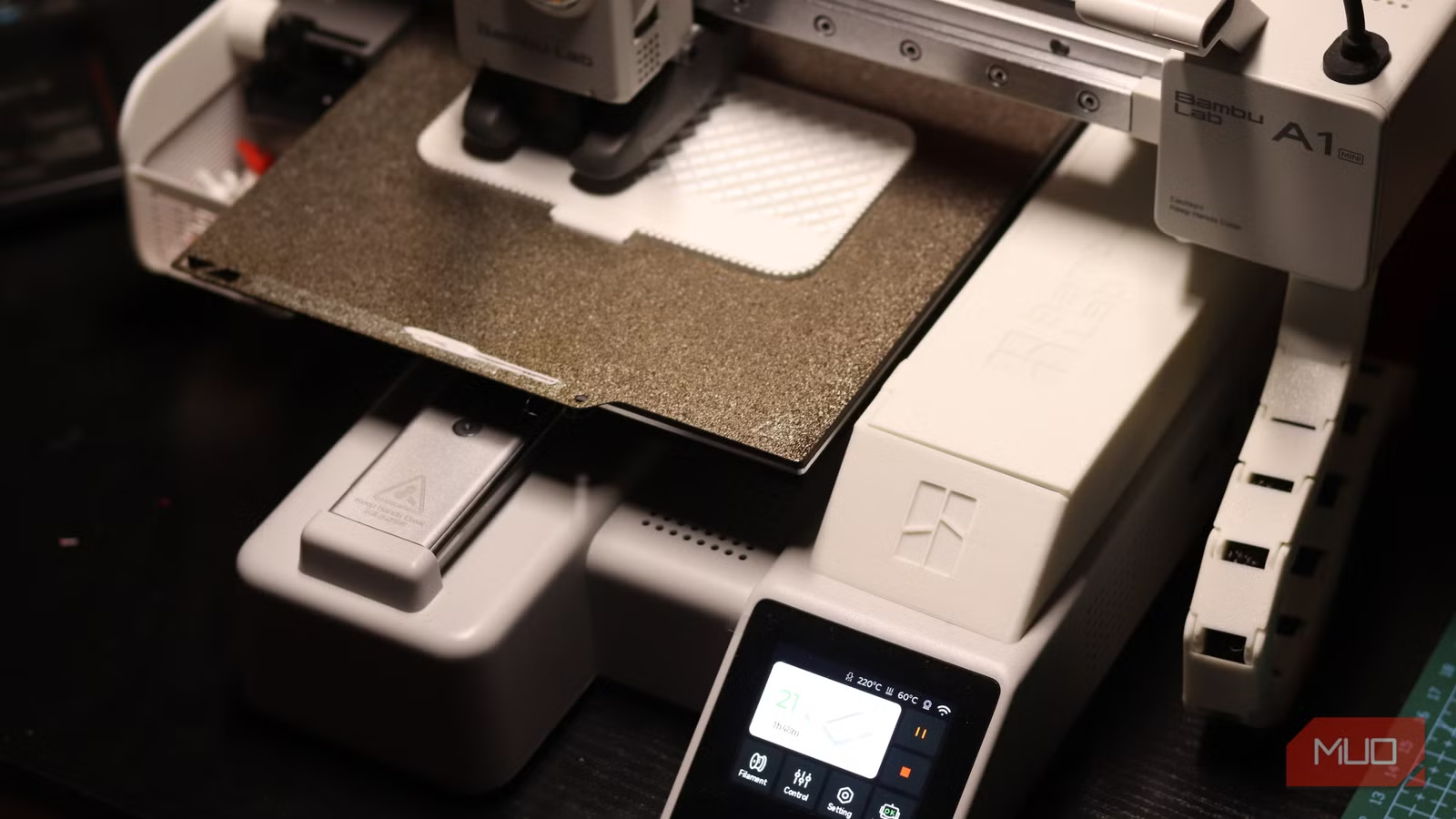
- Bambu Lab's January 2025 firmware update requires authorization for LAN printing, temperature control, and video monitoring
- OrcaSlicer developers advised users not to update firmware, recommending manual SD card transfers instead
- By June 2025, the lockdown extended to all Bambu printer lines, completing the ecosystem restriction
Bambu Lab pushed a firmware update in January 2025 that locks out third-party software from controlling its 3D printers. The change requires users to authenticate through Bambu's official software stack for basic functions like sending print jobs over LAN, adjusting temperatures, and accessing remote video feeds. OrcaSlicer, the community's favorite alternative to Bambu's own slicer, no longer works with updated machines.
The company calls it an "authorization and authentication protection mechanism." The maker community calls it the HP ink cartridge playbook. And they're not updating their firmware.
What did Bambu Lab actually change?
The X1 series received the update first. Critical operations now require going through Bambu's software. You can't send a print over your local network without authorization. You can't control the hotend temperature remotely. Firmware upgrades and video monitoring are gated behind the same system.
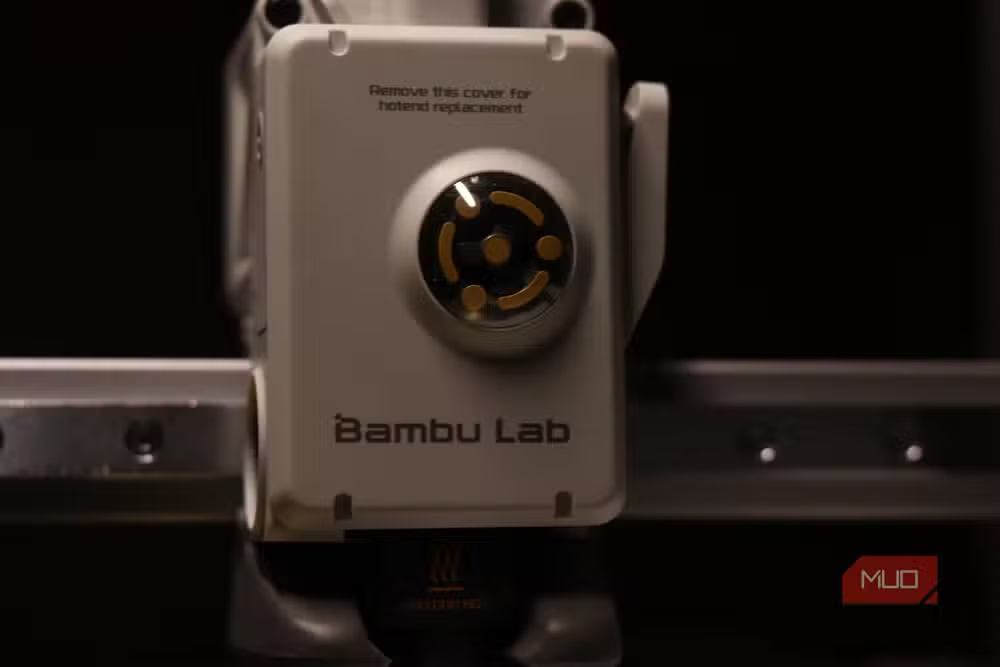
Bambu's solution is a new middleware application called Bambu Connect. It sits between third-party slicers and the printer, theoretically maintaining some compatibility while keeping Bambu in control of authentication. The OrcaSlicer team reviewed it. Their verdict: just use a microSD card instead.
"The integration wouldn't provide meaningful value for OrcaSlicer users," the team stated. They told Bambu printer owners to skip the firmware update entirely.
Why the 3D printing community is furious
3D printing grew out of the RepRap project, an open-source initiative where users shared designs, modified hardware, and built tools for each other. That ethos still defines the community. OrcaSlicer exists because makers wanted features Bambu's software didn't offer, or preferred software that worked across multiple printer brands.
Bambu captured roughly 68% of the consumer desktop 3D printer market by late 2024, according to industry estimates. The company hit a $1.5 billion valuation the same year. That dominance gives its decisions outsized impact. When Bambu locks down its ecosystem, it affects a majority of new 3D printer buyers.
The backlash was immediate. Reddit threads filled with users pledging to stay on older firmware. YouTube creators published guides on avoiding the update. Some started exploring hardware modifications to bypass the restrictions entirely.
Bambu doubled down by June 2025
Despite the pushback, Bambu didn't reverse course. By June 2025, the A and P series printers received the same firmware treatment, completing the lockdown across the entire product lineup. Every Bambu printer now requires authorization for functions that previously worked with any compatible software.
The timing matters. Bambu built its reputation by offering machines that worked out of the box, printed reliably, and integrated with community tools. Many users chose Bambu specifically because the printers played nice with OrcaSlicer and other alternatives. Now those same users own hardware that's progressively less compatible with the software they prefer.
What options do Bambu owners have?
The practical workaround is simple but annoying: don't update, or go back to sneakernet. Slice your models, export them to a microSD card, walk to your printer, insert the card. It works. It's also a step backward from the wireless workflow that made Bambu printers attractive.
Some users are staying on older firmware indefinitely. Others are watching open-source projects that aim to reverse-engineer the authentication system. A few are selling their Bambu machines and switching to competitors like Prusa, whose founder has been vocal about keeping systems open.
The global 3D printing market is projected to reach $20 billion by 2026, with over 10 million hobbyist users worldwide. How Bambu handles this conflict will shape whether the consumer segment remains accessible and tinkerer-friendly, or follows the traditional printer industry into locked ecosystems and artificial restrictions.
Another case where firmware decisions by manufacturers create security and usability tradeoffs for users
Logicity's Take
Bambu is betting that convenience will beat community. Most buyers care about print quality and ease of setup, not whether OrcaSlicer works over LAN. The vocal maker community doesn't represent the mass market Bambu is chasing. But there's a risk: Bambu's growth came from enthusiast recommendations. If power users stop recommending the brand, that word-of-mouth engine stalls. The next 12 months will show whether Bambu's market share holds, or if this decision costs them the advocates who built their reputation.
Frequently Asked Questions
Can I still use OrcaSlicer with a Bambu printer?
Yes, but with limitations. On updated firmware, you'll need to export to a microSD card and physically insert it. Wireless printing and remote control through OrcaSlicer are blocked without using Bambu Connect middleware.
What is Bambu Connect?
Bambu Connect is middleware software Bambu released as a bridge between third-party slicers and their printers. It handles the authorization requirements, but the OrcaSlicer team considers it unnecessary and recommends manual SD card transfers instead.
Should I update my Bambu printer firmware?
If you rely on OrcaSlicer or other third-party tools for wireless printing, many community members advise staying on older firmware. Updating enables the authentication requirements that block these features.
Is Bambu Lab the only 3D printer company doing this?
So far, Bambu is the most prominent consumer brand implementing this level of software lockdown. Competitors like Prusa Research have publicly committed to keeping their systems open-source.
What printers are affected by Bambu's firmware changes?
All current Bambu printer lines. The X1 series received restrictions in January 2025, and the A and P series were updated by June 2025, completing the lockdown across the entire product range.
Need Help Implementing This?
If you're managing a fleet of 3D printers for prototyping or production and need help navigating firmware decisions, software compatibility, or building internal workflows that don't depend on cloud services, contact Logicity's consulting team for vendor-neutral guidance.
Source: MakeUseOf
Huma Shazia
Senior AI & Tech Writer
Produced with AI assistance and reviewed by the Logicity editorial team. Learn more in our Editorial Policy.