Key Takeaways
- VAIO operates independently after Sony sold the brand to Japan Industrial Partners in 2014
- Japanese electronics retailer Nojima acquired 91.4% of VAIO in 2025, with Sony retaining just 4.7%
- VAIO now sells five notebook models in the FS series across 11 countries including the US
VAIO laptops still exist in 2026. The brand Sony launched in 1996 and sold off in 2014 continues making PCs under new ownership, though you'd be forgiven for thinking it vanished years ago. Japanese electronics conglomerate Nojima now controls 91.4 percent of the company, while Sony retains a small 4.7 percent stake.

The company currently sells five notebook models under the FS series, available in 14-inch and 16-inch configurations. You won't find them at your local electronics store in North America. Canon USA handles VAIO's business sales in the States, and individual buyers can order through Amazon or Best Buy's online storefronts.
How VAIO went from Sony flagship to independent brand
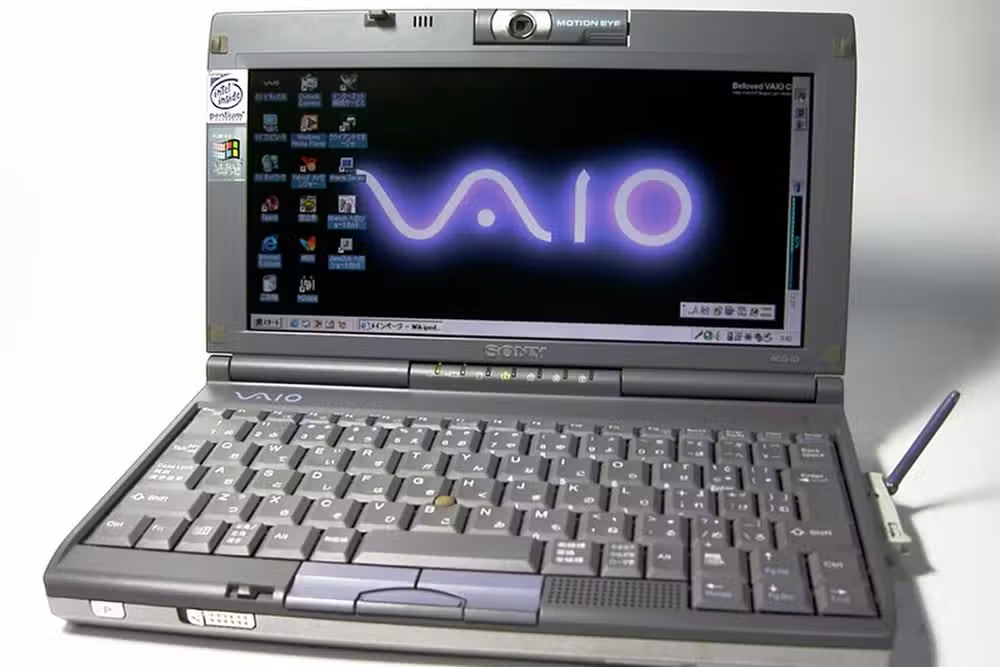
Sony launched VAIO when home PCs were exploding in popularity and dial-up internet was becoming mainstream. The brand built a reputation for premium design and build quality. By 2013, though, Sony had trimmed the lineup to just seven products and some hybrid tablet devices.
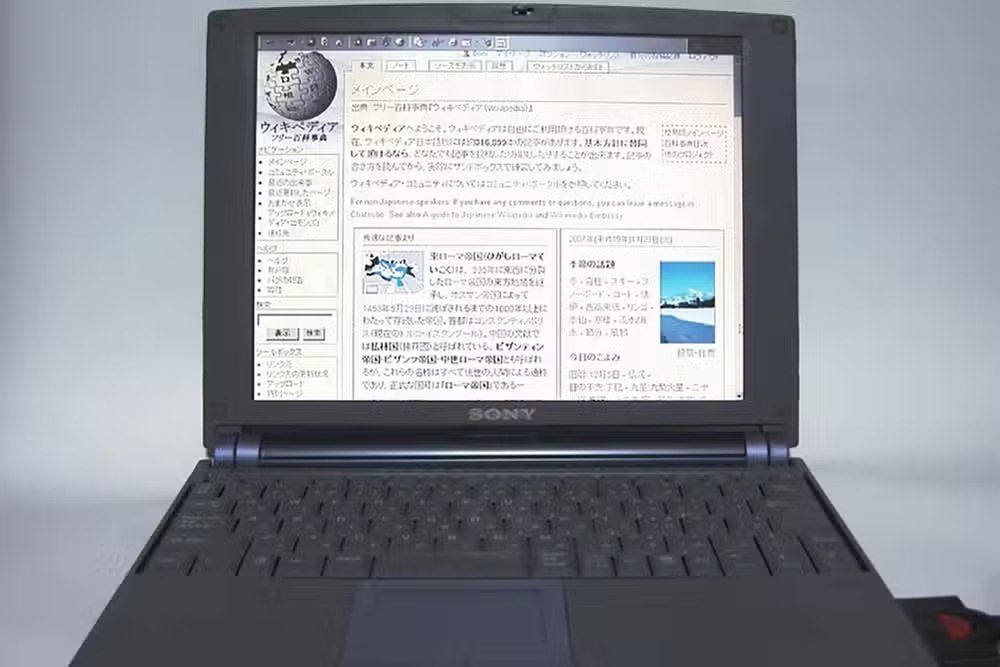
In 2014, Sony announced it would exit the PC business to focus on smartphones. The company transferred VAIO to Japan Industrial Partners (JIP), a private equity firm, for roughly $500 million. JIP's initial plan was to focus on Japan's domestic market, selling to both consumers and businesses while scaling operations carefully.
Sony stopped designing and manufacturing PCs entirely after the sale. The company kept a minority stake and retained intellectual property rights to the VAIO brand and logo.
What VAIO sells today
VAIO's current lineup bears little resemblance to its Sony-era ambitions. Gone are the desktops, media center PCs, and experimental hybrids. The company now concentrates entirely on notebooks.
The FS series includes touch-enabled options in both 14-inch and 16-inch sizes. VAIO positions these as business machines rather than consumer laptops. The company operates in 11 countries: Japan, the United States, Argentina, Brazil, Chile, China, India, Malaysia, Mexico, Singapore, Taiwan, and Uruguay.
Distribution remains the biggest obstacle for Western buyers. Unlike Dell or HP, which blanket retailers with product, VAIO operates through limited channels. Canon USA handles B2B sales, while consumers rely on online orders.
Who owns VAIO now?
Nojima, a Japanese consumer electronics conglomerate, took control in 2025. The company runs the Nojimi retail chain and owns satellite TV channels purchased from Sony Pictures Entertainment. Nojima acquired 91.4 percent of VAIO from JIP, the private equity firm that had shepherded the brand since Sony's exit.
Sony's stake shrank to 4.7 percent. The company no longer has operational involvement but maintains IP rights. This arrangement lets Nojima run VAIO as an independent business while preserving brand continuity.
Why most people forgot VAIO existed
VAIO's invisibility comes down to distribution and marketing. JIP focused on Japan's domestic market for years after the acquisition. International expansion was evaluated cautiously, not pursued aggressively.
Meanwhile, competitors like Asus, Acer, HP, Dell, and Lenovo dominated shelf space and advertising. Even Samsung and LG, which aren't known primarily for laptops, maintain higher visibility in the PC market than VAIO does.
The Club VAIO community, where enthusiasts once gathered for updates and support during Sony's ownership, no longer exists in its original form. That direct connection to a passionate user base disappeared when Sony walked away.
Can you actually buy a VAIO in 2026?
Yes, though it takes effort. US buyers can order through Amazon or Best Buy's websites. Business customers work with Canon USA. Walk-in retail availability is essentially nonexistent in North America.
VAIO has abandoned desktops entirely. If you want a VAIO tower for gaming or workstation tasks, you're out of luck. The company bets its future on portable business machines, nothing else.
Logicity's Take
VAIO's survival proves there's room for niche PC brands, but barely. The company avoided extinction by accepting smaller scale. It's not competing with Dell or HP on volume. It's serving business buyers who remember the brand's premium reputation and don't mind ordering online. Whether Nojima can expand VAIO's reach without losing the focus that kept it alive remains the real test. The brand has traded ambition for survival.
Frequently Asked Questions
Is VAIO still owned by Sony?
No. Sony sold VAIO to Japan Industrial Partners in 2014. Japanese retailer Nojima acquired 91.4% of the company in 2025. Sony retains only a 4.7% stake and intellectual property rights.
Where can I buy a VAIO laptop in the US?
VAIO laptops are available through Amazon and Best Buy's online stores. Business customers can purchase through Canon USA. Walk-in retail availability is extremely limited.
Does VAIO still make desktop computers?
No. VAIO discontinued desktops and now sells only notebooks. The current lineup consists of five models in the FS series, available in 14-inch and 16-inch sizes.
What countries sell VAIO laptops?
VAIO sells in 11 countries: Japan, USA, Argentina, Brazil, Chile, China, India, Malaysia, Mexico, Singapore, Taiwan, and Uruguay.
Why did Sony sell VAIO?
Sony exited the PC business in 2014 to focus on mobile smartphones. The company transferred VAIO to private equity firm Japan Industrial Partners for approximately $500 million.
Another look at how hardware economics shape consumer tech pricing
Need Help Implementing This?
Looking to spec business laptops for your organization or evaluate niche hardware vendors? Contact Logicity's technology advisory team for vendor-neutral guidance on enterprise hardware decisions.
Source: MakeUseOf
Huma Shazia
Senior AI & Tech Writer
Produced with AI assistance and reviewed by the Logicity editorial team. Learn more in our Editorial Policy.