Key Takeaways

- Programming-heavy US jobs grew at nearly 5% annually before ChatGPT; that rate has since dropped sharply
- Roughly 500,000 fewer programming jobs exist than would have without large language models
- Wages haven't dropped yet. The effect shows up in fewer jobs filled, not lower pay
Programmers may be among the biggest beneficiaries of generative AI tools. They're also among the first to feel the employment squeeze. A new study from the Federal Reserve Board shows that job growth for programming-heavy occupations has dropped by roughly half since ChatGPT launched in November 2022.
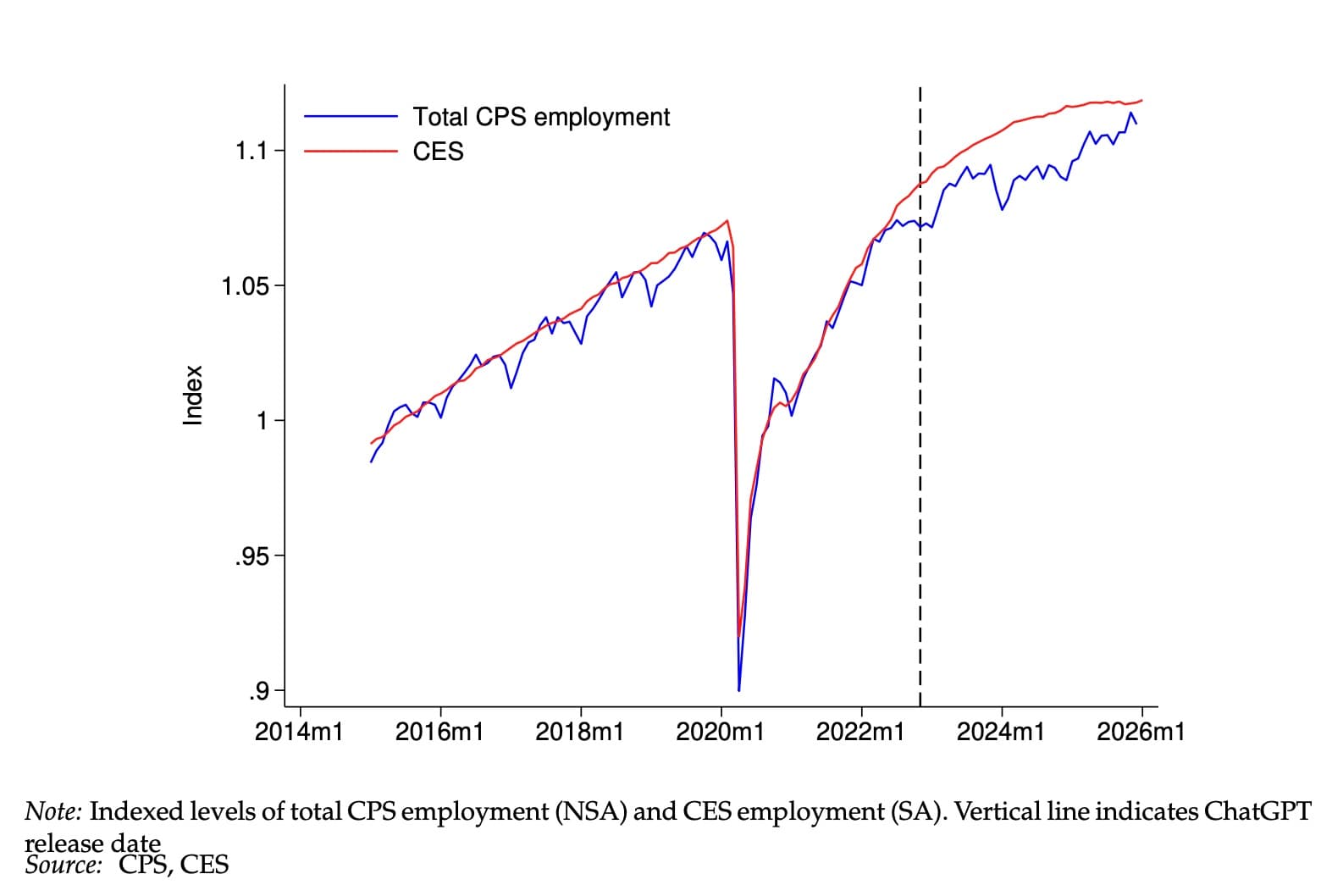
The research, authored by Crane and Soto, analyzed monthly US employment data from a large household survey. They cross-referenced it with a Department of Labor occupational database that classifies jobs by required skills. This let them isolate occupations where programming makes up a significant portion of the work. That group accounts for about 3.7% of all US workers.
From 5% Growth to Flatline
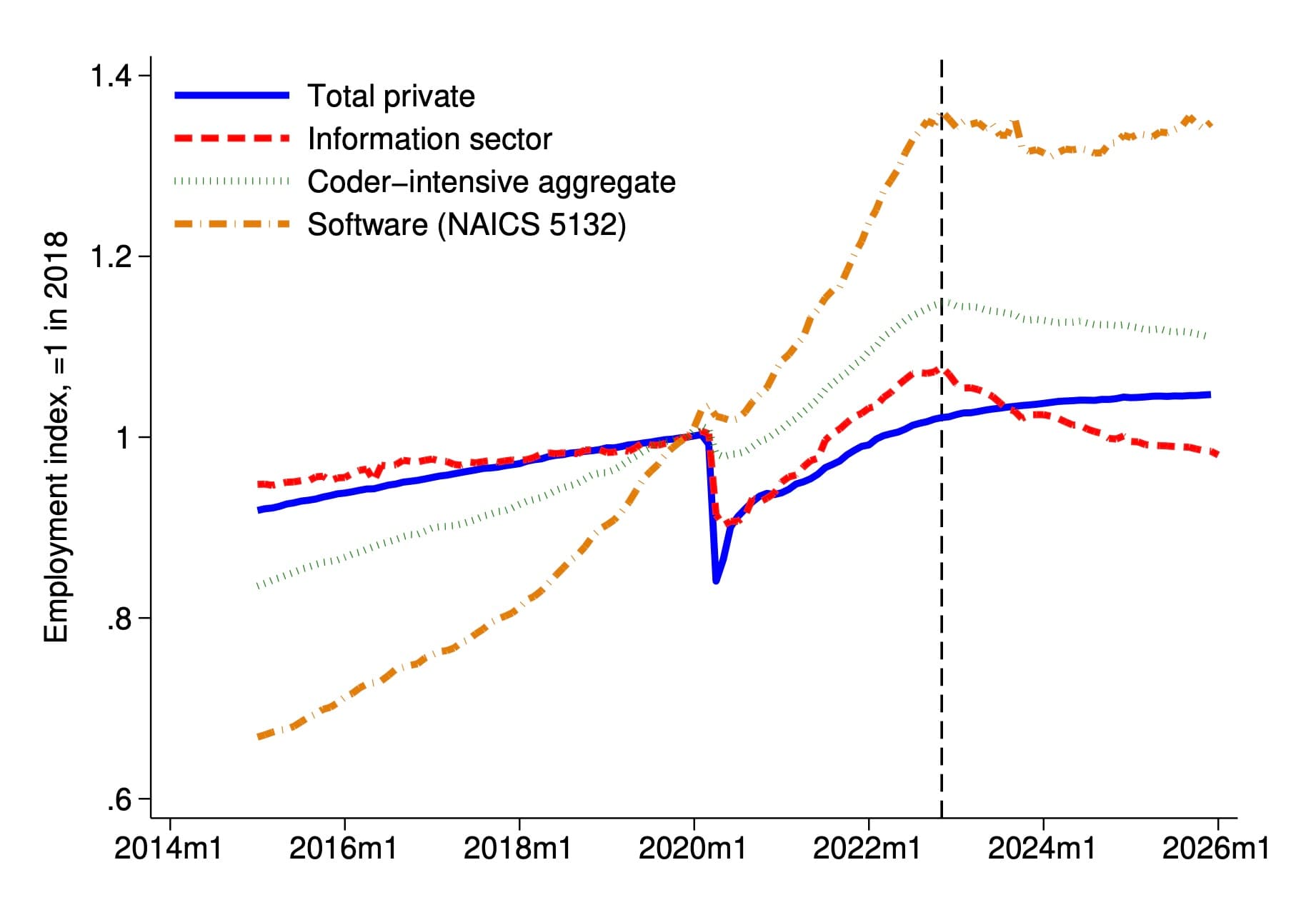
Before ChatGPT's release, programming-heavy jobs were growing at just under 5% annually. That outpaced the broader labor market. Since late 2022, growth has slowed dramatically. In sectors with the highest concentration of programmers, like IT services and software development, growth has essentially stopped.
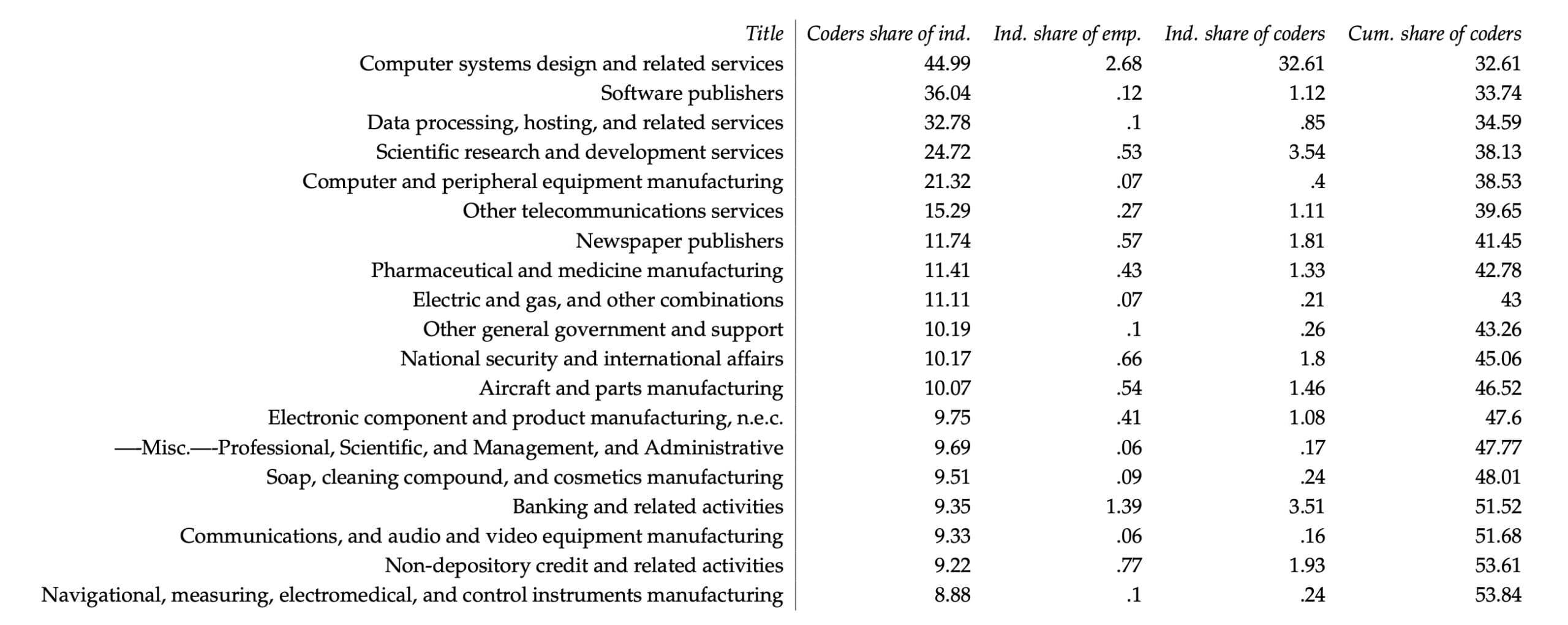
One-third of all US programmers work in contract development for other companies. These roles sit in industries heavily exposed to both AI adoption and broader tech sector pressures.
Ruling Out the Tech Downturn
The obvious counterargument: wasn't this just the tech sector correcting after 2022? Interest rate hikes, the end of pandemic-era online services growth, and the crypto crash all hit the industry simultaneously.
The researchers anticipated this. They built a counterfactual employment curve showing how many programmers would exist if their share within each industry had stayed constant. Only the size of industries would change. Even after this adjustment, programmer employment is still falling by about three percentage points annually.
This suggests companies are deliberately reducing the share of programmers in their workforce. It's not just industry contraction. A control test using occupations barely touched by AI showed no comparable dip.
500,000 Jobs That Didn't Materialize
Stretched over three years, the gap works out to roughly 500,000 jobs that probably would have existed without large language models. But the authors caution against reading this as a straight count of lost jobs.
Many would-be programmers likely found work in adjacent fields. AI may be reshuffling tasks across job categories, with programming skills now appearing in roles not traditionally classified as programming jobs. The study also doesn't capture broader macroeconomic feedback effects. If AI lifts productivity broadly enough, total labor demand could grow over the long run.
Wages Haven't Dropped Yet
The researchers found no clear drop in wages. So far, the effect has shown up mainly in the number of jobs filled rather than in pay. This pattern suggests employers are hiring fewer programmers but still paying market rates for the ones they do hire.
Data from Indeed shows that job postings for software developers have been largely stable since 2024. Postings have ticked up slightly in recent months. This could indicate the sharpest adjustment has already occurred, or that demand is stabilizing at a new, lower baseline.
What This Actually Means
The study doesn't prove AI is replacing programmers wholesale. It does suggest that AI tools are changing how companies staff their engineering teams. Fewer people may be needed for the same output. Or programming tasks are being absorbed into other roles.
For individual programmers, the picture is mixed. Those already employed haven't seen wage cuts. But breaking into the field may be harder than it was three years ago. The 500,000 figure represents jobs that didn't get created, not jobs that were eliminated.
Logicity's Take
Frequently Asked Questions
How many programming jobs have been affected by AI?
The Federal Reserve study estimates roughly 500,000 fewer programming jobs exist than would have without large language models, measured over three years since ChatGPT's November 2022 launch.
Are programmer salaries dropping because of AI?
Not yet. The study found no clear drop in wages. The effect has shown up in fewer jobs being filled, not in lower pay for existing positions.
Is the tech downturn responsible for fewer programming jobs?
The researchers controlled for industry-wide effects like interest rate hikes and the crypto crash. Even after adjustment, programmer employment is still falling by about three percentage points annually.
What percentage of US workers are programmers?
Programming-heavy occupations account for roughly 3.7% of all US workers, according to the Federal Reserve study.
Are companies still hiring software developers?
Indeed data shows job postings for software developers have been largely stable since 2024 and have ticked up slightly in recent months.
Need Help Implementing This?
Source: The Decoder / Jonathan Kemper
Manaal Khan
Tech & Innovation Writer
Produced with AI assistance and reviewed by the Logicity editorial team. Learn more in our Editorial Policy.