Key Takeaways
- Tryzub can destroy Shahed drones from 5km (3.1 miles) away in 3-4 seconds
- The system uses AI-assisted targeting and integrated radar for tracking
- Celebra Tech says the design is mass production-ready once trials conclude
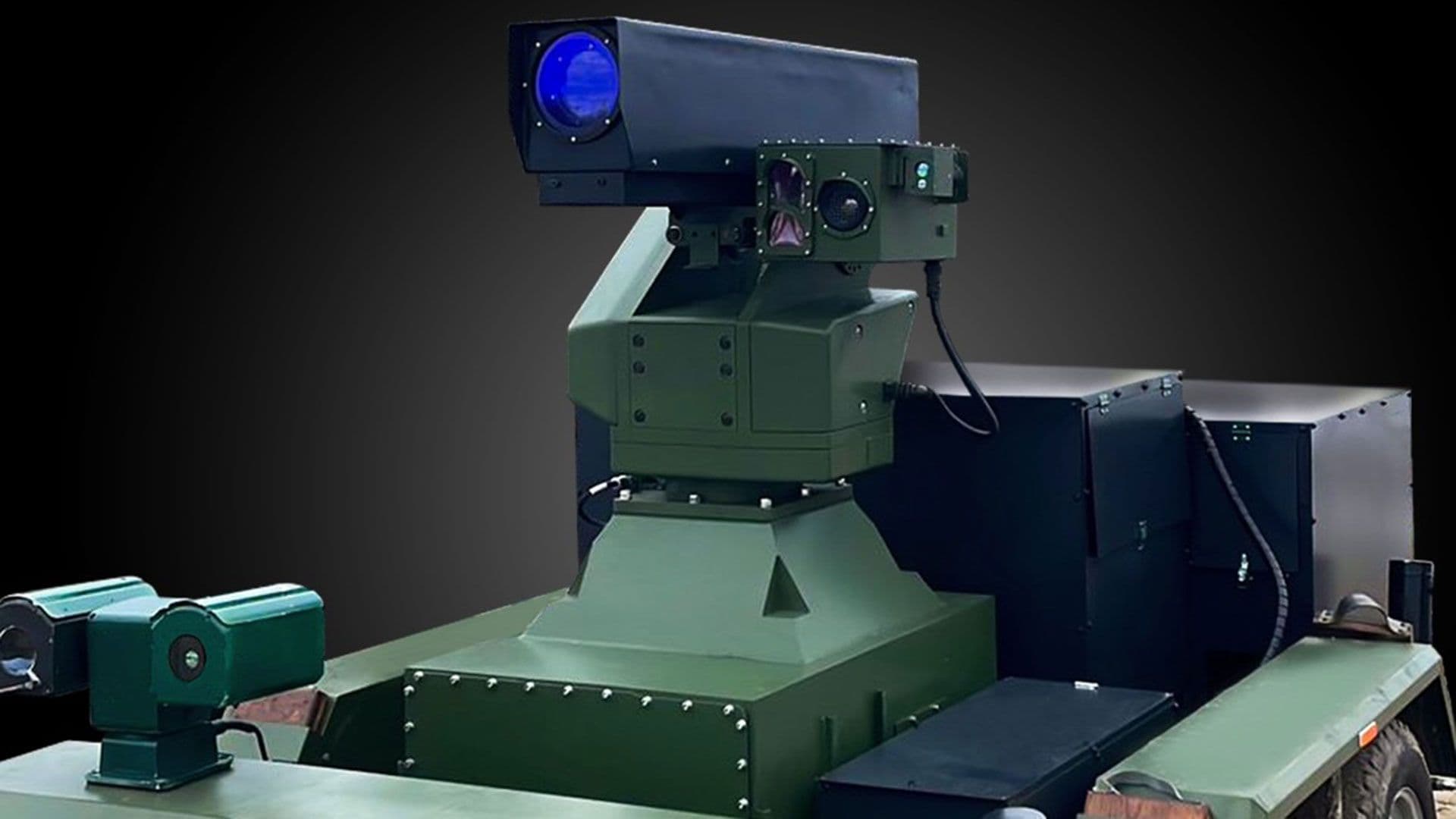
Ukraine is close to fielding a new weapon against the drone swarms that have terrorized its cities and infrastructure. Celebra Tech, a Ukrainian defense firm, has developed Tryzub, an AI-guided laser system that can burn holes through Shahed suicide drones from 5 kilometers away.
A recent demonstration video shows the trailer-mounted system punching through armor plating in three to four seconds. The footage then captures an incoming drone in Tryzub's AI-assisted sights. The laser locks on, fires, and the drone falls from the sky moments later.
How Tryzub Works
The system combines a high-powered laser with AI target acquisition and tracking. Integrated radar helps the mobile platform position itself to intercept incoming threats. This combination allows operators to engage different drone types at varying ranges based on size and speed.
Shaheds are among the larger and slower drones Ukraine faces. These Iranian-designed loitering munitions have struck power plants, residential buildings, and critical infrastructure across the country. Their relatively slow flight makes them ideal targets for directed energy weapons.
Smaller threats require closer engagement. Celebra Tech claims Tryzub can target reconnaissance drones within 1,500 meters and FPV drones at 800 to 900 meters. The system can also interfere with FPV drone cameras, potentially disrupting attacks even when a full burn-through is not possible.
Development Timeline and Production
Celebra Tech has been developing Tryzub since at least 2024, according to Euromaidan Press. The system is now in its final testing stages. No firm deployment date has been announced, but the company says the design is mass production-ready once trials conclude.
The trailer-mounted design makes Tryzub mobile and deployable to different defensive positions. This flexibility matters in a conflict where drone attack patterns shift constantly and fixed air defenses can become predictable targets.
Beyond Air Defense
Tryzub is not limited to shooting down drones. Reports indicate the laser can also be used for demining operations. Ukraine faces one of the largest mine contamination problems in modern history, with unexploded ordnance scattered across formerly occupied territories. A directed energy system that can safely detonate mines from a distance could accelerate clearance efforts.
If the system proves effective in combat, export potential is significant. Countries bordering conflict zones and those facing drone threats from non-state actors represent a ready market. The global race to develop both drone swarms and counter-drone technology has intensified, with nations watching Ukraine's battlefield innovations closely.
The Laser Advantage
Directed energy weapons offer cost advantages over traditional air defense. Missiles and autocannon ammunition cost thousands of dollars per engagement. A laser system's cost per shot is essentially the electricity used. Against cheap mass-produced drones like Shaheds, that math becomes compelling.
The tradeoff is engagement speed and atmospheric conditions. Lasers need to dwell on target long enough to cause damage. Rain, fog, dust, and smoke can scatter the beam and reduce effectiveness. These factors likely explain the different engagement ranges for different drone types.
Logicity's Take
More on AI capabilities in defense and security applications
Frequently Asked Questions
How far can Ukraine's Tryzub laser shoot down drones?
Tryzub can engage Shahed drones from 5 kilometers (3.1 miles) away. Smaller reconnaissance drones can be targeted at 1,500 meters, and FPV drones at 800-900 meters.
How quickly does the Tryzub laser destroy targets?
Demonstration footage shows the system burning through armor in 3-4 seconds. Actual engagement times against drones may vary based on range and target composition.
When will Ukraine deploy the Tryzub laser system?
No deployment date has been announced. The system is in final testing stages, and Celebra Tech says it is mass production-ready once trials conclude.
What company makes Ukraine's anti-drone laser?
Ukrainian defense firm Celebra Tech developed the Tryzub system, which has been in development since at least 2024.
Can Tryzub be used for purposes other than shooting down drones?
Yes. Reports indicate the laser can also be deployed for demining operations, potentially helping clear Ukraine's extensive unexploded ordnance problem.
Need Help Implementing This?
Source: Latest from Tom's Hardware
Manaal Khan
Tech & Innovation Writer
Produced with AI assistance and reviewed by the Logicity editorial team. Learn more in our Editorial Policy.