Key Takeaways
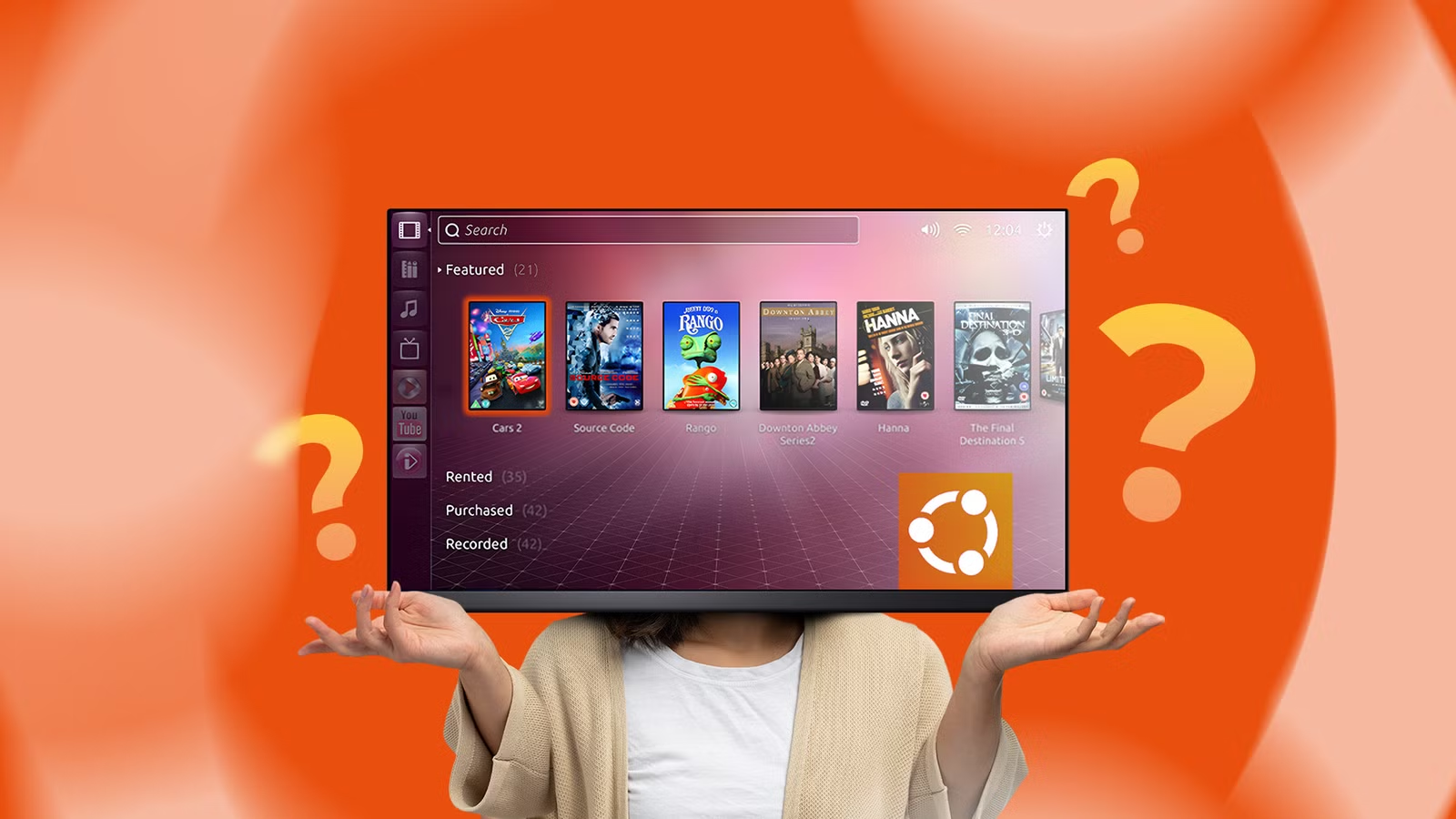
- Ubuntu TV was announced at CES 2012 but never secured manufacturer partnerships and quietly died
- Canonical's ambitious plan to unify Ubuntu across phones, tablets, and TVs collapsed under development costs
- Linux still dominates smart TVs today through Samsung's Tizen and LG's webOS, just not via Ubuntu
Ubuntu TV never shipped. Canonical announced it at CES 2012 with demos of a unified Linux interface for televisions, but no manufacturer ever agreed to build one. The project died quietly around 2014. The irony? Linux did take over the smart TV market. Samsung's Tizen and LG's webOS both run on Linux kernels. Canonical just wasn't the one to do it.
What was Ubuntu TV supposed to be?
In 2012, Canonical was riding high. Ubuntu was the most popular desktop Linux distribution in the world, and the company wanted to expand beyond computers. The plan: put Ubuntu on netbooks, phones, tablets, and televisions. One interface, called Unity, would adapt to every screen size.
At CES 2012, Canonical showed off Ubuntu TV to journalists and tech enthusiasts. The promise was compelling. You wouldn't need to switch between apps to watch different shows. Content from broadcast, streaming, and your personal library would appear in a single unified interface. You could browse, stream, and purchase videos all in one place.
There was a problem. The demo Canonical showed wasn't running on actual TV hardware. It was a clickable mockup running on a computer monitor. The underlying software didn't exist yet. Canonical was showing a proof of concept, hoping to attract TV manufacturers who would ship Ubuntu TV to consumers.
Why did Ubuntu TV fail?
Canonical's vision required building almost everything from scratch. The existing Unity interface was cobbled together from desktop Linux technologies that wouldn't translate to TVs or phones. To make Ubuntu truly cross-platform, Canonical decided to rebuild Unity entirely, create its own display server, and develop a new software distribution format called Snap.
That's a lot of software engineering for one company. And Canonical wasn't just building TV software. It was simultaneously working on Ubuntu Phone, the Ubuntu Edge smartphone, and the desktop operating system. Resources were spread thin.
The Linux community wasn't entirely supportive either. Open source development traditionally relies on collaboration, with different groups contributing to shared tools. Canonical was going its own way, building proprietary solutions rather than contributing to existing projects. When the bills came due and the work got hard, there weren't other companies or communities invested in helping.
Most critically, TV manufacturers showed no interest. Canonical said it was in talks with vendors, but no partnerships materialized. Zero Ubuntu TVs ever reached store shelves. The Ubuntu TV mailing list had over 100 times less activity than the Ubuntu Phone list, which tells you where even the community's attention was focused.
How Linux conquered smart TVs without Ubuntu
Here's the twist. Linux did become the dominant operating system for smart TVs. Just not through Canonical.
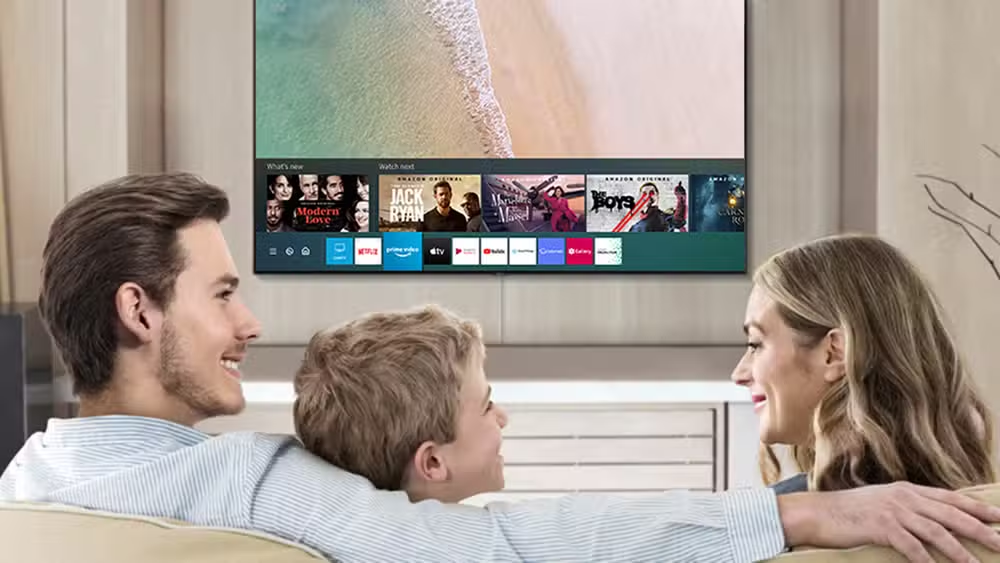
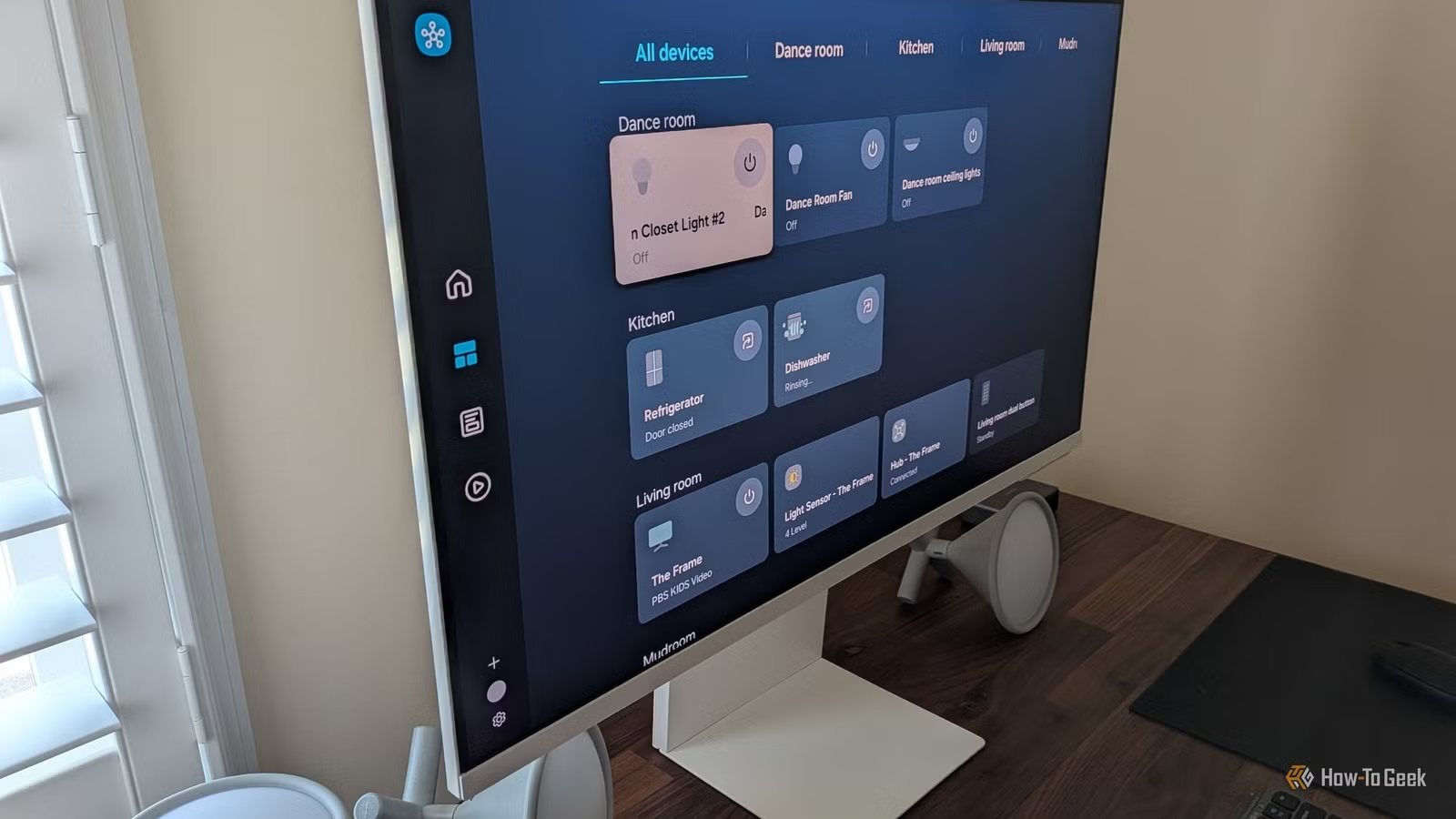
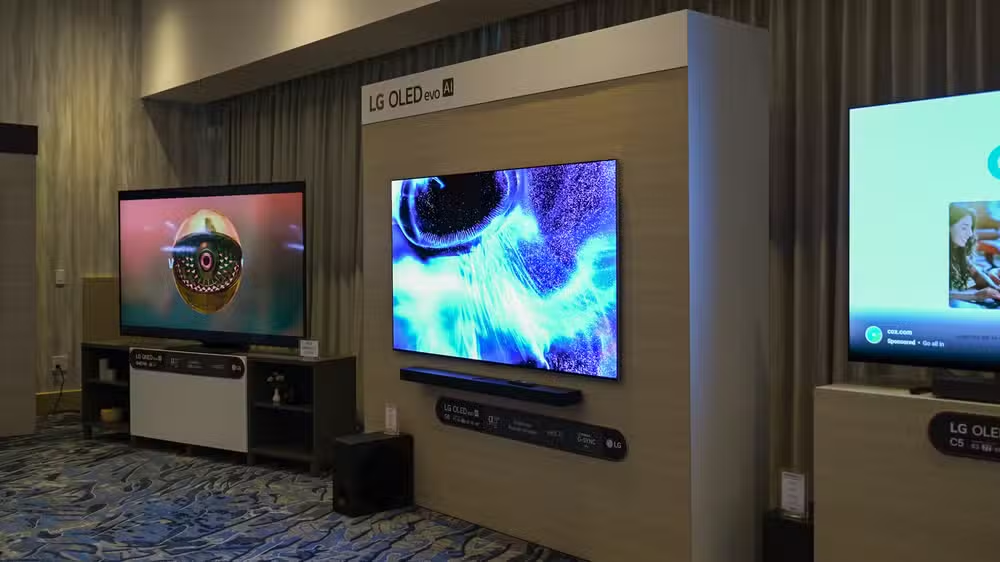
Samsung's Tizen OS runs on a Linux kernel. LG's webOS, which powers over 20 million active TV users, is also Linux-based. These companies built their own interfaces on top of Linux rather than adopting an existing distribution like Ubuntu. They wanted control over the user experience and didn't need Canonical's help to get it.
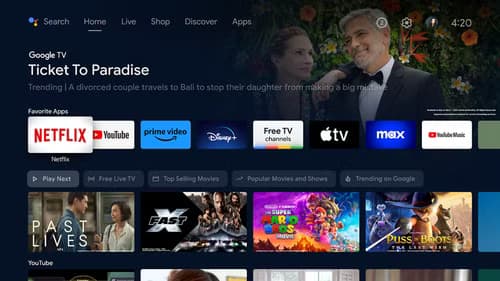
In the US market, Roku, Amazon Fire TV, and Google TV dominate with a combined 72% market share. Android TV (which also runs on a Linux kernel) has become the go-to platform for manufacturers who don't want to build their own software. The smart TV market is now projected to reach $217 billion by 2027.
Can you run Linux on your TV today?
If you want a Linux-powered TV experience in 2026, you have options. Any TV that runs Tizen or webOS is technically running Linux under the hood. For a more traditional Linux setup, you can connect a small PC or Raspberry Pi running a media center distribution like LibreELEC or OSMC.
Some users install custom Linux distributions on Android TV boxes, though this requires technical know-how and the right hardware. The dream of buying a TV that runs Ubuntu out of the box? That's been dead for over a decade.
What happened to Canonical's other hardware projects?
Ubuntu TV wasn't Canonical's only failed consumer hardware bet. The Ubuntu Edge smartphone raised over $10 million on Indiegogo in 2013, but fell short of its $32 million goal and never shipped. Ubuntu Phone launched on a few devices but was discontinued in 2017.
Canonical eventually refocused on what works: servers, cloud computing, and enterprise Linux. The Unity desktop interface was dropped in 2017 in favor of GNOME. Today, Ubuntu remains the most popular Linux distribution for servers and development machines, but the dream of Ubuntu everywhere died years ago.
Another way to repurpose consumer electronics with alternative software
Logicity's Take
Canonical's mistake wasn't the vision. A unified Linux interface across devices makes sense. The mistake was trying to build everything in-house while simultaneously launching multiple hardware platforms. Google succeeded with Android TV by letting device manufacturers handle hardware while Google provided software. Canonical wanted to control both sides and ended up controlling neither. The lesson for startups: pick one battle at a time.
Frequently Asked Questions
Did Ubuntu TV ever ship to consumers?
No. Ubuntu TV was demonstrated at CES 2012 but never secured manufacturer partnerships. Zero Ubuntu TVs were ever sold commercially.
What smart TV operating systems use Linux?
Samsung's Tizen and LG's webOS both run on Linux kernels. Android TV, used by many manufacturers, is also Linux-based.
Can I install Ubuntu on my smart TV?
Not directly. You can connect a PC or Raspberry Pi running Linux to your TV, but there's no way to install Ubuntu on most smart TV hardware.
Why did Canonical abandon Ubuntu TV?
The project required too much custom development, attracted no manufacturer interest, and competed for resources with Ubuntu Phone. Canonical quietly dropped it around 2014-2015.
Is webOS better than Android TV?
It depends on your needs. webOS (LG) has a clean interface and good app support. Android TV offers more apps and Google integration. Both are Linux-based under the hood.
Need Help Implementing This?
Building a custom media center setup or evaluating smart TV platforms for your business? Logicity's team can help you navigate the options. Contact us for a consultation on display technology and embedded Linux solutions.
Source: How-To Geek
Huma Shazia
Senior AI & Tech Writer
Produced with AI assistance and reviewed by the Logicity editorial team. Learn more in our Editorial Policy.