Key Takeaways
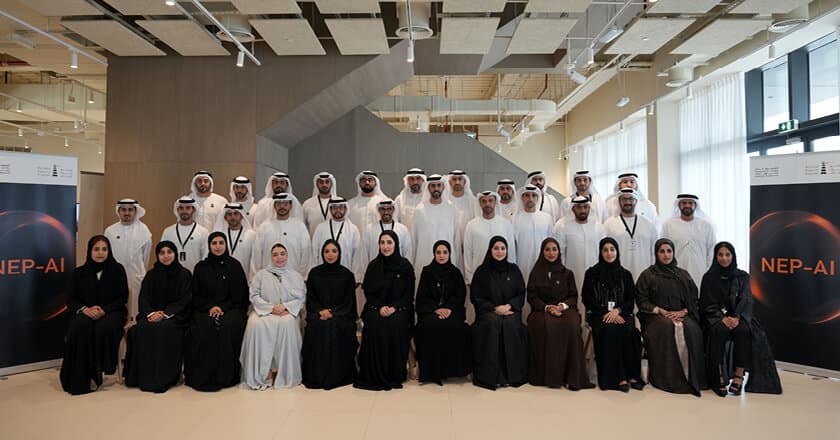
- 32 Emirati experts enrolled in NEP-AI Module 1 covering AI foundations and infrastructure
- Program includes hands-on visits to Technology Innovation Institute and ADIA Lab
- Participants will complete capstone projects addressing real organizational and national AI challenges
The UAE launched the first technical module of its National Experts Program AI Track (NEP-AI) on July 23, enrolling 32 Emirati specialists in a curriculum that goes beyond AI applications to examine how systems are built, trained, and deployed. The program, announced in Abu Dhabi, positions AI infrastructure knowledge as a national priority.
Omar Sultan Al Olama, UAE Minister of State for Artificial Intelligence, Digital Economy, and Remote Work Applications, framed the initiative in terms of long-term competitiveness. "Investing in national talent is fundamental to strengthening the UAE's long-term leadership in artificial intelligence and building a future-ready economy," he said at the launch.
What does Module 1 cover?
The curriculum, titled "AI Foundations and the AI Stack," focuses on the technical underpinnings that most AI adoption programs skip. Participants study AI compute, the processing power behind machine learning workloads. That means examining GPUs, energy requirements, and the global supply chains that determine who can build AI systems at scale.
The module also covers data architecture, model development, and organizational deployment. Participants learn how data quality, structure, governance, and availability affect model performance. This is practical knowledge: understanding why a model fails in production often comes down to data problems, not algorithmic ones.
Site visits: from research to real-world infrastructure
Two institutional visits anchor the learning. At ADIA Lab, Director Dr. Horst Simon will discuss compute as a strategic resource. The lab, backed by the Abu Dhabi Investment Authority, focuses on AI research with national applications.
At the Technology Innovation Institute (TII), CEO Dr. Najwa Aaraj will lead a panel titled "Building the UAE's AI Stack: From National Strategy to Real Infrastructure." TII developed Falcon, the UAE's open-source large language model, making it a natural venue for discussions about sovereign AI capabilities.
Related: AI compute infrastructure and chip development
Why sovereign AI matters to the UAE
Omran Sharaf, Assistant Foreign Minister for Advanced Science and Technology, described AI as "a strategic pillar for strengthening economic competitiveness, national resilience, international cooperation, and global influence." That framing explains why the UAE invests in homegrown expertise rather than relying solely on imported talent or foreign AI services.
The UAE's approach differs from most Gulf states. It has a dedicated AI minister, a national AI strategy targeting 14% of GDP by 2030, and institutions like TII producing competitive open-source models. Training 32 experts in AI infrastructure is a small cohort, but the program aims to create leaders who can shape policy and drive adoption across sectors.
Capstone projects: from theory to application
Each participant will complete a capstone project addressing real organizational or national challenges. The program requires translating technical knowledge into solutions with measurable impact. This structure ensures the cohort doesn't just learn concepts; they apply them to problems the UAE government and enterprises actually face.
Module 1 establishes a common technical vocabulary before subsequent modules on leadership, strategy, and innovation. The sequencing suggests the UAE views technical literacy as foundational to AI governance, not separate from it.
Related: Global AI platform adoption trends
How this compares to other national AI programs
| Program | Country | Focus | Cohort Size | Distinctive Feature |
|---|---|---|---|---|
| NEP-AI Module 1 | UAE | AI stack infrastructure | 32 experts | Site visits to national AI labs |
| AI Singapore (AISG) | Singapore | Industry AI adoption | Thousands trained | 100E program for engineers |
| UK AI Safety Institute | UK | AI safety research | Research staff | Regulatory focus |
| Saudi SDAIA Programs | Saudi Arabia | Broad AI literacy | Varies | Data-first approach |
The UAE's program is smaller and more selective than Singapore's mass-training approach, but more applied than the UK's research-focused institute. The emphasis on compute infrastructure and supply chains reflects the UAE's position as a potential AI hub that must import chips and energy expertise.
Logicity's Take
For AI product teams, the UAE's approach signals where Gulf enterprise contracts may head. Buyers trained in AI infrastructure will ask harder questions about data governance, model deployment, and compute costs. If you're selling AI tools into the region, expect procurement conversations that go beyond features into architecture and compliance. The capstone requirement also suggests the UAE will produce decision-makers who've actually built something, not just evaluated vendor demos.
Frequently Asked Questions
What is NEP-AI Module 1?
NEP-AI Module 1 is the first technical phase of the UAE's National Experts Program AI Track, covering AI foundations, infrastructure, compute resources, and deployment. It enrolled 32 Emirati experts in July 2026.
Who is eligible for the UAE's NEP-AI program?
The program targets Emirati experts selected for their potential to lead AI initiatives across government and enterprise sectors. Specific eligibility criteria have not been publicly detailed.
What is the AI stack?
The AI stack refers to the layers of technology required to build and run AI systems: compute hardware (like GPUs), data infrastructure, model development frameworks, and deployment tools.
Why does the UAE emphasize sovereign AI?
Sovereign AI means developing domestic AI capabilities rather than depending on foreign providers. For the UAE, this reduces strategic dependency and supports economic diversification goals.
Related: AI company governance and talent strategies
Need Help Implementing This?
Building AI training programs or evaluating national AI strategies? Logicity covers the tools, policies, and trends shaping enterprise AI adoption. Subscribe for weekly analysis.
Source: TahawulTech.com / Sandhya D'Mello
Manaal Khan
Tech & Innovation Writer
Produced with AI assistance and reviewed by the Logicity editorial team. Learn more in our Editorial Policy.