Key Takeaways

- Pet monitoring systems reduce emergency vet visits by catching health issues early
- Automated feeding and tracking eliminates household coordination overhead
- Total setup cost of $150-400 can save thousands in pet care services annually
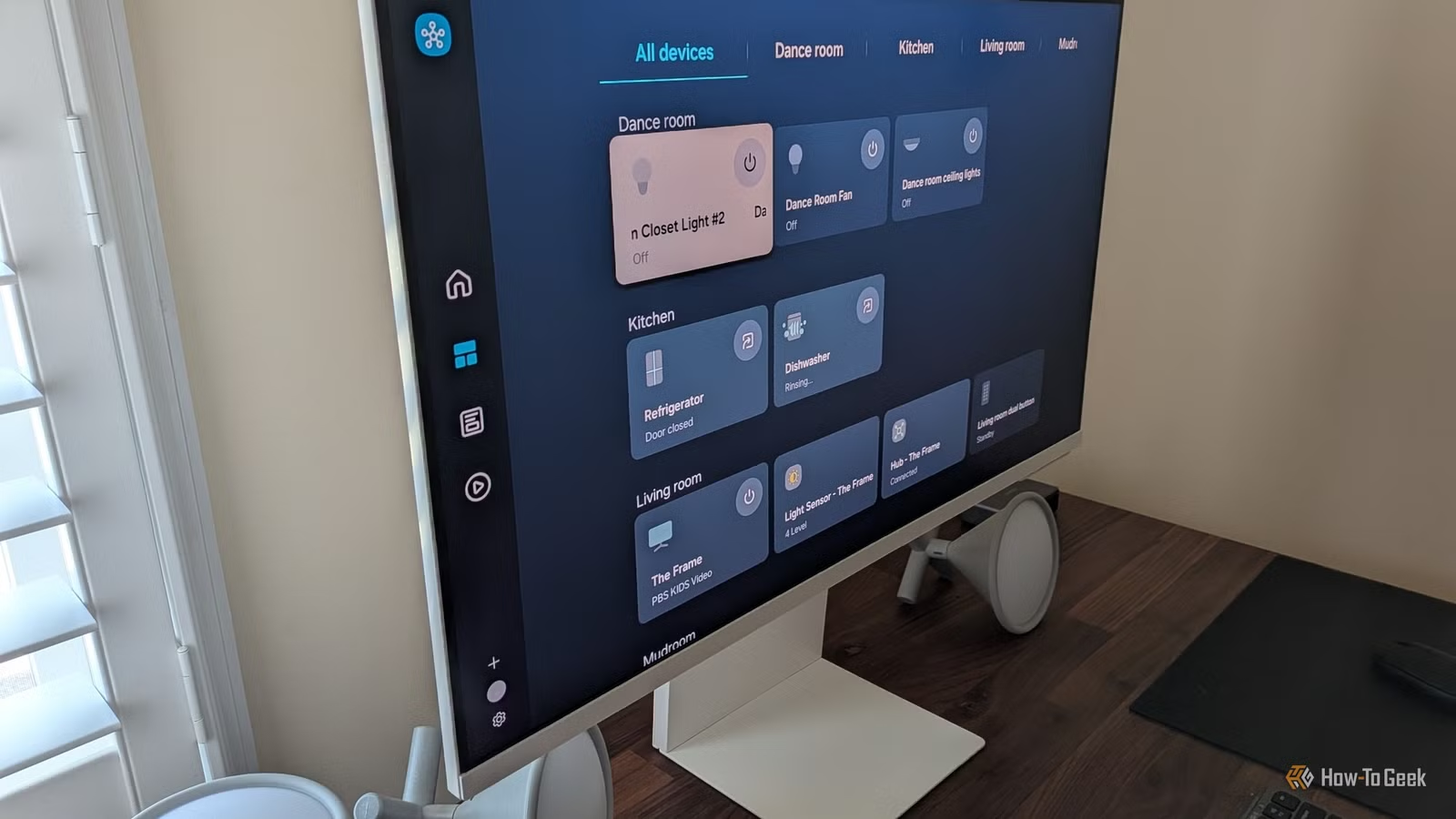
According to [How-To Geek](https://www.howtogeek.com/stop-overlooking-pets-in-your-smart-home-ways-cats-and-dogs-can-benefit-too/), smart home setups shouldn't be limited to humans—with the right accessories and automations, your pets can benefit from connected home technology in ways that also save you time and mental overhead.
Here's what most smart home enthusiasts miss: the real value of pet automation isn't the gadgets. It's the cognitive load you eliminate. If you're running a company, managing a team, or building a startup, you don't have mental bandwidth to remember whether the dog got fed before your 7 AM standup. That's where smart home for pets becomes a productivity tool, not a luxury.
Why Should Busy Professionals Care About Pet Tech?
The U.S. pet industry hit $147 billion in 2024, and the pet tech segment is growing at 25% annually. But forget the macro numbers—what matters is your time. Pet care coordination in busy households creates what productivity experts call 'invisible work': the mental overhead of tracking feeding schedules, medication timing, and health patterns across multiple family members or roommates.
A properly configured smart home for pets eliminates this coordination cost entirely. One vibration sensor on a food container, connected to Home Assistant, creates an audit trail that everyone in the household can check. No more Slack messages asking 'did anyone feed the cat?' No more double-feeding (which veterinarians flag as a leading cause of pet obesity).


Executive Summary
Pet automation delivers ROI through three channels: time savings (3-5 hours/week), reduced pet care service costs ($200-500/month for frequent travelers), and early health detection that prevents expensive vet emergencies. Total investment: $150-400 for a complete system.
How Does Automated Pet Feeding Tracking Work?
The simplest entry point is a Zigbee vibration sensor attached to your pet's food container. When someone opens the container to feed, the sensor logs the event. Home Assistant timestamps it, and you've got a verifiable record.
This isn't theoretical. One Reddit user built a complete pet dashboard that includes feeding history, manual override options (for when you move the container without feeding), and voice integration. The system sends push notifications if feeding doesn't happen by a scheduled time. Total hardware cost: about $20 for the sensor.
| Solution | Cost | Setup Time | Best For |
|---|---|---|---|
| Vibration sensor + Home Assistant | $20-30 | 1-2 hours | Tech-comfortable households |
| Smart pet feeder (standalone) | $80-150 | 15 minutes | Single-pet, simple needs |
| Full monitoring dashboard | $150-300 | 4-6 hours | Multi-pet or health tracking needs |
| Professional pet monitoring service | $200-500/month | N/A | Frequent travelers, premium peace of mind |
What's the Real Cost of Pet Monitoring Systems?
Let's break down the economics. A complete smart home for pets setup using Home Assistant typically includes:
- Zigbee vibration sensor for food tracking: $20
- Bluetooth tracker for pet presence detection: $25-30
- Indoor camera with motion detection: $40-80
- Smart water fountain with level monitoring: $50-80
- Temperature/humidity sensor (for pet comfort zones): $15-25
Total investment: $150-235 for a comprehensive system. Compare that to professional pet-sitting services at $25-50 per visit, or pet monitoring subscriptions at $15-30 monthly. If you travel even twice a month for work, the hardware pays for itself within a quarter.
How Can Pet Health Monitoring Prevent Expensive Vet Bills?
This is where the business case gets compelling. Veterinary emergencies average $800-1,500 per incident. Many of these emergencies—dehydration, eating disorders, mobility issues—show warning signs days or weeks before they become critical.
Smart home systems can track water consumption patterns, feeding frequency, and movement activity. When your cat suddenly drinks 40% less water than usual, you get an alert—not an emergency vet visit a week later. When your dog's activity levels drop consistently over three days, you know to schedule a checkup before symptoms escalate.
The same pattern recognition that powers business intelligence dashboards works for pet health. You're essentially building an early warning system that costs less than one prevented emergency.
The same AI that powers smart home automations is transforming business operations
Which Smart Home Platform Works Best for Pet Automation?
Home Assistant dominates this category for a reason: flexibility. Apple HomeKit, Google Home, and Amazon Alexa handle basic automations, but they can't build the custom logic that pet monitoring requires. You can't tell Alexa to 'send me a notification if the cat hasn't eaten in 14 hours but ignore weekends when we free-feed.'
Home Assistant runs locally (no cloud dependency), supports virtually every smart home protocol, and offers visual automation builders for non-coders. The learning curve is steeper than consumer platforms, but the capability ceiling is dramatically higher.
✅ Pros
- • Complete customization for complex pet schedules
- • Local processing means no subscription fees
- • Integrates with existing smart home devices
- • Active community sharing pet-specific automations
❌ Cons
- • Initial setup requires technical comfort
- • Runs on dedicated hardware (Raspberry Pi or mini PC)
- • No official mobile app from major app stores
Can Pet Presence Detection Really Work Reliably?
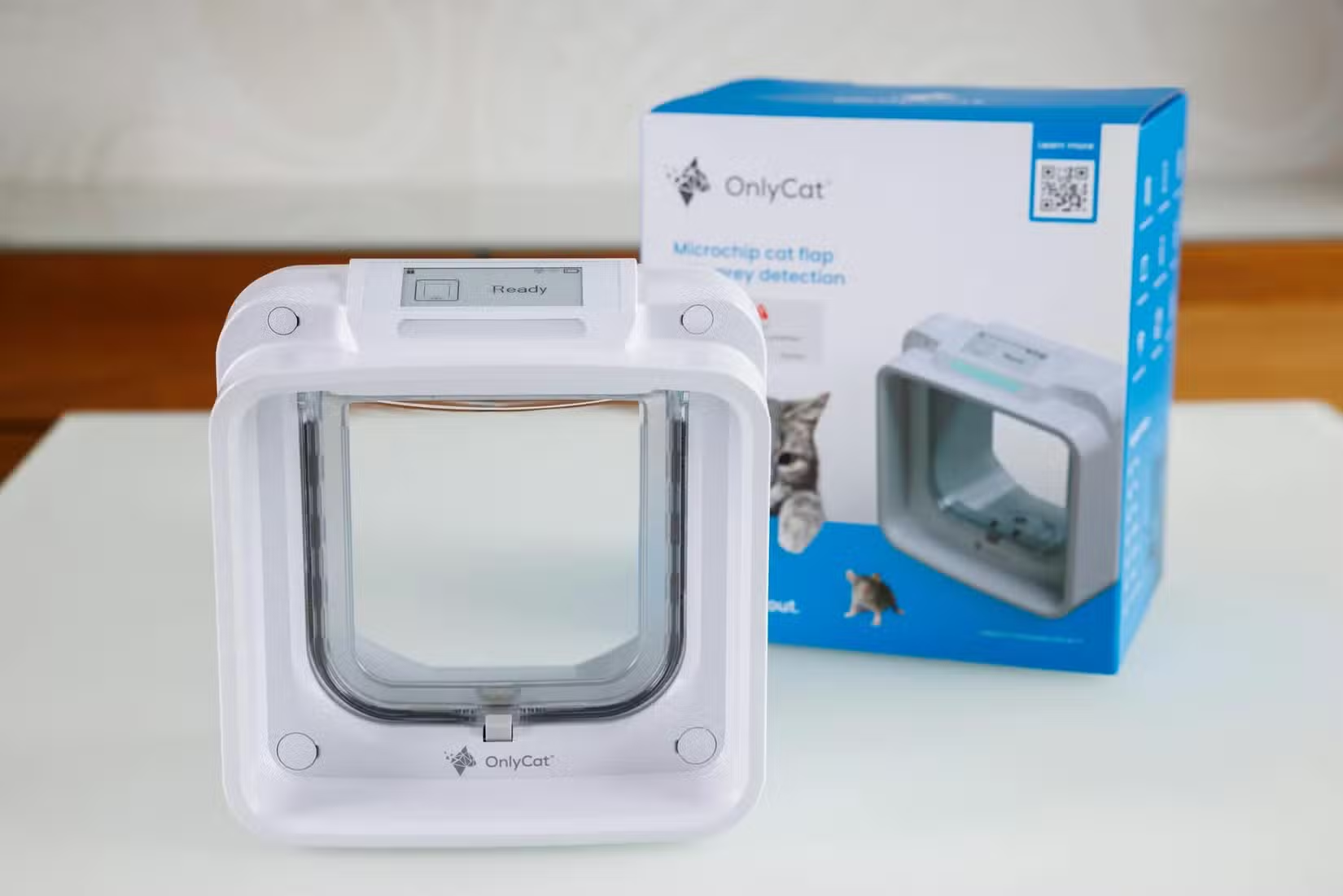
Bluetooth Low Energy (BLE) trackers have improved significantly. A $25 tile-style tracker on your pet's collar, combined with BLE receivers throughout your home, can track which room your pet is in with reasonable accuracy. This matters for climate control (no need to cool rooms your pet isn't using) and for monitoring access to restricted areas.
The technology isn't perfect—thick walls and metal interference can cause false readings—but it's good enough for most practical applications. For outdoor cats, GPS-enabled collars add location tracking outside the home, though battery life becomes a consideration.
What's the Implementation Timeline for Pet Smart Home?
If you're already running Home Assistant for other automations, adding pet monitoring takes an afternoon. Starting from scratch, budget a weekend for the complete setup. Here's a realistic timeline:
The refinement phase matters. Your automation thresholds will need tuning based on your specific pets' habits. A cat that grazes throughout the day needs different feeding alerts than a dog with scheduled meals.
Home Assistant automations can be built faster with AI coding assistants
Is Smart Home Pet Tech Worth the Investment?
The ROI calculation is straightforward. If you value your time at $50/hour (conservative for most professionals reading this), and pet automation saves you 30 minutes daily in coordination overhead and peace-of-mind checking, that's $750/month in recovered productivity. A $200 system pays for itself in the first week.
Add the avoided costs: fewer emergency vet visits from early detection, reduced pet-sitting expenses, and the intangible value of not worrying during travel. For busy professionals, this isn't a gadget purchase—it's an infrastructure investment.
Logicity's Take
We build automation systems for businesses, not pet owners specifically. But the underlying architecture is identical. The same event-driven logic that powers our n8n workflows for client onboarding or our Claude-based document processing handles pet feeding alerts just fine. What's interesting from a technical standpoint is how Home Assistant's local-first approach aligns with the data privacy concerns we see from enterprise clients. No cloud dependency means no subscription creep and no data leaving your network. For Indian tech professionals specifically, this matters because internet reliability varies. A cloud-dependent pet feeder fails when your ISP hiccups. A local Home Assistant instance keeps running. If you're evaluating smart home platforms for any automation need—pet-related or otherwise—the build-vs-buy decision usually favors building when you need custom logic. The consumer platforms optimize for simplicity, not flexibility. That's the same tradeoff we help clients navigate with AI agent implementations: the easy solution works until it doesn't, and then you're rebuilding from scratch.
Frequently Asked Questions
How much does a complete smart home pet monitoring system cost?
A comprehensive setup using Home Assistant runs $150-400 for hardware, with no ongoing subscription fees. This includes feeding tracking sensors, presence detection, cameras, and water monitoring. Compare this to pet-sitting services at $25-50 per visit or monitoring subscriptions at $15-30 monthly.
Can I set up pet automation without technical skills?
Basic setups using standalone smart feeders require minimal technical knowledge. Full Home Assistant integration requires comfort with configuration files and basic networking, though the visual automation builder has reduced the learning curve significantly. Budget 6-8 hours for a first-time setup.
Does pet monitoring actually prevent health emergencies?
Pattern tracking for water consumption, feeding frequency, and activity levels can flag issues days before symptoms become critical. While not a replacement for veterinary care, early alerts on behavioral changes have documented value in preventing escalation of treatable conditions.
What happens to my pet monitoring if the internet goes down?
Home Assistant runs locally, so all automations continue functioning without internet. You lose remote access and push notifications during outages, but the core monitoring and local alerts remain operational. This is a significant advantage over cloud-dependent alternatives.
Is pet tracking hardware compatible with existing smart home setups?
Most pet monitoring sensors use Zigbee or Z-Wave protocols, which integrate with all major platforms including Home Assistant, SmartThings, and Hubitat. Check protocol compatibility before purchasing, but cross-platform support is generally excellent in 2026.
Keep your smart home control devices updated with the latest security patches
Need Help Implementing This?
Logicity builds automation systems for businesses across India and the Middle East. While pet monitoring isn't our core focus, the same Home Assistant and n8n expertise that powers our client workflows applies here. If you're looking to automate any repetitive process—pet-related or otherwise—we can help you build systems that actually work. Reach out at logicity.in for a consultation.
Source: How-To Geek
Huma Shazia
Senior AI & Tech Writer
Produced with AI assistance and reviewed by the Logicity editorial team. Learn more in our Editorial Policy.