Key Takeaways
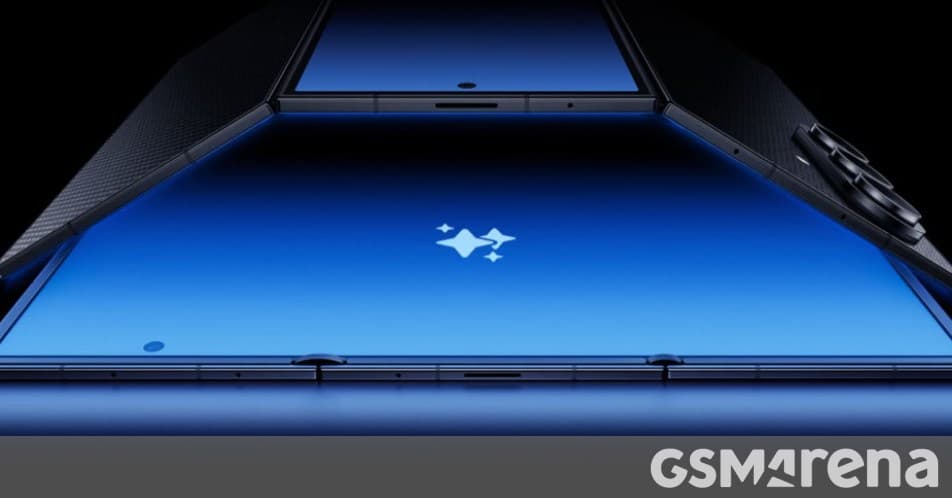
- Samsung's tri-fold experiment lasted under 6 months in US market, signaling production or demand challenges
- Enterprise buyers should wait for 2027's rumored TriFold 2 before committing to tri-fold device strategies
- The foldable market remains viable but bifurcated: dual-fold devices are stable, triple-fold is still experimental
According to [GSMArena](https://www.gsmarena.com/the_samsung_galaxy_z_trifold_is_now_discontinued_in_the_us_as_well-news-72434.php), Samsung has officially discontinued the Galaxy Z TriFold in the United States, marking the end of its limited production run after just a few months on the market.
If you were considering deploying tri-fold devices across your organization, that decision just got made for you. Samsung's official product page now states the "limited-run Galaxy Z TriFold is now completely sold out," with the company redirecting customers to the Galaxy Z Fold7 or Galaxy S26 Ultra instead.
Read in Short
Samsung's Galaxy Z TriFold is dead in both Korea and the US after an extremely limited run. For business leaders: this isn't a signal to avoid foldables entirely, but a clear indicator that triple-fold technology isn't ready for enterprise deployment. Stick with the proven Galaxy Z Fold series if foldables fit your use case, and watch for Samsung's rumored 2027 TriFold 2 before reconsidering.
Why Did Samsung Discontinue the TriFold So Fast?
The Galaxy Z TriFold's lifespan tells a story that business strategists should pay attention to. This wasn't a product failure in the traditional sense. It was a controlled market test that Samsung chose not to scale.
The device went on sale in Korea first, with "very limited quantities" that sold out quickly. The US saw its final restock on April 10, 2025. By mid-2025, it was gone from both markets. This pattern suggests Samsung faced one or more critical challenges: manufacturing complexity that couldn't scale, component costs that made mass production unprofitable, or demand signals that didn't justify continued investment.
For CTOs and procurement leaders, this matters because it reveals where the foldable market actually stands. Dual-fold devices like the Galaxy Z Fold series have achieved manufacturing maturity. Triple-fold technology hasn't. The gap between "impressive prototype" and "enterprise-ready product" remains significant.
What Should Enterprise Buyers Do About Foldable Phones?
The TriFold's discontinuation doesn't mean foldables are dead. It means the market is bifurcating into stable and experimental tiers.
| Factor | Dual-Fold (Z Fold7) | Triple-Fold (TriFold) | Traditional Flagship (S26 Ultra) |
|---|---|---|---|
| Market Maturity | 7th generation, stable | 1st generation, discontinued | Fully mature |
| Enterprise Support | Full warranty, parts available | No longer supported | Full warranty, parts available |
| Starting Price (US) | $1,599 | N/A (unavailable) | $1,079 |
| Screen Real Estate | 7.6" unfolded | ~10" unfolded (estimated) | 6.9" fixed |
| Deployment Risk | Low | High (product discontinued) | Minimal |
If your organization has been piloting foldable devices for field workers, executives, or mobile productivity use cases, the Galaxy Z Fold7 remains a viable option. At $1,599 for the 256GB model, it's priced competitively with premium traditional smartphones while offering genuine productivity benefits for users who need larger screens on the go.
The S26 Ultra at $1,079 offers better value if screen real estate isn't your primary concern. For most enterprise deployments, this remains the safer choice.
Samsung's 2027 Foldable Strategy: What's Coming Next
Samsung isn't abandoning the triple-fold concept. Recent rumors suggest a TriFold 2 could arrive in 2027, featuring a thinner and lighter design that addresses the original's bulk. More intriguingly, Samsung may also introduce a rollable-screen smartphone, which could offer similar screen expansion without the mechanical complexity of multiple hinges.
For business planning purposes, this timeline matters. If you're building a device strategy that depends on triple-fold form factors, you're looking at a minimum 18-24 month wait before the next commercially available option. That's a long time in mobile technology cycles.
Another perspective on how device manufacturers are pivoting their mobile strategies
The Real Cost of Early Adoption in Enterprise Hardware
The TriFold situation illustrates a recurring pattern that business leaders should recognize. Cutting-edge hardware categories follow a predictable cycle: limited launch, market testing, iteration or discontinuation, and eventual maturity (if the market validates the concept).
The Enterprise Hardware Adoption Framework
Before deploying any new device category across your organization, ask three questions: (1) Is this at least a third-generation product? First and second generations carry discontinuation risk. (2) Can you get replacement parts and support for your expected deployment lifecycle (typically 3-4 years)? (3) Does the premium over proven alternatives justify measurable productivity gains? If any answer is "no," you're paying for R&D, not productivity.
The Galaxy Z Fold series passes all three tests. The TriFold failed them all. That doesn't make the TriFold a bad product. It makes it an inappropriate enterprise purchase for any organization that values predictable technology lifecycles.
Should Your Business Wait for Rollable Phones Instead?
Samsung's rumored rollable-screen smartphone deserves attention from business strategists. Unlike foldables, which require multiple hinges and create visible creases, rollable displays use a single mechanism to extend screen size. This could mean better durability, fewer mechanical failure points, and a more seamless user experience.
However, the same early-adoption warnings apply. If Samsung launches a rollable device alongside the TriFold 2 in 2027, expect limited availability, premium pricing, and uncertain long-term support. Business buyers should watch the technology's evolution but avoid procurement commitments until at least the second generation.
Data-driven decision making applies to hardware procurement as much as software
What This Means for the Foldable Phone Market in 2026
The TriFold's discontinuation won't significantly impact the broader foldable market. Samsung's Galaxy Z Fold and Z Flip lines continue to see strong sales, and competitors like Google, OnePlus, and Honor are expanding their foldable portfolios.
The real signal here is about market segmentation. Basic foldables (flip phones with small cover screens) are reaching price points accessible to mid-market enterprise deployments. Premium foldables (book-style devices like the Z Fold7) are stabilizing as productivity tools. Experimental form factors (triple-fold, rollable) remain in the enthusiast and early-adopter category.
Business leaders should plan their mobile strategies accordingly. Budget for proven foldable form factors if they fit your use cases, but don't build dependencies on technologies that haven't survived multiple product generations.
Logicity's Take
At Logicity, we build AI-powered systems and digital infrastructure for businesses across India and the Middle East. We don't manufacture hardware, but we regularly advise clients on technology procurement as part of their digital transformation journeys. The TriFold situation is a textbook example of what we call 'innovation theater' versus 'innovation infrastructure.' Samsung's limited release was smart R&D. It generated real-world data on manufacturing, demand, and user behavior without committing to full-scale production. For our clients, we recommend a similar mindset: pilot new technologies in controlled environments before enterprise-wide deployment. This applies whether you're evaluating foldable devices, AI agents, or new software platforms. The TriFold buyers who got devices have interesting collector's items. The enterprise buyers who waited have stable fleets running Z Fold7s. Know which category your organization belongs in before signing purchase orders.
Frequently Asked Questions
Frequently Asked Questions
Is the Samsung Galaxy Z TriFold still available anywhere?
No. Samsung has officially discontinued the TriFold in both Korea and the United States, the only two markets where it was sold. The company's official product page states it is "completely sold out" with no plans for restocking. Secondary market prices will likely increase significantly for collectors.
Should my company invest in foldable phones for employees in 2026?
Yes, but only in mature product lines. The Galaxy Z Fold7 is a seventh-generation device with full enterprise support, making it appropriate for business deployment. Avoid first-generation form factors like triple-folds or rollables until they've proven market viability through multiple product cycles.
When will Samsung release the TriFold 2?
Current rumors suggest 2027, with a thinner and lighter design than the original. However, Samsung has not confirmed any details. Business leaders should not plan around unconfirmed product timelines.
What's the total cost of ownership for foldable phones vs traditional smartphones?
Foldable devices typically cost 40-60% more upfront ($1,599 for Z Fold7 vs $1,079 for S26 Ultra). However, screen repair costs are significantly higher, and the long-term durability of folding mechanisms remains less proven than traditional smartphone construction. Factor in 10-15% higher support costs when budgeting for foldable fleets.
Are rollable phones better than foldable phones for enterprise use?
Too early to tell. Rollable displays theoretically offer fewer mechanical failure points than multiple hinges, but no major manufacturer has released a commercial rollable smartphone yet. Wait for at least second-generation products before evaluating rollables for enterprise deployment.
Another perspective on the real cost of cutting-edge technology adoption without proper due diligence
Need Help With Your Enterprise Technology Strategy?
Logicity helps businesses across India and the Middle East make smart technology decisions. Whether you're evaluating device procurement strategies, building AI-powered productivity tools, or planning your next digital transformation initiative, our team brings practical expertise to complex technology questions. Get in touch to discuss how we can help your organization avoid expensive early-adoption mistakes while staying competitive.
Source: GSMArena.com / Vlad
Manaal Khan
Tech & Innovation Writer
Produced with AI assistance and reviewed by the Logicity editorial team. Learn more in our Editorial Policy.