Key Takeaways

- REST APIs reduce infrastructure costs through stateless design that simplifies cloud load balancing
- Most production APIs are 'REST-ish' not truly RESTful, missing HATEOAS requirements
- Choosing between REST and GraphQL depends on your data complexity and team expertise

Read in Short
REST isn't a protocol you install. It's an architectural style that 93% of organizations use because it reduces complexity, scales easily on cloud infrastructure, and uses standards your team already knows. The catch? Most companies implement 'REST-ish' APIs that skip advanced features like HATEOAS. For most business needs, that's fine. Here's what actually matters for your bottom line.
According to [Gabriel TME on DEV Community](https://dev.to/gabrieltme/arquitetura-rest-3d6), REST is not a protocol or framework but an architectural style introduced by Roy Fielding in 2000, designed to maximize scalability and reliability in distributed systems. This distinction matters because it explains why REST has become the backbone of modern software integration rather than just another tool in the stack.
What Is REST API Architecture and Why Does It Dominate?
Here's a number that should grab your attention: the global API ecosystem will hit $270 billion by the end of 2025. And REST APIs account for 83% of all public-facing integrations. That's not momentum. That's market consensus.
REST succeeded because it didn't try to reinvent how the web works. It formalized it. Roy Fielding, who co-founded the Apache HTTP Server, studied how the web itself scaled to billions of users. Then he extracted the principles that made that possible and published them as REST constraints.
“REST is software architecture on the scale of decades: every couple of years we should be able to replace a component without affecting the rest of the system.”
— Roy Fielding, Creator of REST & Co-founder of Apache HTTP Server
For business leaders, this translates to lower switching costs. You can swap your mobile app, replace your backend database, or migrate to a new cloud provider. As long as everyone follows REST conventions, the system keeps working.
How Does REST API Architecture Reduce Infrastructure Costs?
The magic word is 'stateless.' In REST, the server doesn't remember who you are between requests. Every API call carries all the information needed to process it. Sounds inefficient, right? It's actually the opposite.
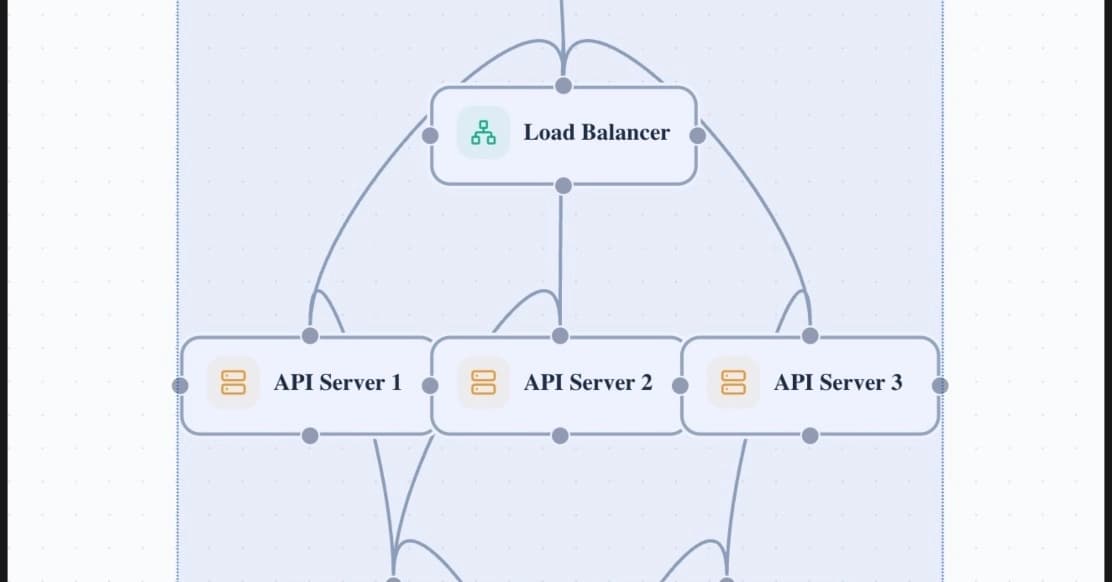
Think about what happens when traffic spikes. With stateful systems, you need 'sticky sessions' that route each user to the same server. That's a load balancer nightmare. With REST, any available server can handle any request. You spin up ten more instances during Black Friday, spin them down on Tuesday. Your cloud bill reflects actual demand, not worst-case provisioning.
The Cloud Cost Equation
Stateless REST APIs enable horizontal scaling without session management overhead. For companies running on AWS, Azure, or GCP, this means auto-scaling groups work as advertised. One fintech client cut their infrastructure costs by 35% after refactoring to truly stateless APIs, simply because they could finally use spot instances.
This same principle applies when building local development environments. If you're testing API integrations before deploying to cloud, running a [local Kubernetes cluster](/blog/local-kubernetes-clusters-cut-dev-costs-before-cloud) can save thousands in development costs while maintaining production parity.
The REST Constraints Every CTO Should Understand
REST defines six constraints. You don't need to memorize them, but you need to understand what they buy you in practice.
- Client-Server Separation: Your frontend and backend teams can work independently. Release cycles don't need to sync.
- Statelessness: No session state on the server. This enables the cloud scaling we discussed above.
- Cacheability: Responses can be cached at multiple levels (browser, CDN, proxy). This slashes latency and server load.
- Uniform Interface: Resources have unique URLs. Actions use standard HTTP verbs (GET, POST, PUT, DELETE). New developers onboard faster.
- Layered System: You can insert proxies, load balancers, and security layers without changing your API contracts.
- Code on Demand (Optional): Servers can send executable code to clients. Rarely used, but it's why JavaScript works the way it does.
Why Most 'REST APIs' Aren't Actually RESTful
Here's an industry secret: the Reddit community at r/webdev frequently debates whether to call modern APIs 'REST-ish' rather than 'RESTful.' They have a point. Most production APIs skip the hardest requirement: HATEOAS.
HATEOAS (Hypermedia as the Engine of Application State) means API responses should include links telling the client what actions are possible next. Think of it like a website. You don't hardcode every URL. You follow links. A truly RESTful API works the same way.
“Hypermedia is the feature that makes a web API capable of handling changes gracefully. If the engine of application state is not being driven by hypertext, it cannot be RESTful.”
— Leonard Richardson, Creator of the Richardson Maturity Model
So why do most teams skip it? Because HATEOAS adds complexity that many applications don't need. If your API serves a single mobile app that your team also builds, hardcoding endpoints is simpler and works fine. But if you're building a public API that hundreds of third-party developers will integrate, HATEOAS prevents breaking changes from cascading into support tickets.
“Roy Fielding's definition should carry more weight than most; he made it clear that HATEOAS is a pre-condition of REST, not an optional extra.”
— Martin Fowler, Chief Scientist at Thoughtworks
REST vs GraphQL vs SOAP: Which Architecture Fits Your Business?
A viral tweet from NikkitaFTW compared REST and GraphQL using a burger analogy: REST is like ordering from a fixed menu. GraphQL is like having a tray of ingredients and building exactly what you want.
That analogy captures the user experience. But it misses the operational trade-offs. Here's what your engineering and finance teams actually need to know:
| Factor | REST | GraphQL | SOAP |
|---|---|---|---|
| Learning curve | Low (uses HTTP standards) | Medium (requires schema design) | High (XML-heavy, WS-* standards) |
| Caching | Built-in HTTP caching | Requires custom implementation | Minimal native support |
| Over-fetching data | Common problem | Solved by design | Common problem |
| Team expertise needed | Any web developer | Specialized GraphQL developers | Enterprise integration specialists |
| Best for | Public APIs, microservices | Complex data relationships, mobile apps | Legacy enterprise systems, banking |
For most startups and mid-sized companies, REST remains the pragmatic choice. Your team already knows it. Tooling is mature. Debugging is straightforward. GraphQL makes sense when you have complex, nested data that multiple clients need to query differently. Think dashboards pulling from dozens of microservices, or mobile apps that need to minimize bandwidth.
Real-World Implementation: What Gets Missed
The gap between REST theory and practice shows up in three areas that cost companies time and money.
- Versioning strategy: Without a plan, API changes break production clients. URL versioning (/v1/, /v2/) is simplest. Header versioning is cleaner but harder to debug.
- Error handling: REST doesn't specify error formats. Choose a standard (RFC 7807 Problem Details) before your first client integration.
- Documentation: Your API is only as good as its docs. Tools like OpenAPI (Swagger) generate interactive documentation from code. Budget time for this.
Security is another area where REST's flexibility becomes a liability. Unlike SOAP, which has built-in WS-Security standards, REST relies on you to implement authentication correctly. OAuth 2.0 is the industry standard, but misconfiguration remains the top cause of API breaches. This is similar to how blockchain projects must decide between [transparent and shielded transactions](/blog/unshielded-tokens-when-blockchain-transparency-beats-privacy). There's no default answer. You design for your threat model.
The Bottom Line for Business Leaders
✅ Pros
- • Scales horizontally with minimal infrastructure complexity
- • Uses standards your team already knows (HTTP, JSON, URLs)
- • Massive ecosystem of tools, libraries, and documentation
- • Works with any programming language or platform
❌ Cons
- • Over-fetching data requires multiple round trips for complex queries
- • No built-in real-time support (need WebSockets separately)
- • True REST compliance (HATEOAS) is rarely implemented
- • Security implementation is your responsibility
Logicity's Take
We've built REST APIs for startups across India and the Middle East, including Arabic RTL interfaces that require careful handling of bidirectional data. The pattern we see repeatedly: teams over-engineer their first API. They chase perfect REST compliance before they have a single paying customer. Our advice? Start with basic REST conventions. Use JSON. Follow HTTP verb semantics. Skip HATEOAS unless you're building a public platform. You can always add sophistication later. The real cost isn't in choosing REST vs GraphQL. It's in delayed launches and over-scoped MVPs. For most projects, we recommend pairing Next.js with a headless CMS like Sanity for content APIs, then layering custom REST endpoints only where business logic demands it. That gets you to market in weeks, not months.
Frequently Asked Questions About REST API Architecture
Frequently Asked Questions
How much does building a REST API cost?
A simple REST API with 5-10 endpoints costs $10,000-$30,000 to build properly. Complex systems with authentication, rate limiting, and documentation can reach $100,000+. The ongoing maintenance (versioning, monitoring, updates) typically runs 20-30% of build cost annually.
Is REST still relevant in 2025 or should we use GraphQL?
REST remains the default choice for 93% of organizations. Use GraphQL only if you have complex data relationships or multiple clients with different data needs. For most B2B SaaS, internal tools, and mobile backends, REST is simpler to build, debug, and maintain.
How long does it take to implement a REST API?
A basic API takes 2-4 weeks with an experienced team. Add 2-3 weeks for OAuth authentication, 1-2 weeks for comprehensive documentation, and 2-4 weeks for production hardening (rate limiting, monitoring, error handling). Budget 8-12 weeks for a production-ready system.
What's the difference between REST and RESTful?
REST is the architectural style. RESTful means an API follows all REST constraints, including HATEOAS. Most production APIs are 'REST-inspired' but skip full compliance. For business purposes, this distinction rarely matters unless you're building public APIs for third-party developers.
Do I need REST expertise on my team or can we outsource it?
Any competent backend developer can build basic REST APIs. For production systems with security requirements, rate limiting, and high availability, you need senior engineering experience. Outsourcing initial builds is common. Keep documentation and architectural decisions in-house.
Learn how to test your REST APIs locally before racking up cloud bills
Another architectural trade-off where business requirements drive technical choices
Need Help Implementing This?
Logicity builds production-ready REST APIs for startups and enterprises. We specialize in AI-integrated systems, multilingual applications, and rapid MVP development. If you're evaluating API architecture for your next project, our team can help you make the right trade-offs for your business goals.
Source: DEV Community
Huma Shazia
Senior AI & Tech Writer
Produced with AI assistance and reviewed by the Logicity editorial team. Learn more in our Editorial Policy.