Key Takeaways
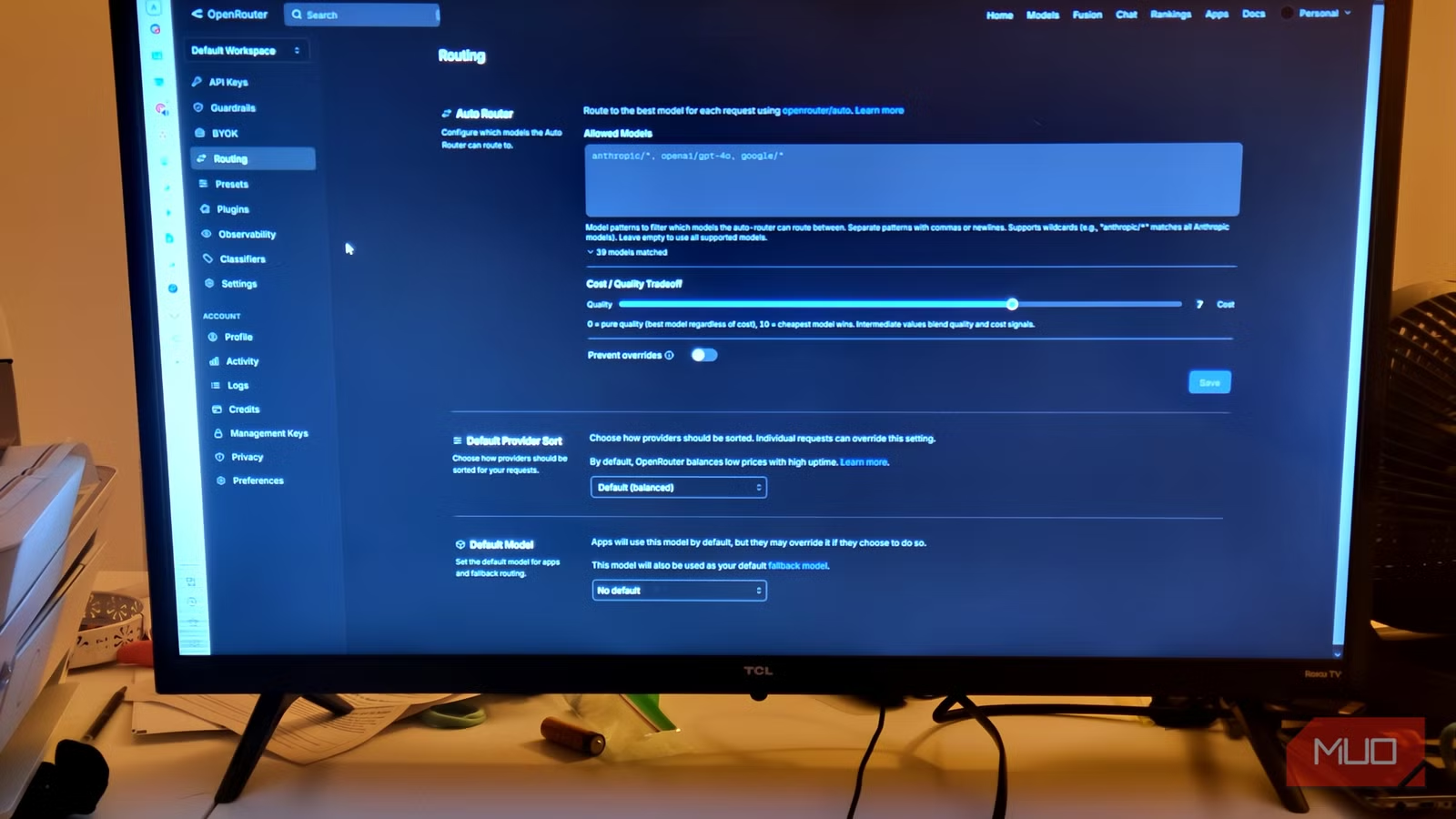
- OpenRouter provides a single API endpoint compatible with OpenAI's SDK that routes requests to 500+ models from 60+ providers
- Switching between models like GPT-4, Claude, and Gemini requires changing just one string in your code
- The platform processes 25 trillion tokens weekly and raised $1.3 billion in its May 2026 Series B
OpenRouter has become the routing layer developers didn't know they needed. The platform offers a single API endpoint that connects to over 500 AI models across 60+ providers, letting developers swap between GPT-4, Claude, Gemini, and Mistral by changing one string in their code. No rewiring authentication. No new billing portals. No engineering project every time you want to test a different model.
The pitch is simple: stop managing a dozen different integrations. Every major AI provider, from OpenAI to Anthropic to Google, has its own API structure, authentication flow, and billing system. Building apps that use multiple models means maintaining separate connections to each. OpenRouter standardizes all of it behind an interface compatible with OpenAI's SDK.
Why are developers switching to unified AI API endpoints?
The core problem is vendor lock-in. Once you've built your application around one provider's API, switching means going back into your codebase and rewriting integration logic. Jorge Aguilar, writing for MakeUseOf, describes the frustration: "I've switched from Gemini to plenty of others, and every time, it is incredibly annoying because of the different foundations."
OpenRouter eliminates that friction. The same code that calls GPT-4 can call Mistral or Claude without any other changes. This matters when you're comparing outputs across models, testing which one handles your specific use case best, or hedging against a provider's downtime.
Billing consolidation is the other draw. Instead of juggling separate accounts and spending commitments across OpenAI, Anthropic, Google, and others, OpenRouter uses a single prepaid credit balance. You load funds once, costs get deducted per token as you make calls, and your budget can flow across whatever combination of models makes sense for each project.
How does OpenRouter handle model failures?
One feature stands out: automatic failover. If your chosen model is down or getting hammered by traffic, you can pass a list of model slugs instead of just one. OpenRouter will move down the list until it finds one that works. For production applications requiring high uptime, this is critical. Reddit users in r/LLMDevs and r/devops praise this routing as essential for reliability.
The response format mirrors OpenAI's SDK, so existing code patterns apply. You pull text from response.choices[0].message.content. Model names follow a consistent slug pattern like anthropic/claude-3.5-sonnet or google/gemini-pro-1.5, which you grab from OpenRouter's model directory.
Setting up OpenRouter in your project
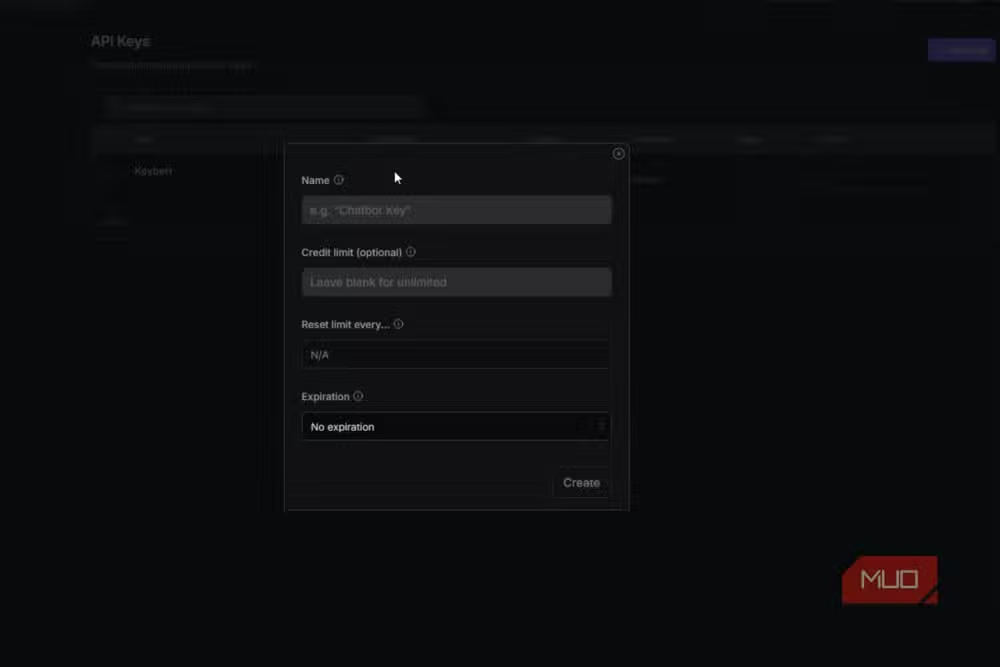
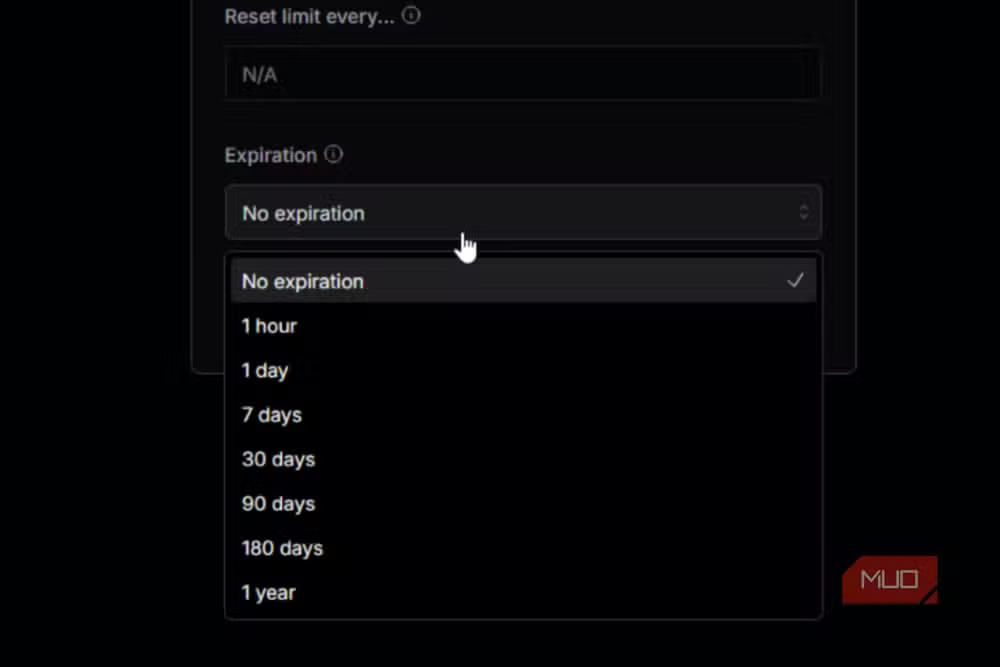
Getting started takes about five minutes. Create an account on OpenRouter's website, add credit in the billing section, then generate an API key in the Keys tab. Copy the token immediately. Unlike some platforms, OpenRouter won't show this key again.
Install the standard OpenAI library (pip install openai for Python, npm install openai for Node.js). Change the base URL to https://openrouter.ai and use your OpenRouter token as the API key. From there, you call chat completions the same way you would with OpenAI directly.
The company has ambitions beyond simple routing. In a recent developer keynote, an OpenRouter lead engineer stated: "We aren't just routing traffic; we are building the orchestration layer that allows models to talk to each other and delegate tasks autonomously." That's a hint at where this is headed: not just model access, but model coordination.
What are the concerns with centralized AI routing?
Privacy is the obvious one. As a centralized middleman, OpenRouter processes all prompts before passing them to the final model provider. Power users in developer communities note this adds another party with visibility into your data. For applications handling sensitive information, that's a real consideration, not a dealbreaker, but something to factor into your architecture decisions.
There's also the question of what happens if OpenRouter itself goes down. You've traded multiple points of failure for a single one. The failover routing helps within the platform, but doesn't help if the platform itself is unreachable.
The business case for model-agnostic infrastructure
OpenRouter raised $1.3 billion in its May 2026 Series B, a valuation that reflects enterprise demand for this kind of abstraction layer. The platform now handles 25 trillion tokens weekly, with 45% of traffic coming from non-US-developed models. That last stat matters: OpenRouter has become a global AI gateway, not just a convenience layer for American developers using American models.
For teams building AI features into products, the value proposition is flexibility without complexity. You can start with one model, benchmark against others, and switch without rewriting integration code. The engineering time saved compounds across projects.
Another developer's perspective on simplifying infrastructure through better choices
More approaches to consolidating tools and reducing subscription fatigue
Frequently Asked Questions
Does OpenRouter support all major AI models?
Yes. OpenRouter provides access to 500+ models from 60+ providers, including OpenAI, Anthropic, Google, Mistral, and open-source options. New models are typically added within days of their public API release.
How does OpenRouter pricing compare to direct API access?
OpenRouter uses pass-through pricing with a small markup. You pay per token based on each model's rates, deducted from a single prepaid balance. The convenience of unified billing often offsets any marginal cost difference.
Can OpenRouter automatically switch models if one fails?
Yes. You can pass a list of model slugs in your request, and OpenRouter will automatically route to the next available model if your first choice is down or overloaded.
Is OpenRouter compatible with existing OpenAI SDK code?
Yes. OpenRouter uses an interface compatible with OpenAI's SDK. You change the base URL and API key, and your existing code works with any model OpenRouter supports.
What are the privacy implications of using OpenRouter?
OpenRouter processes all prompts before routing them to model providers, adding an intermediary with visibility into your data. Evaluate this against your application's sensitivity requirements.
Logicity's Take
OpenRouter's $1.3 billion valuation signals a broader shift: the AI stack is unbundling. Just as CDNs abstracted away server infrastructure, routing layers are abstracting away model choice. The winners in AI application development won't be those locked into one provider's capabilities. They'll be teams that can swap models as easily as changing a config variable. OpenRouter isn't the only player building this layer, but it's the one setting the terms right now.
Need Help Implementing This?
Building AI features into your product and unsure which model fits your use case? Logicity's network of technical consultants can help you design a model-agnostic architecture. Contact us at consult@logicity.in.
Source: MakeUseOf
Manaal Khan
Tech & Innovation Writer
Produced with AI assistance and reviewed by the Logicity editorial team. Learn more in our Editorial Policy.