Key Takeaways
- Don Ho filed a trademark complaint with Cloudflare against the macOS port of Notepad++
- The dispute is about branding and trademark, not the code itself, which is GPL-licensed
- Ho's concerns stem partly from a recent supply chain attack that compromised Notepad++'s update server
The Branding Problem
Don Ho, the creator of the popular Windows text editor Notepad++, has filed a trademark complaint with Cloudflare and is threatening further legal action. His target: a macOS port that used his project's name, logo, and even his own biography to present itself as an official release.
Ho published a blog post on May 1st calling the project a "fake" and asking users to help correct the record online. The issue is not the code itself. Notepad++ is released under GPL v3, which permits anyone to fork and modify the source. The problem is everything else.
The macOS port, built by New York-based developer Andrey Letov using AI-assisted development workflows, launched its first public version in April. It quickly attracted attention from tech outlets that covered it as though it were an official cross-platform expansion of the 22-year-old editor. Several publications initially reported the port as a long-awaited native release before correcting their coverage after Ho's blog post.
What the Port's Website Did
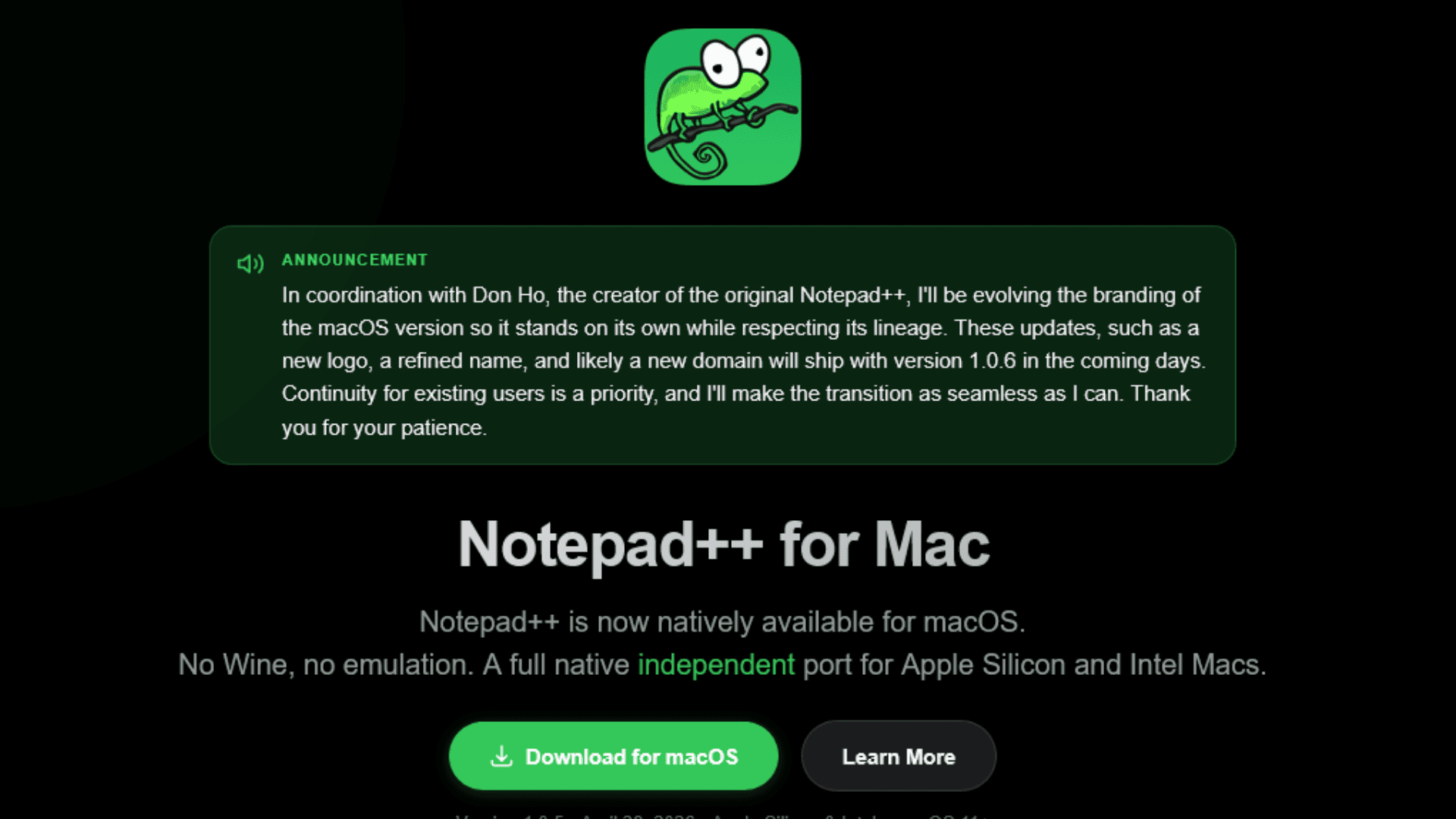
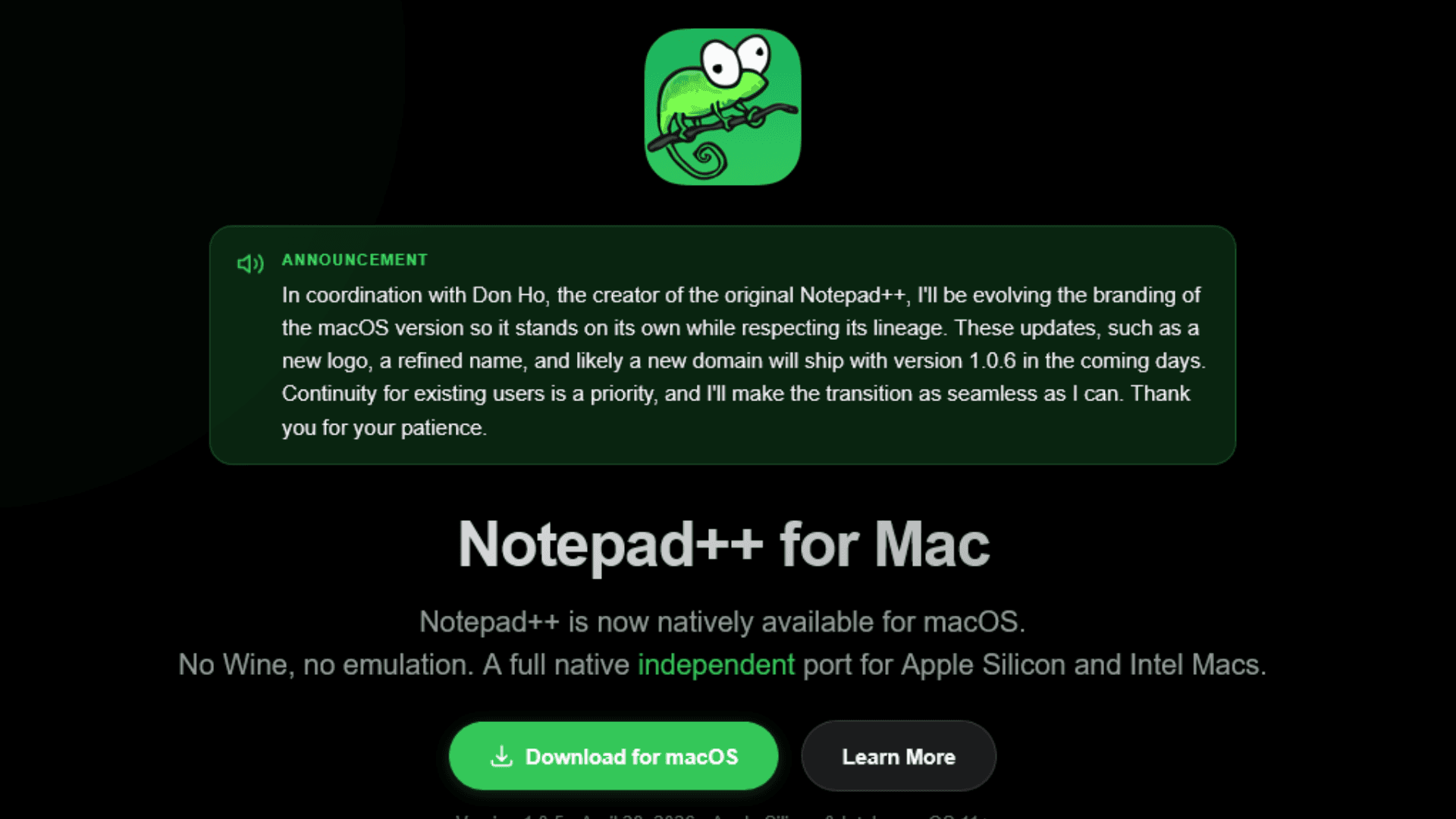
The project's website used the Notepad++ chameleon logo, a near-identical domain name, and an author page that listed Ho alongside Letov. Ho had no knowledge of this and gave no consent.
A disclaimer noting the port was independent did appear on the site. But users had to scroll past the marketing copy to find it.
In a GitHub thread where the early dispute played out (and is still ongoing), Ho argued that it's "risky for the Notepad++ team to appear as endorsing any project which claims to be based on the Notepad++ code base." Other contributors warned that such actions could expose users to malware and that any security problems in the port would damage the reputation of the original project.
Why This Matters More Now
Ho's concern about reputation damage is not abstract. In February, Notepad++ announced that its own update server had been hijacked in a targeted supply chain attack linked to the Chinese espionage group Lotus Blossom. That attack delivered trojanized installers to a subset of users through the editor's built-in updater for roughly seven months.
Ho has spent the months since tightening update verification. An unauthorized fork trading on the same brand identity complicates that effort. It makes it harder for users to distinguish legitimate software from imitations.
Related: open-source alternatives to proprietary software
Code vs. Trademark
Ho has stressed that his issue is not with the macOS port existing. He has expressed that he's happy to see a macOS port. The problem is the unauthorized use of branding. The project's name and logo are trademarked. Ho did not grant permission for either to be used.
This is a common tension in open source. The GPL permits forking code freely. It does not grant trademark rights. Projects like Firefox and Linux have faced similar situations. Anyone can fork their code, but using the official name and logo requires permission.
Letov responded to the initial complaint by expressing hope that Ho would endorse the port. Ho refused, telling The Register that he would not put his name on software he doesn't manage.
What Happens Next
The trademark complaint with Cloudflare is the first formal step. Ho has threatened further legal action if the branding issues are not resolved. The GitHub thread remains open, with both sides still discussing the matter.
If Letov removes the Notepad++ name, logo, and any reference to Ho from the project, the legal issue likely disappears. The code can continue as a separate project under a different name. Whether users will find and trust a renamed port is another question.


Logicity's Take
Frequently Asked Questions
Is the Notepad++ macOS port legal?
The code itself is legal under GPL v3, which permits forking. The legal issue is the unauthorized use of the Notepad++ trademark, logo, and Don Ho's name and biography.
Why did Don Ho file a trademark complaint?
The macOS port used Notepad++'s name, logo, and Ho's biography without permission, making it appear to be an official release. This is trademark infringement, not a GPL violation.
Can I still use the Notepad++ macOS port?
The port exists and functions, but it is not endorsed by the original Notepad++ project. Given the ongoing dispute and Ho's concerns about security reputation, users should proceed with caution.
What is the difference between GPL and trademark rights?
GPL governs how source code can be used, modified, and distributed. Trademark rights protect names, logos, and brand identity. You can fork GPL code freely, but you cannot use the original project's trademarked name or logo without permission.
Need Help Implementing This?
Source: Latest from Tom's Hardware
Huma Shazia
Senior AI & Tech Writer
Produced with AI assistance and reviewed by the Logicity editorial team. Learn more in our Editorial Policy.