Key Takeaways
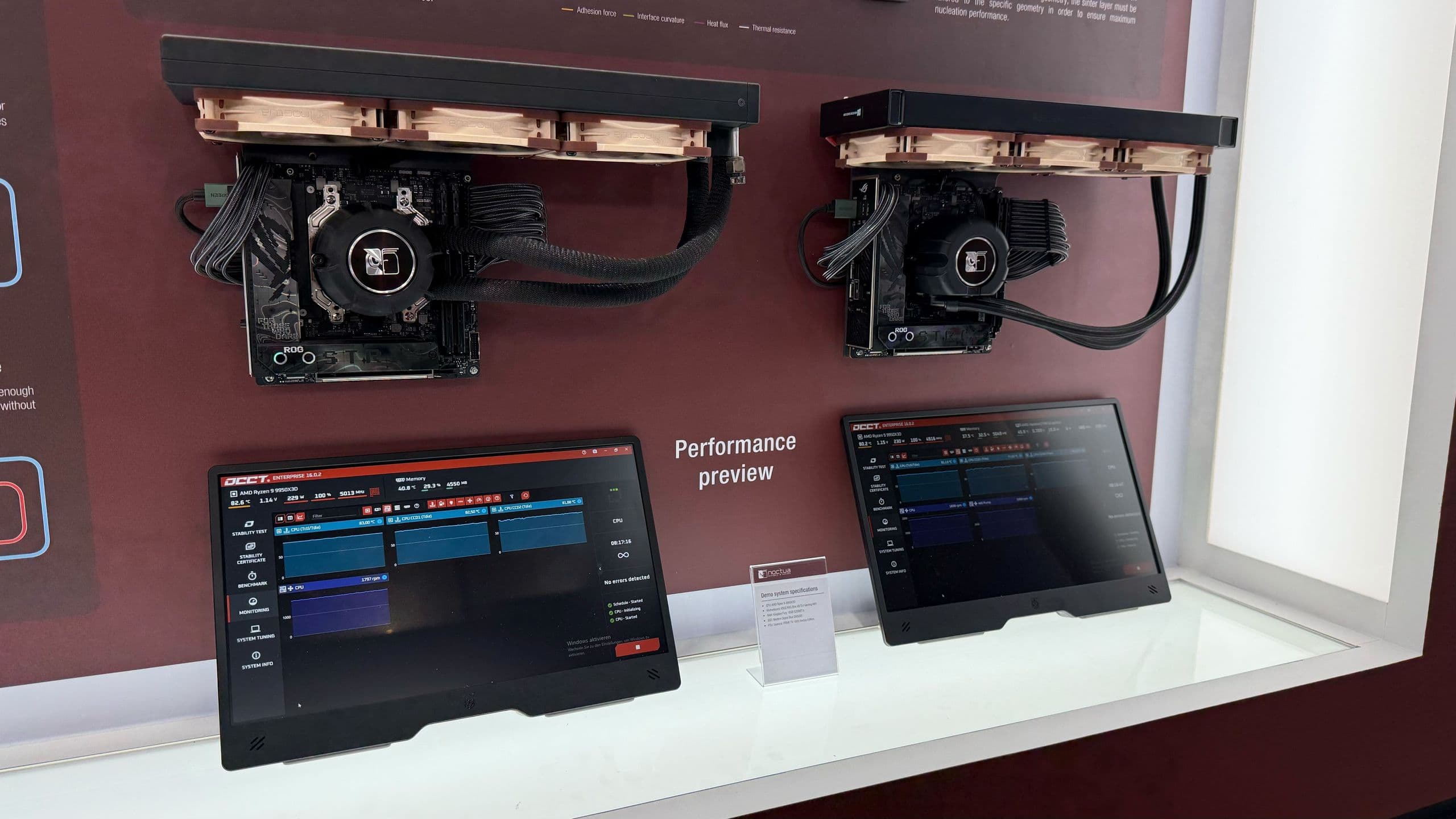
- Noctua's thermosiphon prototype matched a 360mm AIO cooler at 230W thermal load, hitting around 80°C on a Ryzen 9 9950X3D
- A sintered copper evaporator surface solves the vapor bubble insulation problem that plagued earlier prototypes
- The passive cooler now targets Q3 2027 for commercial release, with a design that resembles retail AIOs
Noctua's long-running experiment in pumpless liquid cooling has reached a critical milestone. At Computex 2026, the Austrian cooling specialist demonstrated its latest thermosiphon prototype matching the thermal performance of a 360mm all-in-one liquid cooler, all without a single moving part in the loop.
The company now projects a Q3 2027 commercial launch for the product. That's later than some enthusiasts hoped, but the Computex demonstration showed why Noctua believes the wait will be worth it.
How a Thermosiphon Works
A thermosiphon relies on physics instead of a pump to move liquid through a cooling loop. Here's the cycle: a working fluid sits in a closed loop. When exposed to CPU heat, the fluid vaporizes and rises. It enters a condenser (the radiator), sheds its heat, returns to liquid form, and falls back down to the heat source. Gravity and phase change do the work that a pump would normally handle.
This simple principle creates complex engineering problems. Noctua has spent years characterizing and solving them.
The Sintered Copper Breakthrough
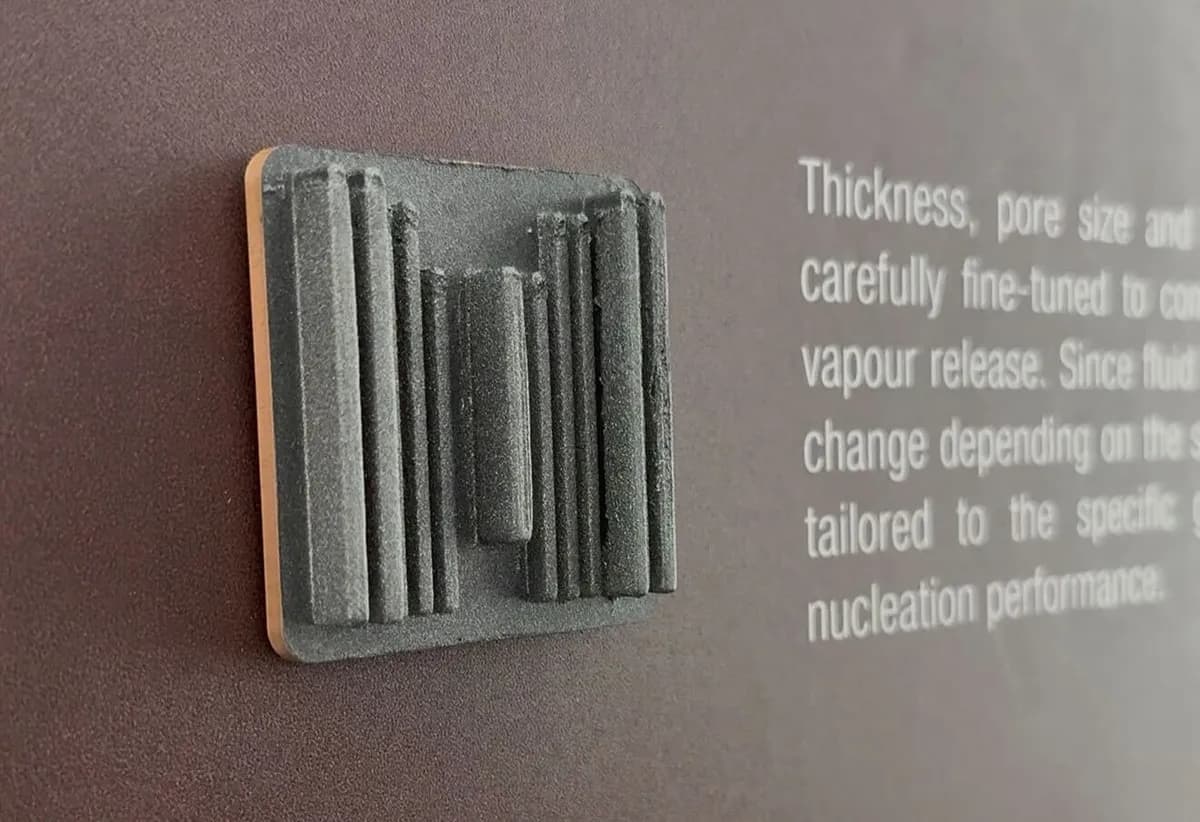
The biggest improvement in the latest prototype is a thin layer of sintered copper applied to the evaporator surface. This rough, porous material creates enormous surface area at the microscopic level. Capillary action draws cool liquid toward the evaporator as the fluid nearest the surface vaporizes.
“The sintered copper surface is the missing piece of the puzzle, allowing us to overcome the vapor bubble insulation issues we faced in earlier iterations.”
— Noctua Representative, Computex 2026
Earlier prototypes struggled with insulating bubbles or films forming over hot spots. On a smooth surface, vapor can pool and block heat transfer. The sintered layer prevents this by wicking fresh liquid to the surface continuously.
Noctua also redesigned the finned evaporator to prevent turbulent fluid flow. Turbulence causes warm vapor to mix with colder fluid further from the evaporator surface, reducing cooling efficiency.
Performance Demo: Thermosiphon vs AIO
Noctua put the thermosiphon head-to-head against a 360mm version of its NL-LC1 AIO cooler. Both systems cooled identical Ryzen 9 9950X3D test rigs running at a Package Power Tracking (PPT) limit of 230W.
Accounting for some variance in the workload, both systems showed CPU temperatures just over 80°C. The passively circulating thermosiphon delivered cooling performance comparable to an AIO with an active pump. For a cooler with no moving parts in the liquid loop, that's a significant achievement.
Design Refinements
Beyond the evaporator improvements, Noctua made practical changes that move the prototype closer to retail readiness.
- The inlet and outlet hoses now sit on the same side of the evaporator, similar to standard AIO pumps. This improves motherboard clearance and compatibility.
- New tubing material reduces permeation, seals better at connectors, and achieves full regulatory compliance.
- The overall unit now resembles a typical AIO, a major departure from the rough prototypes shown in previous years.
The visual similarity to existing AIOs matters for adoption. PC builders are familiar with routing AIO tubes and mounting radiators. A thermosiphon that installs like an AIO but runs without a pump would slot into existing build workflows.
Why Kill the Pump?
The pump is the most common failure point in liquid coolers. It's also a noise source, even in premium units. By eliminating it, Noctua aims to create a cooler that's both quieter and more reliable over the long term.
Air coolers avoid pump risk entirely, but they struggle with high thermal loads and take up significant space inside the case. A thermosiphon could offer AIO-level performance with air-cooler-level reliability. That's the pitch, at least.
Community Reaction: Cautious Optimism
Discussion on r/hardware and r/buildapc shows enthusiasm for the concept, but disappointment at the timeline. Q3 2027 is further out than many hoped, especially given that Noctua has shown thermosiphon prototypes for several years.
Power users are focused on trade-offs. Passive silence comes at the cost of radiator size. Hitting 230W+ thermal targets requires a larger radiator footprint than many cases comfortably accommodate. Whether mainstream builders will accept that trade-off remains to be seen.
What's Next
Noctua's approach is characteristically methodical. The company doesn't rush products to market. The NL-LC1 AIO, shown alongside the thermosiphon at Computex 2026, represents Noctua's first entry into active liquid cooling. It suggests the company is building out a liquid cooling portfolio where the thermosiphon will eventually fit.
For now, the Q3 2027 date is a projection, not a promise. Engineering challenges remain. But the Computex demo showed that Noctua has solved the hardest physics problems. The remaining work is refinement and manufacturing.
Logicity's Take
Frequently Asked Questions
What is a thermosiphon CPU cooler?
A thermosiphon is a pumpless liquid cooler that uses phase change and gravity to circulate fluid. Heat vaporizes the liquid, it rises to a radiator, condenses, and falls back down. No mechanical pump is needed.
When will Noctua's thermosiphon be available?
Noctua projects a Q3 2027 commercial launch, though this is an estimate subject to engineering progress.
How does the thermosiphon compare to an AIO cooler?
In Noctua's Computex 2026 demo, the thermosiphon matched a 360mm AIO on a 230W CPU load, with both systems hitting around 80°C. The thermosiphon does this without a pump.
Why would someone choose a thermosiphon over an AIO?
The pump is the most common failure point in AIOs and a source of noise. A thermosiphon eliminates the pump, potentially offering better long-term reliability and quieter operation.
What is sintered copper and why does it matter?
Sintered copper is a porous, rough material created by fusing copper particles. Its high surface area enables capillary action that draws liquid to the evaporator, preventing insulating vapor bubbles from forming.
Need Help Implementing This?
Source: Latest from Tom's Hardware
Huma Shazia
Senior AI & Tech Writer
Produced with AI assistance and reviewed by the Logicity editorial team. Learn more in our Editorial Policy.