Key Takeaways
- Prentis is raising $100M at a $1B valuation for AI agents that automate office workflows
- The startup claims $50M in signed contracts and projects $75M ARR by Q3 2026
- Prentis says its Hive-32B model beats OpenAI and Anthropic on computer-use benchmarks at 10x lower cost
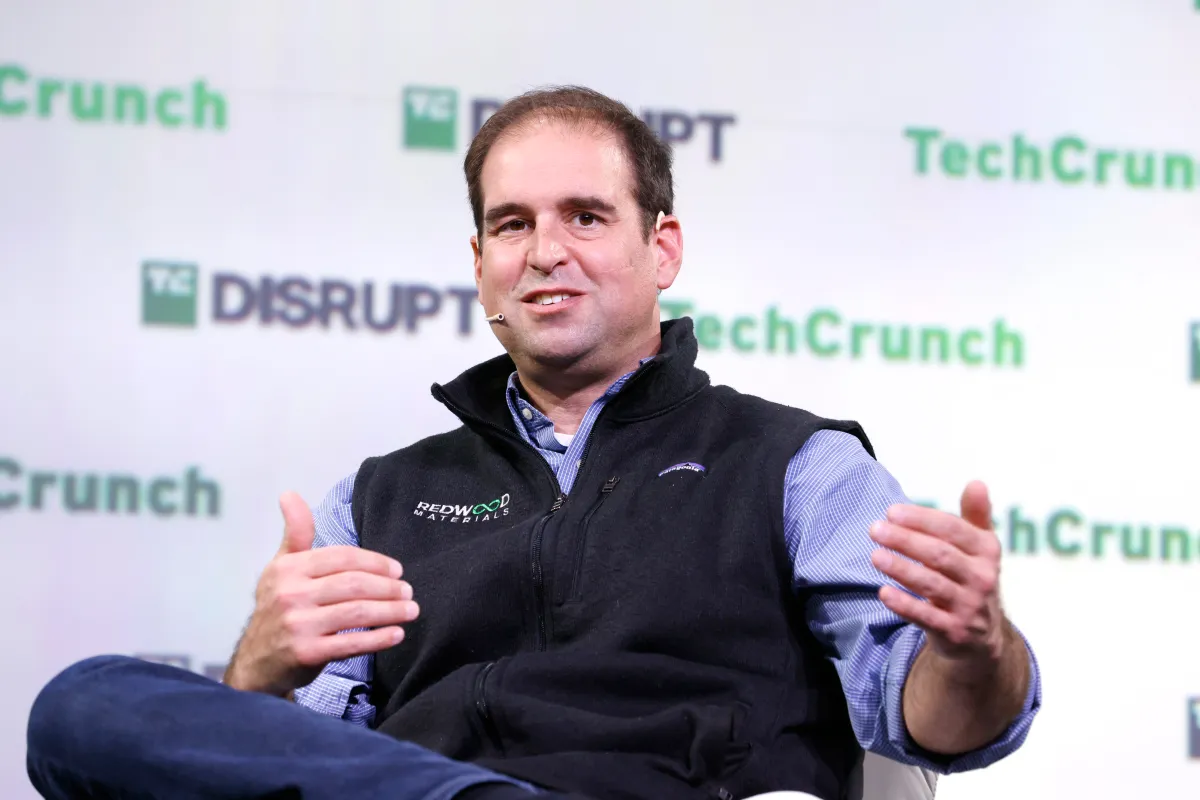
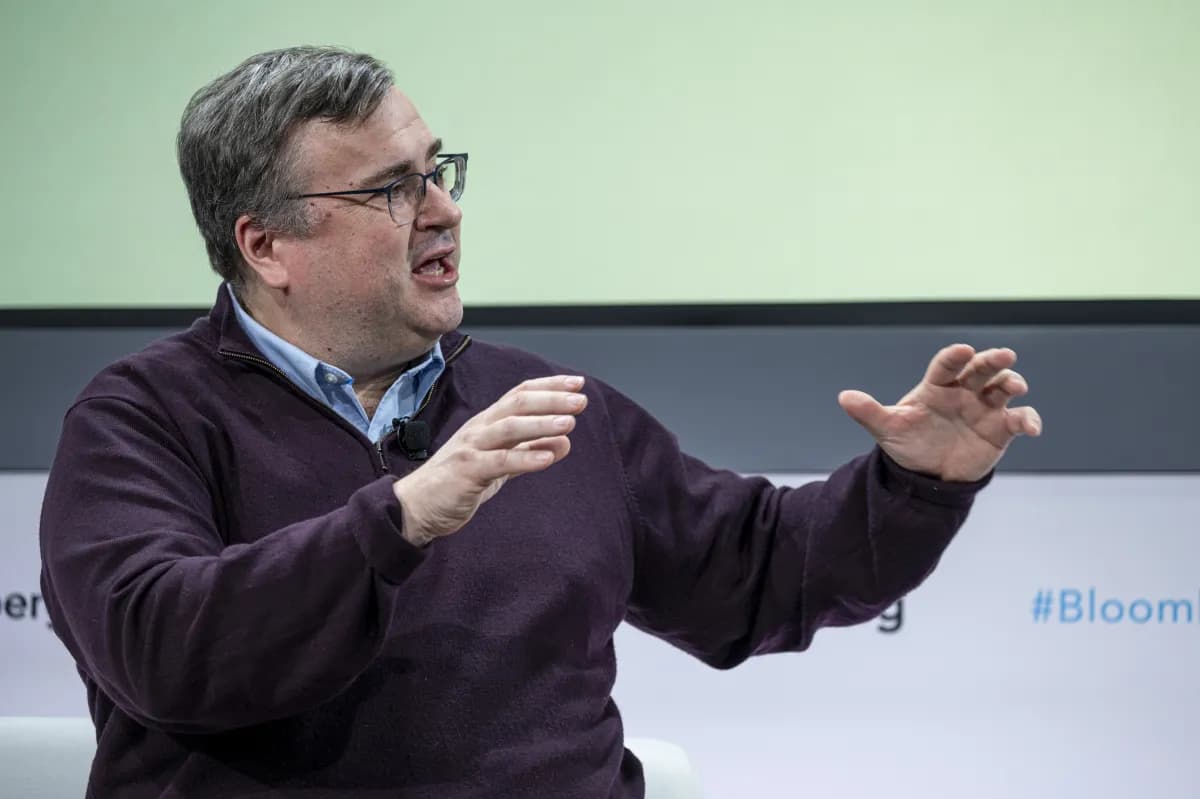
Prentis, the AI research lab co-founded by Reid Hoffman, Mark Pincus, and serial entrepreneur Ritankar Das, is in talks to raise $100 million at a $1 billion valuation. The startup, launched in April 2026, is building AI agents that control computers to automate routine office workflows, from processing insurance claims to handling customs duty refund exceptions.
The funding round, reported by TechCrunch, would give the three-month-old company a unicorn valuation before it has publicly shipped a product. Prentis has not responded to requests for comment.
Earlier coverage of Prentis funding discussions
What does Prentis actually build?
Prentis trains models to learn how office workers navigate routine workflows across documents and systems. The goal: AI agents that can watch a human complete a task once, then replicate that task autonomously across thousands of cases.
According to investor materials obtained by TechCrunch, the company has signed contracts worth up to $50 million with several customers, including a healthcare management services organization, a manufacturer, and goods and clothing manufacturers. The pitch deck projects an estimated $75 million annualized run rate by Q3 2026.
A caveat buried in the deck: those figures reflect estimated annualized value based on a contracted fee equal to 20% of savings realized, not recognized revenue. They are "performance-dependent and subject to final execution." Translation: if the agents don't deliver measurable savings, the revenue doesn't materialize.
How does Hive-32B compare to GPT-5 and Claude Opus?
Prentis claims its Hive-32B model outperforms OpenAI's GPT-5.4 and Anthropic's Claude Opus 4.6 on two computer-use benchmarks: WindowsAgentArena, which measures end-to-end task completion on real Windows applications, and ScreenSpot-v2, which tests a model's ability to locate the right on-screen control.
The company argues its edge comes from running a much smaller, cheaper model. Its pitch deck claims roughly 10x lower cost per task than frontier APIs, making it more economical to deploy across everyday workflows. TechCrunch has not independently verified these benchmark results.
| Model | Benchmark Focus | Cost Claim | Source Verification |
|---|---|---|---|
| Prentis Hive-32B | WindowsAgentArena, ScreenSpot-v2 | ~10x cheaper than frontier APIs | Not independently verified |
| OpenAI GPT-5.4 | General purpose + computer use | Frontier API pricing | Public benchmarks available |
| Anthropic Claude Opus 4.6 | General purpose + computer use | Frontier API pricing | Public benchmarks available |
Who is behind Prentis?
Ritankar Das, 31, serves as CEO. Das was UC Berkeley's youngest University Medalist in over a century, graduating at 18 with a double major in bioengineering and chemical biology. He earned a master's in biomedical engineering at Oxford before dropping out of an AI PhD program at Cambridge, where he was a Gates Cambridge Scholar, to found Titan in 2014.
Titan, Das's holding company, has launched several AI-focused ventures. Tala Health, an AI-powered virtual care provider, raised a $100 million seed round in 2025. Forta Health, an autism care startup, raised $55 million led by Insight Partners in 2024. Dascena, a disease prediction company, was acquired by CirrusDx in 2022.
Reid Hoffman and Mark Pincus are co-founders but appear to have lighter operational roles. Hoffman, the LinkedIn co-founder and Greylock partner, stepped down from Microsoft's board last month to go "founder mode" on Manas AI, an AI drug-discovery startup. He was an early OpenAI investor and co-founded Inflection AI with Mustafa Suleyman before Microsoft absorbed most of that team in 2024.
Pincus, the Zynga founder, now runs the investment firm Reinvent Capital with Hoffman as a senior adviser. He published a memoir, "Life at the Speed of Play," last month.
The competition is fierce and well-funded
Prentis is betting that automating everyday office tasks will soon outpace coding as AI's biggest use case. It's a crowded market. Anthropic, OpenAI, and Mira Murati's Thinking Machines Lab are all developing AI agents for computer use.
Anthropic has been acquiring talent directly. Earlier this year, it bought Vercept, a Seattle computer-use startup, folding in its founders and shutting down the product. This M&A activity signals how seriously the major labs view the category.
Deep dive on building AI agents with Claude
Prentis has hired more than 25 employees, including researchers from OpenAI, Google DeepMind, Meta, Tencent, and Alibaba, according to its website. Whether that talent base is enough to outrun labs with thousands of researchers and billions in compute remains the central question.
Context on recent AI funding landscape
Logicity's Take
Prentis is making a sharp bet: that a smaller, specialized model tuned for computer use can beat general-purpose giants on cost and accuracy for workflow automation. The $1B valuation on unrecognized, performance-contingent revenue is aggressive, but founder pedigree matters in fundraising. The risk for founders watching this space is that Anthropic, OpenAI, and Google ship native computer-use capabilities that commoditize what Prentis is building. If you're evaluating AI workflow automation today, watch whether Prentis releases public benchmarks that can be independently verified. Until then, the claims are investor marketing, not proven technology.
What happens next?
The $100 million round is reportedly still in discussions, not closed. If completed at the reported $1 billion valuation, Prentis would join a growing list of AI startups that reached unicorn status in 2026 based largely on founding team reputation and ambitious projections.
For startup founders in adjacent spaces, the signal is clear: computer-use AI agents are attracting serious capital. The question is whether the category will consolidate around a few winners or fragment into vertical-specific tools. Prentis's early contracts with healthcare and manufacturing customers suggest a vertical approach. Whether that's a durable moat or a detour from the real competition remains to be seen.
Frequently Asked Questions
What is Prentis AI?
Prentis is an AI research lab co-founded by Reid Hoffman, Mark Pincus, and Ritankar Das. It builds AI agents that learn office workflows and automate computer tasks like processing insurance claims.
What is Prentis's valuation?
Prentis is reportedly in talks to raise $100 million at a $1 billion valuation, according to TechCrunch.
What is Hive-32B?
Hive-32B is Prentis's AI model for computer use. The company claims it outperforms GPT-5.4 and Claude Opus 4.6 on benchmarks at roughly 10x lower cost per task.
Who founded Prentis?
Prentis was co-founded by Ritankar Das (CEO), Reid Hoffman (LinkedIn co-founder), and Mark Pincus (Zynga founder).
How does Prentis make money?
According to its pitch deck, Prentis charges a fee equal to 20% of savings realized by customers, making revenue performance-dependent.
Need Help Implementing This?
Building or evaluating AI agents for your startup? Logicity covers the latest in AI automation, agent architectures, and practical implementation patterns. Subscribe to our newsletter for weekly deep dives on the tools and trends shaping startup tech stacks.
Source: Startups | TechCrunch / Marina Temkin
Manaal Khan
Tech & Innovation Writer
Produced with AI assistance and reviewed by the Logicity editorial team. Learn more in our Editorial Policy.