Key Takeaways
- World Foundation raised $52.5 million by selling WLD tokens to strategic investors with a one-year lockup period
- Over 18 million humans have been verified using World ID, with 475 million proofs utilized across platforms
- The funding comes as AI expansion creates urgent demand for proof-of-humanity infrastructure
World Foundation raised $52.5 million by selling WLD tokens to strategic investors, betting that AI's rapid expansion will force platforms to verify which users are actually human. The funding round, led by Pantera Capital, comes with a one-year lockup on the tokens.
The nonprofit steward of the World protocol plans to use the capital to expand World ID infrastructure and transition the protocol toward full decentralization. The organization wants to make the system economically self-sustaining through fees paid by applications that integrate World ID.
Why proof of humanity matters now
The numbers tell the story. More than 18 million humans have been verified through World ID technology. Platforms have used over 475 million World ID proofs for authentication. These integrations now span communications, identity verification, authentication services, and even dating platforms.
"World has built the only technology that enables individuals to prove they are unique humans without revealing their identity," the organization stated in its announcement. That claim positions World ID as a privacy-preserving alternative to traditional identity verification, which typically requires sharing personal documents or biometric data with third parties.
Cosmo Jiang, general partner at Pantera Capital, framed the investment around AI's trajectory: "The need for Proof of Human is becoming acutely clear with the acceleration of AI development, and we see this in the influx of enterprise traction. We're excited to continue supporting World's mission at this inflection point in its growth."
Another major AI infrastructure funding round from July 2026
How the technology works
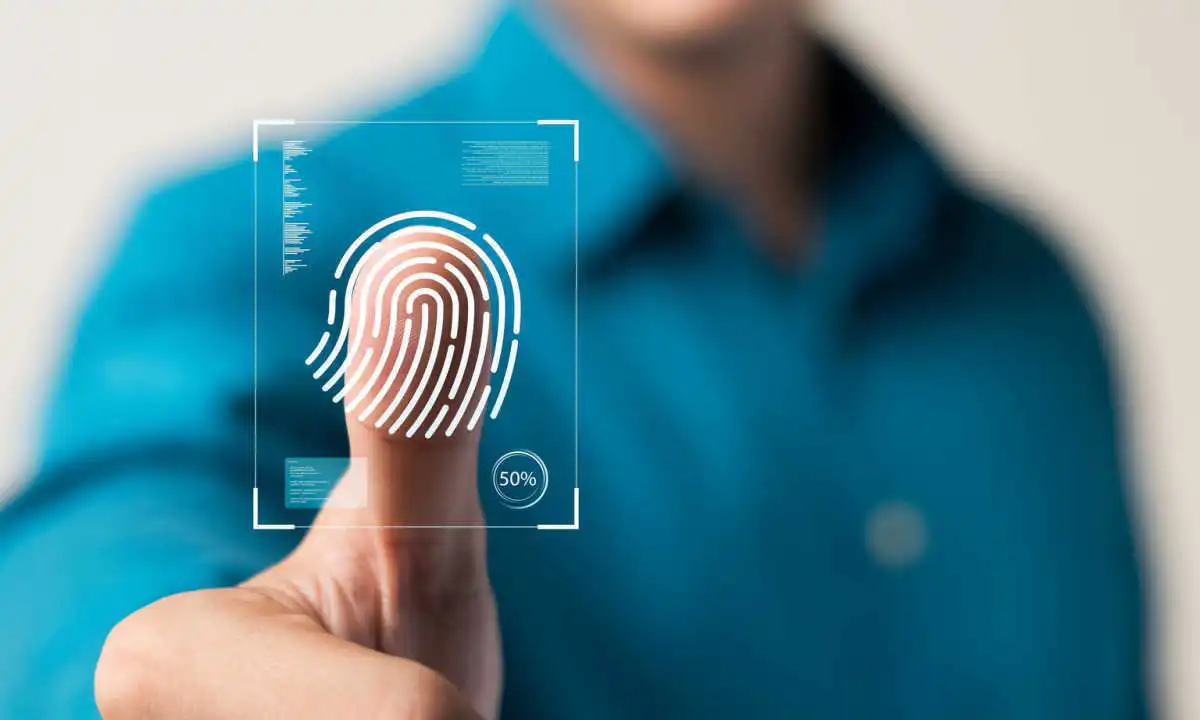
Tools for Humanity, the company behind the hardware, uses a device called an Orb to capture images of a person's face and eyes. The system converts those images into a numeric string stored locally on the user's device. That string becomes the World ID, which can prove humanness without revealing the person's actual identity or biometric data.
The approach differs from traditional KYC solutions that store documents in centralized databases. World ID keeps the biometric proof on the user's device, sharing only a cryptographic verification when needed. Critics have raised privacy concerns about the iris-scanning process itself, but proponents argue the decentralized storage model addresses the most serious data breach risks.
AI agents get human verification
World partnered with Coinbase in March to tackle a specific problem: how do you know an AI agent acting on someone's behalf is authorized by a real human? Their solution, AgentKit, is a beta developer toolkit that lets verified humans delegate their World ID to AI agents.
This creates an accountability chain. When an AI agent initiates a transaction or interaction, the receiving party can verify that a verified human authorized that agent. For financial services, e-commerce, and any platform worried about bot abuse, this could become essential infrastructure as autonomous agents proliferate.
Context on AI infrastructure investment trends this week
Enterprise adoption and brand partnerships
Tools for Humanity has been partnering with established brands to promote World ID adoption. The 475 million proof utilizations suggest meaningful transaction volume, though the organization hasn't disclosed revenue figures or the specific fee structure it plans to implement.
For fintech platforms, World ID presents an interesting compliance question. It verifies humanness and uniqueness but not legal identity. A platform might use World ID to prevent Sybil attacks and bot abuse while still requiring traditional KYC for regulatory purposes. The two systems could work in parallel.
| Feature | World ID | Traditional KYC | CAPTCHA/Bot Detection |
|---|---|---|---|
| Proves unique human | Yes | Yes | No (session-based) |
| Privacy-preserving | Yes (local storage) | No (centralized data) | Partial |
| Reveals legal identity | No | Yes | No |
| Works for AI agents | Yes (via delegation) | No | No |
| Hardware required | Orb scan (once) | No | No |
| Regulatory compliance | Supplementary only | Full compliance | Not applicable |
Logicity's Take
The timing here is strategic. As AI agents move from demos to production, every platform will need to answer the same question: how do I know this request came from a real human? World ID is positioning itself as that answer. The one-year token lockup suggests investors expect a longer timeline to mainstream adoption. For fintech teams evaluating identity solutions, World ID likely complements rather than replaces existing KYC providers like Onfido, Jumio, or Persona. The real test will be whether major payment processors and banks integrate World ID verification into their fraud prevention stacks.
Related: identity verification failures in fintech
Frequently Asked Questions
What is World ID and how does it work?
World ID is a proof-of-humanity system that uses iris scans to verify a person is a unique human. The biometric data converts to a numeric code stored on the user's device, allowing them to prove humanness without revealing their identity.
How much funding has World Foundation raised?
World Foundation raised $52.5 million in this round by selling WLD tokens to strategic investors. The tokens have a one-year lockup period. Pantera Capital led the funding round.
Can World ID replace KYC for financial services?
No. World ID proves a user is a unique human but does not verify legal identity. Financial institutions would use it alongside traditional KYC to prevent bot abuse and Sybil attacks while maintaining regulatory compliance.
How does World ID work with AI agents?
Through AgentKit, developed with Coinbase, verified humans can delegate their World ID to AI agents. This lets platforms verify that an autonomous agent is acting on behalf of a real, verified human.
How many people have verified with World ID?
Over 18 million humans have been verified through World ID technology, and more than 475 million World ID proofs have been used across various platforms.
Need Help Implementing This?
Evaluating proof-of-humanity solutions for your platform? Logicity's team can help you assess how World ID and competing identity verification tools fit your compliance and fraud prevention requirements. Contact us for a consultation.
Source: PYMNTS | / PYMNTS
Manaal Khan
Tech & Innovation Writer
Produced with AI assistance and reviewed by the Logicity editorial team. Learn more in our Editorial Policy.