Key Takeaways
- ContraVault AI raised $3.1 million in pre-Series A funding led by Chiratae Ventures to expand into the US market
- The startup claims to reduce tender procurement time by 60-70% for clients including Tata's Voltas and Adani Group
- 85% of current business comes from government project bids, with the company now targeting private sector and US construction markets
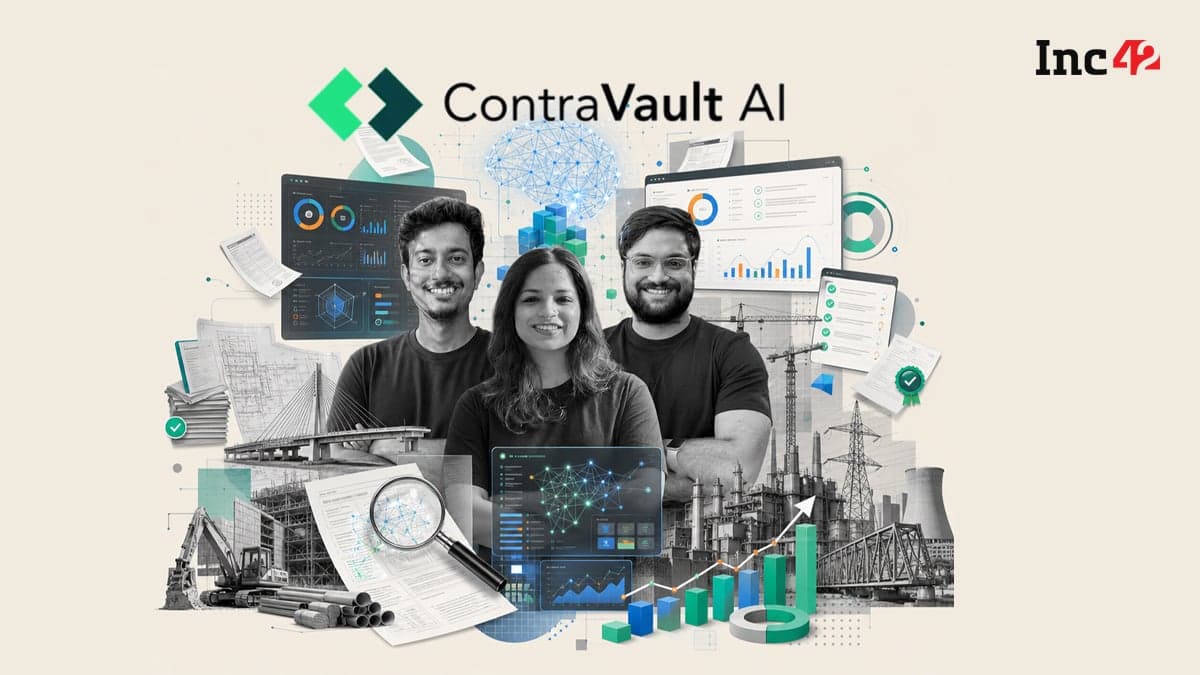
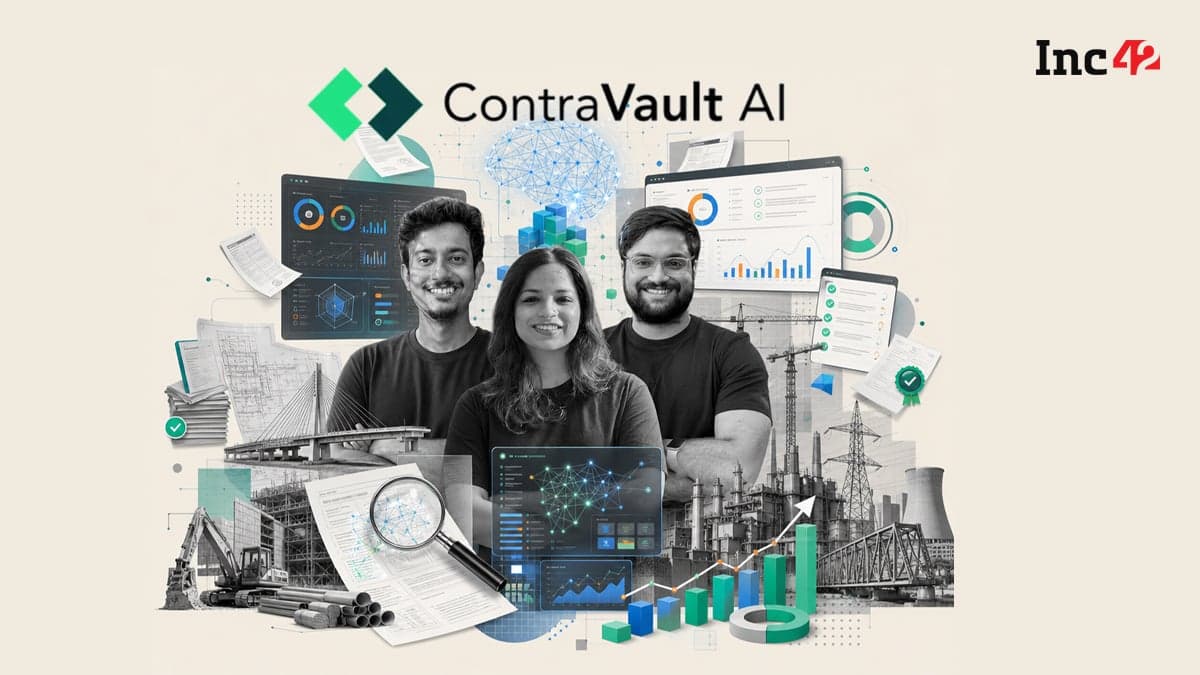
ContraVault AI, an Indian startup that uses AI to automate the notoriously tedious process of government tender bidding, has raised $3.1 million in a pre-Series A round led by Chiratae Ventures. The company will use the capital to enter the US market and build out its engineering automation features.
Titan Capital, which backed the company's earlier $600,000 seed round, also participated. The total raised now sits at roughly $3.7 million since the company's founding in 2024.
What does ContraVault AI actually do?
If you've never dealt with government procurement, the process is brutal. Companies bidding on infrastructure contracts must sift through hundreds of tender documents, assess whether they can fulfill requirements, prepare extensive documentation, and secure multiple internal sign-offs. A single bid can consume hundreds of manhours.
ContraVault's platform attempts to collapse that timeline. Its software scans available tenders, flags which ones a company can realistically win, and then automates much of the submission process. The startup offers 13 modules covering risk identification, AI-assisted contract negotiation, document summarization, and go/no-go analysis for bid qualification.
CEO Sayan Sen, who co-founded the company with Isha Juneja and Tanmay Juneja, claims clients see procurement time drop by 60-70% while placing 30-35% more bids overall. The math is straightforward: less time per bid means more bids submitted.
Who's using it?
The client list is notable for a two-year-old startup. ContraVault counts Tata Group's Voltas, Shapoorji Pallonji, Adani Group, and Sterling & Wilson among its 40 customers. According to Sen, the client base has doubled in the past two months alone.
Currently, 85% of business comes from companies bidding on government projects. That concentration reflects reality: most large infrastructure work in India flows through public tenders. The startup is beginning to pursue private-sector contracts as well, though that effort remains early.
Sen claims the platform has processed tenders worth over $2.5 billion in total project value. That figure represents bid analysis, not revenue or transaction volume.
Why target the US now?
Indian enterprise sales cycles are long. American companies, facing higher labor costs, have stronger incentives to automate procurement workflows. ContraVault has already established a US subsidiary and plans to break into the market through construction industry events.
The timing aligns with a broader trend. Infrastructure spending in the US has surged following the Infrastructure Investment and Jobs Act, creating a larger pool of government contracts to bid on. More projects means more tenders, and more tenders means more potential customers for procurement automation.
Sen emphasized the defensibility of vertical-specific AI: "All of the surface level solutions are already built by existing LLMs. The deep verticalised solution utilise internal knowledge to help build custom solutions." In other words, ChatGPT can summarize a document, but it doesn't understand the specific requirements, risks, and compliance burdens of a power plant tender.
What's next on the product roadmap?
ContraVault plans to add automation for engineering drawings, a requirement for many infrastructure bids. This feature would help the company win larger clients while creating a barrier that newer competitors would struggle to replicate. Building accurate engineering document automation requires deep domain expertise and substantial training data.
The competitive landscape includes TenderTiger, TendersInfo, and Tender 24X7. Most of these focus on tender discovery rather than end-to-end automation. ContraVault's pitch is that it handles the full lifecycle from identification through submission.
The market opportunity
India's infrastructure market sits at roughly $206 billion and is projected to grow at 8% annually, reaching $302 billion by 2031. Since tender bidding mediates most of that spending, even a small percentage of the workflow value represents a substantial market.
The question is whether ContraVault can capture meaningful share before well-funded competitors or the incumbents adapt. Two years in, with major Indian conglomerates as customers, the startup has at least demonstrated product-market fit domestically. The US expansion will test whether the approach translates.

Logicity's Take
ContraVault is betting that procurement automation requires industry-specific depth that general-purpose AI tools won't match. That's a reasonable thesis, but it creates a scaling challenge: each new vertical demands specialized training and expertise. The client roster proves the model works for Indian infrastructure. Whether construction companies in Texas or defense contractors in Virginia adopt the same platform is a different question entirely. The US subsidiary will need local domain expertise, not just sales presence.
Frequently Asked Questions
How much funding has ContraVault AI raised in total?
ContraVault has raised approximately $3.7 million across its seed and pre-Series A rounds. The latest $3.1 million round was led by Chiratae Ventures.
What industries does ContraVault AI serve?
The platform focuses on construction, energy, power, defense, and aerospace companies that bid on infrastructure tenders.
How does ContraVault AI reduce tender bidding time?
The software identifies viable tenders, analyzes fulfillment requirements, assesses risks, and automates documentation. The company claims this cuts procurement time by 60-70%.
Who are ContraVault AI's main competitors?
Competitors include TenderTiger, TendersInfo, and Tender 24X7, though most focus primarily on tender discovery rather than full-cycle automation.
Microsoft CEO's perspective on AI's impact on traditional business sectors
Need Help Implementing This?
Logicity covers enterprise AI adoption and procurement technology. If your organization is evaluating tender automation or similar workflow tools, reach out to our research team for vendor comparisons and implementation guidance.
Source: Inc42 Media / Anjali Jain
Huma Shazia
Senior AI & Tech Writer
Produced with AI assistance and reviewed by the Logicity editorial team. Learn more in our Editorial Policy.