Key Takeaways
2026 Banking Rules Explained: How U.S. Banks Are Getting Riskier—or Smarter?
- The OCC's revised CBLR framework took effect July 1, 2026, and could reduce regulatory burden for 95% of community banks
- The changes may free up $64 billion in capital that could support additional lending to small businesses
- Community banks can now use a simpler measure of capital adequacy instead of complex risk-weighted calculations
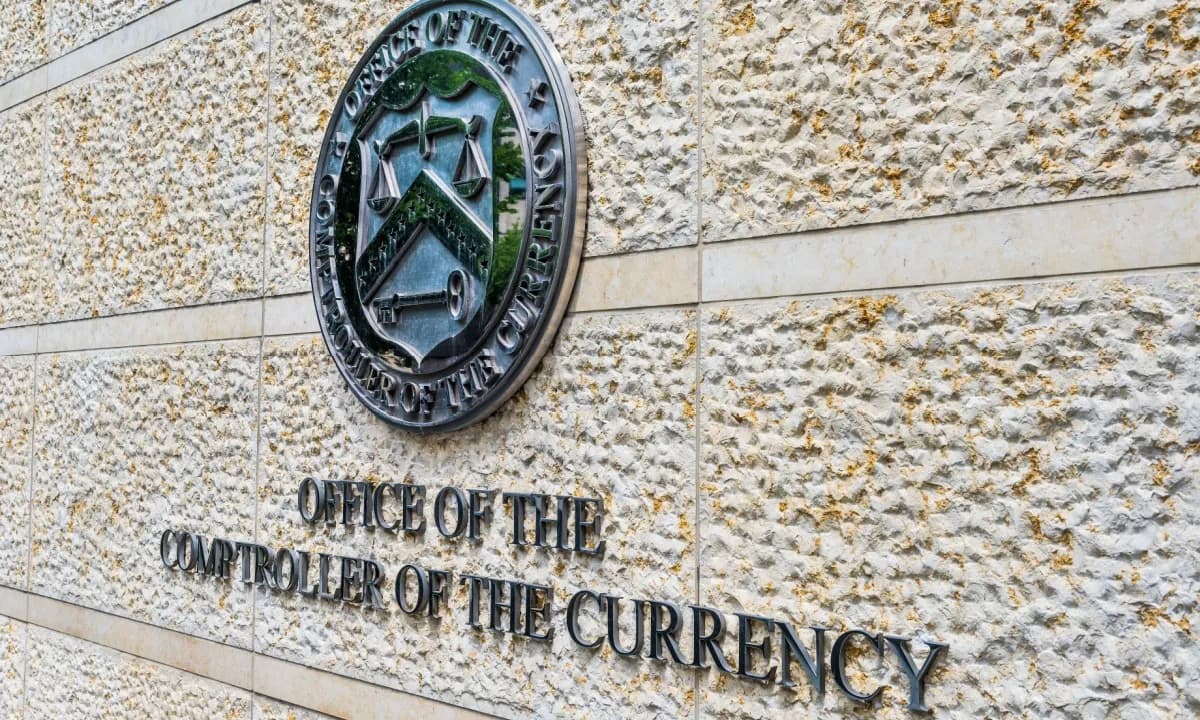
The Office of the Comptroller of the Currency has published a compliance guide explaining the revised community bank leverage ratio framework that went live July 1. The update affects 95% of community banks and could unlock $64 billion in capital for small business lending, according to the regulator.
For finance teams at community banks and the fintechs that serve them, the practical effect is straightforward: qualifying institutions can skip the complex risk-weighted asset calculations that larger banks must perform. Instead, they use a single leverage ratio to demonstrate capital adequacy.
What the new CBLR framework actually changes
The CBLR framework is optional. Banks that qualify and elect to use it avoid the full Basel III capital calculations, which require categorizing every asset by risk weight. That process demands significant compliance overhead for institutions that, in the OCC's own words, are "well-managed and well-capitalized, conduct business safely and avoid risk."
The July 1 revisions expand eligibility and simplify the calculation methodology. Federal bank regulatory agencies finalized the rule jointly in April, adopting it without changes from a November proposal. The OCC's new compliance guide walks bank executives and compliance officers through exactly how to determine eligibility and implement the simpler framework.
Comptroller Jonathan V. Gould framed the move as part of a broader deregulation push. "President Donald J. Trump and Secretary of the Treasury Scott Bessent are leading a community bank comeback by unleashing Parallel Prosperity for Main Street and Wall Street," he said in the agency's announcement. "The OCC is proud to support their efforts by reducing cumbersome regulations that have long hindered these vital institutions."
The $64 billion question: where does the freed capital go?
The OCC claims the revised framework could free up $64 billion that community banks currently hold in excess reserves to satisfy the more conservative risk-weighted calculations. The regulator expects most of this capital to flow toward small business lending.
That projection rests on an assumption: banks will actually lend the freed capital rather than retain it as a buffer. In practice, individual bank boards will make their own decisions based on local economic conditions, loan demand, and risk appetite. Still, even partial deployment of that capital represents a meaningful liquidity injection for Main Street businesses that rely on community banks for credit.
Community banks hold outsized importance for small business lending. Unlike large national banks that often prefer larger commercial loans, community banks specialize in the $50,000 to $5 million range that many local businesses need. The American Bankers Association has long argued that regulatory complexity diverts resources from lending to compliance.
The OCC's broader deregulation agenda
The CBLR revision is one piece of a larger effort. In May, the OCC announced it was tailoring its examination process based on bank size, complexity, and risk profile. Examiners now use an updated resource to simplify IT and cybersecurity examinations for community banks.
"Community banks are anchors of local economies, providing essential banking services and small business lending that helps power job creation," Gould said in the May announcement. The agency's logic: smaller banks with simpler business models don't need the same supervisory intensity as complex multinational institutions.
Critics of bank deregulation typically argue that lighter oversight invites risk-taking that can lead to failures. The counterargument from the OCC: community banks pose limited systemic risk, and regulatory burden itself creates risk by pushing small banks out of business or into mergers, reducing competition and local credit availability.
What fintech teams should understand
For fintechs partnering with community banks for lending, payments, or banking-as-a-service, the CBLR changes matter in several ways. Banks with more capital flexibility may be more willing to take on partnership risk or expand into new products. They may also have more appetite for the operational complexity that fintech partnerships sometimes require.
The compliance simplification also affects fintechs that provide regulatory technology to community banks. Products built around complex risk-weighted asset calculations become less relevant for CBLR-electing banks. That's a market signal worth noting.
Community banks considering the CBLR framework should review the OCC's new compliance guide carefully. The decision to elect CBLR status involves tradeoffs. While the framework simplifies ongoing compliance, banks that later grow beyond eligibility thresholds would need to transition back to full risk-weighted calculations. That transition has its own costs.
Related coverage on capital availability in financial services
The eligibility question
Not every community bank qualifies for CBLR. The framework has asset size limits, off-balance sheet exposure restrictions, and minimum leverage ratio requirements. Banks must also maintain a relatively simple business model without significant trading activity or complex derivatives positions.
The OCC's guide addresses how to determine eligibility and how to maintain it over time. Banks that fall out of compliance have a grace period to either return to compliance or transition to standard capital calculations. The specifics matter for planning purposes.
Logicity's Take
The $64 billion headline number is the OCC's projection, not a guarantee. The actual capital freed depends on how many eligible banks elect CBLR status and how their boards choose to deploy excess reserves. For fintech companies building bank partnership strategies, the more immediate signal is directional: community banks are getting regulatory relief, which typically increases their willingness to innovate. Companies in the regtech space serving community bank compliance should recalibrate their product roadmaps. Tools focused on risk-weighted asset calculation may see reduced demand from CBLR-electing institutions, while products supporting leverage ratio monitoring and CBLR eligibility tracking become more relevant.
Frequently Asked Questions
What is the community bank leverage ratio framework?
The CBLR is an optional simplified capital adequacy standard that allows qualifying community banks to use a single leverage ratio instead of complex risk-weighted asset calculations. Banks that elect CBLR status avoid the Basel III capital framework's detailed requirements.
Which banks are eligible for CBLR?
Eligibility depends on asset size, off-balance sheet exposure limits, minimum leverage ratio requirements, and business model simplicity. Banks with significant trading activity or complex derivatives generally do not qualify. The OCC's compliance guide details specific thresholds.
When did the revised CBLR framework take effect?
The revised framework went into effect July 1, 2026. Federal bank regulatory agencies finalized the rule jointly in April 2026, adopting it without changes from a November 2025 proposal.
The OCC's move reflects a genuine tension in bank regulation. Standardized capital rules protect depositors and the financial system, but they impose costs that fall disproportionately on smaller institutions. Whether this particular calibration strikes the right balance will become clearer as banks make their CBLR elections and deploy the freed capital.
Need Help Implementing This?
If your fintech partners with community banks or your bank is evaluating CBLR election, contact our team for analysis on how these regulatory changes affect your specific situation.
Source: PYMNTS | / PYMNTS
Huma Shazia
Senior AI & Tech Writer
Produced with AI assistance and reviewed by the Logicity editorial team. Learn more in our Editorial Policy.