Key Takeaways
How I Would Break Into Tech in 90 Days (With $0 Budget)
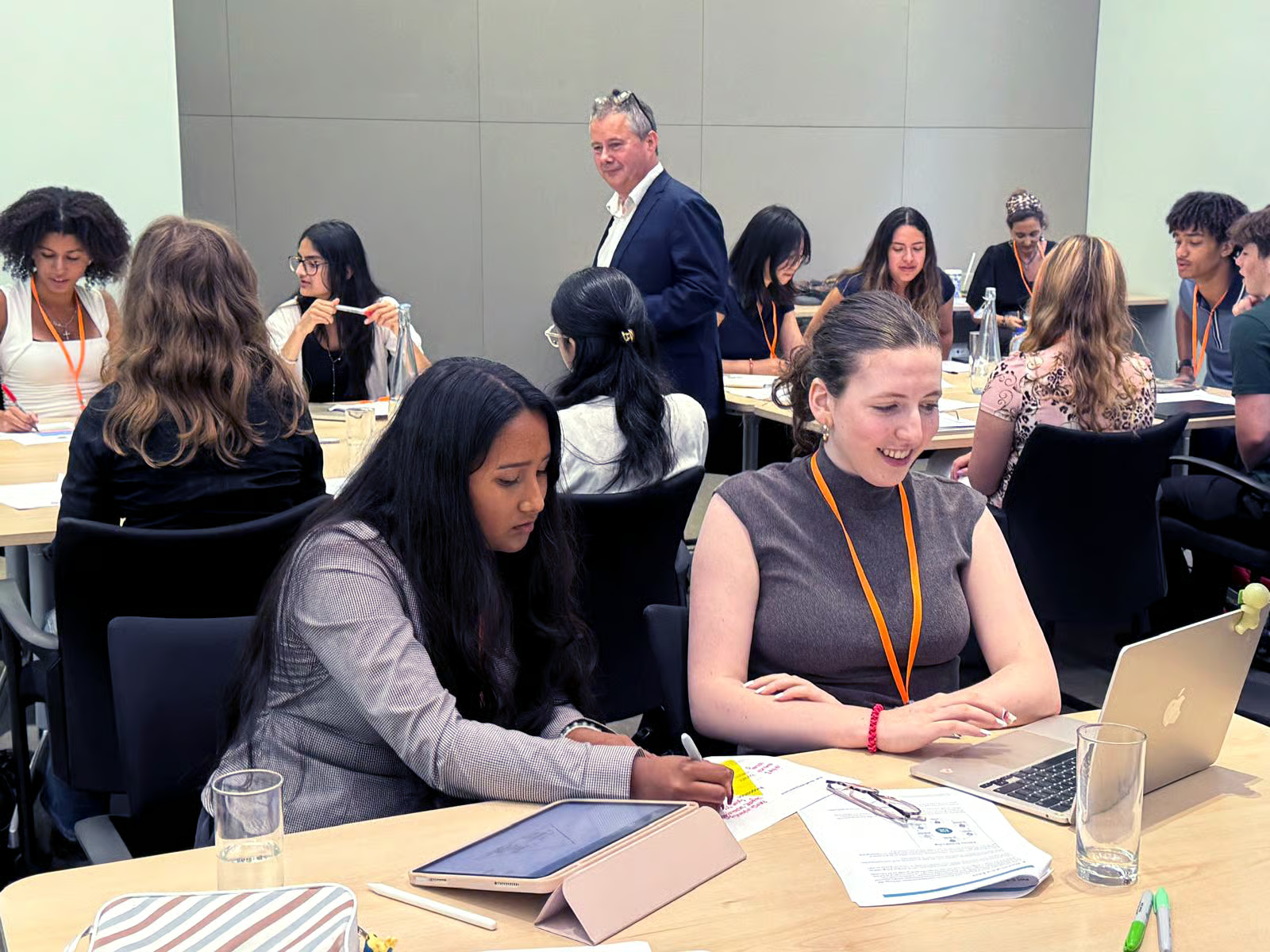
- Angel investors Deborah Gruenberger and Isobel McDermott-Spencer launched a free five-day startup course for 16-18 year olds in London
- Only 35% of UK young people report receiving any enterprise education at secondary school, with girls even less likely
- The course teaches startup fundamentals and investor deal assessment, with students pitching to real founders
Two angel investors have launched a free five-day founder course for 16-18 year olds in London, aiming to fill what they call a "ghastly hole" in tech career pathways for teenagers. The programme, created by Deborah Gruenberger and Isobel McDermott-Spencer, teaches startup fundamentals and investor thinking to young people shut out of an industry that increasingly automates entry-level work.
Merlin Mani, 17, is among this week's cohort. She runs an entrepreneurship club at her London secondary school and plans to study maths at university. She's already clear about the trade-offs of tech wealth. "If I were Elon Musk," she says, "I'd give some of that money to charity."
Why traditional routes into tech are disappearing
The course addresses a real bottleneck. A Federation of Small Businesses poll found just 35% of young people said they had received any enterprise education at secondary school. Girls were even less likely to report doing so.
Gruenberger and McDermott-Spencer point to tightened safeguarding rules, employer caution, and shrinking internship programmes as culprits. Gruenberger cites a friend's daughter who sat through three interviews for a job at an ice cream shop. "Why is there even one interview for this?" she asks.
The broader trend is structural. Many startups now hire fewer junior staff as they automate routine work with AI. For teenagers, this creates a catch-22: they cannot get experience because roles no longer exist, and they cannot compete for remaining roles without experience.
Georgia Fleet, CEO of healthtech startup Zonova Technologies, will pitch to this week's students. She admits young people struggle to get a foothold at her company because lab-based work takes "at least three months to bring new hires up to speed." The overhead makes teen placements impractical.
What the course actually teaches
The programme, which began last summer, covers startup building blocks and the process investors use when assessing deals. Entrepreneurs and investors speak to students throughout the week, offering a view of company-building from both sides of the table.
One exercise puts students in the investor seat. On Friday, they will hear Fleet's pitch for Zonova Technologies and decide whether they would back the business. Fleet, who recently closed a seed round, admits the format is intimidating. "Pitching to teenagers is pretty scary, though I did close a seed round recently so I'm the most practiced I've ever been."
The structure is deliberate. Rather than teaching students to code or build products, the course focuses on commercial thinking: how to evaluate opportunities, understand risk, and communicate value. These skills transfer whether a student eventually founds a company, joins one, or invests in one.
The gender gap in startup education
Gruenberger and McDermott-Spencer say the course will also create opportunities for young women, who face steeper barriers in tech. Mani puts it bluntly: "I do think we have to put twice as much effort in to be recognised for our work to be respected in the same way. When it comes to this industry, you think of tech bros first."
The FSB data supports her perception. Girls are less likely than boys to receive enterprise education at school, compounding the visibility problem. Fewer female role models in startups means fewer young women see founding as a realistic path.
The course does not fix this systemically, but it gives participants access to working founders and investors, including women. Exposure matters. Mani already runs a "mini Dragons' Den" at her school and is fascinated by the startup cluster around King's Cross. ("I'm jealous of the Google massage chairs.") Her ambitions predate the course, but structured learning and mentorship accelerate what self-teaching cannot.
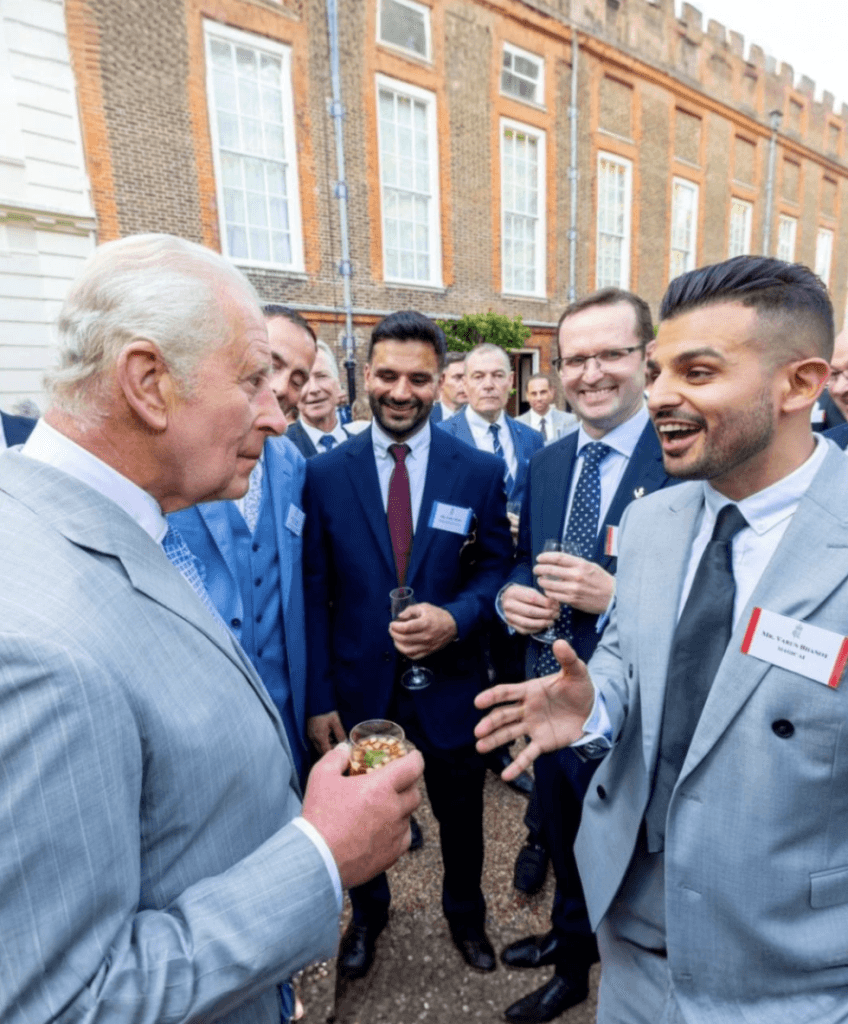
Pitching techniques remain relevant whether your audience is a royal or a room of teenagers evaluating your startup.
Government moves on technical education
UK Prime Minister Andy Burnham has vowed that secondary school pupils in England will soon study subjects like manufacturing and AI. The government says courses will be available from Year 10, linked to local industries and designed to give children a clearer pathway into work.
This policy addresses some gaps but not others. Formal AI curricula may help with technical literacy, but they do not teach commercial judgment or give students access to working founders. Gruenberger and McDermott-Spencer's course sits in a different space: less vocational training, more exposure to how tech businesses actually operate.
The two approaches are complementary. Government programmes can scale; private initiatives can move faster and experiment with format. Neither replaces hands-on work experience, which remains scarce for under-18s across industries.
How AI is reshaping what skills matter
Mani plans to study maths, a subject she believes will endure regardless of what happens in AI. "I think there will be a rapid decline in software engineering for example, which is fine, because I don't like coding," she says.
Her reasoning reflects a broader shift. As AI tools automate implementation tasks, the value of technical execution declines relative to problem framing, commercial strategy, and communication. A founder who can identify what to build matters more when building becomes cheaper. This is the bet implicit in a course that teaches investor thinking rather than technical skills.
Mani remains convinced she will build a company. She may not want to become the next Musk, but she's determined to become a founder on her own terms, shaped by values she has already articulated at 17.
Logicity's Take
This course is modest in scale but points to a larger market failure. The startup ecosystem celebrates self-starters but provides almost no structured pathways for teenagers to learn how it works. Incubators, accelerators, and VC fellowships all target people with existing track records. For founders who mentor young people informally, this programme offers a replicable model. The real test is whether graduates actually start companies in five to ten years, or whether exposure without execution fizzles. Worth watching: whether similar programmes emerge in other European cities, and whether institutional VCs start funding them as pipeline investments.
What founders can learn from teen education
Fleet's nervousness about pitching to teenagers is instructive. Experienced founders often calibrate their pitches for sophisticated audiences who share assumptions about markets, metrics, and exits. Teenagers have none of this context. They ask basic questions that reveal whether a business idea actually makes sense to someone outside the echo chamber.
This is a useful exercise for any founder. If you cannot explain your company to a 17-year-old, your pitch to investors may rely on jargon rather than clarity. The best pitches work at multiple levels of sophistication. Gruenberger and McDermott-Spencer have, perhaps inadvertently, created a stress test for early-stage storytelling.
Founders looking to replicate this model do not need to run a formal programme. A single afternoon with local sixth-formers, structured around a pitch exercise and Q&A, gives students exposure and gives founders feedback. Schools are often desperate for industry speakers. The friction is coordination, not resources.
Scaling the model
The course currently runs in London, where the density of startups and investors makes speaker recruitment straightforward. Replicating it elsewhere would require building local networks from scratch. This is solvable but not trivial.
One option is virtual delivery. Tools like Loom allow founders to record pitches asynchronously, and platforms like Notion can host course materials. A hybrid model, with recorded content and live Q&A sessions, could reach students outside London without requiring founders to travel.
Disclosure
Some links in this post are affiliate links — Logicity earns a commission if you sign up, at no extra cost to you. We only link products we have used or actively recommend.
The deeper challenge is incentives. Gruenberger and McDermott-Spencer are angel investors with time and network to spare. Most founders do not. Scaling teen startup education probably requires institutional backing, whether from VCs seeking pipeline, corporates seeking brand, or government seeking outcomes. None of these are guaranteed, but the proof of concept now exists.
Frequently Asked Questions
Who can attend the teen founder course in London?
The course is open to 16-18 year olds. It runs for five days and covers startup fundamentals and investor deal assessment.
Is the course free?
Yes. The programme is free for participants, funded by its creators Deborah Gruenberger and Isobel McDermott-Spencer.
What do students learn?
The curriculum covers startup building blocks, how investors assess deals, and includes exercises where students evaluate real pitches from founders.
Need Help Implementing This?
If you're a founder considering outreach to schools or mentorship programmes, start small: offer a single session at a local sixth form and iterate from there. Contact us at Logicity if you want help structuring a pitch workshop or finding the right educational partners.
Source: Sifted
Manaal Khan
Tech & Innovation Writer
Produced with AI assistance and reviewed by the Logicity editorial team. Learn more in our Editorial Policy.