Key Takeaways
Kevin Hale - How to Pitch Your Startup
- Keep royal pitches even shorter than elevator pitches — focus on what's genuinely interesting to the listener, not your sales deck
- Strategic positioning matters: Bhanot stood near a vacuum services company, making his AI fitness mirror sound compelling by comparison
- Finding common ground (like a charity connection) beats rehearsed business speak in high-stakes conversations
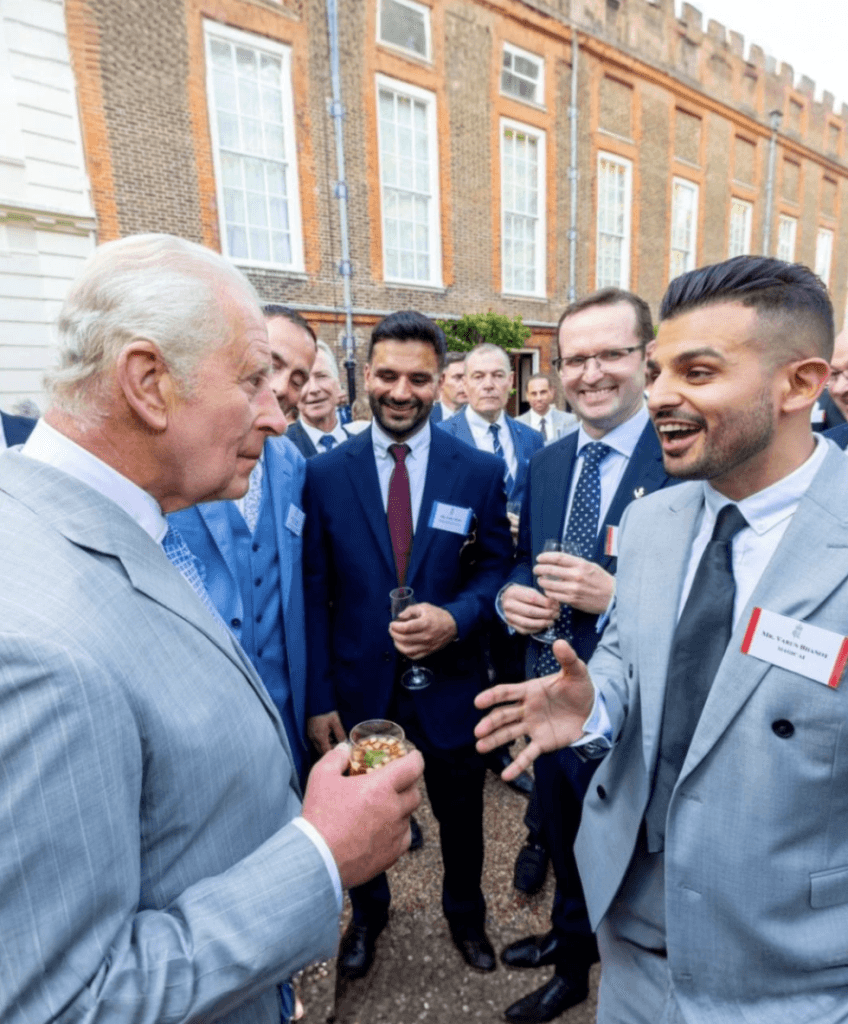
Varun Bhanot, CEO of London-based Magic AI, walked into St James's Palace earlier this month to collect his company's King's Award for Enterprise in the innovation category. He was sweating through a suit in 31-degree heat, about to pitch his smart fitness mirror to King Charles III. 'I did fumble my words a bit,' he admits. His experience offers an unexpectedly useful framework for any founder facing a high-pressure pitch, royal or otherwise.
Magic AI makes an interactive mirror that provides real-time training tips, working with celebrity instructors including ex-Olympian Asha Philip and former England cricket captain Alastair Cook. The King's Award, announced in April and presented at a palace reception, recognises outstanding innovation by UK businesses. Bhanot's takeaways from the experience translate directly to investor meetings, conference encounters, and any scenario where you have 30 seconds with someone important.
What's different about pitching to royalty?
The core constraint is time compression. Elevator pitches are short by design, but royal encounters are shorter still. Bhanot's interaction lasted perhaps a minute. The King opened with a direct challenge: after Bhanot mentioned AI, Charles asked 'What sort of AI?' Then, pointedly: 'Is that good AI?'
This is worth noting. Even in a ceremonial setting, the person across from you might probe your positioning. Bhanot's response, that his AI 'helps make people fitter,' gave a concrete benefit rather than technical specs. It answered the implicit question: why should I care?
The King 'seemed vaguely familiar with us,' Bhanot says. This suggests some pre-briefing happened, which founders should assume occurs before any significant meeting. Investors often know more about you than they let on. The pitch isn't purely informational; it's a test of how you communicate under pressure.
Three tactics that worked
Bhanot offered three concrete strategies that apply far beyond palace receptions.
First, he did his homework on the listener. He mentioned running the London Marathon to raise money for a charity where the King serves as patron. This created immediate common ground. The lesson: research who you're pitching to and find a genuine connection point, not a forced one. Bhanot actually ran the race in a mirror costume, though he admits the King 'couldn't quite understand what I was talking about' when he tried to explain that detail. Sometimes less context is more.
Second, he brought a wingman. A fellow award recipient helped break the ice by noticing the King was holding a Pimm's despite the drink not appearing on the menu. 'We wondered if he'd brought his own bottle, or had a hip flask on the go,' Bhanot says. The shared observation lightened the mood. In investor settings, having a co-founder or team member who can interject naturally reduces pressure on any single person.
Third, positioning mattered literally. Bhanot found himself standing near someone describing their vacuum services for concrete. 'It sounded very boring,' he admits, 'but I thought it might make the King happier to hear about my business by comparison.' This is cynical but honest. Context shapes perception. At demo days and conferences, founders often overlook how adjacent pitches affect their reception.
The deeper point about authenticity
Bhanot's most revealing comment: 'It felt a bit like when all the tech guys have to get dressed up to meet Trump.' The discomfort of putting on a suit, speaking formally, operating outside your normal register — this is something every founder faces when stepping from the product into the pitch.
The best pitches acknowledge this tension without letting it derail the message. Bhanot fumbled his words. He attempted an anecdote that confused his audience. Yet he walked away with a positive interaction and, more importantly, the King's Awards seal for Magic AI's packaging. 'So technically he's an ambassador,' Bhanot jokes.
The perfectionist tendency among founders often backfires in high-stakes moments. Rehearsed pitches can feel mechanical. Bhanot's approach was more conversational: open with the category (AI), clarify the benefit (fitness), then pivot to personal connection (the charity marathon). The structure worked because it prioritised the listener's questions over the founder's agenda.
What founders can actually apply
Most founders won't pitch to royalty. But the dynamics Bhanot describes, extreme time pressure, an audience with asymmetric power, the need to be memorable without being annoying, apply to dozens of scenarios. A chance encounter with a target customer at a conference. A 90-second slot at a pitch competition. The moment an investor asks 'so what do you actually do?' at a party.
Bhanot's framework reduces to three principles: know your audience before you speak, have someone nearby who can support the conversation, and be aware that what comes before and after you shapes how you're perceived. None of these require charisma. They require preparation.
The King's Award itself carries weight. It's one of the UK's most prestigious business awards, with a rigorous application process and royal presentation. For Magic AI, the credibility signal matters for consumer trust and retail partnerships. The company's smart mirror competes in a market that includes Peloton's Guide camera system and various connected fitness devices, making third-party validation particularly valuable.
Logicity's Take
Bhanot's experience highlights something founders often miss: the highest-stakes pitch isn't always the most prepared one. Investors and partners often form impressions in informal moments, not boardroom presentations. For early-stage founders managing investor relations, tools like [HubSpot](https://logicity.in/r/hubspot), [Pipedrive](https://logicity.in/r/pipedrive), or [Salesforce](https://logicity.in/r/salesforce) can track these touchpoints systematically. But no CRM replaces the fundamental skill of reading a room and adjusting in real time. The concrete tactics here, research the person, bring backup, consider your positioning, cost nothing to implement and work at every funding stage.
Disclosure
Some links in this post are affiliate links — Logicity earns a commission if you sign up, at no extra cost to you. We only link products we have used or actively recommend.
The unsexy truth about memorable pitches
Pitch advice often focuses on the pitch itself: the deck, the narrative arc, the ask. Bhanot's story suggests the surrounding elements matter at least as much. Who's standing next to you. What you know about the person you're addressing. Whether you can find a moment of genuine human connection rather than transactional selling.
This is harder to systematise than slide design. But it's also harder to fake. The King asked 'Is that good AI?' because he wanted to understand intent, not just capability. Founders face variations of this question constantly. Having a clear, honest answer matters more than having a clever one.
Bhanot never directly asked the King to become an ambassador for Magic AI. He didn't need to. The award itself created the association. Sometimes the best pitch is knowing when not to push.
Frequently Asked Questions
What is the King's Award for Enterprise?
The King's Award for Enterprise is one of the UK's most prestigious business awards, recognising outstanding achievement in innovation, international trade, sustainable development, and promoting opportunity. Winners receive a royal presentation and can display the King's Awards emblem on products and marketing materials for five years.
How long should an elevator pitch be?
Traditional elevator pitches run 30 to 60 seconds. For high-pressure situations like Bhanot's royal encounter, aim for 15 to 30 seconds of core message. Focus on what the listener finds interesting, not comprehensive company information.
What does Magic AI's smart mirror do?
Magic AI produces an interactive mirror that provides real-time training tips and coaching. The company works with celebrity instructors including former Olympian Asha Philip and ex-England cricket captain Alastair Cook to deliver fitness content.
Need Help Implementing This?
Building a repeatable pitch process for your startup? Our founder resources cover everything from investor targeting to CRM setup. Subscribe to the Logicity newsletter for weekly tactical guides.
Source: Sifted
Manaal Khan
Tech & Innovation Writer
Produced with AI assistance and reviewed by the Logicity editorial team. Learn more in our Editorial Policy.