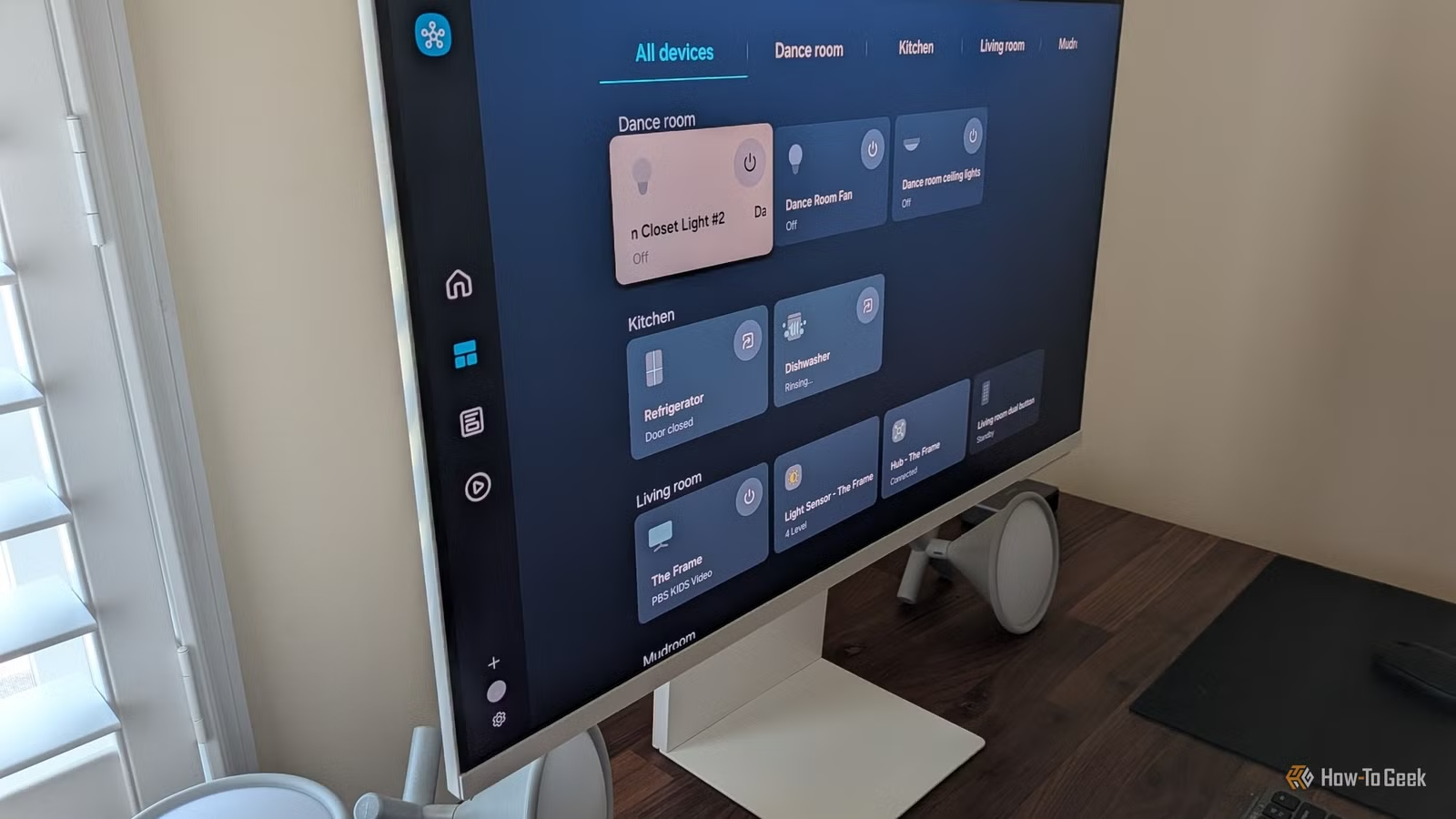
The Connectivity Standards Alliance released Matter 1.6 today, and the headline feature solves one of the most persistent annoyances in smart home setup: you no longer need to power on a device before configuring it. Full NFC-based commissioning means you can hold your phone to a Matter-certified bulb, switch, or sensor, complete the setup, and then install it wherever you want. The device activates with your network credentials already loaded.
For anyone who has balanced on a ladder trying to scan a tiny QR code on a ceiling-mounted sensor, or fumbled with Bluetooth pairing that refuses to discover a device three feet away, this is a genuine quality-of-life improvement. The old ritual of power on, wait, open app, scan code, wait for Bluetooth, then wait for Wi-Fi is gone.
How NFC commissioning changes device installation
The technical shift is significant. Previous Matter versions relied on Bluetooth Low Energy for the initial handshake between your phone and a new device. That required the device to be powered and broadcasting. Matter 1.6 moves the entire commissioning process to bidirectional NFC, which works with unpowered devices.
The practical benefit is staging. An electrician can configure a dozen smart switches before mounting any of them. A homeowner can set up a motion sensor on the kitchen counter, then install it in the garage. The device stores its credentials and network information, activating automatically when it finally receives power.
Professional installers on Reddit's r/SmartHome are calling this a workflow transformation for large projects. Instead of configuring devices room by room after installation, they can pre-provision an entire home's worth of hardware in one sitting.
Joint Fabric: one device, every platform
Matter 1.6 also addresses the fragmentation problem that plagues multi-platform households. If your home runs Apple HomeKit in one room and Google Home in another, adding a device to both ecosystems has meant repeating the setup process or dealing with flaky bridging solutions.
Joint Fabric creates a unified network layer. Add a smart bulb once, and every compatible platform on the network sees it. No duplicate configurations, no manual linking. The device exists on a single fabric that all your controllers can access.
This matters most for households that have accumulated devices across different ecosystems over the years. A Philips Hue bridge speaking to HomeKit, a Nest thermostat tied to Google, an Echo controlling the living room. Joint Fabric lets these platforms coexist without requiring users to pick a winner.
Why thermostats get their own feature
Thermostat Suggestions sounds minor, but it addresses a real coordination problem. Smart home automations from different apps frequently conflict. Your geofencing app lowers the temperature when you leave. Your energy-saving routine tries to raise it five minutes later. Your manual adjustment gets overwritten by a third automation you forgot existed.
The new feature lets platforms send recommendations instead of commands. The thermostat evaluates each suggestion against user preferences, recent manual changes, and current conditions. If you just adjusted the temperature, it can ignore an automation that tries to change it seconds later.
This is a small step toward smarter conflict resolution in multi-automation households. Instead of last command wins, the device itself becomes the arbiter.
Smaller improvements worth noting
Matter 1.6 includes several incremental upgrades beyond the headline features. Security sensors can now share events across platforms, standardizing how motion detectors and contact sensors communicate regardless of manufacturer. Smoke and carbon monoxide alarms can report when they have been removed from the wall, a security and safety feature that closes an obvious gap.
The ecosystem now includes over 500 certified devices. The NFC commissioning update applies retroactively to any device with NFC hardware, though manufacturers will need to push firmware updates to enable it.
Is this the update that makes Matter mainstream?
Probably not on its own. Matter has struggled with awareness and adoption despite strong backing from Apple, Google, Amazon, and Samsung. The technology works, but most consumers still do not know what it is or why they should care.
What Matter 1.6 does is remove friction for the people who do engage with smart home tech. The setup experience has been consistently cited as a pain point in user research and community discussions. Making that process faster and more reliable is not glamorous, but it is necessary groundwork.
The real test will be whether device manufacturers ship products with NFC commissioning enabled by default, and whether the major platforms update their apps to support the new flow quickly. The standard is only as useful as its implementation.
Understanding the state of home networking hardware helps contextualize smart home infrastructure decisions
Logicity's Take
Matter 1.6 is not a breakthrough. It is plumbing. But good plumbing is what separates a technology that enthusiasts tolerate from one that regular people actually use. The NFC commissioning feature specifically targets the moment where most smart home setups fail: the first five minutes. If CSA can get this into devices by the 2026 holiday season, Matter might finally start feeling like the default rather than the exception.
Frequently Asked Questions
Do I need to buy new devices to use Matter 1.6 NFC setup?
Not necessarily. Existing devices with NFC hardware can receive firmware updates to enable the feature. However, devices without NFC will continue using the older Bluetooth-based commissioning process.
Will Matter 1.6 work with my current smart home app?
The major platforms including Apple Home, Google Home, and Amazon Alexa support Matter. They will need app updates to take advantage of the new NFC commissioning flow, but compatibility with the underlying standard is already in place.
What is Joint Fabric and do I need it?
Joint Fabric allows multiple smart home platforms to share access to devices on a single network. If you use both Google Home and Apple HomeKit in your house, Joint Fabric means you only need to add a device once for both platforms to see it.
Can I set up devices without an internet connection using NFC?
The NFC commissioning transfers network credentials and configuration data directly to the device. The device still needs to connect to your local network when powered on, but the initial setup does not require an active internet connection.
Need Help Implementing This?
If you are building Matter-compatible products or integrating smart home features into your platform, Logicity covers the technical and business side of IoT standards. Subscribe to our newsletter for updates on Matter adoption and implementation guides.
Source: How-To Geek
Manaal Khan
Tech & Innovation Writer
Produced with AI assistance and reviewed by the Logicity editorial team. Learn more in our Editorial Policy.