Key Takeaways
- Manhattanhenge 2026 dates: May 28-29 and July 11-12
- Best viewing streets: 14th, 23rd, 34th, 42nd, and 57th Streets looking west
- May 29 and July 11 offer the dramatic full sun effect; May 28 and July 12 show the half sun
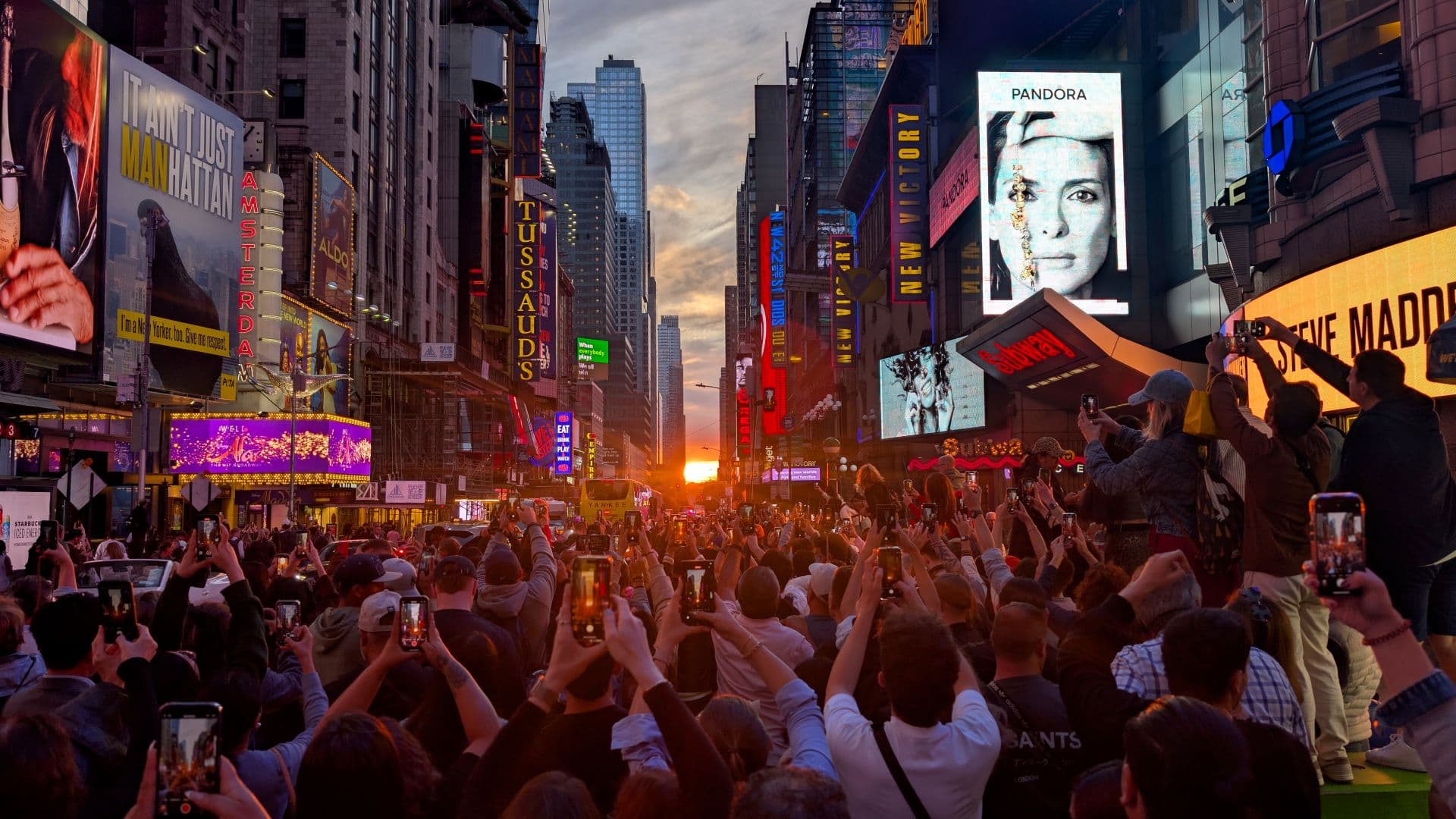
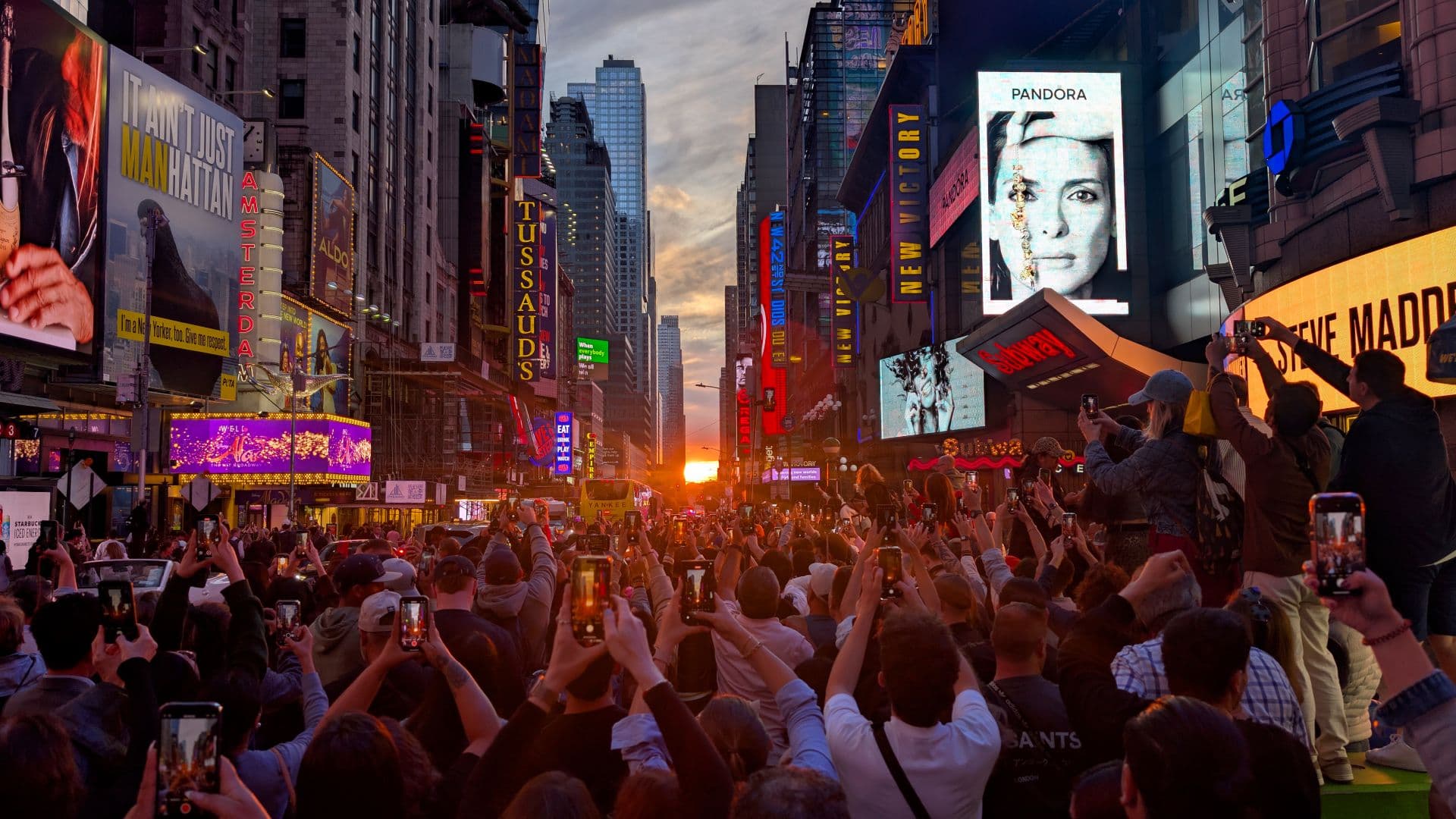
Twice each year, New Yorkers and visitors gather along Manhattan's cross streets to witness something remarkable. The setting sun aligns perfectly with the city's east-west street grid, turning the urban canyons into golden corridors of light. This is Manhattanhenge, and the 2026 dates are now set.
2026 Dates and What You'll See
Manhattanhenge 2026 will occur on May 28-29 and again on July 11-12. But not all four evenings offer the same view.
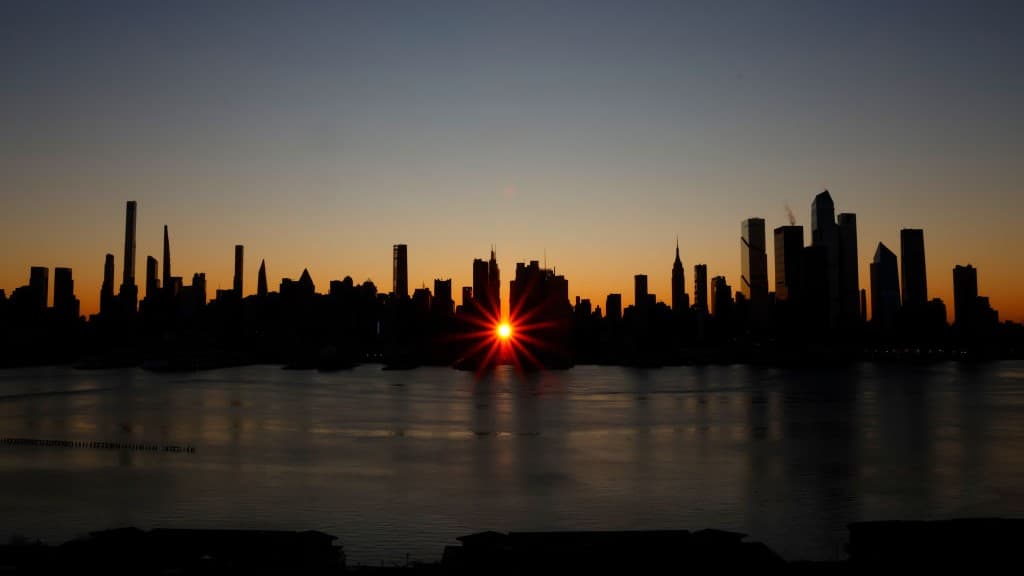
- May 28 and July 12: Half sun on the horizon. The sun appears cut in half by the street, resting partially below the horizon line.
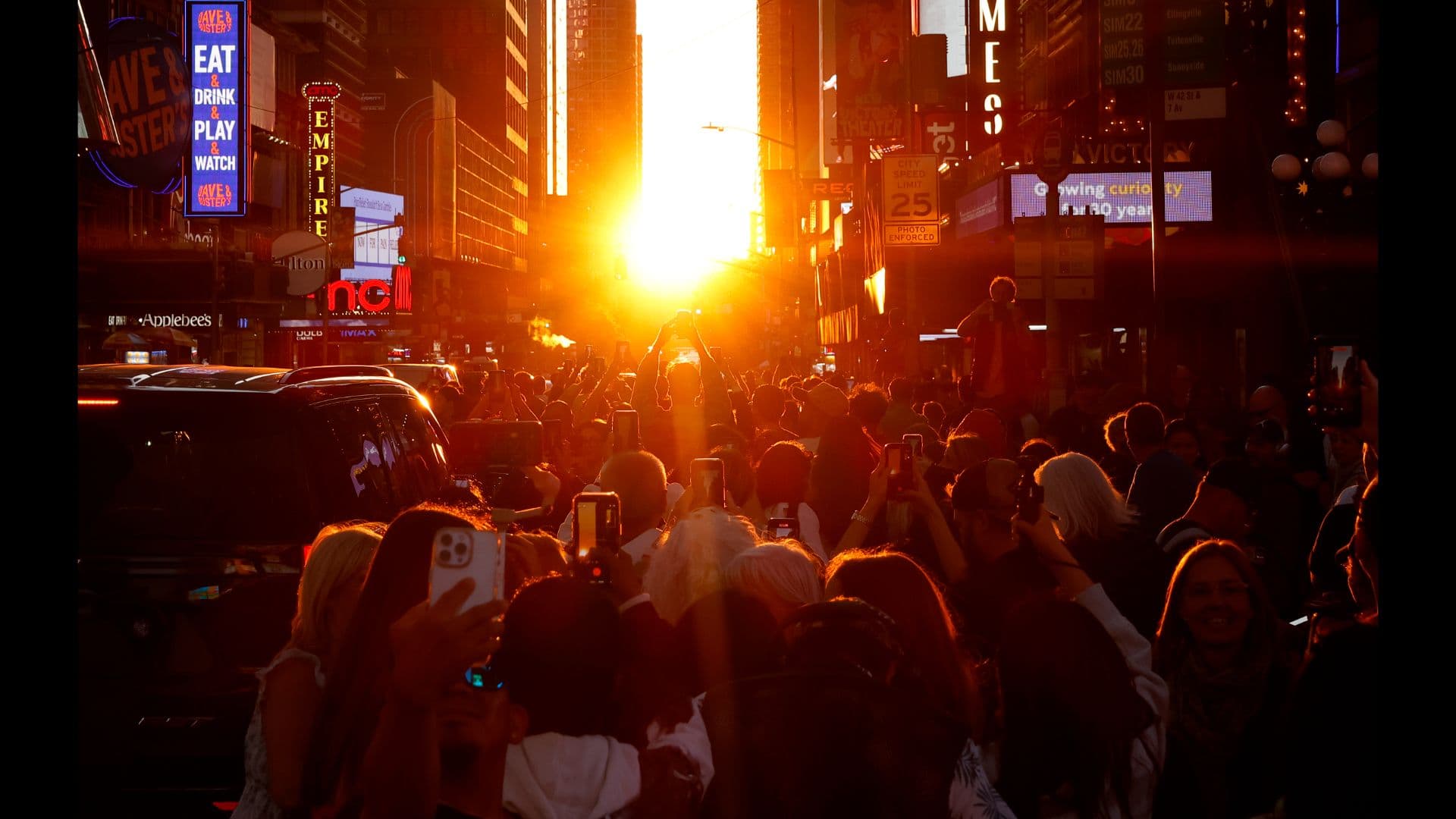
- May 29 and July 11: Full sun effect. The entire solar disk sits above the horizon, centered in the street. This is the most dramatic view.
The timing clusters around Memorial Day for the spring occurrence and mid-July for the summer event. Both windows are brief. Miss the date by even a day or two, and the alignment is noticeably off.
Best Streets for Viewing
Location matters. You need an unobstructed view west toward New Jersey, which means positioning yourself on Manhattan's wider cross streets.
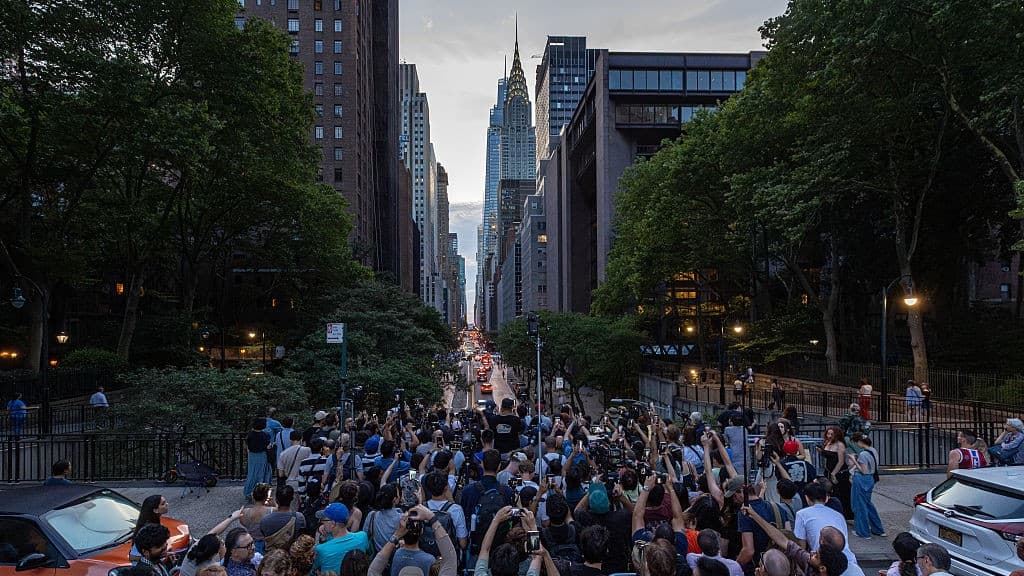
The recommended viewing spots are 14th, 23rd, 34th, 42nd, and 57th Streets. Stand as far east as you can while still having a clear sightline to the western horizon. 42nd Street near Grand Central Terminal is the most popular location, but expect crowds.
Arrive early. Serious photographers set up at least an hour before sunset. Casual viewers should plan for 30 minutes ahead to secure a decent spot and avoid being blocked by the crowd.
Why Does Manhattanhenge Happen?
The phenomenon exists because of a coincidence between Manhattan's street grid and the sun's seasonal movement.
Manhattan's street grid is rotated about 29 degrees from true north-south. This means the sun doesn't align with the streets on the equinoxes. Instead, the alignment happens roughly three weeks before and after the summer solstice. In late May, the sun's position on the horizon during sunset matches the angle of the streets. The same thing happens again in mid-July as the sun moves back south.
The name "Manhattanhenge" is a nod to Stonehenge, the ancient monument in England where the summer solstice sunrise aligns with the Heel Stone. Astrophysicist Neil deGrasse Tyson popularized the term in the early 2000s.
NYC's Rare Skywatching Opportunity
New York City ranks among the worst places in the United States for astronomical observation. Light pollution drowns out most celestial events. Manhattanhenge is the exception. It's one urban phenomenon that actually benefits from the built environment.
The event has become a cultural fixture. The term appeared in a 2009 episode of "CSI: NY" and has been featured in the TV Land series "Younger." Social media fills with photos each time it occurs, drawing visitors from around the world.

Logicity's Take
Photography Tips
Smartphones can capture the moment, but the sun is bright. Avoid staring directly at it, especially through a camera viewfinder. Wait until the sun is partially below the horizon or use the screen rather than an optical viewfinder.
For better shots, position yourself with tall buildings on either side to frame the sun. 42nd Street offers the Empire State Building and Chrysler Building as backdrop options depending on your angle.
Frequently Asked Questions
What time does Manhattanhenge occur?
The event happens around sunset, typically between 8:00 and 8:30 PM local time in late May and mid-July. Check sunset times for the specific date.
What is the difference between half sun and full sun Manhattanhenge?
Half sun (May 28 and July 12 in 2026) shows the sun bisected by the horizon. Full sun (May 29 and July 11) displays the complete solar disk above the horizon, centered in the street.
Why is it called Manhattanhenge?
The name references Stonehenge, where the sun aligns with the ancient stones on the summer solstice. Astrophysicist Neil deGrasse Tyson popularized the term to describe Manhattan's similar solar alignment.
Where is the best place to watch Manhattanhenge?
The best viewing spots are along 14th, 23rd, 34th, 42nd, and 57th Streets, looking west toward New Jersey. You need a clear sightline to the horizon.
Does Manhattanhenge happen in winter?
No. The alignment only occurs in late May and mid-July when the sun's position on the horizon matches the angle of Manhattan's street grid.
Need Help Implementing This?
Source: Latest from Space.com
Huma Shazia
Senior AI & Tech Writer
Produced with AI assistance and reviewed by the Logicity editorial team. Learn more in our Editorial Policy.