Key Takeaways
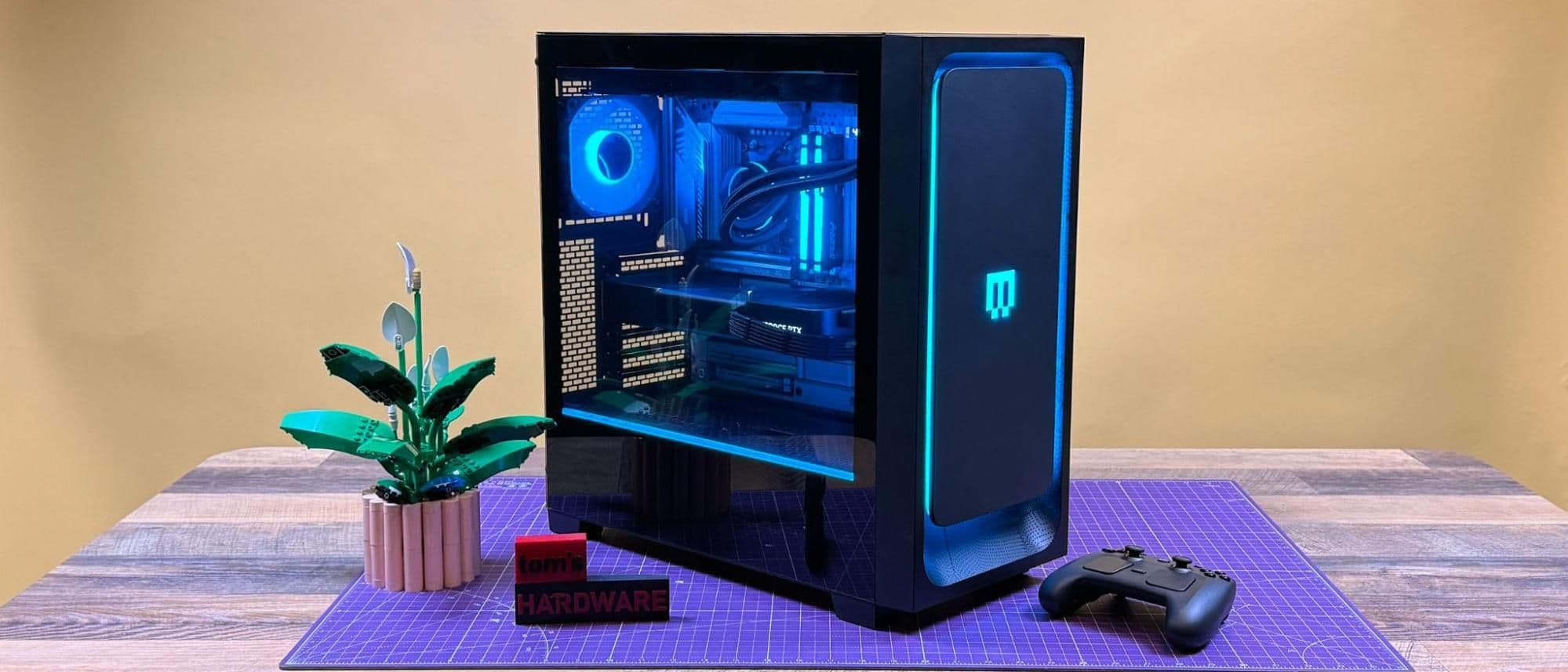
- The MG-1's new MK.II chassis is larger, with improved airflow from three 140mm intake fans
- Configuration options go up to RTX 5090 and Ryzen 9950X3D, pushing prices past $7,000
- Clean cable management and understated design, but limited front panel ports
What Makes the MG-1 Different in 2026
Boutique gaming PCs usually fall into two camps: the tasteful builds that look like premium workstations, and the RGB-drenched monsters that scream for attention. Maingear's revamped MG-1 sits firmly in the first camp. It's a black aluminum mid-tower with a tempered glass window, clean lines, and none of the custom liquid cooling theatrics you might expect at this price point.
The system now ships in the MK.II chassis, which is noticeably bigger than its predecessor. The new dimensions measure 18.78 x 19.65 x 9.06 inches, up from 19 x 16.88 x 8.13 inches on the original. That extra width means this PC will likely live on your floor rather than your desk.
Design: Understated with Smart Touches
The MG-1's exterior is deliberately plain. It's a rectangular black box with minimal flair. A blue power button on top provides the only accent. The left panel's tempered glass window shows off the components, RGB lighting, and cable management that's remarkably tidy thanks to the motherboard's rear-side connectors.
The magnetic front panel is the system's signature feature. It snaps on and off easily, with a curved scoop that diffuses RGB lighting around its edges. The design makes it simple to swap for custom panels that Maingear sells separately. The panel sits shorter than before, leaving room for your hand to slide underneath and pull it off for cleaning or replacement.
Cooling and Airflow Improvements
The larger chassis isn't just for show. Three 140mm intake fans sit behind the front panel, with the bottom fan positioned to push air directly beneath the GPU. A single rear exhaust fan handles outflow. The review unit included Maingear's 360mm liquid CPU cooler mounted as a top exhaust, pulling warm air up through the radiator and out of the case.
Dust management is solid. The front intakes sit behind a filter. A magnetic filter covers the top above the radiator. The bottom filter, positioned under the power supply, has a convenient handle for easy removal.
Configuration Options and Pricing
The MG-1 scales from sensible to extreme. Entry configurations start at $2,249, which gets you into the ecosystem without maxing out your credit card. The ceiling is much higher. You can configure the system with an Nvidia GeForce RTX 5090 and AMD Ryzen 9950X3D processor. That's the combination in our review unit, which pushed past $7,000.
This pricing is consistent with the high-end gaming PC market in 2025. Top-tier boutique builds regularly hit these figures. The question is whether you're paying for performance, aesthetics, or the peace of mind that comes from having someone else handle the build and testing.
✅ Pros
- • Extremely clean build quality with excellent cable management
- • Strong performance at the top configurations
- • Wide range of configuration options from $2,249 to $7,000+
- • Smart dust filtration across intake points
❌ Cons
- • Expensive at higher configurations
- • Limited front panel ports
- • Larger chassis may not fit on desks
- • Fewer boutique extras than some competitors
What's Missing
For a system that can exceed $7,000, the MG-1 feels restrained in some areas. Front panel connectivity is sparse. If you regularly plug in USB devices, headphones, or SD cards at the front of your PC, you'll notice the limitation.
The system also skips the elaborate custom liquid cooling loops and automotive-grade paint jobs that define some boutique builders. This is a clean, professional-looking machine. It's not a conversation piece. Depending on your taste, that's either a feature or a missed opportunity at this price.
Who Should Consider the MG-1
The MG-1 works best for buyers who want top-tier performance without the DIY hassle and prefer understated design over aggressive gaming aesthetics. The clean build quality suggests a system you'd be comfortable having visible in a home office or living room.
If you want maximum customization, wild RGB setups, or extensive front I/O, look elsewhere. The MG-1 is a polished, well-built machine that prioritizes substance over flash. That philosophy extends to the price, which is substantial but not unreasonable for what you get at the high end.
Logicity's Take
For readers who prefer building their own hardware projects
Frequently Asked Questions
How much does the Maingear MG-1 cost?
The MG-1 starts at $2,249 for base configurations. High-end builds with RTX 5090 and Ryzen 9950X3D exceed $7,000.
What GPU options are available for the Maingear MG-1?
The system supports configurations up to the Nvidia GeForce RTX 5090, along with various lower-tier options.
Is the Maingear MG-1 good for gaming?
Yes. With options for RTX 5090 and Ryzen 9950X3D, the MG-1 can handle any current game at maximum settings. Performance depends on your chosen configuration.
How big is the Maingear MG-1 MK.II chassis?
The new chassis measures 18.78 x 19.65 x 9.06 inches, making it a mid-tower that's likely too large for most desks.
Does the Maingear MG-1 have good cooling?
The MK.II chassis includes three 140mm front intake fans, a rear exhaust, and optional 360mm liquid CPU cooling. Dust filters cover all major intake points.
Need Help Implementing This?
Source: Latest from Tom's Hardware
Huma Shazia
Senior AI & Tech Writer
Produced with AI assistance and reviewed by the Logicity editorial team. Learn more in our Editorial Policy.