Key Takeaways
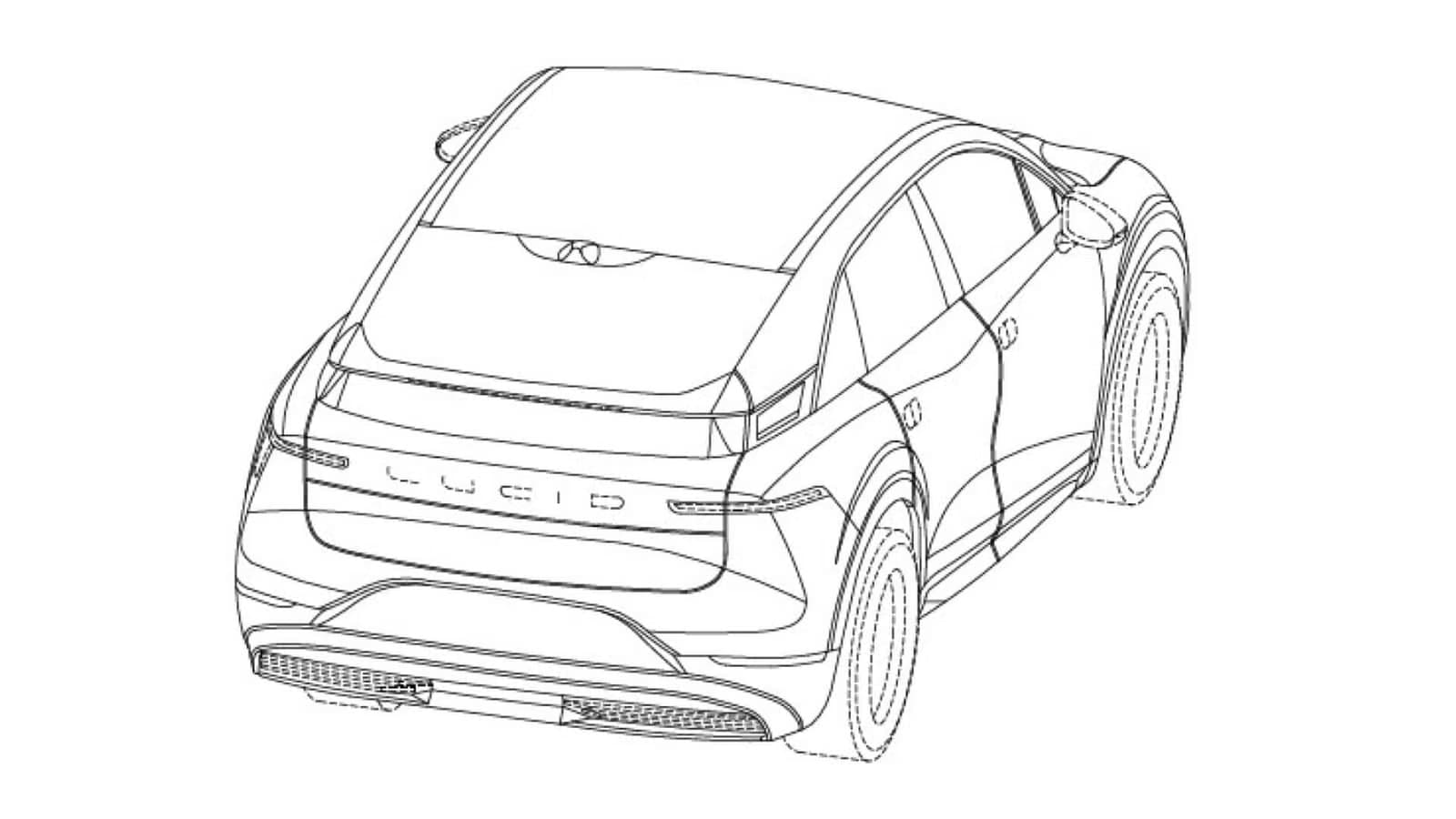
- Lucid has filed design patents for the Cosmos EV with the EU Intellectual Property Office, confirming the production-ready styling of its most affordable vehicle yet.
- The Cosmos targets a sub-$50,000 starting price with 300 miles of range from a 69kWh battery, directly challenging the Tesla Model Y.
- A new Atlas drivetrain reduces part count by 30% and weight by 23%, enabling faster charging and lower costs without sacrificing the brand's efficiency focus.
Lucid Motors has registered the design of its upcoming Cosmos electric crossover with the European Union Intellectual Property Office, giving the public its clearest look yet at the vehicle the company is betting its future on. The filing, searchable as design number 015142895, shows a midsize SUV priced to start below $50,000. That's nearly $21,000 less than Lucid's cheapest current model.
The Cosmos matters because Lucid has never made money. The Air sedan starts at $70,900. The Gravity SUV opens at $79,900. Both are excellent vehicles. Neither sells in volumes that cover Lucid's costs. The Cosmos is designed to change that equation by reaching buyers who consider a Tesla Model Y or Rivian R2 instead of a luxury sedan.
What does the Lucid Cosmos design reveal?
The patent images show a more compact version of Lucid's three-row Gravity SUV. The rear slopes more aggressively, and the Lucid branding is more prominent. Multiple trim levels appear in the filing, consistent with Lucid's earlier statements that a performance variant will hit 60 mph in 3.5 seconds.
Inside, the Cosmos appears to ditch Lucid's signature multi-display cockpit for a single large screen. That's a cost-saving measure, but it also supports the company's robotaxi partnership with Uber, which recently expanded to Houston. A simpler interface is easier to standardize for autonomous operation.
The design matches what Lucid privately showed investors in March and camouflaged prototypes spotted on public roads in May. This is a design patent, so minor details could shift before production. But the core styling is locked.
How does the Atlas platform cut costs?
Lucid CEO Peter Rawlinson has been explicit about the strategy. "The Cosmos isn't just another SUV; it's an efficiency statement," he said. "By leveraging the Atlas platform, we've reduced part complexity by 30%, which is the only way to reach a mass-market price point without compromising the Lucid experience."
The Atlas drivetrain is 23% lighter than Lucid's current motors. Fewer parts means simpler assembly, lower labor costs, and fewer potential failure points. That weight savings also lets the Cosmos use a relatively modest 69kWh battery while still achieving an estimated 300 miles of range.
The 800-volt architecture enables 200 miles of charging in 14 minutes. That's competitive with Porsche and Hyundai's fastest-charging EVs. Combined with a target drag coefficient of 0.22, the Cosmos aims to be one of the most aerodynamic SUVs in its price class.
When will the Cosmos launch and what will it cost?
Lucid plans to release the Cosmos later in 2026. The base price will sit below $50,000, though higher-end configurations could exceed $70,000. A rugged variant called the Earth SUV is expected as a 2028 model with similar pricing.
For context, the Tesla Model Y Long Range currently starts around $45,000. The Rivian R2 is targeting a similar price point for its 2026 launch. The Cosmos will compete directly with both, plus established players like the BMW iX1 and Mercedes EQA in the entry-luxury electric crossover segment.
What are enthusiasts saying about the design?
Online forums have fixated on the Cosmos's split-window rear styling. Some users compare it to a Toyota Prius crossed with an Audi. That's not entirely a compliment. Others praise the aerodynamic focus and argue the design will age better than flashier competitors.
The bigger concern in enthusiast communities isn't styling. It's software. Lucid has faced criticism for buggy infotainment systems and over-the-air update delays. At $70,000-plus, buyers tolerate some roughness. At $50,000, competing against Tesla's mature software stack, Lucid's code needs to be tight from day one.
Can the Cosmos make Lucid profitable?
That's the question the company's survival depends on. Lucid delivered around 9,000 vehicles in 2024. To break even, it likely needs to deliver tens of thousands per year. The Air and Gravity won't get there. Their prices limit the addressable market.
The Cosmos, priced for volume, changes the math. If Lucid can manufacture it efficiently using the Atlas platform's simplified design, margins could be healthy even at sub-$50,000 prices. If production stumbles or software issues plague early buyers, the window could close.
Logicity's Take
The Cosmos isn't just Lucid's attempt at volume. It's a test of whether the company's engineering-first culture can survive translation to a mass-market product. Rawlinson's team has proven they can build the most efficient EVs on the planet. They have not proven they can build them cheaply, consistently, and with software that doesn't frustrate owners. The Atlas platform's 30% parts reduction suggests they understand the manufacturing challenge. Whether they've solved it won't be clear until the first production Cosmos rolls off the line in Arizona.
Another look at how automotive retail is changing as EV startups rethink the buying experience
Frequently Asked Questions
When will the Lucid Cosmos be released?
Lucid plans to release the Cosmos in late 2026, with higher-end trims and the Earth SUV variant following in 2028.
How much will the Lucid Cosmos cost?
The base Cosmos will start below $50,000. Performance and luxury trims could exceed $70,000.
What is the range of the Lucid Cosmos?
The base model targets 300 miles of estimated range from a 69kWh battery pack.
How does the Cosmos compare to Tesla Model Y?
Both target similar price points around $45,000-$50,000. The Cosmos aims for better efficiency with a 0.22 drag coefficient and faster charging via its 800V architecture.
What is Lucid's Atlas platform?
Atlas is Lucid's new drivetrain architecture designed for mass-market vehicles. It's 23% lighter than current motors and uses 30% fewer parts to reduce manufacturing costs.
Need Help Implementing This?
If you're tracking the EV market for investment or fleet decisions, Logicity can help you stay ahead of launch timelines and competitive positioning. Reach out to discuss custom briefings on the vehicles that matter to your business.
Source: How-To Geek
Huma Shazia
Senior AI & Tech Writer
Produced with AI assistance and reviewed by the Logicity editorial team. Learn more in our Editorial Policy.