Key Takeaways
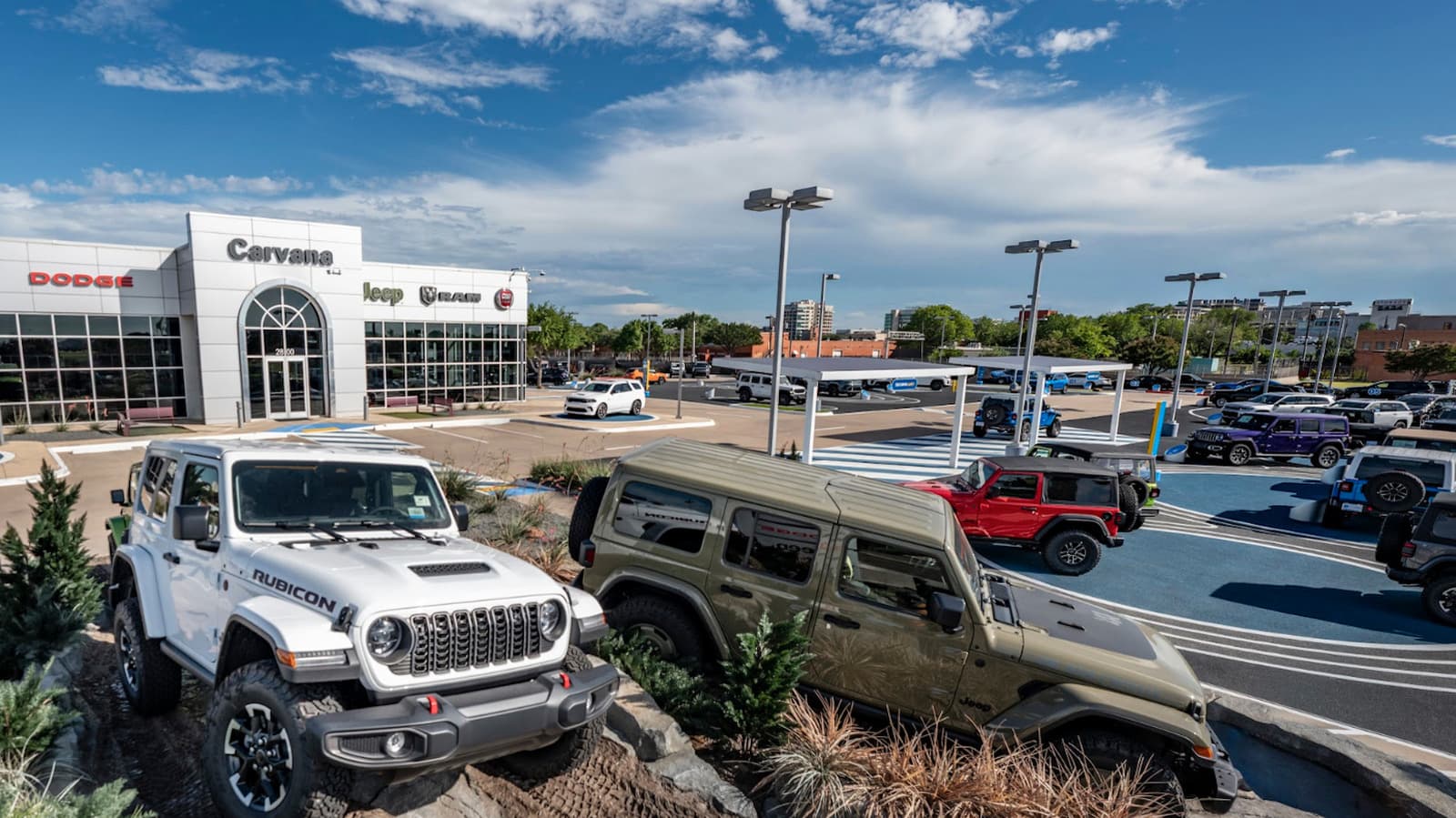
- Carvana converted a Dallas dealership into a test drive-only center for Chrysler, Dodge, Jeep, and Ram vehicles
- Staff focus on support rather than sales, with all transactions completed through the app or website
- The model helps Carvana access trade-ins for its used car inventory while adding service revenue streams
Carvana just opened its first physical test drive center in Dallas, converting a traditional dealership into something closer to a car showroom with no sales pressure. Customers can explore new vehicles from Chrysler, Dodge, Jeep, and Ram at their own pace. When they're ready to buy, they do it through the app.
This is a notable shift for a company built entirely on online used car sales and those attention-grabbing vending machine towers. The Dallas location represents Carvana's first attempt at blending physical exploration with its digital-only transaction model.
How the Carvana test drive experience works
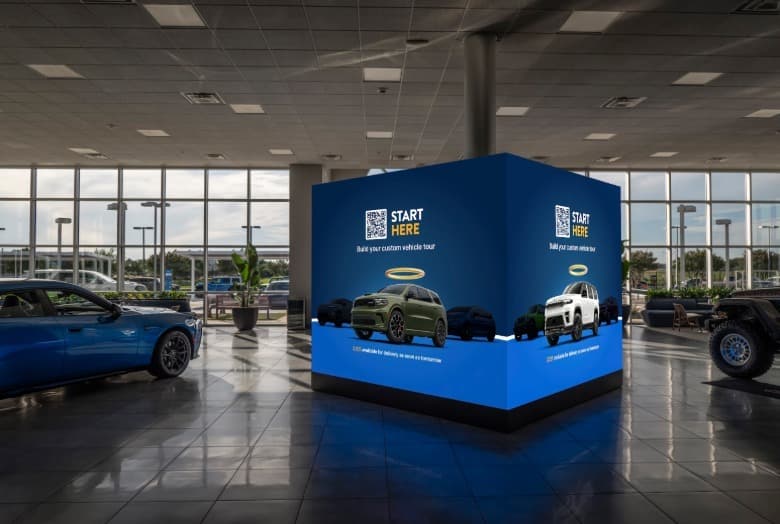
The Dallas center looks nothing like a typical dealership. Plants and comfortable seating fill the space, alongside a 10-foot by 10-foot cube of LED screens that serves as the interactive hub. Customers scan a QR code to control the display from their phones, cycling through available inventory until they find something interesting. The cube then shows a map to locate that exact vehicle on the lot.
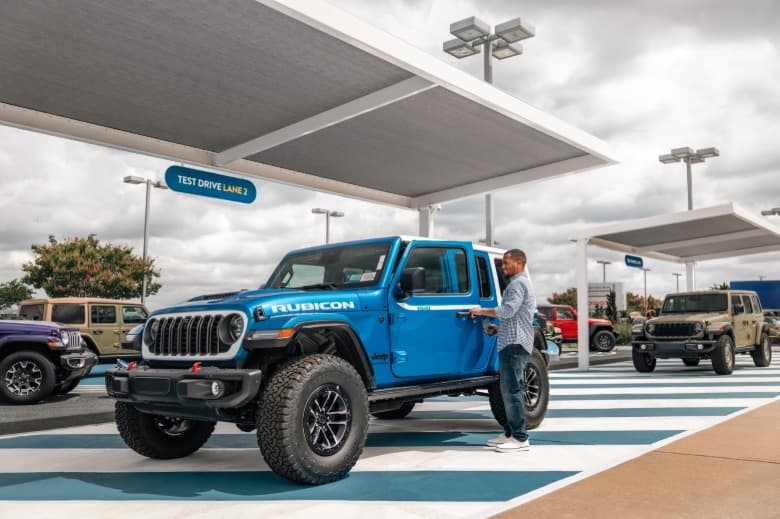
All cars sit unlocked and grouped by model for side-by-side comparisons. You can open doors, climb in, poke around the interior. When you want to actually drive something, a button press in the app summons a staff member who brings out a duplicate of the vehicle you've been inspecting.
Test drives happen unsupervised. Staff provide a suggested route and wait at the dealership. They have your name, email, phone number, and a copy of your license, so accountability exists. But there's no salesperson in the passenger seat steering the conversation toward financing options.
Why remove salespeople from test drives?
The traditional car buying experience ranks among the most stressful consumer transactions. Commission-driven salespeople, negotiation games, and the pressure to decide quickly have defined dealerships for decades. Carvana is betting that removing all of that creates enough goodwill to funnel customers toward its online checkout.
Staff at the center focus on answering questions, not closing deals. If someone asks about buying, they point to the website or app. Carvana describes the role as "support, not sales." The company even suggests people visit just for fun, with no expectation of a purchase.
The business case for physical locations
Carvana has spent the past year acquiring dealerships across the country, and this Dallas center is the first to open under the new model. More locations are planned. The strategy addresses a real weakness in the online-only approach: you can't test drive a car through a website.
But the move also opens up revenue streams that traditional dealerships have relied on for years. Service, maintenance, and parts sales generate consistent income beyond the initial vehicle purchase. And selling new cars from Stellantis brands creates a pipeline of trade-ins that can flow directly into Carvana's used car inventory.
The Dallas center currently offers only new vehicles. Used cars remain an online-only purchase for now, though that could change as the model evolves.
Early reactions and skepticism
Discussion on Reddit's r/cars and Hacker News has been cautiously positive. Users like the idea of unsupervised test drives and the absence of high-pressure tactics. But skeptics are asking the obvious question: does maintaining physical showrooms eventually raise costs enough to erode Carvana's pricing advantage over traditional dealers?
That tension sits at the heart of this experiment. Carvana built its brand on cutting out the dealership middleman. Now it's becoming a dealership, just one that operates by different rules. Whether customers will pay the same prices for a hybrid experience that still requires them to complete the purchase online remains to be seen.
Logicity's Take
Carvana is essentially unbundling the dealership experience. Test drives happen in person, transactions happen online, and the pressure-cooker sales floor disappears. If the model scales without inflating costs, it could force traditional dealers to rethink their floor staff entirely. The bigger question is whether Stellantis gave Carvana favorable terms to serve as an experiment for their own retail future.
Frequently Asked Questions
Can you buy a car at Carvana's test drive center?
No. All purchases happen through Carvana's website or app. Staff at the Dallas location focus on answering questions and supporting test drives, not completing sales.
What car brands are available at the Carvana test drive center?
The Dallas center offers new vehicles from four Stellantis brands: Chrysler, Dodge, Jeep, and Ram. Used cars are not available for test drives at this location.
Are Carvana test drives supervised?
No. Customers take vehicles out alone after providing their driver's license. Staff suggest a route and wait at the dealership for the car to return.
Will Carvana open more test drive centers?
Yes. Carvana has been acquiring dealerships across the country and plans to convert more into test drive centers following the Dallas model.
How does Carvana's test drive center differ from a regular dealership?
The center has no commission-based salespeople, offers unsupervised test drives, and requires all purchases to happen online. The space itself features comfortable seating and an interactive LED display instead of a traditional sales floor.
Need Help Implementing This?
Exploring new retail models for your automotive or e-commerce business? Logicity covers emerging strategies at the intersection of physical and digital experiences. Subscribe for weekly analysis on business model innovation.
Source: Engadget
Manaal Khan
Tech & Innovation Writer
Produced with AI assistance and reviewed by the Logicity editorial team. Learn more in our Editorial Policy.




