Key Takeaways
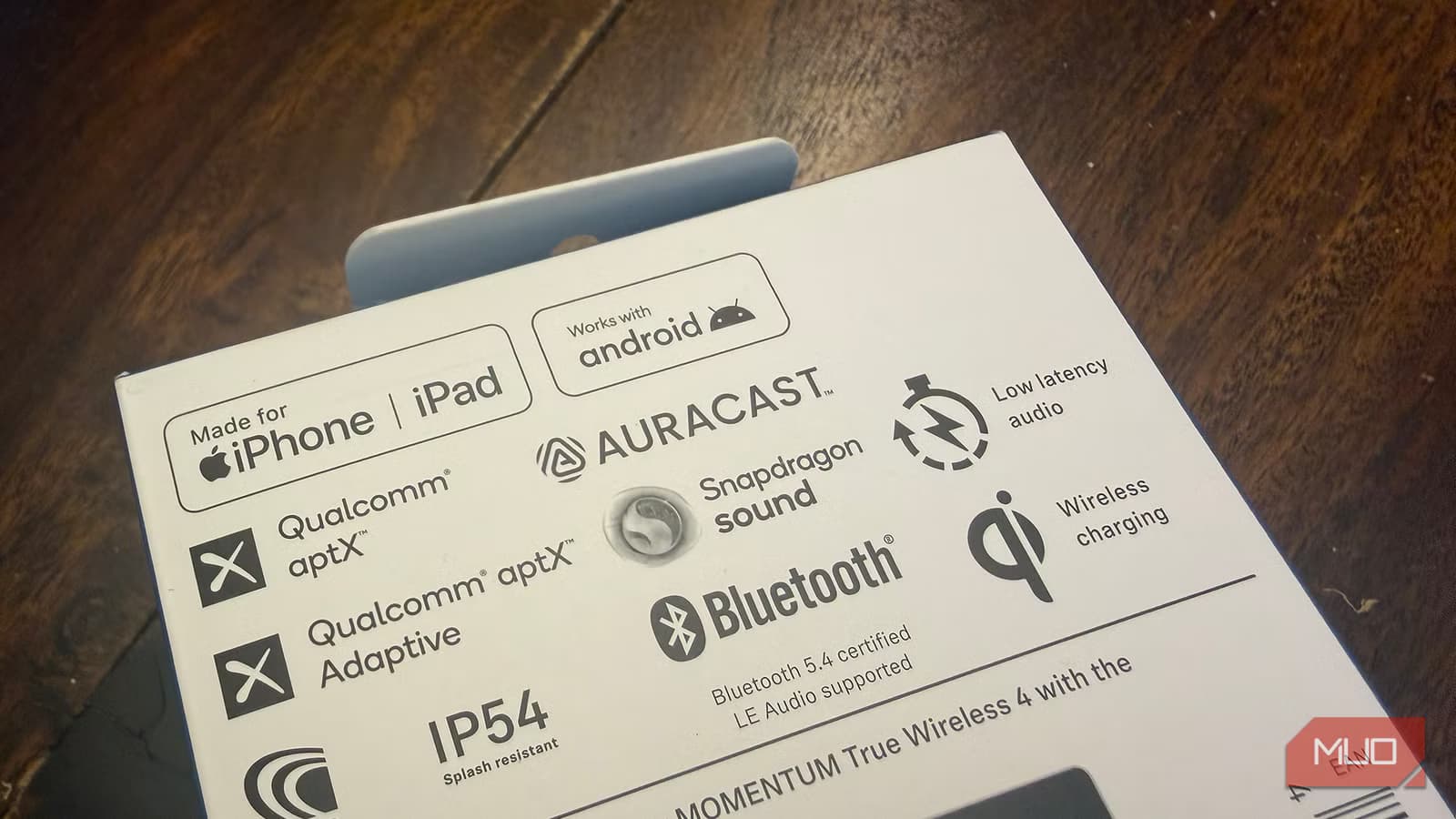
- LC3 achieves high-quality audio at 345 kbps versus LDAC's 990 kbps maximum, while using 50% less power than SBC
- Both your phone and headphones need Bluetooth 5.2+ support for LC3 to work
- Auracast enables unlimited devices to tap into a single audio broadcast, useful for gyms, museums, and hearing aids
Bluetooth LE Audio's LC3 codec is quietly replacing the SBC standard that has defined wireless audio quality for years. The pitch: better sound at lower bitrates, half the power consumption, and new broadcast capabilities that LDAC simply cannot match. The catch is that both ends of your audio chain need Bluetooth 5.2 or later, and adoption remains uneven.
For years, audiophiles chased Sony's LDAC codec, which tops out at 24-bit, 96kHz audio at up to 990 kbps. That's well above CD quality. LC3 takes a different approach. Instead of pushing maximum bitrate, it achieves comparable quality at roughly 345 kbps. The Bluetooth SIG, which governs the standard, claims LC3 sounds better than SBC even at 50% lower bit rates.
What makes LC3 different from LDAC?
LDAC is Sony's proprietary high-resolution codec, introduced in 2015. It prioritizes raw audio quality and requires significant bandwidth. LC3 is an open standard baked into Bluetooth 5.2. It prioritizes efficiency.
The power savings are substantial. LC3 uses approximately half the energy of SBC to deliver equal or better audio quality. For wireless earbuds with small batteries, that difference translates directly into longer playback time.
Latency also drops significantly. Classic Bluetooth audio often sits around 150ms of delay. LE Audio can push this down to roughly 20ms, which matters for gaming and keeping video in sync with audio.
True wireless stereo, finally
Classic Bluetooth sends stereo data to one earbud, which then relays a mono channel to the other. This creates synchronization headaches and connection drops. With LC3, both earbuds connect independently to the source device. Each receives its own channel. The result is more reliable connections with no latency mismatch between left and right.
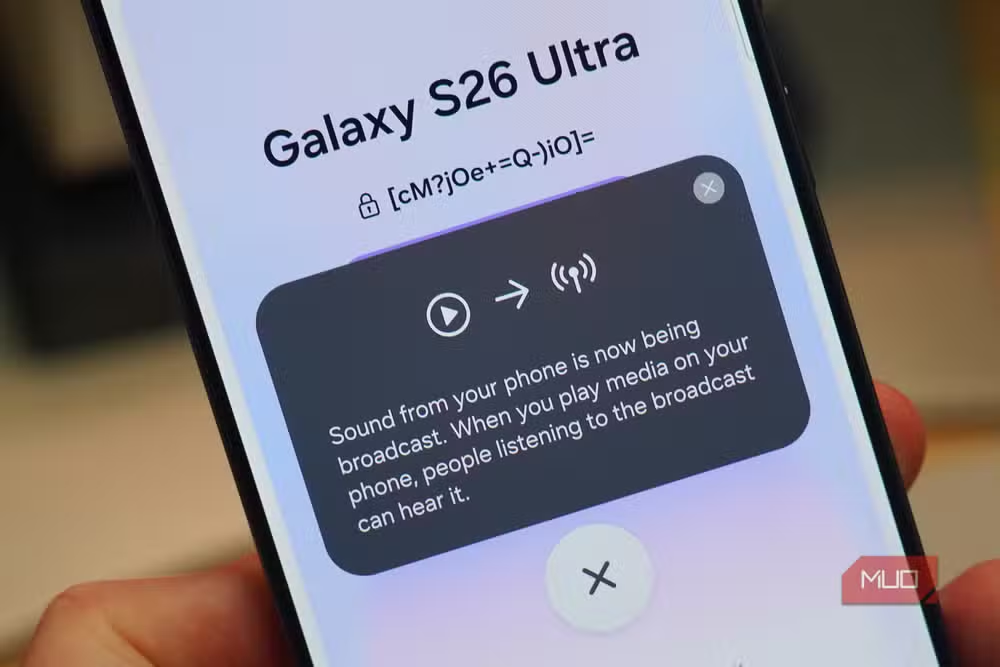
This independent connection also enables Auracast, the broadcast feature built into LE Audio. A single source device can stream audio to an unlimited number of receivers simultaneously. Sports bars could broadcast game audio to patrons' earbuds. Museums could offer guided tours without handing out hardware. Gyms could pipe instructions directly to participants during a class.
What devices support LC3 today?
You need Bluetooth 5.2 or later on both the transmitting and receiving device. On the phone side, Samsung's Galaxy S26 Ultra and Google's Pixel 10 Pro support LE Audio. On the headphone side, the Sony WF-1000XM5 earbuds, Sennheiser Momentum 5 Wireless, and AirPods Max 2 are compatible.
Apple's support is limited. The iPhone 17 Pro can use LC3, but Apple restricts it to Made for iPhone hearing aids. This is a deliberate choice, not a technical limitation.
To check if LE Audio is active on Android, go to Settings, then Bluetooth, and look for an LE Audio toggle. On Windows, the setting lives in Device Settings. Mac users with compatible hardware may get codec support but not Auracast broadcasting.
Who benefits most from LC3?
Hearing aid users stand to gain the most. Broadcast audio sent directly to hearing aids makes crowded environments far more accessible. A lecture hall, a place of worship, or a train station could push announcements straight to compatible devices.
For mainstream users, the benefit is simpler: your earbuds last longer and switch between devices more smoothly. If you have already invested in LDAC-compatible gear, there is no urgent reason to upgrade. But if you are buying new headphones today, LC3 support is worth checking for.
| Feature | LDAC | LC3 |
|---|---|---|
| Max bitrate | 990 kbps | ~345 kbps typical |
| Power consumption | Standard | ~50% less than SBC |
| Latency | ~150ms | ~20ms possible |
| Broadcast audio | No | Yes (Auracast) |
| Open standard | No (Sony proprietary) | Yes |
| Minimum Bluetooth version | 4.0 | 5.2 |
The adoption problem
LC3 shipped as part of Bluetooth 5.2 in 2020. Six years later, support remains inconsistent. Many flagship phones support it. Most budget devices do not. Headphone manufacturers have been slow to update their chipsets. And Apple's walled-garden approach means iOS users cannot use Auracast or general LC3 streaming.
Audiophile communities remain skeptical. LDAC's higher bitrate is easy to quantify. LC3's efficiency gains are harder to hear directly. The codec's real advantage shows up in battery meters and connection stability, not in blind listening tests.
Logicity's Take
LC3 is not an LDAC killer. It is a different tool for a different job. LDAC still wins on raw bitrate for stationary listening. LC3 wins on power efficiency, latency, and broadcast capabilities. The real question is whether Apple will ever unlock LC3 for general use on iPhones. Until then, the Android ecosystem owns this feature.
Frequently Asked Questions
Can I use LC3 and LDAC at the same time?
No. Your devices negotiate a single codec per connection. If both support LC3 and LDAC, the device settings determine which one takes priority.
Does LC3 sound better than LDAC?
Not necessarily. LDAC can push higher bitrates. LC3's advantage is achieving comparable quality at much lower bitrates while using less power.
How do I know if my headphones support LC3?
Check the specifications for Bluetooth LE Audio or Bluetooth 5.2+ support. Manufacturers do not always list LC3 explicitly.
Will my old Bluetooth headphones work with LE Audio?
No. LE Audio requires hardware support. A firmware update cannot add LC3 to headphones designed for Classic Bluetooth only.
Is Auracast available everywhere?
Not yet. Venues need to install Auracast transmitters, and users need compatible devices. Adoption is just beginning in airports and some public spaces.
Another counterintuitive wireless technology where more devices means better performance
Need Help Implementing This?
Building audio products or accessibility solutions around Bluetooth LE Audio? Logicity can connect you with engineers who specialize in embedded Bluetooth development. Reach out through our contact page.
Source: MakeUseOf
Manaal Khan
Tech & Innovation Writer
Produced with AI assistance and reviewed by the Logicity editorial team. Learn more in our Editorial Policy.