Key Takeaways
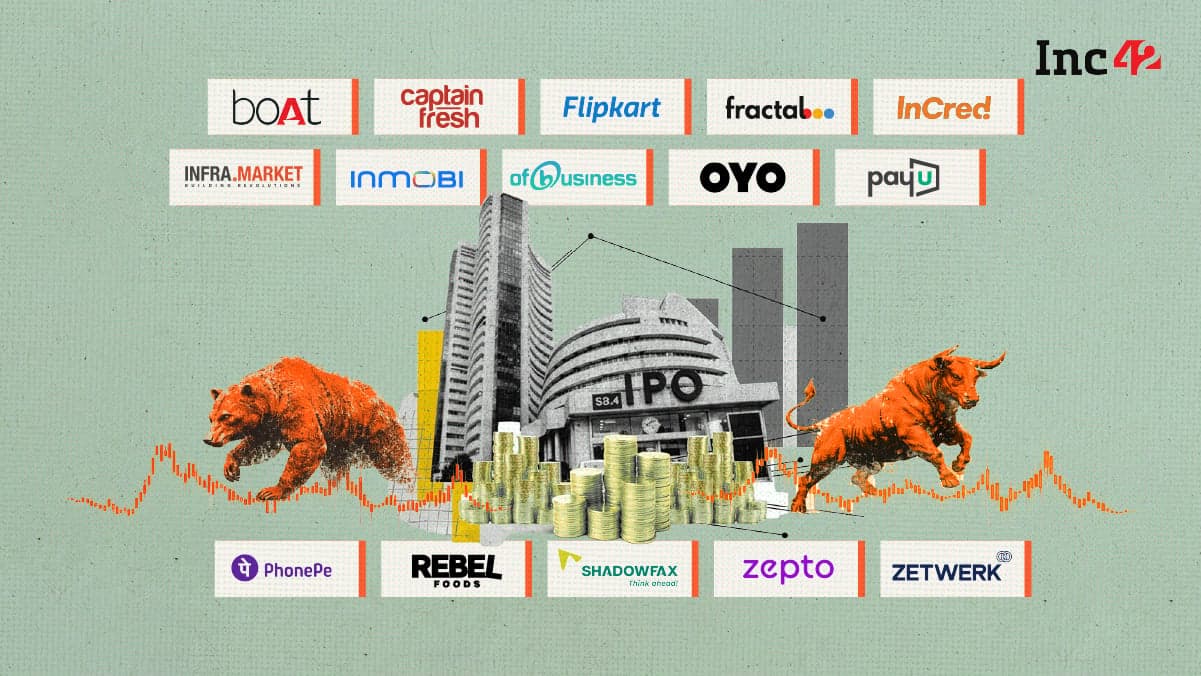
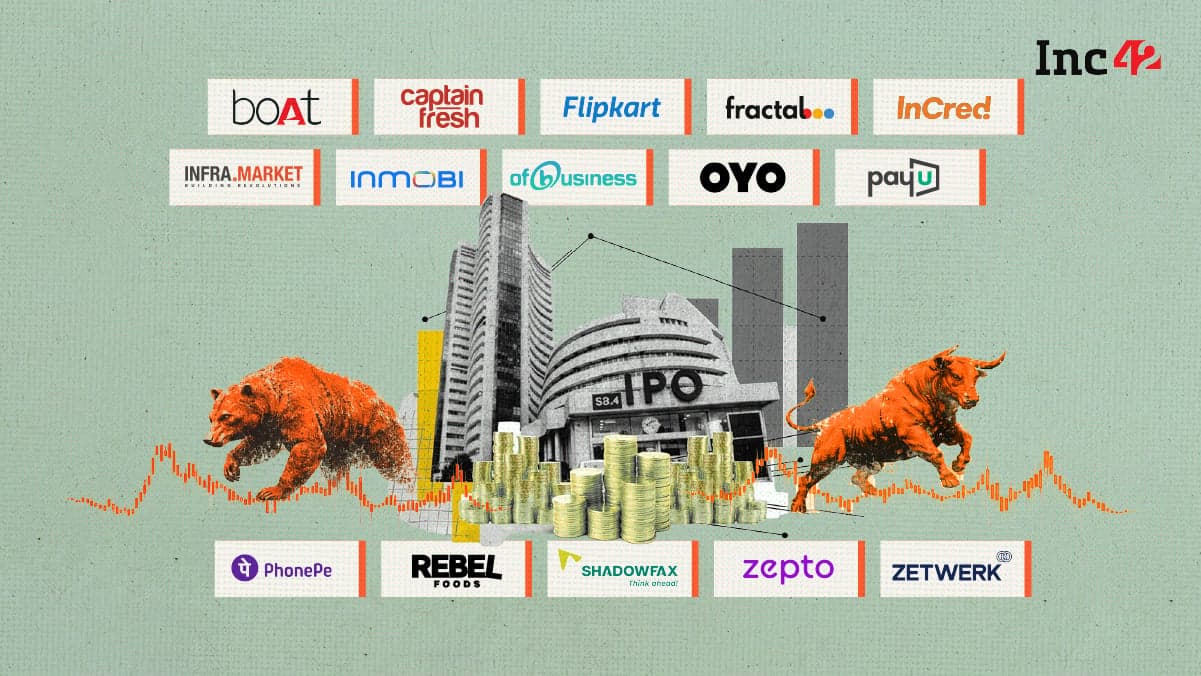
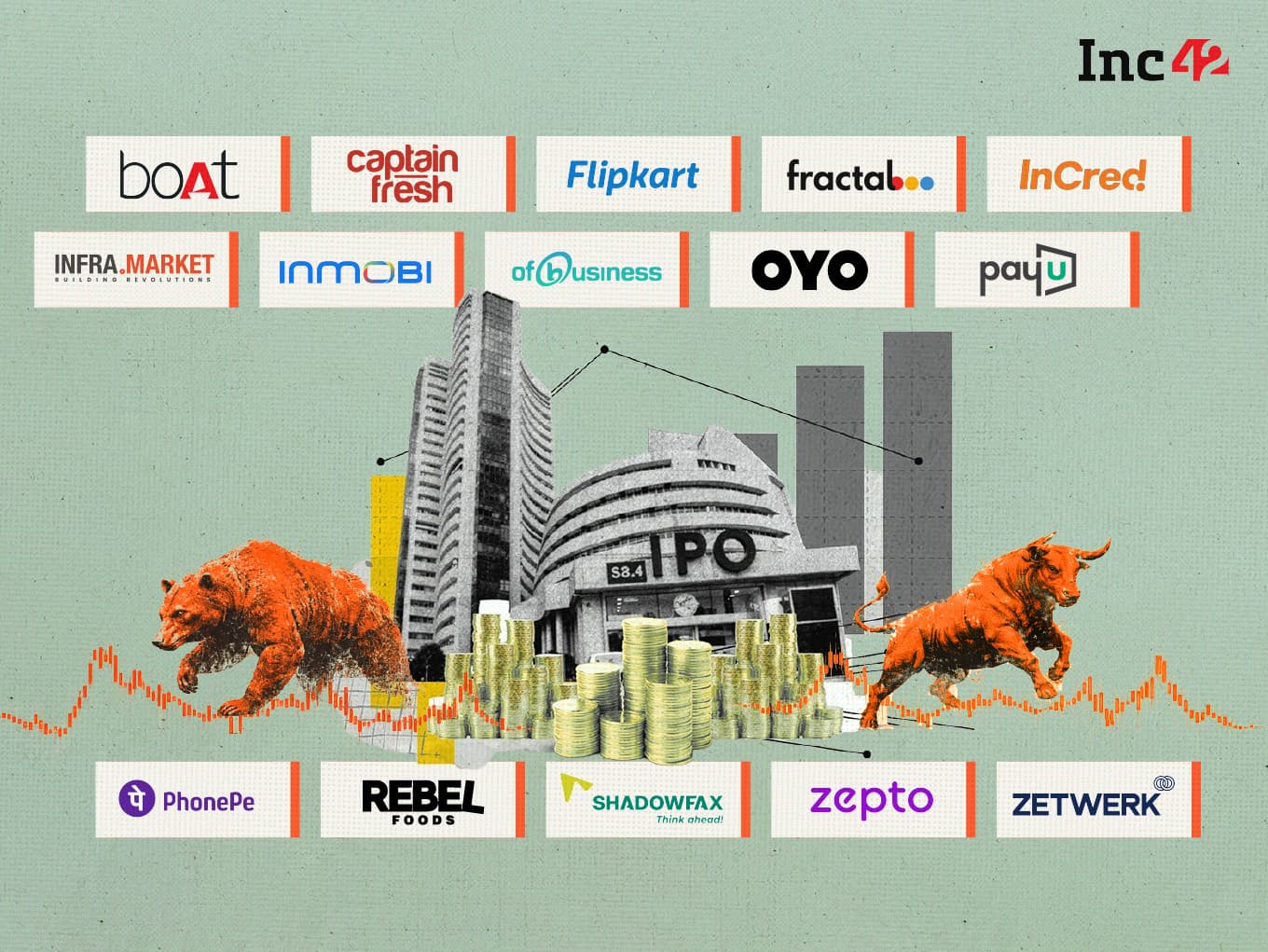
- 24 startups have filed DRHPs with SEBI, with 25 more in preparation stages
- Flipkart, Zepto, OYO, InMobi, and Zetwerk alone could raise over ₹47,000 Cr
- Public market investors are shifting focus from growth metrics to profitability and cash efficiency
2025 Set the Stage
Dalal Street had a landmark year in 2025. Eighteen Indian startups went public, raising a combined ₹41,248 Cr. That made it the biggest year ever for new-age tech IPOs in India.
Several factors drove the surge. GDP growth projections improved investor appetite. SEBI simplified DRHP filings and loosened ESOP rules, letting founders retain more ownership. Retail participation exploded as demat accounts crossed 20 Cr.
Most 2025 IPOs leaned heavily on the OFS (Offer for Sale) component, giving early investors and VCs a way to cash out. Post-listing, the market rewarded companies with real profits and sustainable growth. Hype alone did not hold.
“Besides the readiness that startups showed in their unit economics, there is also an increase in the founders committing to their businesses for next couple of decades and grow their businesses by adding adjacent profit pools – something that the public markets reward handsomely.”
— Ashish Kumar, cofounder and general partner at Fundamentum Partnership
2026 Pipeline: The Numbers
The first three months of 2026 brought five new-age tech listings. But unlike 2025, most performed flat or outright poorly. The market's appetite has shifted.
Still, the pipeline is packed. Twenty-four startups have already filed their draft red herring prospectuses with SEBI. Another 25 or more are finalizing their IPO plans.
The unicorns alone tell the story. Flipkart, Zepto, OYO, InMobi, and Zetwerk could collectively raise over ₹47,000 Cr. If even half of them list, 2026 will surpass 2025 in total capital raised.
What Investors Want Now
The rules have changed. Public market investors are no longer chasing top-line growth. They want predictable cash flows, sustainable unit economics, and operational discipline.
“IPO-bound startups in 2026 will be increasingly defined by their ability to demonstrate predictable cash flows, sustainable unit economics, and operational discipline rather than headline growth alone. Public market investors will place greater emphasis on governance, capital efficiency and long-term value creation, favouring companies that balance scale with financial prudence.”
— Rehan Yar Khan, managing partner at Orios Venture Partners
This shift explains the lukewarm reception for early 2026 listings. Companies that went public on promise rather than performance struggled to hold their issue price.
Key Themes to Watch
- Profitability over growth: Investors will scrutinize bottom lines, not just GMV or user counts
- Governance matters: Board composition, related-party transactions, and founder accountability are now deal factors
- OFS dominance: Expect early investors to continue using IPOs as exit routes
- Sector concentration: Fintech, e-commerce, and B2B SaaS will dominate the pipeline
- Valuation resets: Startups may accept lower valuations than their last private rounds to get deals done
The Unicorns in Line
Flipkart remains the biggest name. A Flipkart IPO would be the largest tech listing in Indian history. The company has been profitable on an adjusted basis and has the scale to command a premium valuation.
Zepto, the quick-commerce player, has grown rapidly but faces questions about long-term profitability in a competitive market. OYO has attempted to list before and withdrew. This time, the company claims better unit economics.
InMobi, the mobile advertising platform, and Zetwerk, the B2B manufacturing marketplace, round out the top tier. Both have established businesses with clearer paths to profitability than consumer-facing startups.


Logicity's Take
Risks to the Pipeline
Not every company in line will make it to listing. Global macroeconomic conditions, particularly interest rates and tech sector sentiment in the US, will influence Indian IPO appetite.
Regulatory surprises are also possible. SEBI has been startup-friendly, but that could change if early listings underperform and retail investors take losses.
The biggest risk may be self-inflicted. Startups that push for inflated valuations may find the market unwilling to play along. The 2026 investor is pragmatic, not optimistic.
Frequently Asked Questions
How many Indian startups are planning IPOs in 2026?
Around 49 startups are in the pipeline. Twenty-four have already filed DRHPs with SEBI, and over 25 more are preparing their IPO plans.
Which Indian unicorns are expected to go public in 2026?
Flipkart, Zepto, OYO, InMobi, and Zetwerk are among the top names. Together, they could raise over ₹47,000 Cr.
How much did Indian startups raise in IPOs in 2025?
Eighteen startups raised a record ₹41,248 Cr from public markets in 2025.
What are investors looking for in 2026 startup IPOs?
Predictable cash flows, sustainable unit economics, profitability, and strong governance. Growth alone is no longer enough.
Why did early 2026 startup IPOs underperform?
Most listings in Q1 2026 were flat or disappointing because investors are now prioritizing fundamentals over hype and growth narratives.
Need Help Implementing This?
Source: Inc42 Media / Team Inc42
Manaal Khan
Tech & Innovation Writer
Produced with AI assistance and reviewed by the Logicity editorial team. Learn more in our Editorial Policy.