
Key Takeaways

- Loopworm can reduce biologics manufacturing costs to between half and one-fifth of traditional methods
- The startup reported ₹4.5 Cr revenue in FY25 with projections of ₹15-18 Cr for FY26
- Insects like silkworms and black soldier flies replace expensive bioreactor infrastructure
- The company exports animal nutrition products to Japan, Europe, and South America
- Loopworm aims to compete with established fish meal producers, not other insect protein startups



Read in Short
Bengaluru-based Loopworm is turning insects into protein manufacturing machines. They're making animal feed ingredients today and working on pharmaceutical biologics that could cost 80% less than current methods. Revenue is expected to triple next fiscal year.
Here's something wild to think about. That pregnancy test you bought at the pharmacy? The cancer drugs that save lives? The vaccines we all lined up for? They all depend on something called protein biologics. And most of us have never heard of them.
These molecules are the invisible workhorses of modern medicine. They detect diseases, trigger immune responses, and treat conditions by talking directly to your body's biological systems. The problem? They're insanely expensive to make. We're talking complex bioreactor infrastructure, highly specialized manufacturing processes, and a small club of global producers who basically control the supply.
But what if the solution was crawling around in the dirt this whole time?
Bugs as Biological Factories
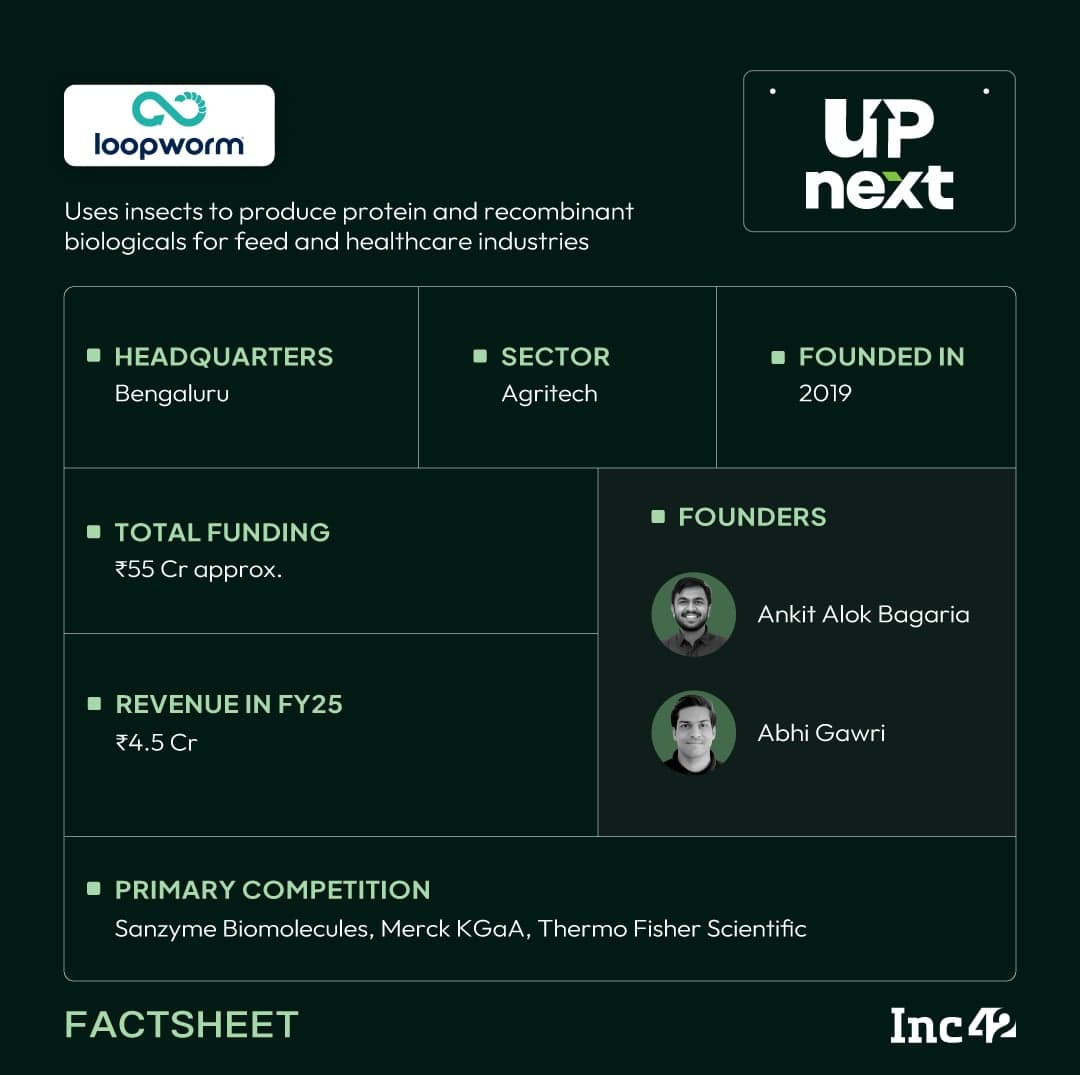
Loopworm, founded by Ankit Alok Bagaria and Abhi Gawri back in 2019, had a pretty unconventional idea. What if insects could manufacture these protein biologics instead of expensive industrial equipment? Turns out, silkworms and black soldier flies are surprisingly good at producing biological molecules. And they're a whole lot cheaper than building a pharmaceutical plant.
“Loopworm is not an animal nutrition company that happens to use insects. It's a manufacturing company that uses insects to make things the world needs.”
— Ankit Alok Bagaria, Co-founder of Loopworm
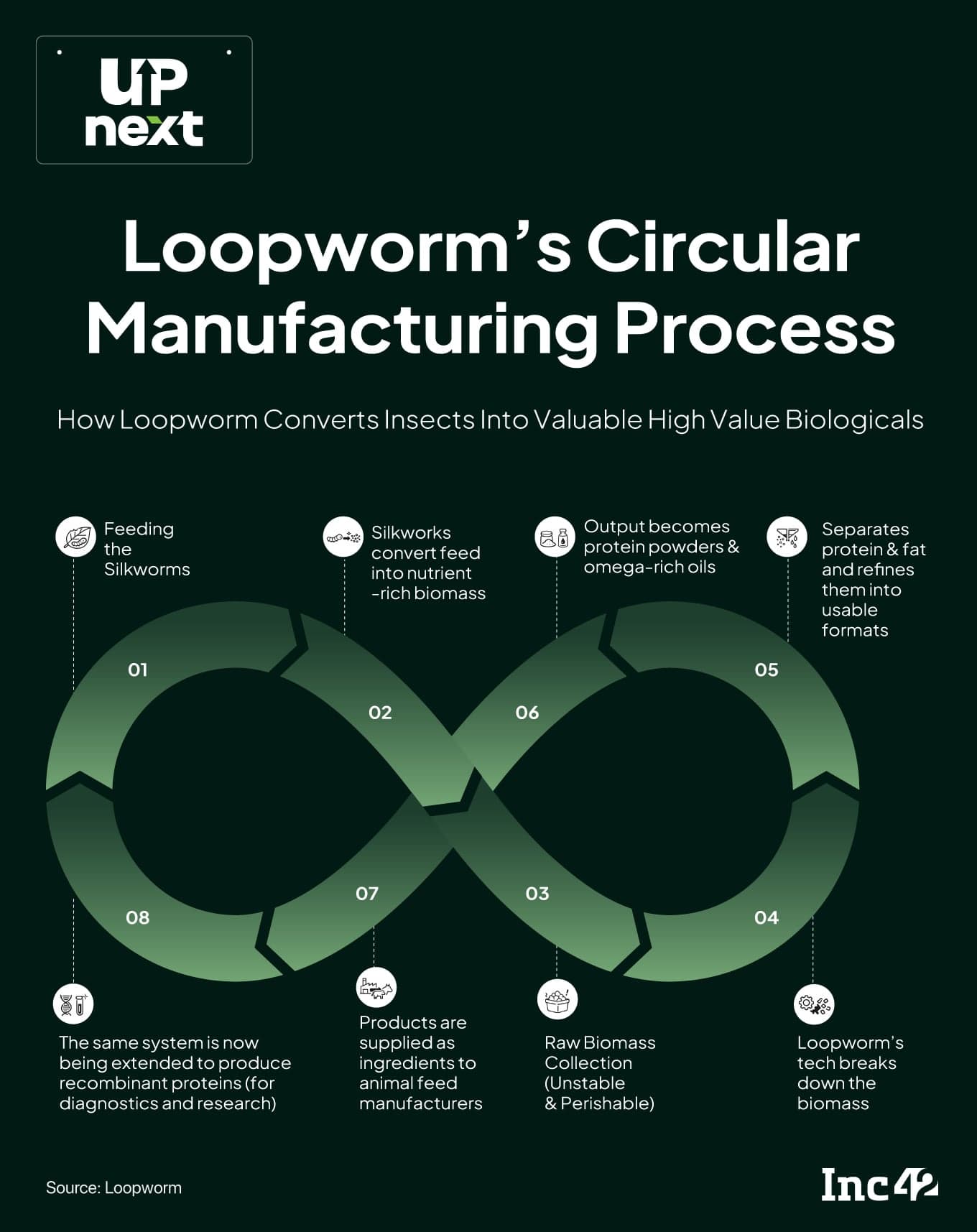
The pitch is straightforward. Instead of relying on traditional bioreactor setups that require massive capital investment and ongoing operational costs, you use insects as your production platform. Same molecules, different factory. The result? Manufacturing costs drop to anywhere between half and one-fifth of what you'd normally pay.
How Traditional Biologics Manufacturing Works
Most protein biologics are made using cell cultures grown in large steel bioreactors. This requires sterile facilities, precise temperature control, expensive growth media, and highly trained technicians. The infrastructure alone can cost hundreds of millions of dollars.

The Revenue Story: Animal Feed First
Now, pharmaceutical biologics are the long game. You don't just walk into the FDA and say "hey, we made this drug using bugs." There's regulatory approval, clinical trials, the whole nine yards. So Loopworm is playing it smart.
Right now, the company makes its money from animal nutrition. They process insects into high-protein concentrates and omega-3-rich fats. These get sold as ingredients for aquaculture, poultry, and pet food. It's not as sexy as cancer drugs, but it pays the bills and builds the manufacturing expertise they'll need later.
The growth numbers are pretty solid. FY25 brought in ₹4.5 Cr in revenue, and they're projecting ₹15-18 Cr for FY26. That's roughly a 3-4x jump in a single year. Export demand is driving most of this, with customers in Japan, Europe, and South America buying their products for pet food and aquaculture.
Who They're Actually Competing Against
Here's where it gets interesting. Loopworm doesn't see other insect protein startups as competition. At all. They're going after a much bigger target: the established fish meal and krill meal market dominated by companies like Pelagia AS and Omega Protein Corp.
Think about it. Fish meal has been the protein source of choice for animal feed for decades. But overfishing is a real problem, sustainability concerns are growing, and prices fluctuate wildly based on catch volumes. Insects? You can farm them year-round, they grow incredibly fast, and they convert organic waste into protein with ridiculous efficiency.
| Factor | Traditional Fish Meal | Insect Protein |
|---|---|---|
| Resource dependency | Wild fish stocks | Controlled farming |
| Environmental impact | Contributes to overfishing | Uses organic waste as input |
| Production consistency | Varies by season and catch | Year-round stable production |
| Scalability | Limited by ocean resources | Highly scalable with facilities |
For recombinant proteins (the pharmaceutical side), Loopworm wants to challenge the big global biomanufacturers who've dominated production through traditional bioreactor methods. These are companies with billion-dollar facilities and decades of expertise. Taking them on won't be easy, but the cost advantage could be a game-changer.
Another Indian startup raising significant funding and targeting international expansion
Why This Matters for Healthcare Access
Let's zoom out for a second. In developed markets, expensive biologics are frustrating but often accessible through insurance or government programs. In emerging markets? They're simply out of reach for most people.
Diagnostic tests, therapeutic proteins, research reagents. All of these become more accessible when manufacturing costs drop by 50-80%. We're not talking about incremental improvements here. This could fundamentally change who gets access to modern medicine.
The Biologics Access Gap
Many emerging markets have rapidly growing demand for diagnostics, research tools, and therapeutic proteins. But traditional manufacturing costs mean these products remain imports at premium prices, limiting healthcare development.
And it's not just about cost. Supply chain resilience matters too. When you're dependent on a handful of global manufacturers, any disruption (remember 2020?) creates massive problems. Local or regional production using insect-based platforms could provide backup capacity that doesn't exist today.
The Technical Stuff (Simplified)
So how does a silkworm actually make pharmaceutical proteins? Without getting too deep into molecular biology, here's the basic idea.
- Insects are genetically modified to produce specific proteins in their cells
- As the insect grows, it manufactures the target protein alongside its normal biological processes
- The insects are harvested and processed to extract the desired proteins
- Purification steps isolate the biologics from other insect materials
- Final products are tested for purity and potency
The key advantage is that insects are already protein production machines. They grow fast, they're efficient at converting feed into biomass, and their biology can be modified to produce specific molecules. You're basically hijacking a system that evolution spent millions of years optimizing.
What's Next for Loopworm
The animal nutrition business gives them cash flow and manufacturing experience. Export markets provide validation and scale. But the founders are clearly thinking bigger.
Moving into pharmaceutical biologics will require regulatory approvals, probably starting with veterinary applications before human therapeutics. It'll take years and significant investment. But if they can prove the cost advantage at scale while maintaining quality standards, they'll have something genuinely disruptive.
- Current focus on scaling animal nutrition exports to Japan, Europe, South America
- Building manufacturing expertise and quality systems
- Preparing regulatory pathway for recombinant protein applications
- Targeting competition with traditional fish meal rather than other insect startups
How big tech is investing in emerging technology sectors in India
The Bottom Line
Loopworm is betting that the future of protein manufacturing looks a lot more biological and a lot less industrial. Insects instead of bioreactors. Natural processes instead of sterile steel tanks. Lower costs, better access, more resilient supply chains.
Will it work? The animal feed business is already proving the concept. The revenue trajectory looks solid. And the long-term opportunity in pharmaceutical biologics is massive if they can navigate the regulatory landscape.
Sometimes the weirdest ideas are the ones that actually change things. A few years from now, your medication might be made by bugs. And honestly? That's pretty cool.
Frequently Asked Questions
What is Loopworm and what do they do?
Loopworm is a Bengaluru-based biomanufacturing startup that uses insects like silkworms and black soldier flies to produce protein biologics and animal nutrition ingredients.
How much can Loopworm reduce biologics manufacturing costs?
Depending on the molecule and production complexity, Loopworm claims it can reduce costs to between half and one-fifth of traditional manufacturing methods.
What is Loopworm's current revenue?
The company reported ₹4.5 Cr revenue in FY25 and projects ₹15-18 Cr for FY26, primarily driven by export demand in animal nutrition.
What markets does Loopworm serve?
They supply feed manufacturers in India and export to pet food and aquaculture companies in Japan, Europe, and South America.
Source: Inc42 Media / Anirudh Trivedi
Huma Shazia
Senior AI & Tech Writer
Produced with AI assistance and reviewed by the Logicity editorial team. Learn more in our Editorial Policy.