Key Takeaways
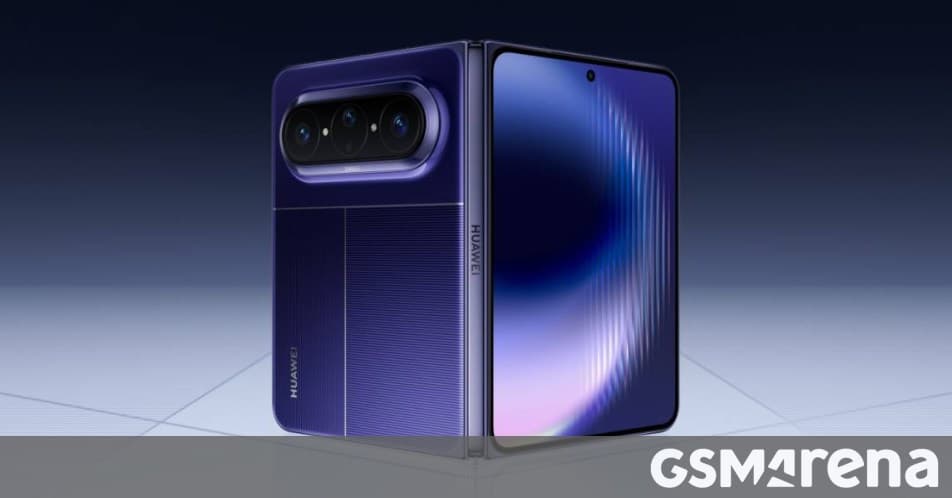
- The 7.7-inch inner display with stylus support creates a tablet-like workspace in your pocket
- HarmonyOS means no Google services, which may break critical business apps
- China-only launch limits enterprise deployment options for global teams
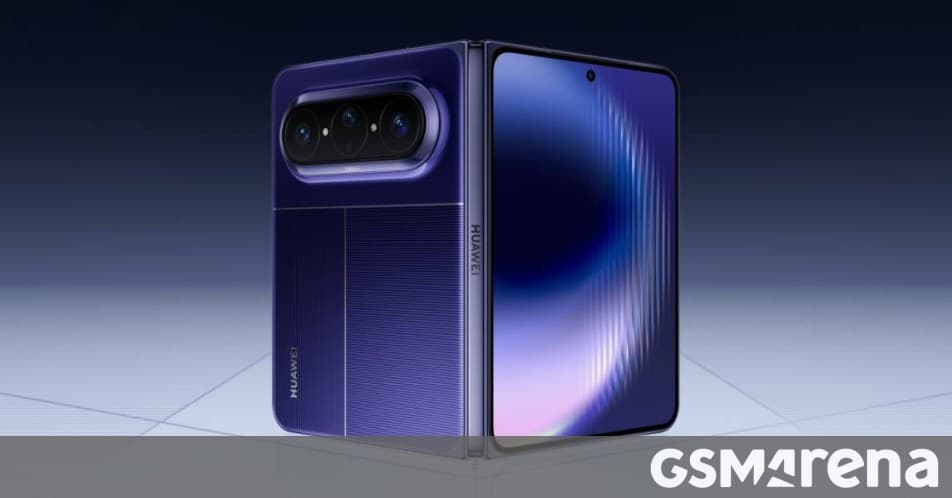
According to [GSMArena](https://www.gsmarena.com/huawei_pura_x_max_unveiled_larger_displays_with_stylus_support_slimmer_build-news-72448.php), Huawei has unveiled the Pura X Max, a wide foldable phone with a 7.7-inch internal display and native stylus support that positions itself squarely between flip phones and traditional book-style foldables.
For business leaders watching the enterprise mobile space, this launch raises a critical question: Is the wide foldable form factor finally ready for serious work? Or is Huawei's continued isolation from Google services a dealbreaker that makes this impressive hardware irrelevant outside China?
What Does the Huawei Pura X Max Offer Business Users?
Let's cut through the spec sheet and focus on what matters for productivity. The Pura X Max isn't just another foldable. It's Huawei's answer to a genuine pain point: executives want tablet-sized screens without carrying tablet-sized devices.
The display runs at 2,584 x 1,828 pixels with a 14.1:10 aspect ratio. That's closer to a traditional 4:3 display than the ultra-wide screens on most phones. For reviewing spreadsheets, annotating PDFs, or participating in video calls, this ratio makes sense. You're getting a workspace, not a cinema screen.
Both the inner and outer displays use LTPO 2.0 technology with 1-120Hz adaptive refresh rates. This matters for battery life during long workdays. The 1,440Hz PWM dimming should reduce eye strain during extended use, a real concern for executives who live on their devices.
Why Stylus Support Changes Mobile Productivity
The M-Pen 3 Mini is the headline feature for business buyers. Huawei designed a compact stylus specifically for this form factor, paired with dedicated cases that keep the pen accessible.
For executives, stylus support unlocks use cases that touchscreens alone can't match. Signing documents on the go. Annotating contracts during negotiations. Sketching ideas in meetings. The Samsung Galaxy Fold series has offered this, but Huawei's wide aspect ratio may prove more practical for document work.
Compare stylus-equipped alternatives at different price points
The Executive Summary
The Pura X Max targets a specific user: someone who needs a tablet-sized workspace but refuses to carry multiple devices. The stylus support and near-4:3 aspect ratio suggest Huawei is thinking about document work, not just media consumption. If your team reviews contracts, annotates designs, or needs quick signatures on the go, this form factor deserves attention.
Huawei Pura X Max vs Pura X: What's Actually New?
Huawei already sells the Pura X. So what does the Max add that justifies attention? The differences matter more than the names suggest.
| Specification | Pura X | Pura X Max | Business Impact |
|---|---|---|---|
| Inner Display | 7" (16:10) | 7.7" (14.1:10) | Better for documents and multitasking |
| Stylus Support | No | Yes (M-Pen 3 Mini) | Enables signatures and annotations |
| Battery | 4,720mAh | 5,300mAh | 12% more capacity for longer workdays |
| Chipset | Kirin 9020 | Kirin 9030 Pro | 30% performance boost |
| Dust/Water Resistance | IPX8 | IP58/IP59 | Better protection for field use |
| Main Camera Aperture | Fixed f/1.6 | Variable f/1.4-4.0 | Better document scanning flexibility |
The 30% performance jump from the Kirin 9030 Pro matters for multitasking. Running video calls, document editing, and email simultaneously requires headroom. The improved dust resistance (IP58/IP59) makes the Max viable for executives who work outside pristine offices.
The HarmonyOS Problem for Enterprise Buyers
Here's where the business case gets complicated. Huawei no longer ships Android. The Pura X Max runs HarmonyOS 6.1, which means no Google Play Store, no Gmail app, no Google Workspace integration out of the box.
For companies standardized on Google Workspace or Microsoft 365, this creates friction. You can potentially sideload some apps, but that introduces security risks and support headaches that IT teams hate. Mobile device management becomes more complex. App compatibility testing becomes a recurring cost.
✅ Pros
- • HarmonyOS offers tighter hardware-software integration
- • No Google dependency may appeal to privacy-focused organizations
- • Chinese market apps work seamlessly
- • Potential advantage for companies doing significant China business
❌ Cons
- • No native Google Workspace or Microsoft 365 apps
- • Limited enterprise app ecosystem compared to Android/iOS
- • MDM solutions may not fully support HarmonyOS
- • Employee training required for unfamiliar OS
If your organization operates primarily in China, or if you're actively reducing Google dependency, HarmonyOS becomes less of an obstacle. For everyone else, it's a significant barrier to deployment.
China-Only Launch: What Global Businesses Should Know
The Pura X Max is launching in China with no confirmed global availability. This isn't surprising given ongoing US sanctions, but it limits options for multinational enterprises.
Companies with China operations might consider deploying these devices for local teams. The price points (converted to approximately $1,200-1,500 USD based on configuration) position the Max competitively against Samsung's Galaxy Z Fold series.
However, supporting mixed device fleets across regions adds IT complexity. Before committing, calculate the real cost: not just hardware, but training, app development, and ongoing support for a separate platform.
Explore alternatives with broader global availability
Camera System: Beyond Selfies to Document Capture
Business users often overlook cameras when evaluating work phones. That's a mistake. Document scanning, whiteboard capture, and quick product photos matter in daily operations.
The Pura X Max's 50MP main camera uses a variable aperture (f/1.4 to f/4.0), which helps capture sharp documents in varying lighting. The RYYB sensor design captures more light than traditional RGB sensors, improving low-light performance for conference room whiteboard shots.
The 50MP periscope telephoto with OIS could prove useful for capturing distant details during site visits or inspections. Having proper optical zoom beats digital cropping when quality matters.
Is the Huawei Pura X Max Worth the Investment?
The answer depends entirely on your organization's geography and software requirements.
Buy If
Your business operates primarily in China, you're reducing Google dependency, or you need stylus-equipped mobile productivity for local teams. The hardware genuinely impresses, and the form factor solves real problems for document-heavy work.
Skip If
Your organization runs on Google Workspace or Microsoft 365, you need global device standardization, or your IT team lacks bandwidth to support a secondary mobile platform. The ecosystem limitations outweigh the hardware advantages.
What This Means for the Foldable Market
Regardless of whether you buy one, the Pura X Max signals where premium mobile devices are heading. The wide foldable category is maturing. Stylus support is becoming expected, not optional. And productivity features are driving design decisions over pure entertainment specs.
Samsung, Google, and other manufacturers are watching. Expect competitive responses that bring these features to devices with full Google and Microsoft ecosystem support. For business buyers, patience may pay off.
See how AI features are reshaping mobile productivity expectations
Logicity's Take
At Logicity, we build digital tools for businesses across India and the Middle East. We're not mobile hardware experts, but we think about device ecosystems constantly when architecting web apps and AI agents for our clients. The Huawei Pura X Max represents genuinely innovative hardware trapped behind ecosystem walls. For Indian businesses, the practical reality is that HarmonyOS limits your ability to integrate with the cloud services most organizations already use. Our clients run on Google Workspace, Microsoft 365, and custom APIs that assume Android or iOS deployment. That said, we see the strategic value for companies with significant China operations. If you're deploying different systems for different regions anyway, the Pura X Max's productivity features (stylus, document-friendly aspect ratio, long battery life) make it a serious contender for China-based teams. The bigger lesson for Indian tech leaders: watch how Huawei's wide foldable category evolves. When Samsung or Google brings similar form factors with full ecosystem support, that's when mainstream enterprise adoption becomes realistic. The hardware category is ready. The software ecosystem needs to catch up.
Frequently Asked Questions
How much does the Huawei Pura X Max cost?
The Pura X Max launches in China at approximately $1,200-1,500 USD depending on configuration. Pricing for other markets hasn't been announced, and global availability remains uncertain due to ongoing trade restrictions.
Can the Huawei Pura X Max run Google apps?
Not natively. The device runs HarmonyOS 6.1, which doesn't include Google Play Services. While sideloading may be possible, it introduces security risks and won't provide the full functionality of official apps. Enterprise buyers should assume no Google Workspace or Microsoft 365 support.
Is the Pura X Max available outside China?
Currently, no. Huawei hasn't announced global availability, and ongoing US sanctions make widespread distribution unlikely. Companies with China operations might deploy locally, but global standardization isn't practical.
How does the Pura X Max compare to Samsung Galaxy Z Fold?
The Pura X Max offers a larger display (7.7" vs 7.6"), native stylus support, and a more document-friendly aspect ratio. However, Samsung's Fold series runs Android with full Google and Microsoft integration, making it more practical for most enterprise deployments outside China.
Is the wide foldable form factor useful for business?
Yes, for specific use cases. The near-4:3 aspect ratio works well for document review, spreadsheet analysis, and video conferencing. Combined with stylus support, it enables contract signing and annotation on the go. Whether these benefits justify the premium and ecosystem limitations depends on your workflow.
Need Help With Enterprise Mobile Strategy?
Logicity helps businesses navigate technology decisions that impact productivity and costs. Whether you're evaluating device fleets, building mobile-optimized web apps, or integrating AI tools into your workflows, we bring practical expertise from real deployments. Reach out to discuss how emerging technology fits your business needs.
Source: GSMArena.com / Peter
Huma Shazia
Senior AI & Tech Writer
Produced with AI assistance and reviewed by the Logicity editorial team. Learn more in our Editorial Policy.