Key Takeaways
- The U6SF uses thousands of local dimming zones instead of edge lighting, enabling deeper blacks and more accurate contrast
- Built-in AI processing analyzes frames in real-time to optimize backlight levels, paired with anti-glare screen treatment
- Supports Dolby Vision IQ, Dolby Atmos, HDR10+ Adaptive, and 144Hz refresh for gaming at prices starting below $800
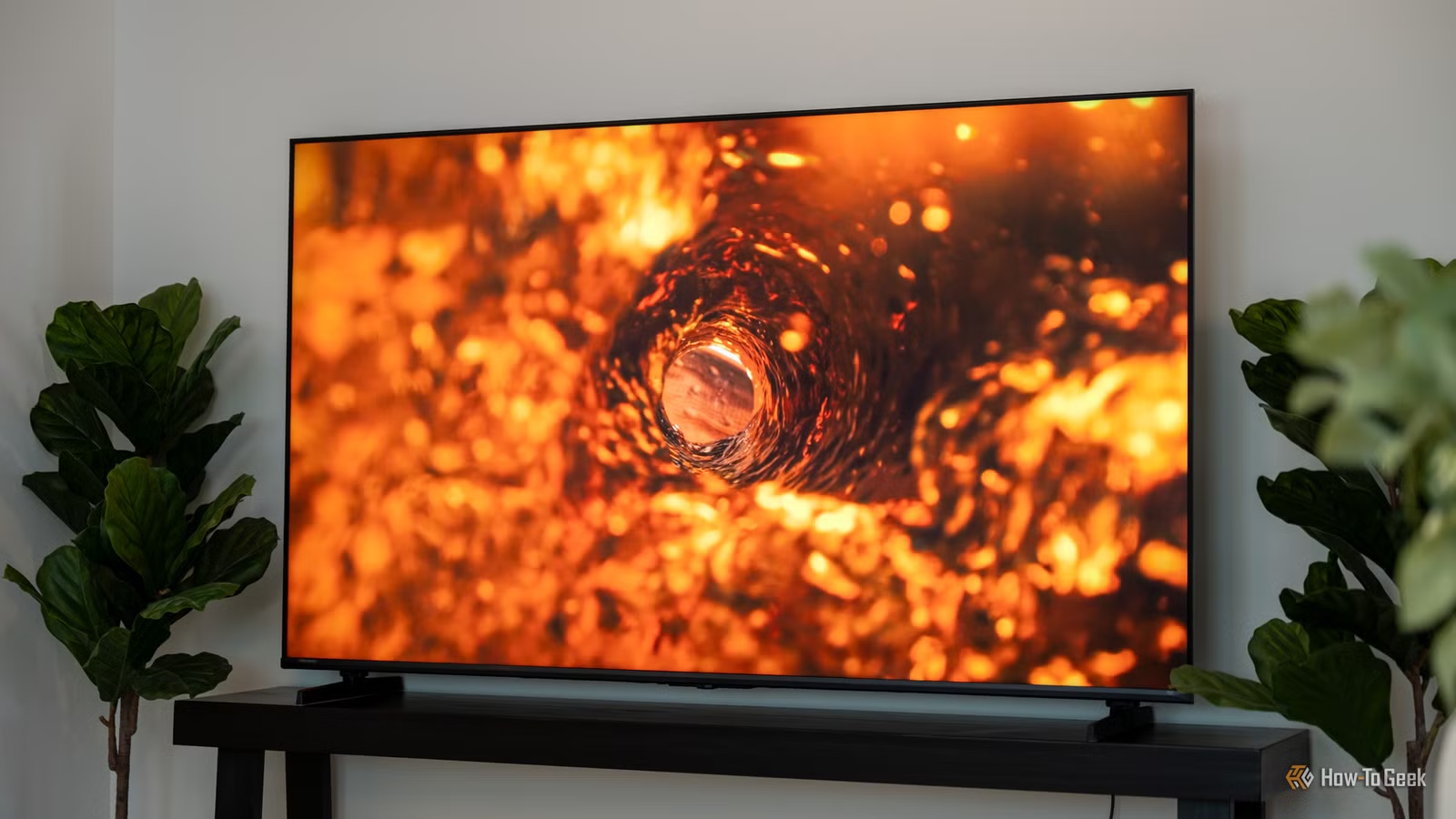
Hisense has added the U6SF to its TV lineup, bringing MiniLED backlighting with thousands of local dimming zones to a price bracket that typically settles for edge-lit panels. The set runs Fire TV out of the box and ships in sizes from 50 to 100 inches, with a 144Hz refresh rate aimed at both cinephiles and gamers.
MiniLED is not new. Samsung, TCL, and Sony have all shipped sets using tiny LED arrays as backlights. What varies is how those LEDs are arranged and controlled. Cheaper implementations line LEDs along the screen's edges. Light bleeds unevenly, blacks look grey, and bright objects halo into dark backgrounds. The U6SF avoids this by placing LEDs directly behind the panel in a full-array configuration, then grouping them into independently controllable zones.
How does the U6SF's local dimming actually work?
Hisense claims the U6SF uses up to thousands of dimming zones. Each zone can brighten or dim independently, so a bright explosion on one side of the screen does not wash out a shadow on the other. This granularity is the main differentiator between entry-level MiniLED and premium sets. A typical LED-backlit TV might manage 100 zones. High-end models exceed 40,000.
Controlling those zones falls to Hisense's custom AI image chip. The processor analyzes each frame in real time, deciding which zones need more light and which should drop to near-black. Frame-by-frame tuning matters most in high-contrast scenes, think a candle in a dark room or subtitles over a night sky.
What is Hi-QLED and why does it matter?
Hi-QLED is Hisense's branding for quantum dot enhancement layered on top of MiniLED backlighting. Quantum dots are nanocrystals that emit precise colors when hit by light. The result is a wider color gamut and more saturated reds, greens, and blues than a standard LCD can produce. Pairing quantum dots with local dimming addresses two common LCD weaknesses at once: limited color volume and poor black levels.
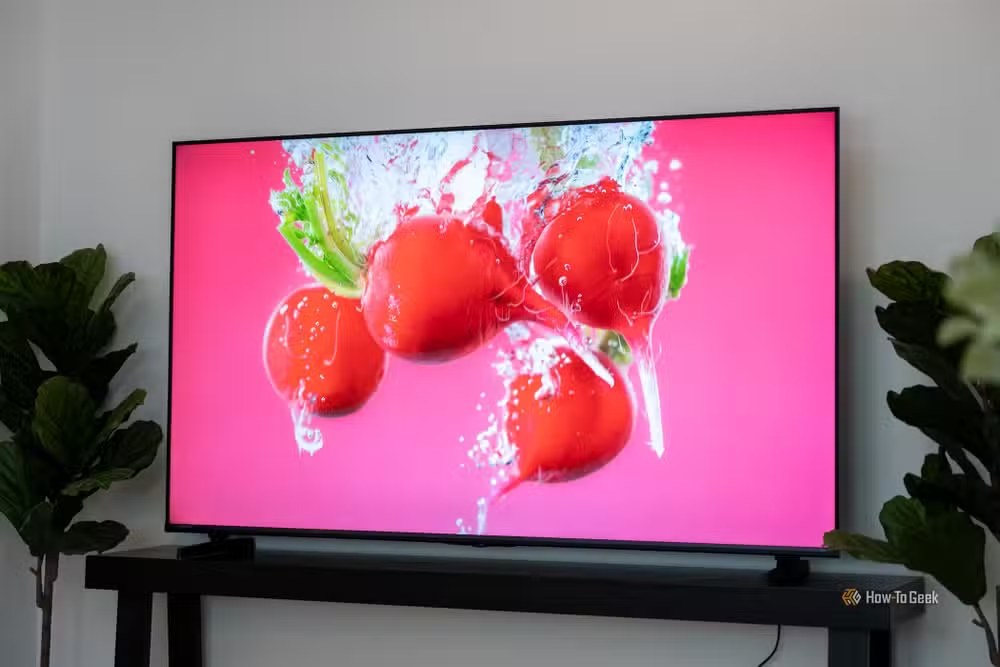
Hisense also touts a proprietary PowerFocus Lens system. The idea is to concentrate each MiniLED's output more tightly, reducing light bleed between zones. Less bleed means sharper transitions between bright and dark areas, which helps with the halo problem that plagues cheaper local dimming implementations.
Screen treatment and ambient light handling
A bright, colorful panel is useless if you spend half the movie staring at your own reflection. The U6SF's screen has an anti-reflection and anti-glare coating designed to cut down on mirror effects. Flat LCD panels are notorious for catching overhead lights and windows. Hisense says this treatment lets you watch in brighter rooms without repositioning furniture.
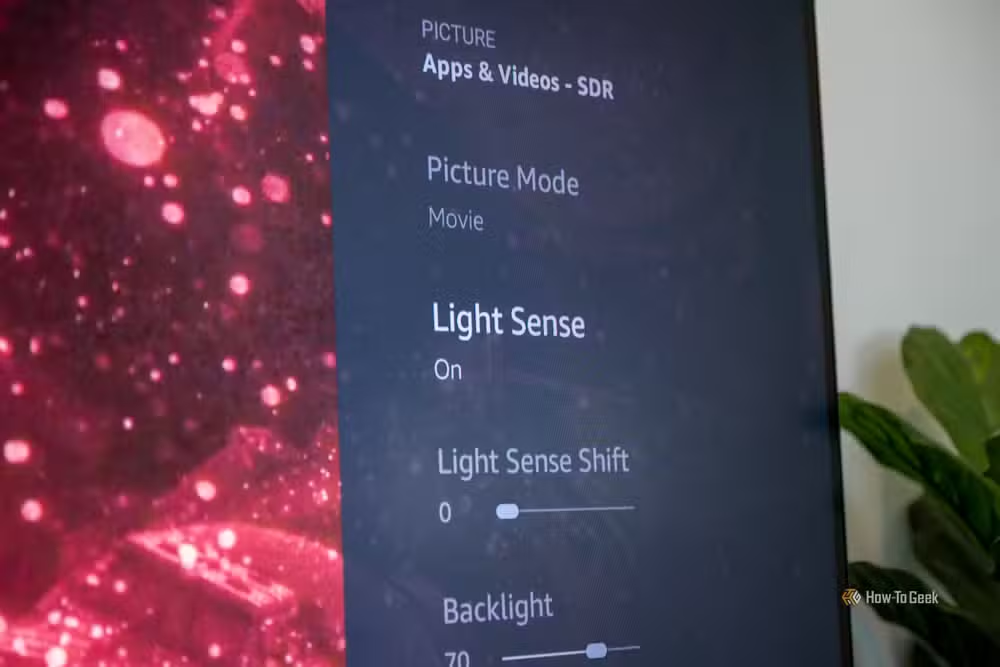
An AI Light Sensor automates brightness adjustment. The TV reads ambient light levels and scales its backlight accordingly. This is the same concept as auto-brightness on a phone. It sounds minor until you realize most people never touch their TV's brightness slider, leaving the set either too dim during the day or blindingly bright at night.
HDR formats and software features
The U6SF ships with Dolby Vision IQ, an adaptive version of Dolby Vision that adjusts tone mapping based on room lighting. Dolby Atmos support handles spatial audio, though external speakers or a soundbar will outperform the built-in drivers. HDR10+ Adaptive and HDR10+ Gaming round out the format support, covering most streaming services and next-gen consoles.
On the AI side, Hisense bundles an AI 4K Upscaler for lower-resolution content and an AI Sports Mode that tweaks motion handling and color saturation for live broadcasts. Whether these features improve or overcook the image depends on personal taste. Most can be toggled off.
Gaming at 144Hz
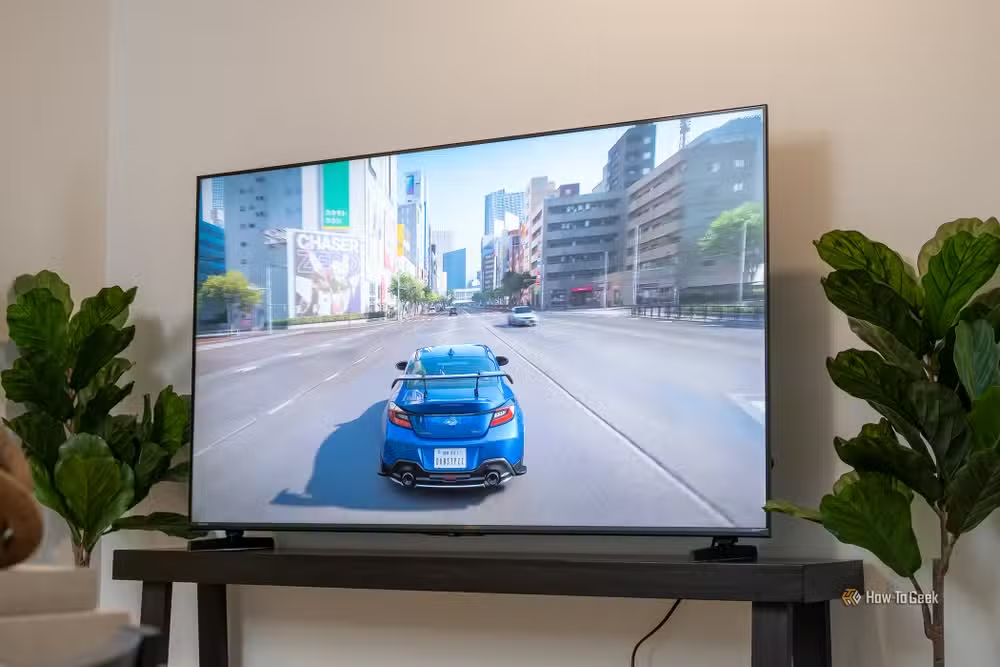
A 144Hz refresh rate is unusual at this price. Most budget 4K TVs cap out at 60Hz. The higher refresh smooths motion in fast-paced games and reduces input lag when paired with variable refresh rate support. If you own a PS5, Xbox Series X, or a gaming PC, the U6SF can actually use what those devices output. Fire TV integration means streaming apps are built in, no external box required.
Where does Hisense sit in the market?
Hisense ranks second globally in TV shipments by volume, trailing only Samsung. The company manufactures its own panels and processors, which keeps costs down. The U6SF targets buyers who want MiniLED performance without paying $1,500 or more. Sizes range from 50 inches up to 100 inches, with street prices starting below $800 for the smaller models.
The trade-off is brand perception. Hisense does not carry the cachet of LG or Sony. Some buyers will pay a premium for a name they trust. Others will pocket the difference and live with a logo they do not recognize.
Logicity's Take
Hisense's aggressive pricing compresses the value gap between budget and premium TVs. If the U6SF's local dimming zone count holds up to independent testing, this set could force Samsung and TCL to cut prices on their entry MiniLED lines. The real test is black uniformity in dark scenes. Zone count is just a number until you see how cleanly the TV handles a starfield or a flashlight in a cave.
Frequently Asked Questions
What is the difference between MiniLED and OLED?
MiniLED uses thousands of small LEDs as a backlight behind an LCD panel, while OLED pixels emit their own light. OLED achieves perfect blacks by turning pixels off entirely. MiniLED can get brighter but cannot match OLED's contrast in completely dark scenes.
Does the Hisense U6SF support HDMI 2.1?
Hisense has not published full port specifications for the U6SF. The 144Hz refresh rate suggests at least one HDMI 2.1 port for gaming, but confirm with the spec sheet before buying.
Is Dolby Vision IQ better than standard Dolby Vision?
Dolby Vision IQ adds ambient light sensing to adjust tone mapping on the fly. It can improve picture quality in rooms with changing lighting conditions. In a dark, controlled theater room, standard Dolby Vision performs identically.
What sizes does the Hisense U6SF come in?
The U6SF ships in 50, 55, 65, 75, 85, and 100-inch sizes.
Does Fire TV limit app availability compared to Google TV?
Fire TV includes most major streaming apps: Netflix, Disney+, Apple TV+, and Amazon Prime Video. Some niche apps available on Google TV may be missing. Check the Fire TV app store for specific services you need.
For readers upgrading home theater gear and wondering about cable compatibility
Need Help Implementing This?
Setting up a new TV and want to optimize picture settings, reduce input lag for gaming, or integrate it with your smart home? Get in touch with our team for personalized guidance on display calibration and home theater configuration.
Source: How-To Geek
Manaal Khan
Tech & Innovation Writer
Produced with AI assistance and reviewed by the Logicity editorial team. Learn more in our Editorial Policy.