Key Takeaways
- The $99.99 Google Home Speaker ships June 25 with 2.5x stronger bass than the Nest Mini
- Gemini for Home powers the speaker, but advanced AI features require a $10/month subscription
- Stereo pairing and 360-degree sound position it against Apple's HomePod mini
Eight months after Google first announced it, the Google Home Speaker is finally available for pre-order at $99.99. The compact smart speaker ships June 25 in 18 countries, promising a significant audio upgrade over Google's aging Nest Mini with a 2x larger driver and 2.5x stronger bass output.
This is Google's first audio device built explicitly for Gemini for Home, marking the company's transition away from the traditional Google Assistant interface toward its newer AI platform. Rick Osterloh, Senior Vice President of Devices & Services at Google, called it the company's "most significant audio leap in the smart home category, designed from the ground up to place Gemini at the center of your living space."
What does the Google Home Speaker look like?
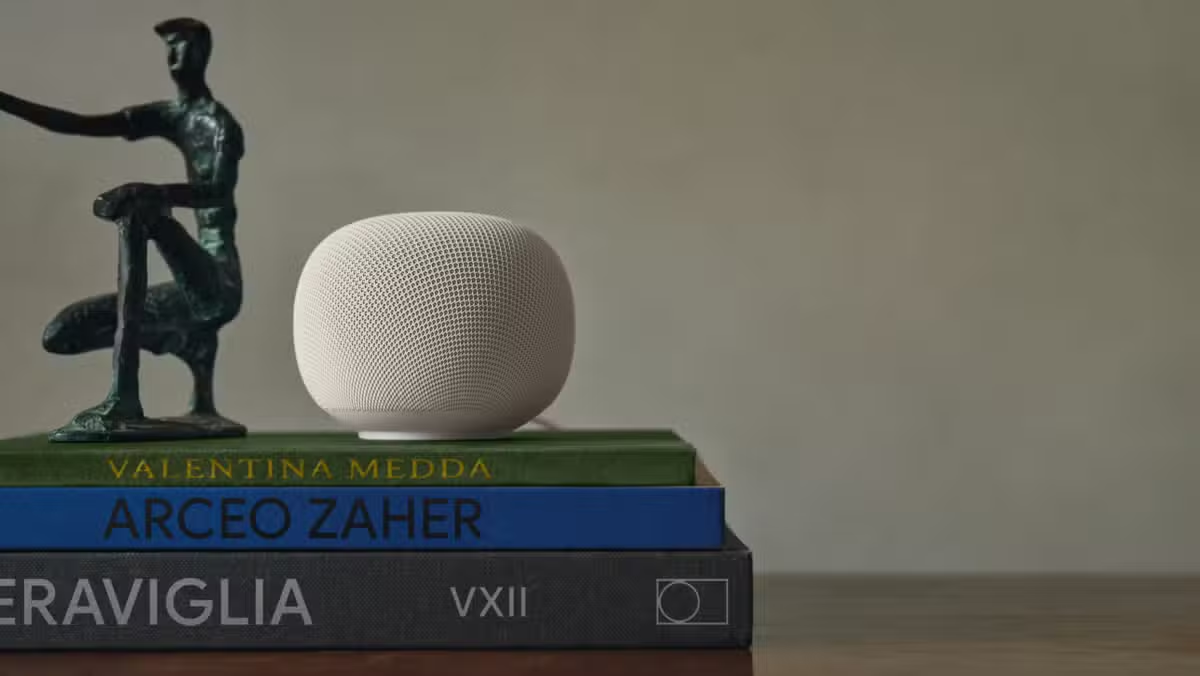
The design borrows heavily from Apple's HomePod aesthetic. At 3.5 inches tall with a 4-inch diameter, it's a compact cylinder wrapped in yarn fabric made from 37% recycled materials. Google says the "unique 3D knitting process" reduces fabric waste during manufacturing.
Four colors are available: Porcelain, Hazel, Jade, and Berry. The Jade and Berry options are Google Store exclusives, available only in the US. A light ring around the base provides visual feedback when the speaker is listening, processing, or responding. There's also a physical toggle switch to mute the microphone.
How does the audio compare to the Nest Mini?
Google is making bold claims here. The new speaker uses a 58mm driver, double the size of the Nest Mini's, and delivers 2.5x stronger bass. The 360-degree sound design aims to provide uniform audio regardless of where you're standing in the room.
You can pair two Google Home Speakers for stereo sound, similar to how HomePod minis work. The speaker also integrates with existing Nest speakers, Nest displays, and Google Cast devices for whole-home audio. Three far-field microphones handle voice detection, with capacitive touch controls on top for basic playback functions.
What is Gemini for Home and why does it matter?
Gemini for Home represents Google's pivot from basic voice commands to contextual, multi-step AI interactions. Instead of issuing one command at a time, you can have more natural conversations with the speaker, and it can handle complex requests that span multiple actions.
The catch: advanced features require Google Home Premium, a $10 per month subscription. Gemini Live, which enables conversational back-and-forth with the speaker, sits behind this paywall. Google includes six months of the service free with purchases made before September 30, 2026.
Basic Gemini routines work without a subscription. You can automate sequences of actions triggered by voice commands or schedules. But the more sophisticated AI capabilities that differentiate this speaker from competitors are subscription-gated.
How are users reacting to the subscription requirement?
Early reactions are split. On Reddit's r/googlehome community, enthusiasm for the improved audio drivers and Matter/Thread support is tempered by frustration over yet another subscription. Smart home enthusiasts are tired of paying monthly fees for features that used to be included.
HackerNews threads focus on privacy concerns around Gemini Live's continuous listening capability. The feature needs to process more audio to enable natural conversations, which raises questions about what Google does with that data.
Quick audio fix for another common smart device frustration
Where can you buy the Google Home Speaker?
Pre-orders are open now at the Google Store and Best Buy for $99.99. The speaker launches June 25 in 18 countries including the US, UK, Canada, France, Australia, and Japan. Remember that the six-month Google Home Premium trial requires purchase by September 30, 2026.
At $100, it sits between Amazon's Echo Dot and Apple's $99 HomePod mini, targeting users who want better audio than budget speakers but don't need the full-size HomePod or Echo Studio. The Gemini integration is the main differentiator, assuming you're willing to pay for Premium after the trial ends.
Frequently Asked Questions
When does the Google Home Speaker ship?
The Google Home Speaker ships on June 25, 2026. Pre-orders are available now at the Google Store and Best Buy.
How much does Google Home Premium cost?
Google Home Premium costs $10 per month. The speaker includes six months free for purchases made before September 30, 2026.
Can you pair two Google Home Speakers for stereo?
Yes, you can pair two Google Home Speakers together for stereo sound. They also work with existing Nest speakers and Google Cast devices.
What colors does the Google Home Speaker come in?
Four colors are available: Porcelain, Hazel, Jade, and Berry. Jade and Berry are US-only Google Store exclusives.
Does Gemini for Home require a subscription?
Basic Gemini routines work without a subscription. Advanced features like Gemini Live require Google Home Premium at $10/month.
Logicity's Take
Google's real bet here isn't audio quality. It's training users to interact with Gemini through their speaker and then converting them to paying subscribers. The $60 free trial is generous, but Google is betting that six months of natural conversation will make the $120 annual fee feel essential. If Gemini Live delivers on its promise of contextual, multi-step commands, that bet might pay off. If it feels like a slightly smarter Google Assistant, expect a wave of cancellations in early 2027.
Need Help Implementing This?
Looking to integrate smart speakers into your office or retail environment? Contact our enterprise tech advisory team for vendor-neutral guidance on smart audio deployment and AI assistant platforms.
Source: MakeUseOf
Manaal Khan
Tech & Innovation Writer
Produced with AI assistance and reviewed by the Logicity editorial team. Learn more in our Editorial Policy.