Key Takeaways
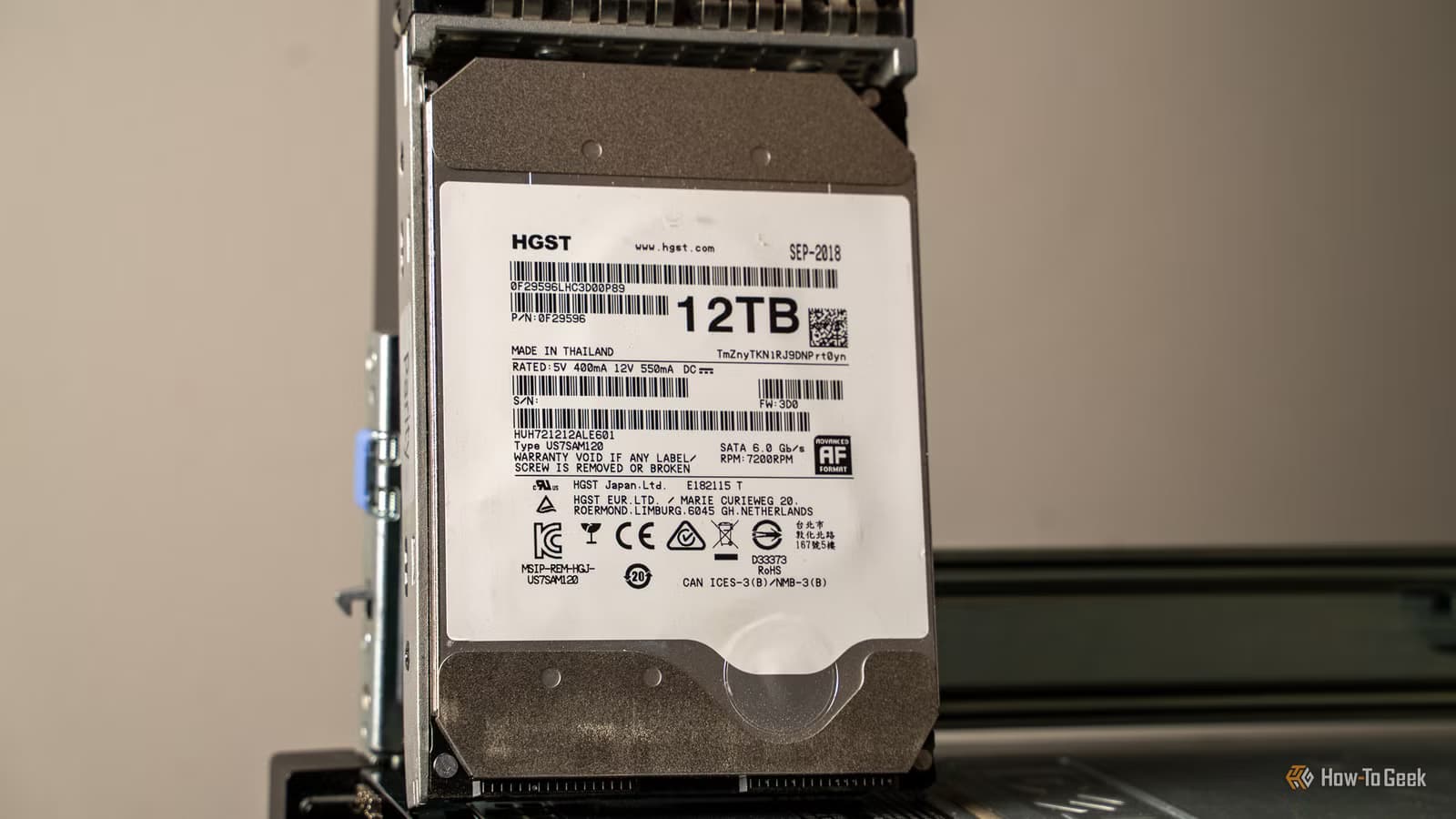
- Enterprise HDDs regularly sell for less than consumer drives due to datacenter decommissioning and bulk resale markets
- Server-grade drives offer 10x higher workload ratings and nearly double the MTBF of consumer models
- Used enterprise drives from temperature-controlled datacenters often outlast new consumer drives that have been power-cycled repeatedly
Enterprise HDDs, built for 24/7 datacenter operation, frequently cost less than the consumer drives sitting on retail shelves. The reason comes down to volume: hyperscalers buy millions of drives, decommission them on fixed schedules, and flood resale markets with hardware that still has years of life left. For anyone building a NAS, home server, or archival storage system, this pricing quirk creates an opportunity.
The counterintuitive economics work like this. Enterprise drives are manufactured for cloud providers, storage vendors, and businesses buying by the rack. These buyers negotiate bulk contracts, run drives in climate-controlled environments, and swap them out on predetermined schedules regardless of condition. When a datacenter refreshes its storage fleet, thousands of drives hit the secondary market at once.
Why enterprise drives outperform consumer models
The spec differences between enterprise and consumer HDDs are not subtle. Enterprise drives carry workload ratings of 550 TB per year. Consumer drives top out around 55 to 180 TB per year. That's a 3x to 10x gap in sustained write capacity.
Mean Time Between Failure ratings tell a similar story. Enterprise drives typically carry MTBF ratings around 2.4 million hours. Consumer drives hover near 1 million hours. Enterprise models also include vibration sensors, error correction optimized for multi-drive enclosures, and firmware tuned for RAID arrays.
| Specification | Enterprise HDD | Consumer HDD |
|---|---|---|
| MTBF (hours) | ~2.4 million | ~1 million |
| Workload rating | 550 TB/year | 55-180 TB/year |
| Warranty | 5 years | 2-3 years |
| Vibration resistance | Yes | Limited |
| Typical use case | 24/7 datacenter | Desktop backup |
Where to find cheap enterprise drives
The r/DataHoarder community on Reddit has turned enterprise drive hunting into a sport. Users share photos of bulk purchases, compare SMART data from different sellers, and maintain running lists of reputable resellers. Names like serverpartdeals and goHardDrive appear frequently in recommendation threads.
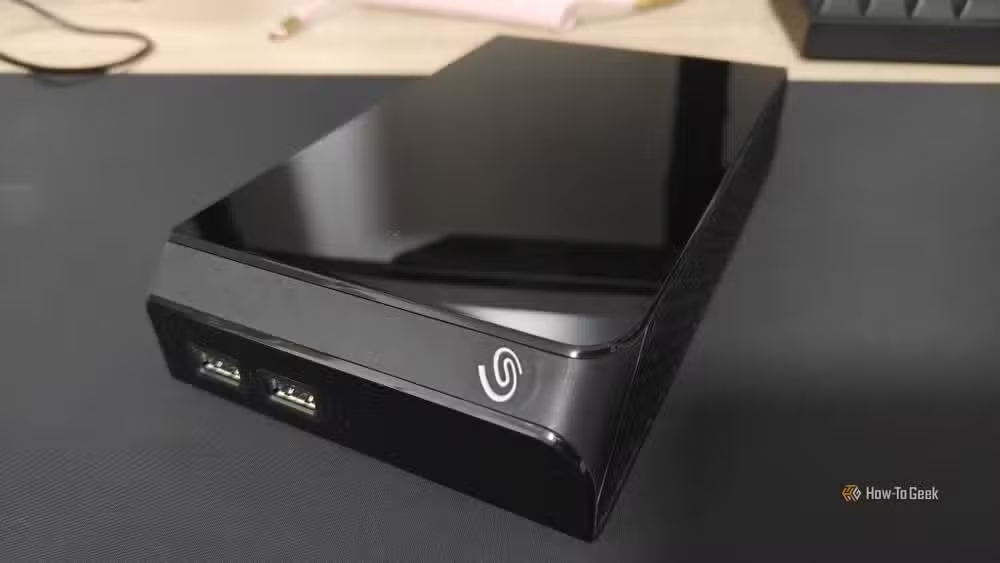
Prices for used enterprise drives in the 8TB to 16TB range currently land around $15 to $20 per terabyte. That matches or beats new consumer drives while delivering better reliability specifications. The trade-off is noise. Enterprise drives run louder than consumer models, an acceptable compromise for a closet server but potentially annoying on a desktop.
What to check before buying used datacenter drives
SMART data is everything. The Self-Monitoring, Analysis and Reporting Technology built into every drive tracks power-on hours, reallocated sectors, read errors, and temperature history. A drive with 30,000 power-on hours but zero reallocated sectors is a safer bet than a consumer drive with 5,000 hours and growing bad sectors.
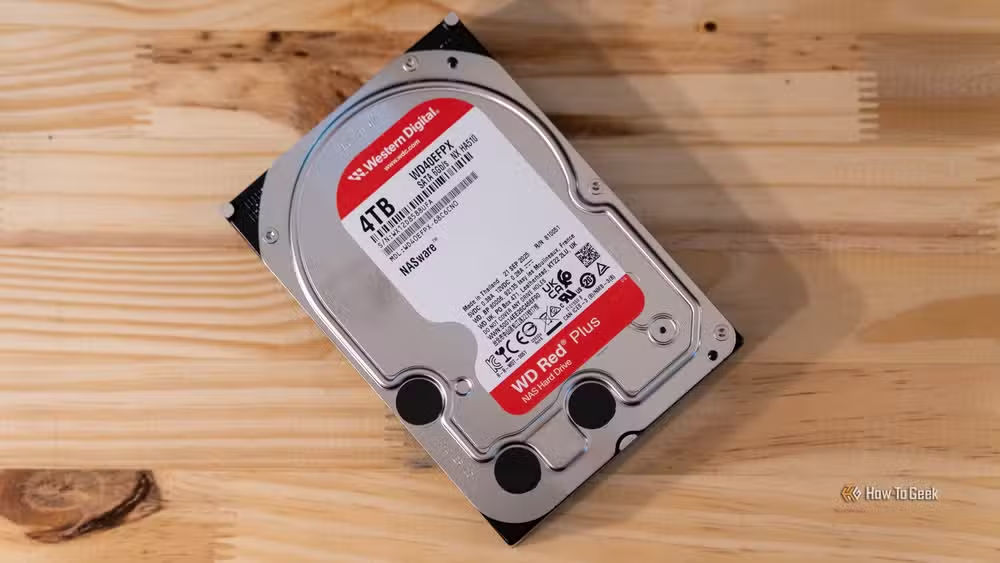
Power cycling matters more than raw hours. A datacenter drive runs continuously at stable temperatures. A consumer drive used for daily backups cycles on and off constantly, stressing the spindle motor and parking mechanism. The datacenter drive, despite higher total hours, often has less mechanical wear.
- Check reallocated sector count: should be zero or very low
- Review power-on hours relative to the drive's age
- Verify the seller offers a return window for DOA units
- Confirm SMART data matches the advertised drive model
- Look for drives from Seagate Exos, WD Ultrastar/HGST, or Toshiba MG series
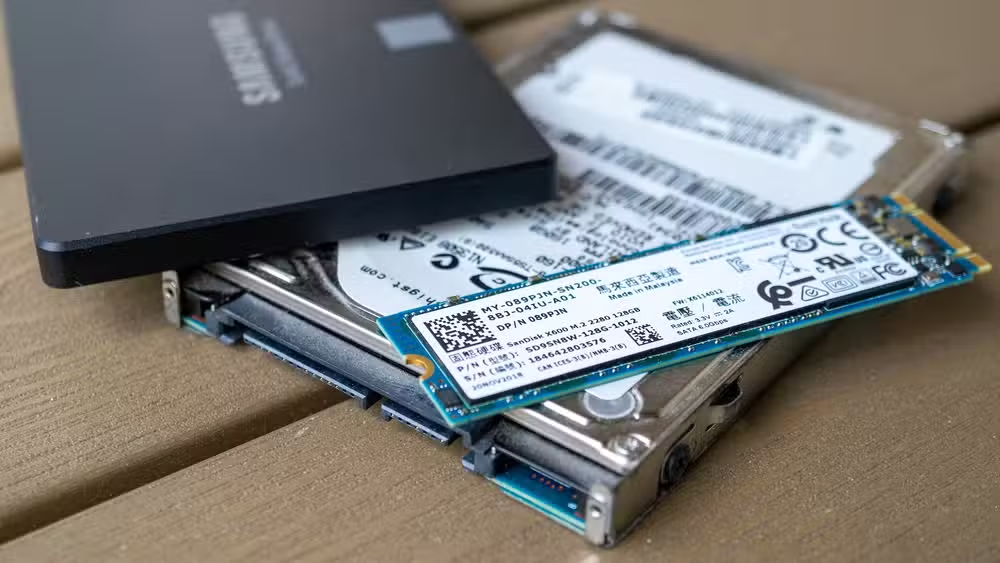
The r/homelab approach to storage
Home server enthusiasts have embraced enterprise drives for NAS builds running TrueNAS, Unraid, and Synology systems. The community consensus: buy used enterprise drives, run them in RAID or ZFS configurations for redundancy, and replace individual drives as they fail. The math works out cheaper than buying consumer drives and hoping they last.
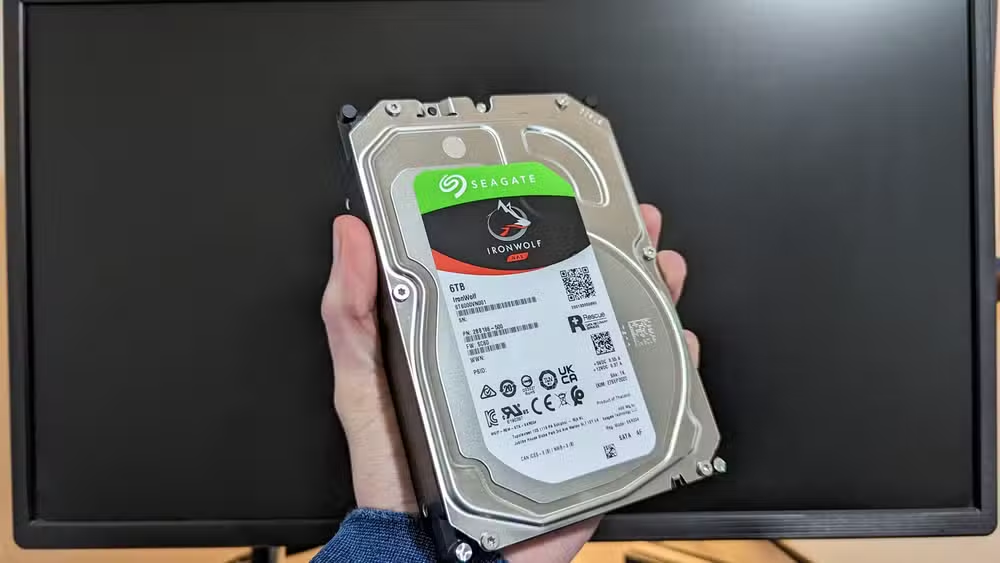
Backblaze, the cloud backup company that publishes annual drive reliability reports, has provided years of real-world failure data. Their findings consistently show enterprise drives outlasting consumer models under continuous operation. That data has become a reference point for anyone building a storage system.
When consumer drives still make sense
Not everyone needs enterprise reliability. A desktop PC with an SSD for the operating system and a consumer HDD for game storage faces low write volumes. The consumer drive's lower noise and retail warranty may justify the purchase. Similarly, someone backing up family photos once a month doesn't need 550 TB per year of write endurance.
The calculation changes for anyone running a home server, maintaining large media libraries, or following the 3-2-1 backup rule with local cold storage. Enterprise drives provide more capacity, better reliability, and often lower prices. The retail premium on consumer drives subsidizes marketing, packaging, and margins that enterprise bulk sales skip entirely.
Another look at how consumer products cut corners compared to industrial-grade alternatives
Frequently Asked Questions
Are used enterprise hard drives reliable?
Yes, often more so than new consumer drives. Datacenter drives run continuously in temperature-controlled environments, avoiding the mechanical stress of repeated power cycling. Check SMART data before buying to verify the drive's condition.
Why are enterprise HDDs cheaper than consumer drives?
Hyperscalers buy millions of drives, then decommission them on fixed schedules. This floods resale markets with surplus inventory, recertified units, and OEM stock that undercuts retail consumer pricing.
What brands make the best enterprise hard drives?
Seagate Exos, WD Ultrastar (formerly HGST), and Toshiba MG series are the most commonly recommended for used purchases based on Backblaze reliability data and community feedback.
Are enterprise hard drives louder than consumer drives?
Yes. Enterprise drives prioritize performance over acoustics since datacenters don't care about noise. Expect noticeably louder operation, which matters for desktop use but not for a server in a closet.
Where can I buy used enterprise hard drives?
Resellers like serverpartdeals and goHardDrive are frequently recommended on r/DataHoarder. eBay also has significant inventory, but verify seller ratings and SMART data policies before purchasing.
Logicity's Take
This pricing anomaly won't last forever. As more consumers discover the enterprise resale market, prices will rise to match demand. The current window exists because most buyers still assume 'enterprise' means expensive. For now, anyone building a NAS or home server should check used datacenter inventory before defaulting to retail consumer drives. The spec advantage combined with lower prices is too significant to ignore.
Need Help Implementing This?
Building a home server or NAS setup? Logicity covers storage strategies, self-hosting guides, and hardware recommendations. Subscribe to our newsletter for weekly roundups on infrastructure topics that matter for builders and tech professionals.
Source: How-To Geek
Huma Shazia
Senior AI & Tech Writer
Produced with AI assistance and reviewed by the Logicity editorial team. Learn more in our Editorial Policy.