Key Takeaways
- Cheap chargers often skip UL testing and USB-IF compliance certifications to cut costs
- Lower-quality capacitors and simplified circuits cause higher ripple current and excess heat
- Budget chargers rarely support PPS (Programmable Power Supply), limiting charging optimization
Cheap phone chargers skip safety certifications, use lower-quality components, and lack modern charging protocols. Slow charging is the obvious drawback. The hidden risks are worse.
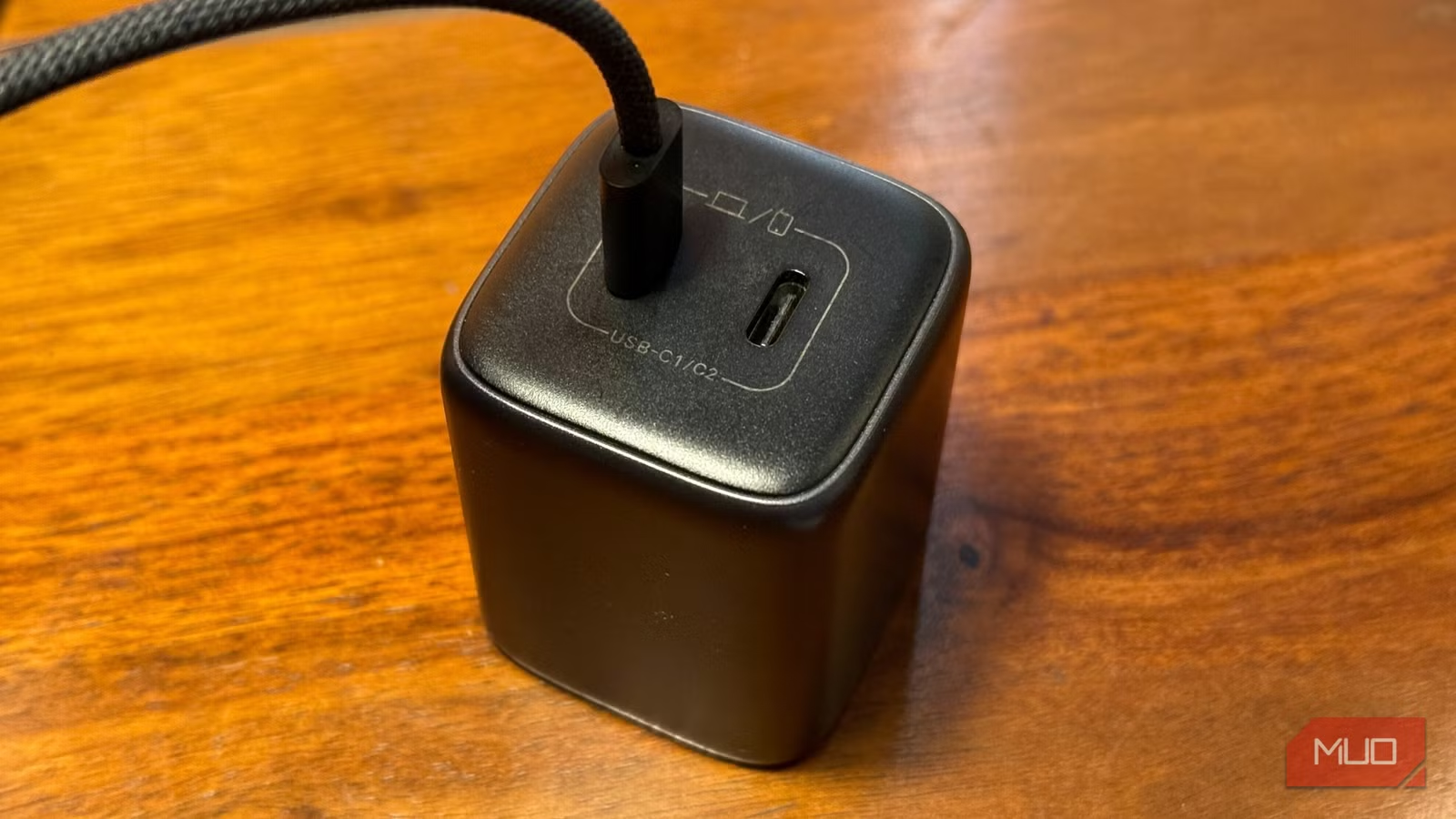
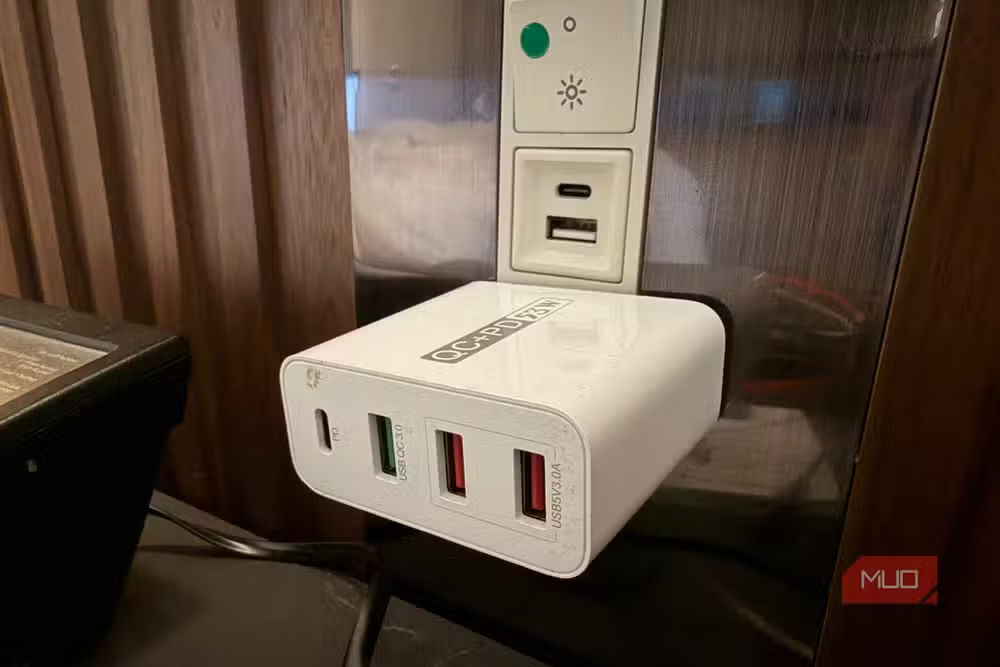
A $10 charger and a $50 Anker look nearly identical. Same USB-C ports, same fast-charging claims on the box. But the real differences are inside, in parts you never see until something goes wrong.
Which certifications do cheap chargers skip?
Reputable manufacturers pay for independent safety certifications. UL testing and USB-IF compliance are not marketing logos. They verify a charger meets electrical safety standards for insulation, grounding, and overcurrent protection.
Budget chargers skip these certifications entirely. The testing process costs money, and passing requires better components. When you see a $10 charger claiming 65W output, odds are good it never went through third-party safety validation.
What components get downgraded?
Most cost-cutting happens at the component level. Cheap chargers use lower-quality capacitors and simplified filtering circuits. These parts are responsible for keeping power clean and stable. Cut corners here, and you get higher ripple current, which stresses your phone's battery over time.
Thermal management is another victim. Premium chargers use better thermal materials and PCB designs that spread heat efficiently. Cheap chargers do the bare minimum, running noticeably hotter under load. Heat degrades components faster and, in extreme cases, creates fire risk.
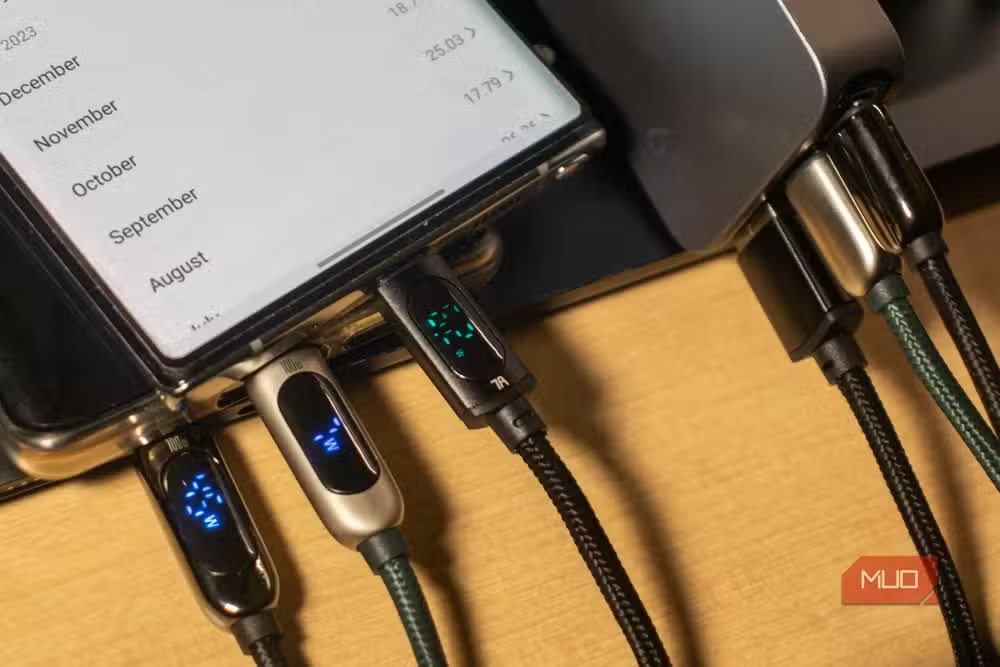
Modern charging tech also gets left out. Most phones now support PPS (Programmable Power Supply), a standard that lets charger and phone negotiate voltage in real time based on battery needs. Implementing PPS requires additional hardware and testing. Budget chargers rarely bother.
Can a cheap charger actually damage your phone?
Modern phones have built-in protections. A Galaxy S26 limited to 25W charging will only draw 25W, even from a cheap 100W charger. Your phone does not blindly accept whatever power a charger delivers.
But phone-side protection cannot compensate for a charger that fails. Overheating chargers, scorched cables, melted connectors, damaged outlets. These incidents are real.
The charger sits plugged in for hours while you sleep. It handles electricity unsupervised. A failure at 3 AM, when no one is watching, is the worst-case scenario these corners create.
How much should a good charger cost?
Stick to reputable brands: Anker, Belkin, UGREEN, Samsung, Apple. A quality 25-30W single-port charger runs $20-30. A 65W multi-port charger from a trusted brand costs $40-60. The premium over a $10 unknown brand is $15-20.
You spent $800-1200 on your phone. Skipping certifications and quality components to save $15 on the charger is poor risk management.
Some accessories can be cheap. HDMI cables are effectively commodity products now. But chargers handle power conversion and thermal stress. They are not the place to minimize cost.
The bottom line on cheap chargers
A cheap charger usually works. That is precisely what makes it dangerous. It conditions you to trust it, until the day it does not work safely. The savings are real. So are the missing certifications, degraded components, and absent thermal protections. Whether that tradeoff makes sense is your call.
Logicity's Take
The charger market has a trust problem. Unlike phones, chargers have no benchmark culture. No one runs Geekbench on their power adapter. This creates an information asymmetry that cheap manufacturers exploit. Until independent teardown channels like BigCliveDotCom become mainstream references, most buyers will keep choosing on price alone. The solution is simple: buy from brands with reputations worth protecting.
Frequently Asked Questions
Are cheap phone chargers dangerous?
They can be. Cheap chargers often skip safety certifications like UL testing and use lower-quality components that run hotter and fail more unpredictably. While most modern phones have built-in protections, a failing charger can still cause overheating, melted cables, or damaged outlets.
What certifications should I look for in a phone charger?
Look for UL (Underwriters Laboratories) certification and USB-IF compliance. These indicate the charger has passed independent safety testing for electrical standards, insulation, and overcurrent protection.
Will a cheap charger damage my phone battery?
Lower-quality capacitors in cheap chargers can cause higher ripple current, which stresses battery cells over time. Your phone's built-in protection limits immediate damage, but long-term battery health may suffer.
What is PPS charging and why does it matter?
PPS (Programmable Power Supply) lets charger and phone negotiate voltage in real time based on battery needs. It enables faster, more efficient charging with less heat. Budget chargers rarely support PPS because it requires additional hardware.
Which charger brands are safe to buy?
Anker, Belkin, UGREEN, Samsung, and Apple are widely considered reliable. These brands invest in certifications and quality components, with reputations that depend on product safety.
Need Help Implementing This?
Looking for guidance on tech purchasing decisions for your organization? Contact Logicity's advisory team for vendor-neutral recommendations on accessories, devices, and infrastructure that balance cost with reliability.
Source: MakeUseOf
Manaal Khan
Tech & Innovation Writer
Produced with AI assistance and reviewed by the Logicity editorial team. Learn more in our Editorial Policy.