Key Takeaways
- AI agents like Claude Cowork can own entire workflows, not just answer questions
- Setup requires precise prompting but pays off with zero ongoing supervision
- Webhook workarounds extend automation to apps without native integrations
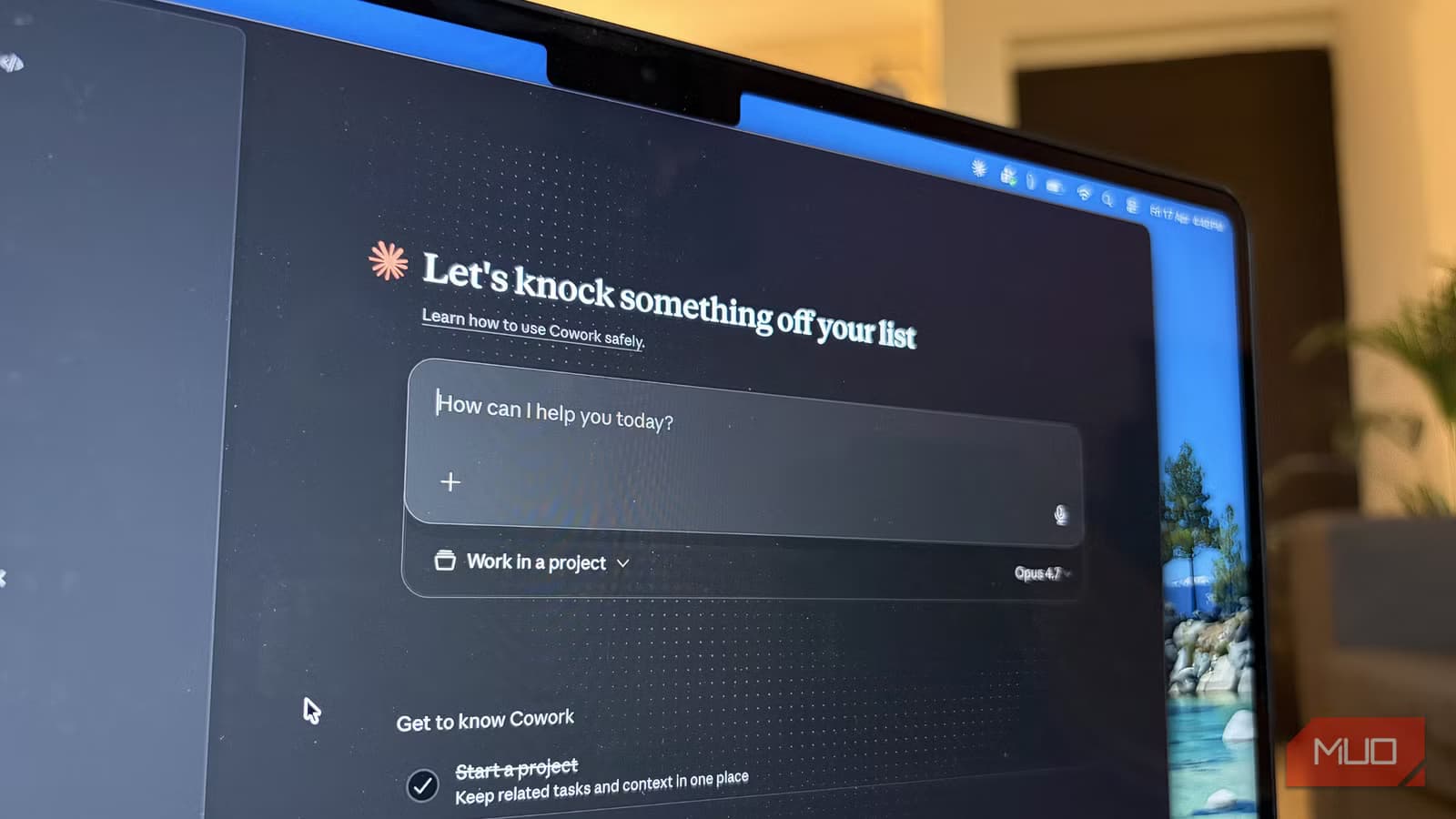
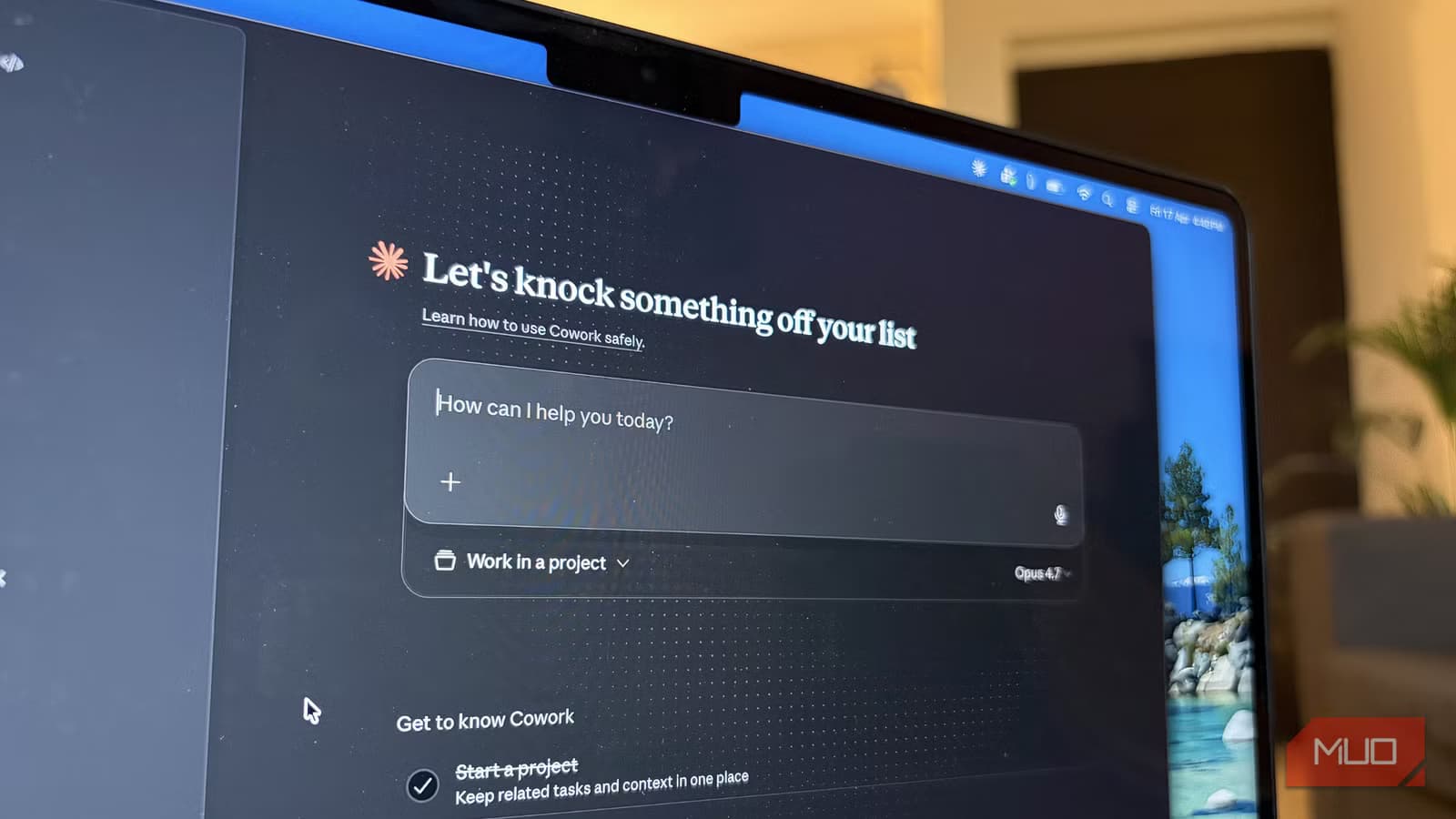
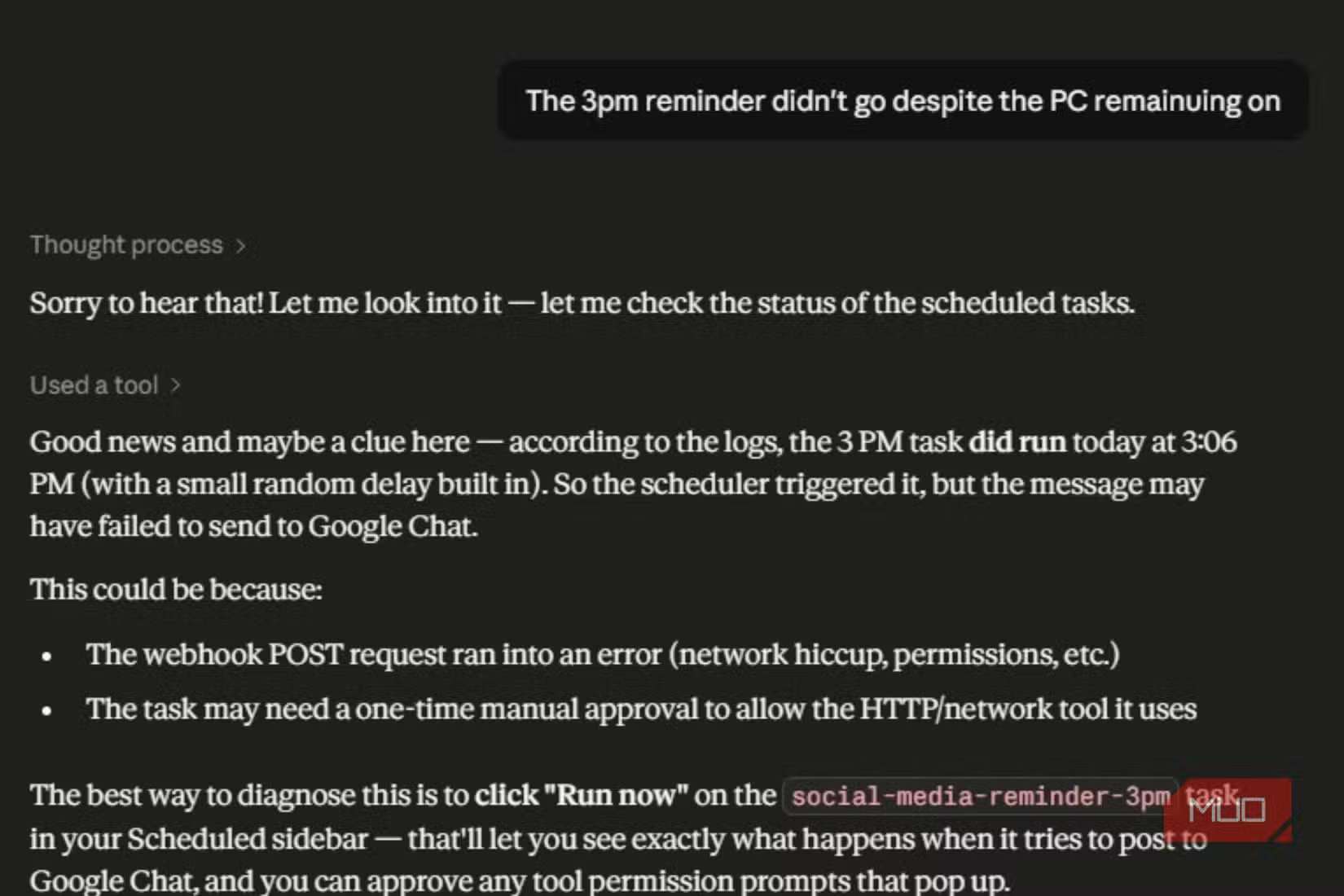
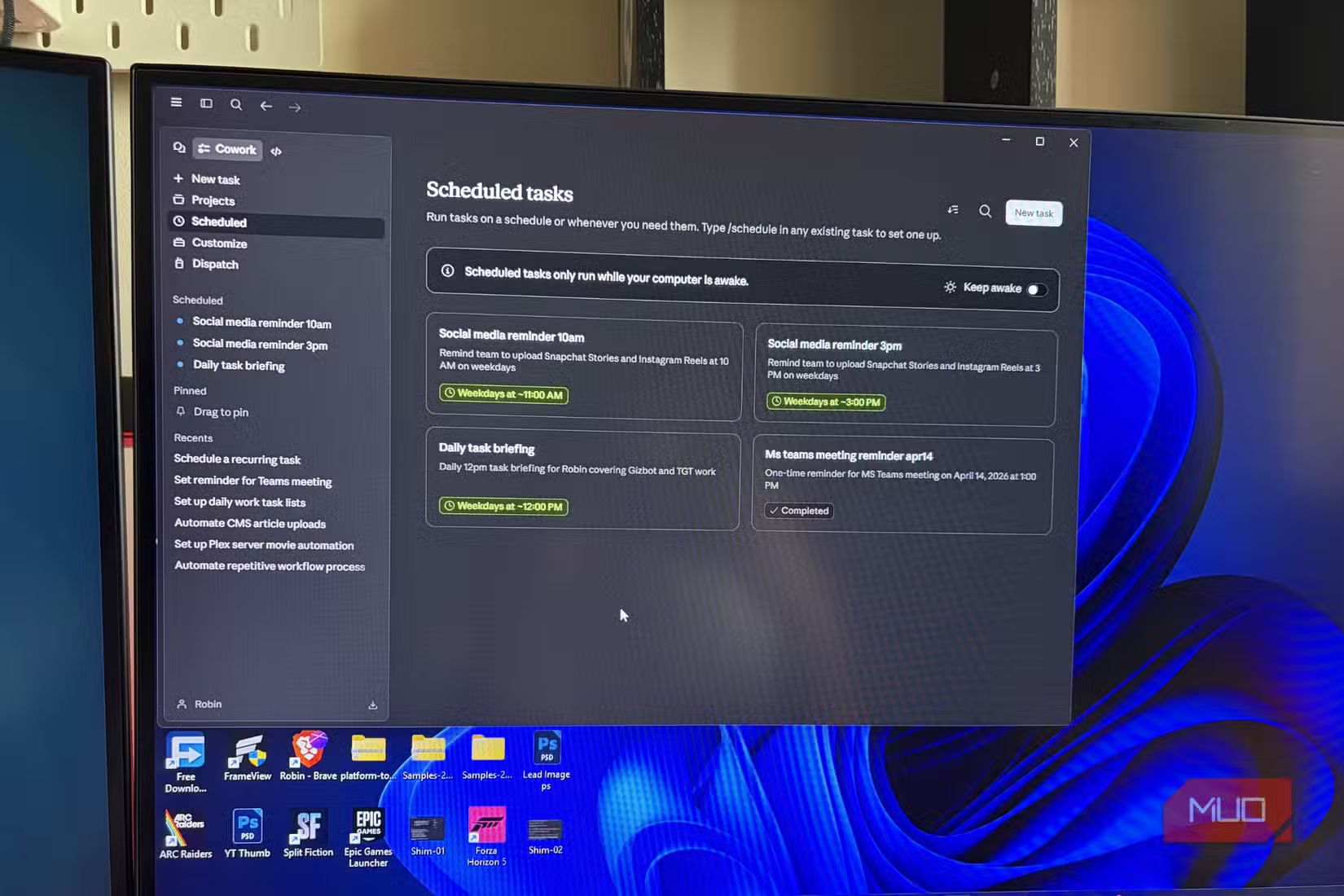
According to [MakeUseOf](https://www.makeuseof.com/claude-cowork-took-one-repetitive-task-for-me-and-im-very-impressed/), Anthropic's Claude Cowork successfully automated daily reminder messages across platforms like Google Chat, handling the entire workflow without constant supervision after initial setup.
Read in Short
Claude Cowork is Anthropic's AI agent that handles repetitive tasks end-to-end. Unlike chatbots that answer questions, it actually executes workflows across Gmail, Google Chat, and other tools. One user automated daily reminders that previously drained 15-20 minutes daily. The catch: setup requires precise prompting, like training a new hire. The payoff: zero ongoing supervision.
What Is Claude Cowork and Why Should Your Team Care?
Your best employees aren't spending their time sending reminder messages. But someone is. And that someone costs you money every hour they're doing work that could be automated. Claude Cowork sits on your system like a digital employee. It doesn't just respond to questions. It takes ownership of tasks and carries them from start to finish.
The difference between Claude Cowork and a typical AI assistant is intent. ChatGPT and similar tools wait for you to ask something. They respond, then wait again. Claude Cowork schedules tasks, monitors timelines, and executes without your input. You set it up once. It handles the rest.
How Does Claude Cowork Automation Actually Work?
The setup process reveals why this tool works where others fail. Claude Cowork doesn't just accept vague instructions. It asks clarifying questions until the task is unambiguous. Think of it like onboarding a meticulous new hire who won't start working until they fully understand the assignment.
In the MakeUseOf test case, the user wanted reminder messages sent to a Google Chat space twice daily. Claude asked about exact timing. It asked which specific Chat space. It confirmed message content. Only after every variable was locked down did it begin execution.
Setup Requirements
Claude Cowork requires precise prompting during initial setup. Plan 20-30 minutes for your first automation. Include: exact timing, specific platforms, message templates, and any conditional logic. The more detail upfront, the less troubleshooting later.
Here's where it gets interesting for technical teams. Google Chat doesn't have native integration with Claude Cowork. Instead of failing, Claude suggested a webhook workaround. This means your team can extend automation to virtually any platform that supports webhooks, even without official API support.
Claude Cowork vs Traditional Automation: What's Different?
Your company probably already uses some automation. Zapier connects apps. IFTTT triggers actions. Slack workflows handle internal routing. So why consider another tool? The answer is adaptability.
| Feature | Claude Cowork | Zapier/IFTTT | Slack Workflows |
|---|---|---|---|
| Setup complexity | Natural language prompts | Visual builders | Template-based |
| Cross-platform | Yes, via webhooks | Yes, via integrations | Slack-only |
| Handles ambiguity | Asks questions | Fails or requires fixes | Fails |
| Ongoing supervision | Minimal | Moderate | Low |
| Cost structure | Per-seat AI subscription | Per-task pricing | Included in Slack |
Traditional automation breaks when something unexpected happens. A message format changes. A recipient moves teams. A platform updates its API. Claude Cowork's natural language foundation means it can interpret context and adapt. It won't blindly execute a broken workflow for three weeks before someone notices.
More IT automation strategies for reducing manual overhead
What Tasks Should Business Teams Automate First?
Not every task belongs in an AI agent's queue. The best candidates share three traits: they're repetitive, they follow clear rules, and they drain attention from higher-value work.
- Daily standup reminders across Slack, Teams, or Google Chat
- Weekly report distribution to stakeholders
- Invoice follow-up messages on fixed schedules
- Meeting prep summaries sent before recurring calls
- Deadline reminders for project milestones
- Customer check-in sequences for account managers
Notice what's not on this list: anything requiring judgment calls, sensitive HR communications, or creative work. AI agents excel at the predictable. They struggle with nuance. Match tasks accordingly.
What's the Real Cost of Claude Cowork for Business?
Anthropic hasn't published enterprise pricing for Claude Cowork publicly, but current Claude Pro subscriptions run $20/month per user. For teams evaluating ROI, the math is straightforward.
If an employee earning $75,000 annually spends 20 minutes daily on tasks Claude can automate, that's roughly 85 hours per year. At their hourly rate, you're looking at $3,000+ in recovered productivity per employee. A $240 annual subscription pays for itself in the first month.
ROI Calculation Template
(Daily minutes saved × 250 workdays) ÷ 60 = hours recovered. Hours recovered × hourly employee cost = annual savings. Compare against subscription cost for ROI. Most teams see 10x-15x return on automation subscriptions.
The hidden cost is setup time. Expect 2-4 hours to properly configure your first batch of automations. After that, maintenance should be minimal. Budget for one team member to own the system and troubleshoot edge cases.
How top founders think about productivity and team leverage
Limitations Business Leaders Should Know Before Deploying
Claude Cowork isn't a magic solution. Understanding its constraints helps you deploy it effectively and avoid frustration.

✅ Pros
- • Natural language setup reduces technical barriers
- • Webhook flexibility extends reach beyond native integrations
- • Minimal ongoing supervision after configuration
- • Handles scheduling complexity well
❌ Cons
- • No native integration with many enterprise tools
- • Requires precise initial prompting
- • Can't handle tasks requiring real-time judgment
- • Enterprise pricing and compliance details still emerging
The webhook dependency deserves attention. While it extends flexibility, it also means your IT team needs to configure and maintain those connections. For companies already using iPaaS platforms, this integrates smoothly. For teams without technical resources, expect a steeper learning curve.
How to Pitch AI Task Automation to Your CFO
Finance leaders don't care about AI capabilities. They care about numbers. Here's how to frame the conversation.
- Audit current repetitive tasks across 2-3 departments for one week
- Calculate time spent on automation-eligible work (use calendar data)
- Convert time to cost using fully-loaded employee rates
- Present subscription cost vs. recovered productivity
- Propose a 90-day pilot with one team before company-wide rollout
The pilot approach reduces risk. If Claude Cowork doesn't deliver, you've invested one subscription fee and a few hours of setup. If it works, you have internal proof points for broader adoption.
Building practical technical skills that improve team productivity
What's Next for AI Agents in Business Operations?
Claude Cowork represents a broader shift. We're moving from AI that answers questions to AI that completes work. Anthropic, OpenAI, and Google are all racing toward agents that can operate autonomously within business systems.
For decision-makers, the strategic question isn't whether to adopt AI agents. It's when and how. Companies that build AI automation competency now will have a productivity advantage as these tools mature. Those waiting for perfect solutions will find themselves playing catch-up against competitors who learned by doing.
Logicity's Take
We've deployed Claude-based automation for clients across India and the Middle East, and the MakeUseOf experience mirrors what we see in production. The webhook approach mentioned in the article is exactly how we connect Claude agents to tools like Google Chat, WhatsApp Business, and custom CRMs that lack official integrations. The critical insight for Indian businesses: Claude Cowork shines when you treat setup like employee onboarding, not software installation. We spend 60% of implementation time on prompt engineering, getting the instructions precise enough that the agent handles edge cases correctly. The remaining 40% is webhook configuration and testing. One manufacturing client in Hyderabad automated supplier follow-ups this way, recovering 12 hours weekly from their procurement team. The ROI calculation in this article is conservative by our experience. For startups with limited headcount, AI agents aren't about cutting staff. They're about letting your expensive talent focus on work that actually requires human judgment.
Frequently Asked Questions
How much does Claude Cowork cost for a business team?
Claude Pro subscriptions start at $20/month per user. Enterprise pricing for Claude Cowork specifically isn't publicly listed, but most teams see 10x-15x ROI based on time recovered from automated tasks.
Is Claude Cowork worth it for small teams under 10 people?
Yes, often more valuable for small teams. When everyone wears multiple hats, automating repetitive work frees up bandwidth for revenue-generating activities. A 5-person startup can recover 30+ hours weekly across the team.
How long does it take to set up Claude Cowork automations?
Plan 20-30 minutes per automation for initial setup, plus 2-4 hours for your first batch to learn the system. After that, new automations take 10-15 minutes. Maintenance is minimal once configured.
Can Claude Cowork integrate with enterprise tools like Salesforce or SAP?
Not natively for most enterprise platforms. However, webhook support means technical teams can connect virtually any tool that accepts HTTP requests. iPaaS platforms like Zapier or Make can bridge gaps.
What tasks should we NOT automate with AI agents?
Avoid automating anything requiring real-time judgment, sensitive HR communications, legal correspondence, or creative work. AI agents excel at predictable, rule-based tasks, not nuanced decisions.
Need Help Implementing This?
Logicity builds AI automation systems for startups and mid-size businesses across India and the Middle East. We specialize in Claude API integrations, n8n workflows, and custom agent deployments. If you want to pilot Claude Cowork or build something more tailored, reach out for a free 30-minute consultation.
Source: MakeUseOf
Manaal Khan
Tech & Innovation Writer
Produced with AI assistance and reviewed by the Logicity editorial team. Learn more in our Editorial Policy.