Key Takeaways
Qwen-Image-3.0 SHOCKS AI World: Unlocking REALISTIC Details & Deep Knowledge!

- Qwen-Image-3.0 processes prompts up to 4,500 tokens, enabling dense multi-panel infographics in a single generation
- The model renders legible text as small as 10 pixels and supports 12 languages including Japanese, Korean, and Spanish
- Unlike previous Qwen models, this version is invite-only API access with no plans for open-source release
Alibaba's Qwen team released Qwen-Image-3.0, an image generator that produces readable text as small as ten pixels and assembles multi-panel infographics without stitching separate images together. The model accepts prompts up to 4,500 tokens, a context length large enough to describe complex layouts, nested interfaces, and technical diagrams in a single pass.
Text rendering has been AI image generation's persistent failure mode. DALL-E, Midjourney, and Stable Diffusion routinely mangle letters, swap characters, and produce gibberish in signage or documents. Qwen-Image-3.0 claims to fix this, generating LaTeX formulas with subscripts and superscripts, newspaper layouts with body copy, and even nested UI mockups where a code editor contains a chat window that contains a poster.
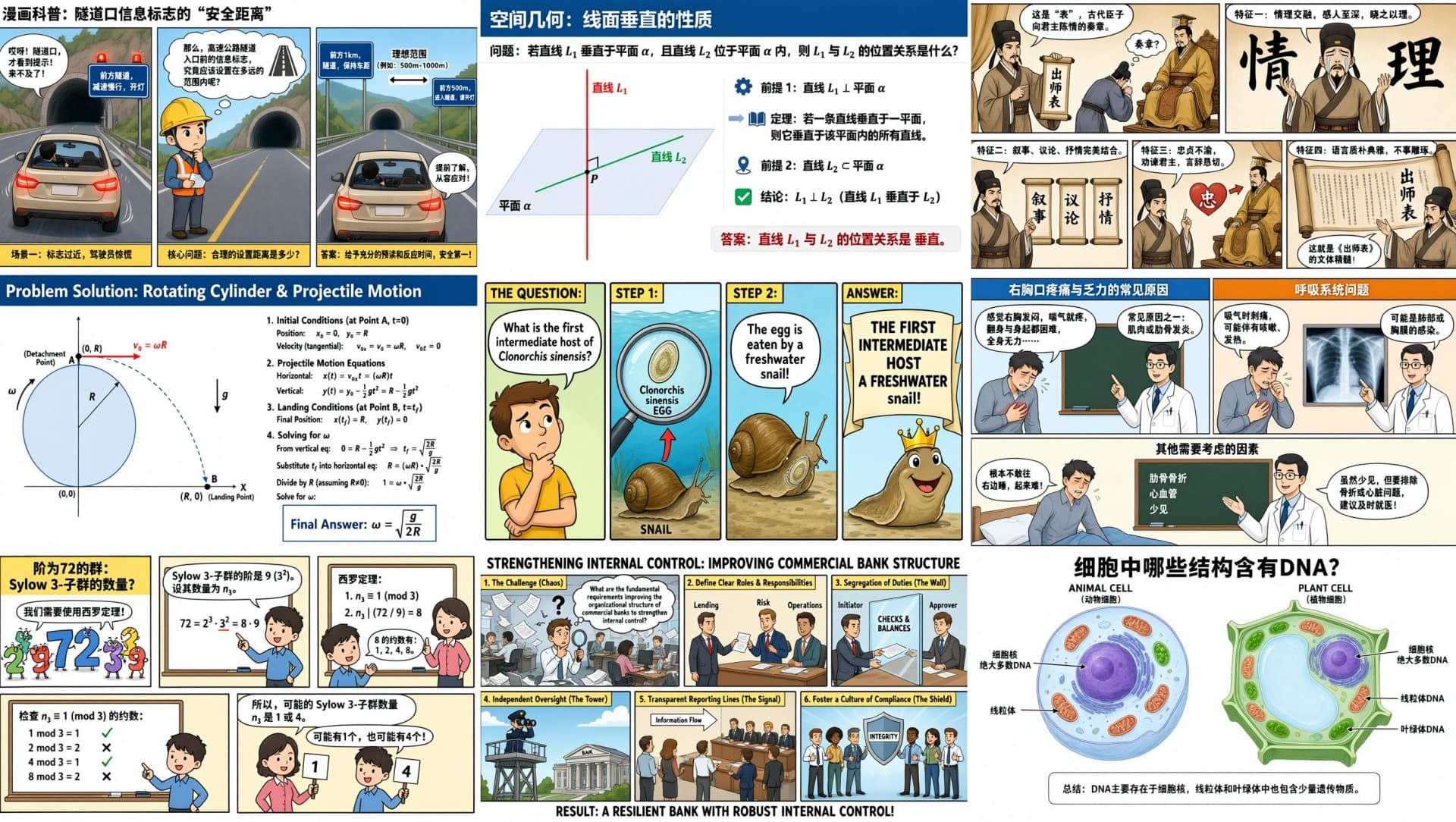
What can Qwen-Image-3.0 actually generate?
The Qwen team published demos showing a 3x3 grid where each panel is a separate infographic. Topics span safe following distances near tunnels, perpendicular lines in geometry, Confucian philosophy, projectile physics, liver fluke life cycles, chest pain diagnostics, Sylow theorems, banking internal controls, and cell DNA. Each panel has its own text, formulas, and illustrations.
Another demo nests four interfaces inside one image. A VSCode window contains a Qwen Chat screen. That chat screen shows a WeChat conversation. The conversation includes a poster explaining how to brew pour-over coffee. Four layers of UI, each with distinct text and layout, rendered coherently.
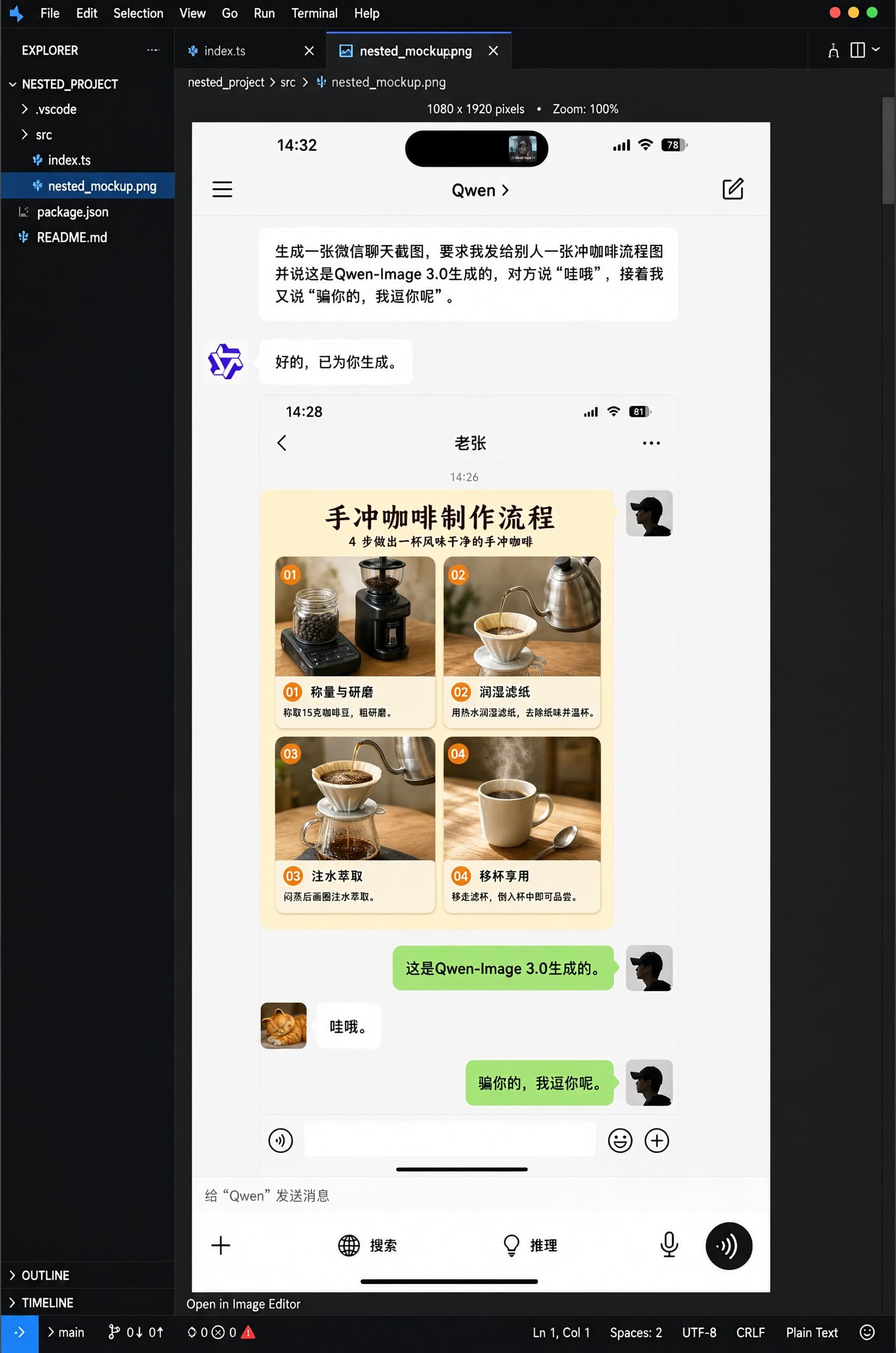
How small can the text be?
Ten pixels. That's the claim. The team showed a simulated academic paper page with multi-line LaTeX equations, including fractions, sums, products, and nested braces. Another example displays a whale shark infographic dense with labels and measurements. A third renders handwritten-style red teacher comments on a document.
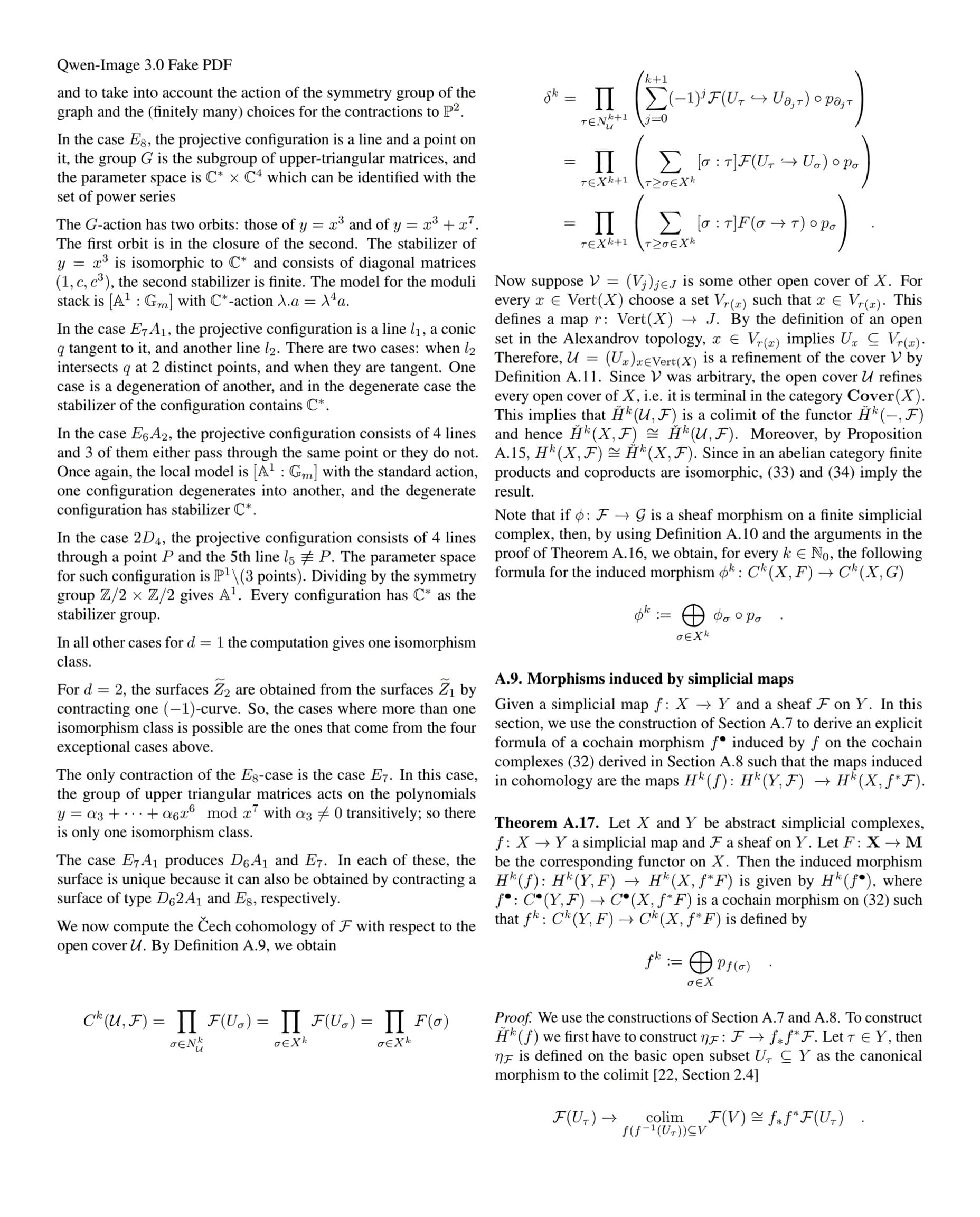
The team describes their goal for this version with one word: "Real." Previous iterations targeted precision, variety, and beauty. This one aims for practical work output. Think newspaper layouts, storyboards, exam sheets, and technical documentation.
What about photorealism and editing?
Qwen-Image-3.0 generates portraits with visible pores, individual hair strands, and detailed skin texture. One demo shows a young woman in sunlight with flower shadows on her cheek, where you can see the separation between backlit hair strands.
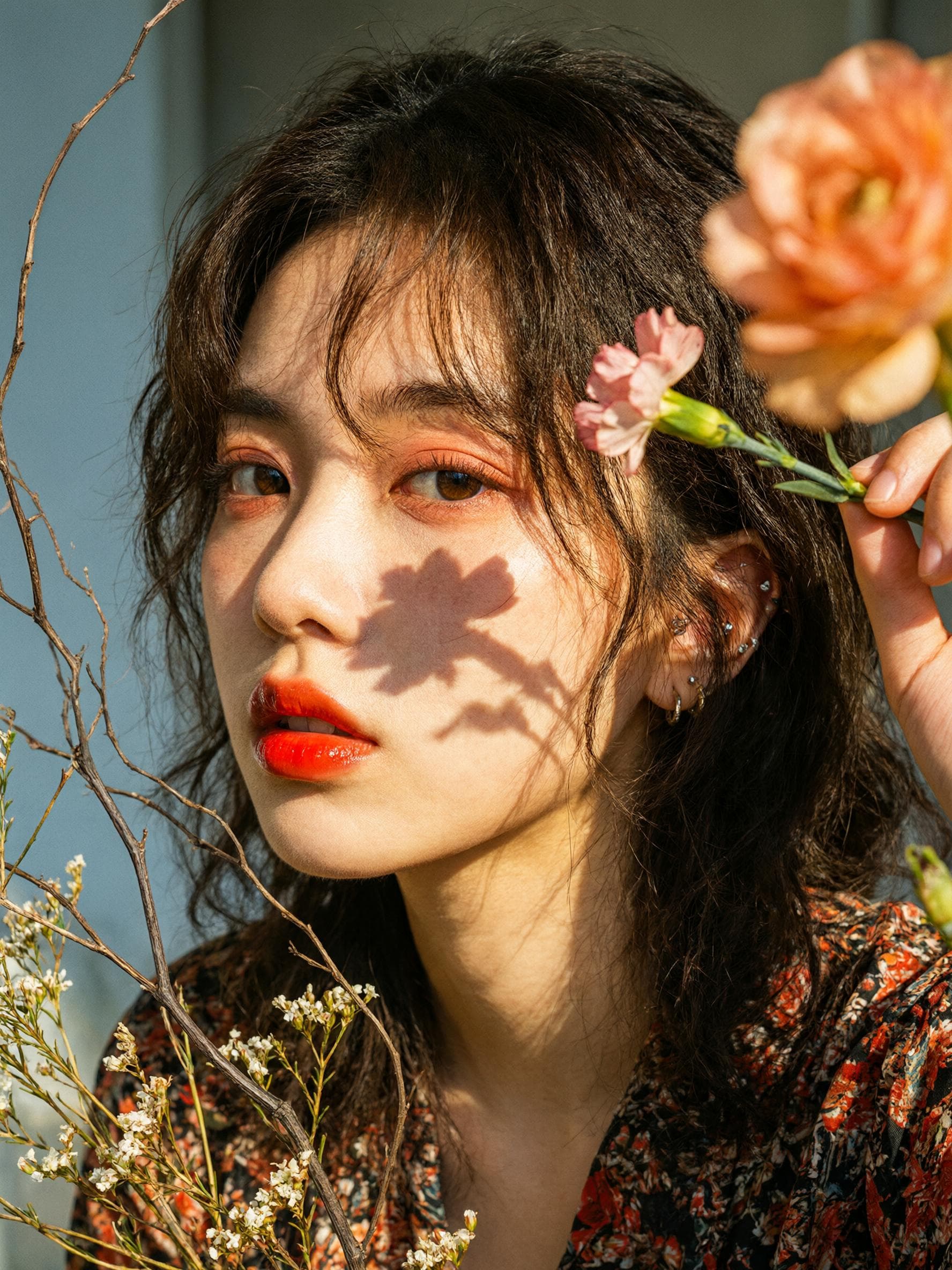
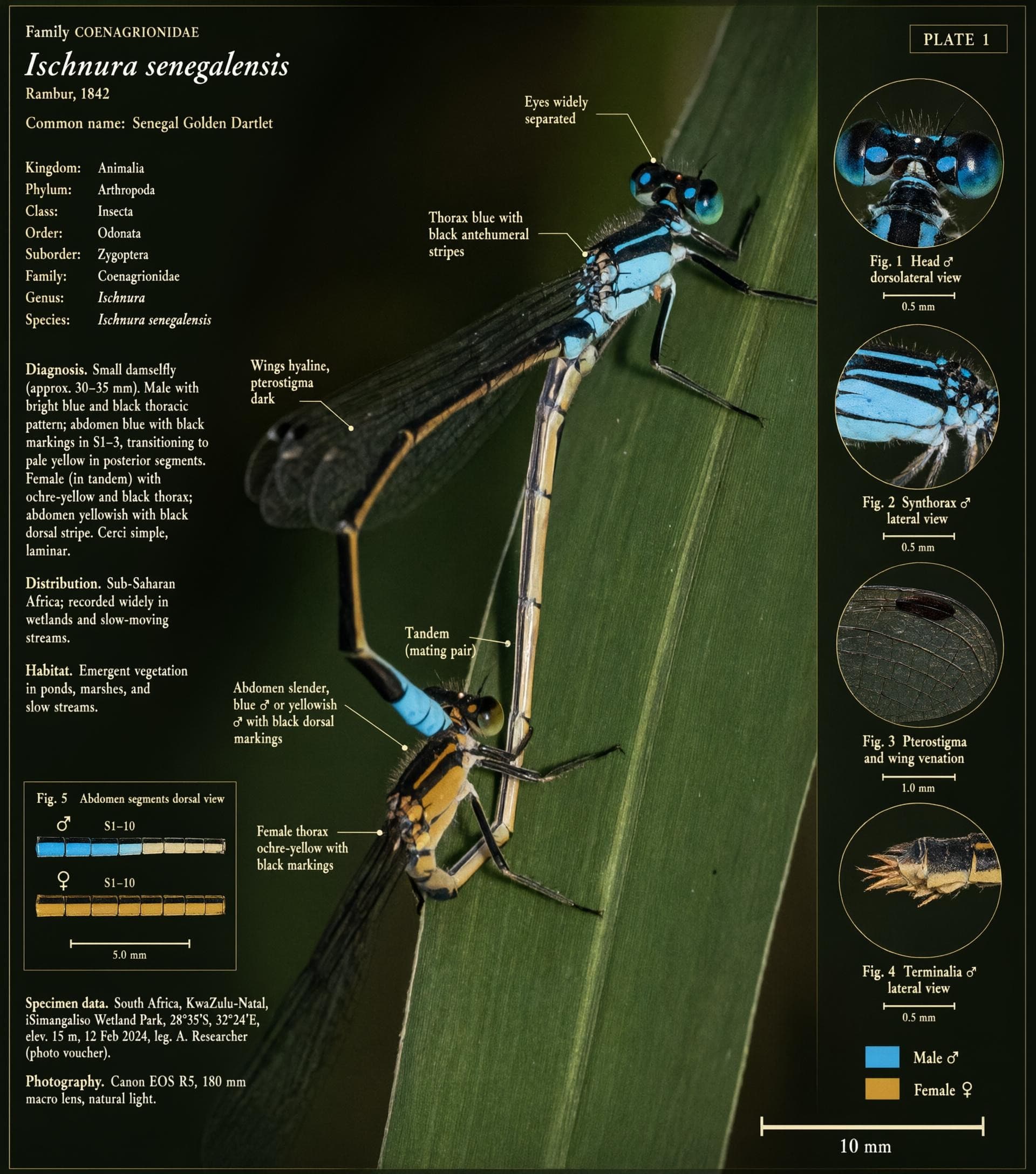
The model also handles image editing. One example repairs a damaged traditional Chinese ink painting of fighting eagles, filling in missing areas while matching the original brushwork. Another converts an insect photo into a scientific identification plate with taxonomy labels, morphological feature callouts, magnified detail views, and scale bars.
Which languages does it support?
Twelve languages natively, including Japanese, Korean, and Spanish. The model can also pull live internet data to generate content like weather forecasts. One demo shows a weather card for Hangzhou; another places Chinese ink painter Qi Baishi and Vincent van Gogh together in a simulated livestream studio.
How do you access Qwen-Image-3.0?
Invite-only API access for now. The team plans to integrate it into Qwen Chat soon. But unlike earlier Qwen models, the weights probably won't be released under an open license. This marks a shift toward commercialization, following a broader industry trend away from open-source model distribution.
Qwen-Image-2.0 launched just this past May. That version focused on training and inference efficiency, including a fast variant that needed four steps per image instead of forty. The jump to 3.0 in two months suggests Alibaba is iterating aggressively on practical use cases.
Logicity's Take
Qwen-Image-3.0 could eliminate the awkward workarounds product teams use to add text to AI-generated images. If the 10-pixel claim holds up in real-world testing, marketing teams can generate complete infographics and data visualizations without a designer cleaning up garbled text. For AI Builders, the 4,500-token context window opens possibilities for generating documentation screenshots, UI mockups with realistic content, and localized assets in 12 languages from a single prompt. The closed API model means pricing will matter. Watch for whether Alibaba charges per-token, per-image, or offers enterprise tiers that compete with OpenAI's DALL-E API and Midjourney's upcoming API.
Frequently Asked Questions
Is Qwen-Image-3.0 open source?
No. Unlike earlier Qwen models, this version is invite-only API access with no announced plans to release model weights.
What's the maximum prompt length for Qwen-Image-3.0?
4,500 tokens, which is enough to describe complex multi-panel layouts in detail.
Can Qwen-Image-3.0 render text in multiple languages?
Yes, it supports 12 languages natively including English, Chinese, Japanese, Korean, and Spanish.
How does Qwen-Image-3.0 compare to Midjourney for text?
Qwen-Image-3.0 focuses specifically on legible text rendering down to 10 pixels. Midjourney and similar models have historically struggled with accurate text in generated images.
When will Qwen-Image-3.0 be available in Qwen Chat?
The team says integration is planned soon, but no specific date has been announced.
Another major AI lab prioritizing practical, accessible models over flagship releases
Need Help Implementing This?
Logicity helps product teams evaluate and integrate AI image generation into their workflows. If you're building with Qwen, DALL-E, or other image models and need architecture guidance, reach out at hello@logicity.in.
Source: The Decoder / Jonathan Kemper
Manaal Khan
Tech & Innovation Writer
Produced with AI assistance and reviewed by the Logicity editorial team. Learn more in our Editorial Policy.