Key Takeaways
- GM is retiring the iconic 5.3L and 6.2L V8 engines that have powered the Silverado since 1999
- New 5.7L and 6.6L V8s will debut in the 2027 Silverado, built on GM's updated Small Block architecture
- Chevrolet is bucking the industry trend toward turbocharging and electrification with naturally aspirated V8s
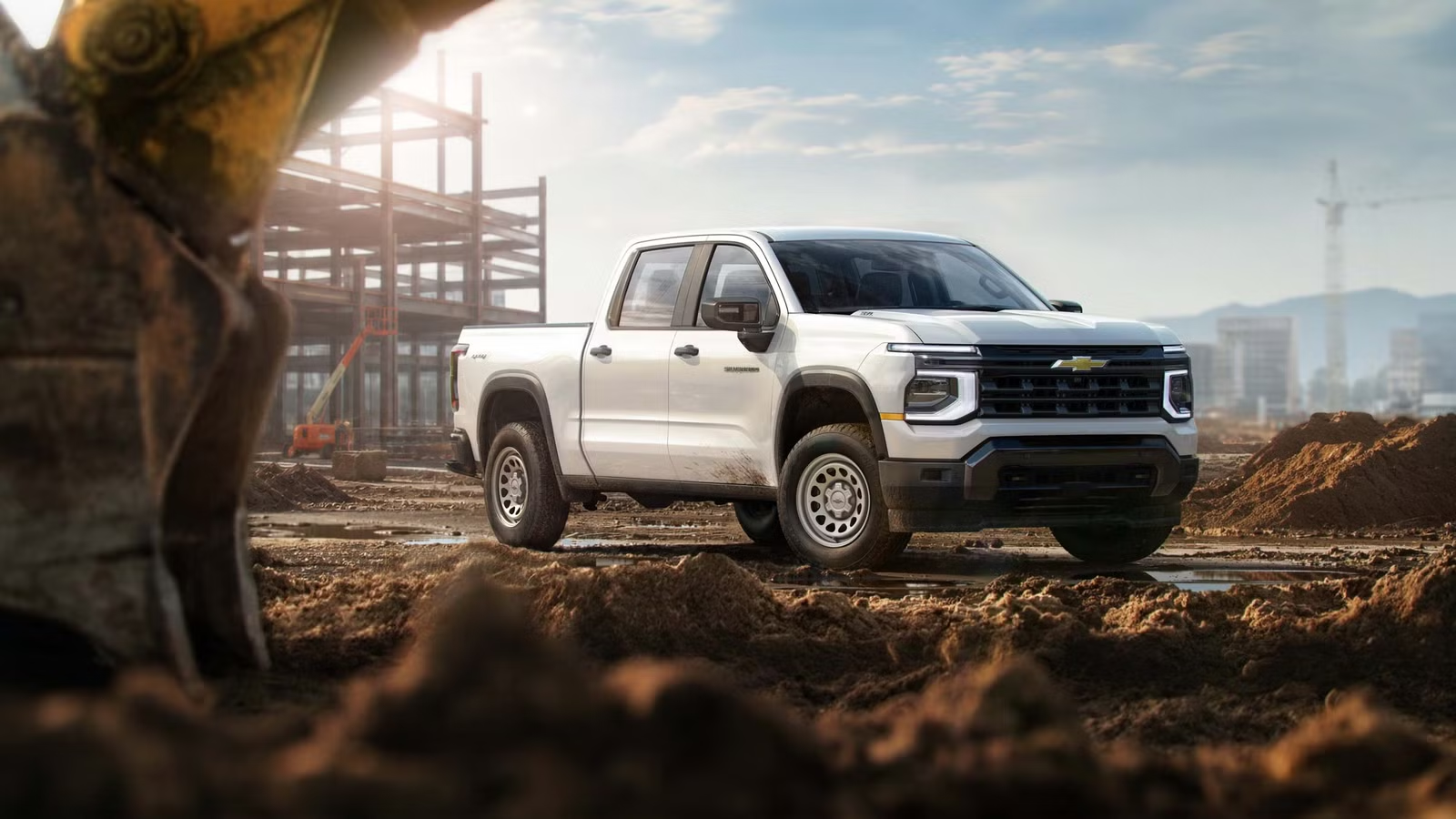
Chevrolet is killing the 5.3-liter V8, the engine that has defined the Silverado 1500 for 25 years. The 2027 Silverado will ship with two new V8s, a 5.7-liter and a 6.6-liter, both built on a refreshed version of GM's Small Block architecture. The 6.2-liter is also gone.
The move is a gamble. Ford's F-150 has shifted toward turbocharged EcoBoost V6 engines and hybrids. Toyota dropped the V8 entirely from the Tundra in favor of a turbocharged hybrid. Chevrolet is betting that truck buyers still want large-displacement, naturally aspirated V8s without turbos or electric assist.
Why is Chevy retiring the 5.3L V8 now?
The 5.3-liter has been in continuous production since 1999. For most Silverado buyers, it represented the sweet spot between power and fuel economy. But GM apparently sees room for improvement with the new displacement sizes.
Both new engines share their basic architecture with GM's latest generation of Small Block V8 powerplants, a design lineage stretching back to the 1950s. Chevrolet has not released horsepower, torque, towing, payload, or fuel economy figures. Those numbers are expected closer to the truck's on-sale date at the end of 2026.
“We pushed these engines through an extensive testing and validation process to make sure they deliver the durability, capability, and dependability Silverado customers expect. From tough towing scenarios to the daily demands our customers put on their trucks, these next-generation V8s were engineered and proven to perform in the real world.”
— Mark Dickens, Chevrolet executive chief engineer
Without specs, there's no way to compare the new engines against the outgoing 5.3 and 6.2-liter on paper. But more displacement typically means more torque, which matters for towing. Whether fuel economy improves will depend on engineering details GM has not disclosed.
What other powertrain changes are coming to the 2027 Silverado?
The V8s are not the only updates. The 2.7-liter TurboMax four-cylinder will swap its eight-speed automatic for a 10-speed transmission, which should improve fuel efficiency. More gears let the engine stay in its most efficient operating range more often.
The 3.0-liter Duramax diesel, a turbocharged inline-six, is moving downmarket. Previously, buyers had to step up to higher trims to get the diesel option. For 2027, it will be available on the base Work Truck model. That is a meaningful change for fleet operators who want diesel fuel economy without paying for leather seats and chrome trim they do not need.
How does this compare to Ford and Toyota?
Ford still offers a 5.0-liter V8 in the F-150, but most buyers choose the 2.7 or 3.5-liter EcoBoost V6 engines or the PowerBoost hybrid. The company has clearly signaled that turbocharging and electrification are the future of its truck lineup.
Toyota went further. When the third-generation Tundra launched, the V8 was gone entirely. Every Tundra now runs a turbocharged V6, with a hybrid version called i-FORCE MAX available for buyers who want more power and better efficiency.
Chevrolet's strategy resembles what Nissan did in the midsize truck segment. The Frontier kept its naturally aspirated V6 while the Tacoma, Colorado, and Ranger all moved to turbocharged four-cylinders. It is a bet that a specific segment of buyers values simplicity and proven technology over the complexity of forced induction or hybrid systems.
What trim levels will the 2027 Silverado offer?
Chevrolet is organizing the 2027 Silverado into seven trims: Work Truck, Custom, Custom Trail Boss, Silverado (replacing the former LT trim), Trail Boss, High Country, and ZR2.
- Work Truck: Base model, now with Duramax diesel availability
- Custom and Custom Trail Boss: Entry-level upgrades with off-road option
- Silverado: Renamed from LT, positioned as the volume seller
- Trail Boss: Off-road focused trim
- High Country: Premium trim, the Silverado's luxury flagship since 2014
- ZR2: Top off-road performance variant
The ZR2 and Trail Boss models prioritize traction over chrome, targeting buyers who actually take their trucks off pavement rather than those who want the look without the capability.
When will the 2027 Silverado go on sale?
Chevrolet has set the on-sale date for the end of 2026. Full specifications including horsepower, torque, towing capacity, and fuel economy ratings will be released closer to that date. Pricing has not been announced.
Logicity's Take
GM's decision to go bigger rather than boosted is interesting given emissions regulations and corporate average fuel economy targets. The company clearly believes there is enough demand for traditional V8s to justify the investment, but they will need significant efficiency gains from the new architecture to avoid fuel economy penalties. This could be a shrewd move if electrification fatigue is real among truck buyers, or a costly miscalculation if regulatory pressure intensifies.
Frequently Asked Questions
Is Chevrolet discontinuing V8 engines in the Silverado?
No. Chevrolet is replacing the 5.3L and 6.2L V8s with new 5.7L and 6.6L V8 engines, not eliminating V8 power from the Silverado lineup.
When does the 2027 Silverado with new engines go on sale?
Chevrolet has announced an on-sale date at the end of 2026. Full specifications will be released closer to launch.
Will the 2027 Silverado offer a diesel engine?
Yes. The 3.0L Duramax diesel will be available, and for the first time, it can be ordered on the base Work Truck trim.
How much horsepower will the new Silverado V8s produce?
Chevrolet has not released horsepower or torque figures for the 5.7L or 6.6L V8 engines. Those specifications are expected before the truck goes on sale.
Why is Chevy using naturally aspirated V8s when competitors use turbos?
Chevrolet is betting that truck buyers prefer traditional V8 power without the complexity of turbochargers or hybrid systems, similar to Nissan's approach with the Frontier.
How recycling infrastructure is evolving alongside automotive technology changes
Need Help Implementing This?
If you're a fleet operator evaluating the 2027 Silverado for your business, or a dealership preparing for the new model year, reach out to Logicity for analysis on total cost of ownership comparisons across the full-size truck segment.
Source: How-To Geek
Manaal Khan
Tech & Innovation Writer
Produced with AI assistance and reviewed by the Logicity editorial team. Learn more in our Editorial Policy.