Four of the world's largest technology companies dropped earnings reports in the same week, and all four are pouring tens of billions into AI infrastructure. Wall Street's response split sharply. Microsoft and Amazon drew investor confidence. Meta and Google faced skepticism. The difference comes down to three factors: how close each company sits to the cost frontier of AI models, whether they can show immediate revenue from their spending, and how clearly they articulate what the money buys.
Ben Thompson's Stratechery analysis this week tied these threads together, arguing that the juxtaposition of earnings reports on the same day made the strategic differences unusually clear. When you watch Meta, Microsoft, Amazon, and Google present back-to-back, the divergence in market reaction stops looking random.
Why Microsoft got permission to spend
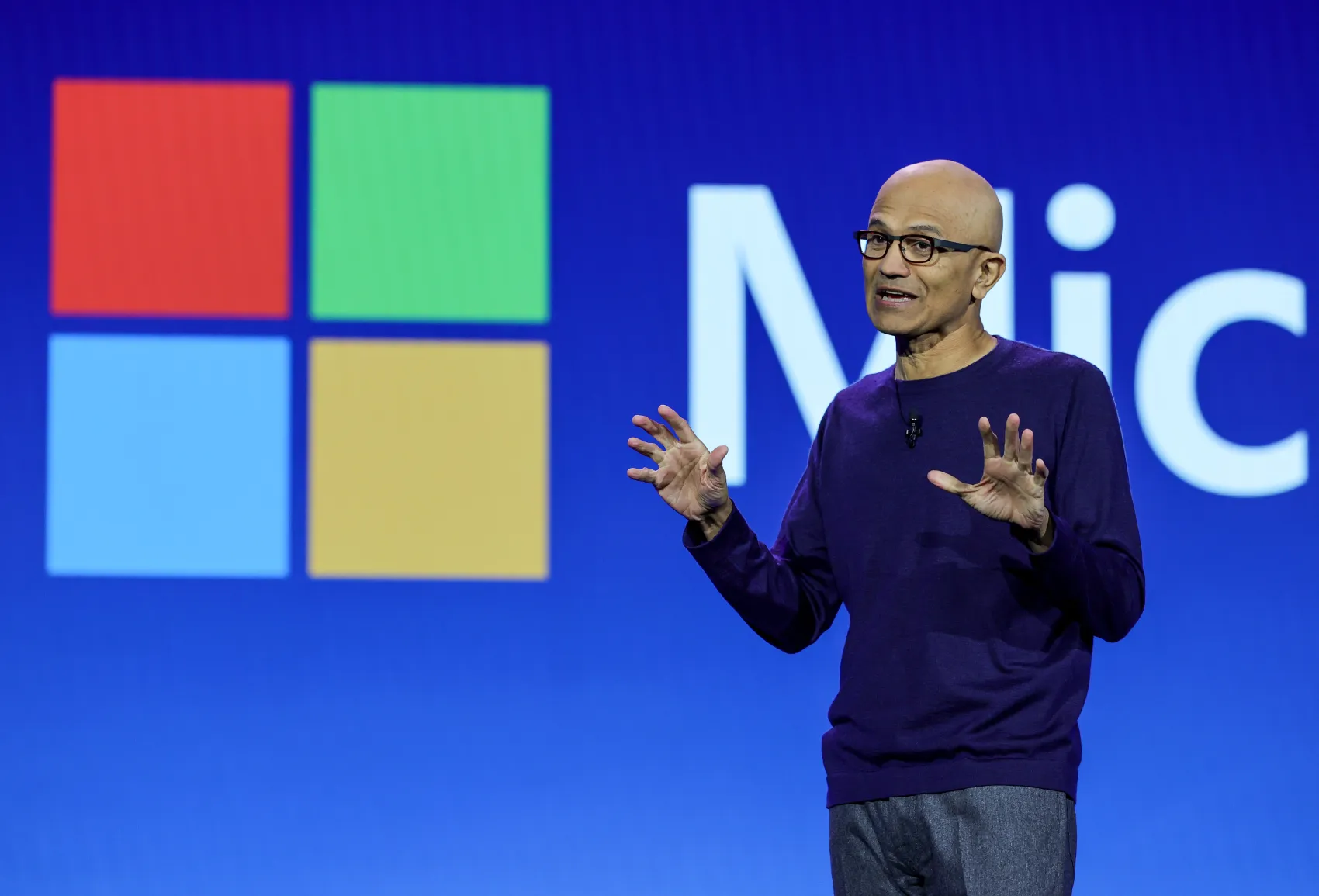
Microsoft's earnings stood out for what Thompson called "clarity of strategy." The company demonstrated lower costs per unit of AI inference than the prior quarter and showed tangible applications already generating revenue. Azure's AI services have paying enterprise customers. GitHub Copilot has millions of subscribers. The path from capex to revenue is visible.
This matters because Wall Street's fundamental question for every AI investor is: when does the spending produce returns? Microsoft answered with numbers. Its cloud revenue in recent quarters has consistently grown above 20% year-over-year, and management has been explicit that AI workloads are a growing share of that figure. The efficiency gains are measurable, not promised.
Thompson's observation carries an edge, though. He notes the reason for Microsoft's clarity is "scarier." The company has been building enterprise AI tooling for years. It acquired GitHub, invested in OpenAI early, and integrated Copilot across its productivity suite before competitors moved. That head start is real. But it also means Microsoft's current advantage reflects decisions made three to four years ago. Competitors cannot simply copy the playbook and catch up on the same timeline.
Meta's timing problem and the frontier cost
Meta's earnings disappointed, and not just on the numbers. Thompson flags the company's "future promises about AI products" as more concerning than the quarterly miss itself. Meta has bet heavily on open-source models (Llama) and on building AI infrastructure that serves its advertising and recommendation systems. But the revenue story remains indirect.
The advertising improvements are real. Meta's machine learning systems have gotten better at targeting and conversion. Revenue has grown. But the connection between capex and those gains is harder to isolate than Microsoft's direct AI product sales. Investors are being asked to trust that infrastructure spending will pay off through better engagement and ad performance, not through new revenue lines.
There's also the frontier question. Meta is training its own frontier models, which puts it closer to the bleeding edge of AI costs. Microsoft, by contrast, outsources much of that work to OpenAI. Google and Amazon train their own models too, but both have cloud businesses that can sell AI inference to external customers, offsetting the training costs. Meta's AI spend is internal, for internal products, with internal returns. The risk profile is different.
Amazon and Google: the Anthropic hedge
Google's earnings, Thompson argues, "seemed to confirm the Anthropic hedge." Google has invested billions in Anthropic, the startup behind Claude, as an insurance policy against its own DeepMind research organization. The investment gives Google access to an alternative frontier model path if Gemini stumbles. But it also signals uncertainty about which AI approach will win.
Amazon's earnings call provided the clearest justification for continued spending. CEO Andy Jassy explained why the company's capex, and Google's, remains defensible: both companies sell AI infrastructure to customers. AWS and Google Cloud offer AI inference as a product. The more they build, the more they can sell. Unlike Meta, they are not just spending on internal applications. They are building inventory.
This distinction matters for AI builders evaluating cloud providers. AWS and Google Cloud are both motivated to keep AI inference costs falling because their revenue depends on it. Meta has no such external pressure. The competitive dynamics differ in ways that affect pricing, availability, and long-term reliability.
Compares AI coding tools and their cost structures, relevant to infrastructure spending decisions
The OpenAI-Apple lawsuit subplot
Stratechery's weekly roundup also covers OpenAI's response to Apple's trade-secrets lawsuit. Apple alleged that former hardware executive Tang Tan and other Apple veterans at OpenAI's hardware division stole proprietary information to build competing devices. OpenAI filed evidence this week that it claims undermines Apple's narrative.
The stakes here extend beyond the two companies. Apple's lawsuit, as Thompson and co-host Andrew Sharp noted on their Dithering podcast, is attempting to kill OpenAI's hardware division entirely. If Apple prevails on its theory, any hardware engineer who leaves Apple for a competitor risks similar litigation. The chilling effect on talent mobility in hardware AI could be significant.
For product teams building AI applications, the lawsuit is a reminder that the frontier of AI is not just software. The companies training the largest models are all investing in custom silicon, specialized data centers, and proprietary hardware. The integration between models and the infrastructure that runs them is tightening. That trend creates moats but also legal risks for anyone trying to compete.
Logicity's Take
The earnings split reveals a strategic truth for AI builders: infrastructure spending only gets investor patience when it connects to revenue the market can see. Microsoft charges for Copilot. AWS sells inference by the hour. Meta's internal improvements are real but invisible to Wall Street. If you're building AI products, the lesson is to show your work. A measurable efficiency gain or a paying customer matters more than a roadmap. For teams evaluating cloud providers, AWS and Google Cloud have external incentives to keep AI costs falling. Meta's infrastructure is optimized for Meta.
What the market's permission structure means
Thompson's phrase "the market's permission" captures something real. Large tech companies do not need investor approval to spend money. They have the cash. But the stock price consequences of spending shape executive behavior. Meta's stock dropped after earnings. Microsoft's rose. Those signals influence future capital allocation decisions.
For AI builders at startups, this creates an unusual window. The giants are constrained by what Wall Street will tolerate. A company burning $10 billion a year on AI infrastructure has to justify it quarterly. A startup burning $10 million does not face the same scrutiny, at least not until the next funding round. The asymmetry is temporary, but it is real.
The question is whether the current spending levels are sustainable. All four companies are betting that AI infrastructure will be as fundamental as cloud computing became. If that bet is right, underinvestment now means losing position later. If it is wrong, the write-downs will be spectacular. The market's split reaction suggests investors are not sure either.
There is no consensus on which company has the right strategy. Microsoft looks safest because its investments are already paying off. Amazon looks defensible because it can sell what it builds. Google looks hedged because of Anthropic. Meta looks most exposed because its spending is internal and its returns are indirect. But the frontier moves fast. The rankings could shift by the next earnings cycle.
Need Help Implementing This?
Logicity helps AI product teams navigate cloud infrastructure decisions, evaluate model deployment options, and build cost-efficient AI pipelines. Reach out at logicity.in/contact to discuss your stack.
Source: Stratechery by Ben Thompson
Huma Shazia
Senior AI & Tech Writer
Produced with AI assistance and reviewed by the Logicity editorial team. Learn more in our Editorial Policy.