Key Takeaways
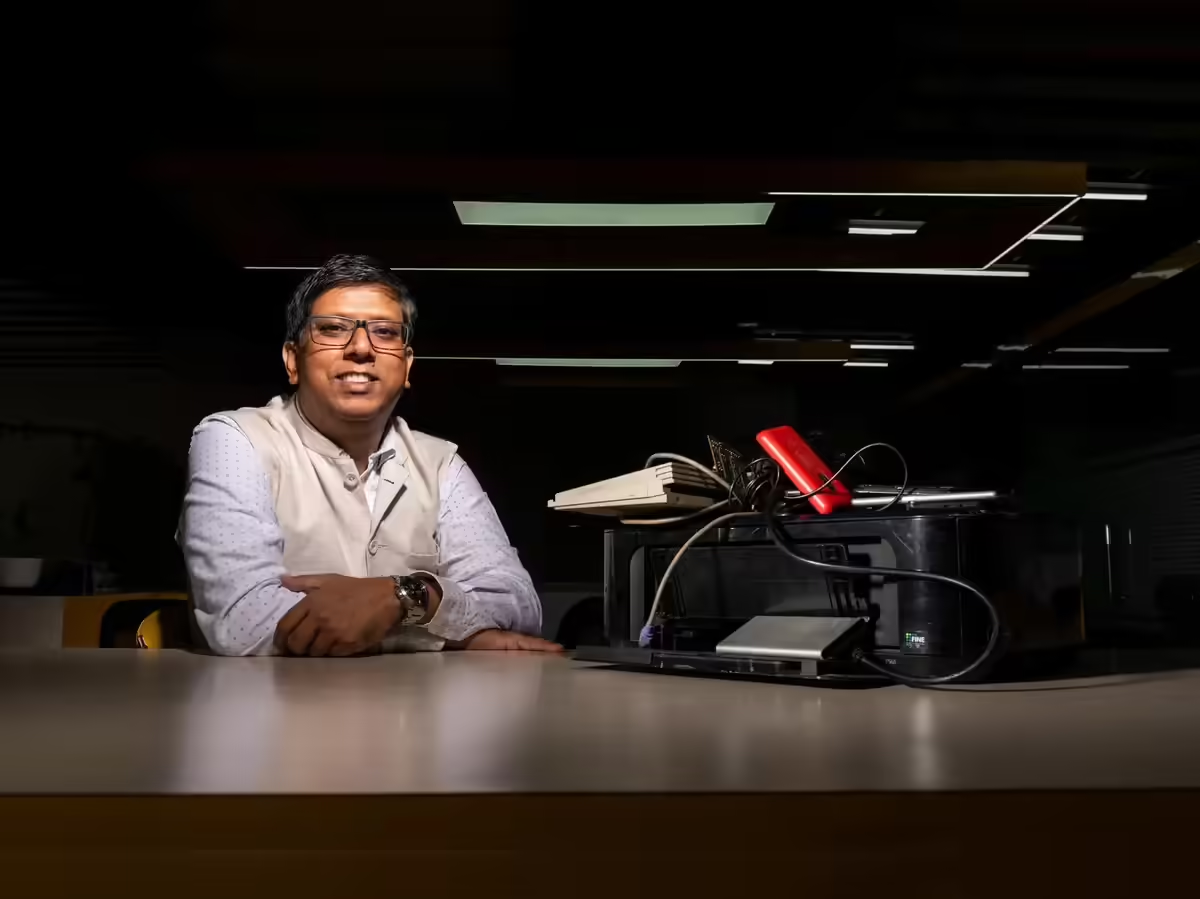
- Karo Sambhav raised ₹56 crore from Zerodha-backed Rainmatter to expand critical mineral recovery from e-waste
- The bootstrapped company has processed 150,000+ metric tonnes of waste across 50+ cities since 2017
- India generates 4.1 million metric tonnes of e-waste annually, making domestic mineral recovery strategically important
Karo Sambhav, a Gurugram-based e-waste recycling company, has raised ₹56 crore from Rainmatter, the climate-focused investment arm backed by Zerodha. The capital will fund infrastructure to extract critical minerals like lithium, cobalt, and nickel from discarded electronics. For a company that stayed bootstrapped for nearly nine years, this marks a significant shift in ambition.
Founded in 2017 by Pranshu Singhal, Karo Sambhav operates two recycling facilities and runs collection networks in more than 50 Indian cities. The company claims to have responsibly processed over 150,000 metric tonnes of waste, spanning electronics, batteries, glass, and other end-of-life materials.
Why urban mining matters for India
India is the world's third-largest generator of electronic waste, producing an estimated 4.1 million metric tonnes annually. Most of that waste contains materials essential for batteries, electric vehicles, and advanced manufacturing: lithium, cobalt, nickel, graphite, and rare earth elements. Precious metals like gold, silver, and platinum group metals are embedded in printed circuit boards.
The country imports most of these materials. As demand for EVs and renewable energy storage accelerates, recovering these minerals domestically becomes a supply chain priority, not just an environmental one.
Urban mining, the process of extracting valuable materials from discarded products, offers a partial solution. Old smartphones, laptops, and batteries contain concentrations of certain minerals higher than raw ore. The challenge lies in formalizing collection and building processing infrastructure at scale.
How Karo Sambhav plans to use the funding
The ₹56 crore will go toward scaling recycling infrastructure. Karo Sambhav's initial focus remains e-waste, but the company handles multiple waste streams. The goal is to increase capacity for extracting what the company calls "critical, precious, and high-value materials" from products that have reached end of life.
Singhal emphasized the operational groundwork already in place. "Karo Sambhav has spent the last nine years building the operating base to collect, recycle, and trace these material streams responsibly," he said.
Viraj Joshi, VP of legal and regulatory at Zerodha, noted the company's track record. "Karo Sambhav has demonstrated patient execution and systems-level impact in a difficult sector," Joshi said. Rainmatter's investment signals continued appetite for sustainability-focused bets over high-burn growth plays.
The challenge of formalizing India's recycling sector
India's informal waste sector handles much of the country's recycling. Workers collect, sort, and process materials without formal systems for tracking, safety, or environmental compliance. Formalizing this sector requires technology for traceability, partnerships with manufacturers for extended producer responsibility compliance, and physical infrastructure for safe processing.
Karo Sambhav's approach centers on building that technology layer. The company's systems track materials from collection through processing, creating audit trails that manufacturers need for regulatory compliance.
Community discussions on platforms like Hacker News and Indian investment forums highlight this as a key differentiator. Scaling formalized recycling in developing economies is logistically hard. Companies that can bridge the informal sector while maintaining compliance have a structural advantage.
Where Rainmatter fits in the climate investing landscape
Rainmatter has backed multiple climate and sustainability startups, preferring businesses with long-term system-building potential over quick exits. Nithin Kamath, Zerodha's CEO and Rainmatter's founder, has publicly praised Karo Sambhav's approach.
The investment reflects broader investor interest in circular economy businesses. Globally, annual e-waste generation is projected to reach 82 million tonnes by 2030. That waste represents both an environmental problem and a resource opportunity, one that companies like Karo Sambhav are positioning to capture.
Frequently Asked Questions
What is urban mining?
Urban mining refers to extracting valuable materials like lithium, cobalt, gold, and rare earth elements from discarded electronics and other end-of-life products, rather than mining raw ore.
How much e-waste does India generate annually?
India produces an estimated 4.1 million metric tonnes of e-waste per year, making it the world's third-largest generator of electronic waste.
Who is Rainmatter?
Rainmatter is a climate and sustainability-focused investment initiative backed by Zerodha, India's largest stockbroker. It invests in companies working on environmental impact and resource efficiency.
What materials can be recovered from e-waste?
E-waste contains lithium, cobalt, nickel, graphite, rare earth elements, gold, silver, platinum group metals, copper, and tantalum, all critical inputs for batteries, EVs, and electronics manufacturing.
Logicity's Take
Karo Sambhav's nine years of bootstrapped operation before raising external capital is notable in an ecosystem that often rewards growth over sustainability. The timing aligns with policy momentum: India is actively building frameworks for extended producer responsibility in electronics. If the company can scale mineral recovery while maintaining traceability standards, it could become critical infrastructure for domestic EV and battery supply chains, not just a recycling business.
Need Help Implementing This?
Building circular economy operations or navigating extended producer responsibility compliance? Reach out to Logicity's editorial team for coverage of technology partners and implementation approaches in India's evolving sustainability sector.
Source: Tech-Economic Times / ET
Manaal Khan
Tech & Innovation Writer
Produced with AI assistance and reviewed by the Logicity editorial team. Learn more in our Editorial Policy.




