Key Takeaways
- Claude outperformed ChatGPT and Gemini in hardware diagnostics by providing step-by-step, safety-aware guidance
- Up to 62.5% of AI responses in data recovery queries were deemed inaccurate in a recent study
- AI chatbots can help structure troubleshooting but should not replace human expertise for high-voltage components
If your PC breaks in 2026, you have options. You can spend hours reading forum threads. You can call a friend who "knows computers." Or you can ask an AI chatbot and hope it doesn't tell you to flash your BIOS when your power supply is fried.
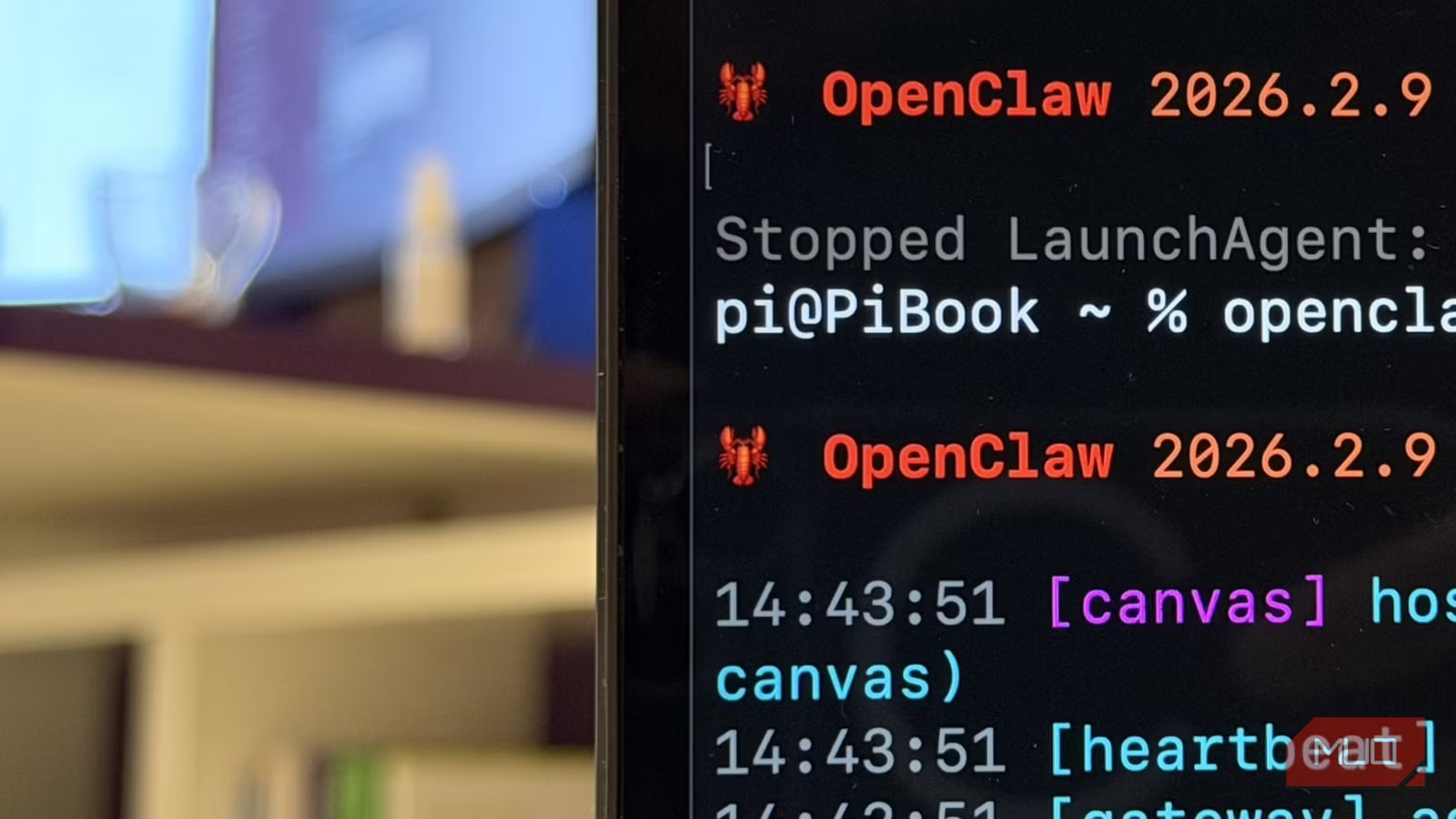
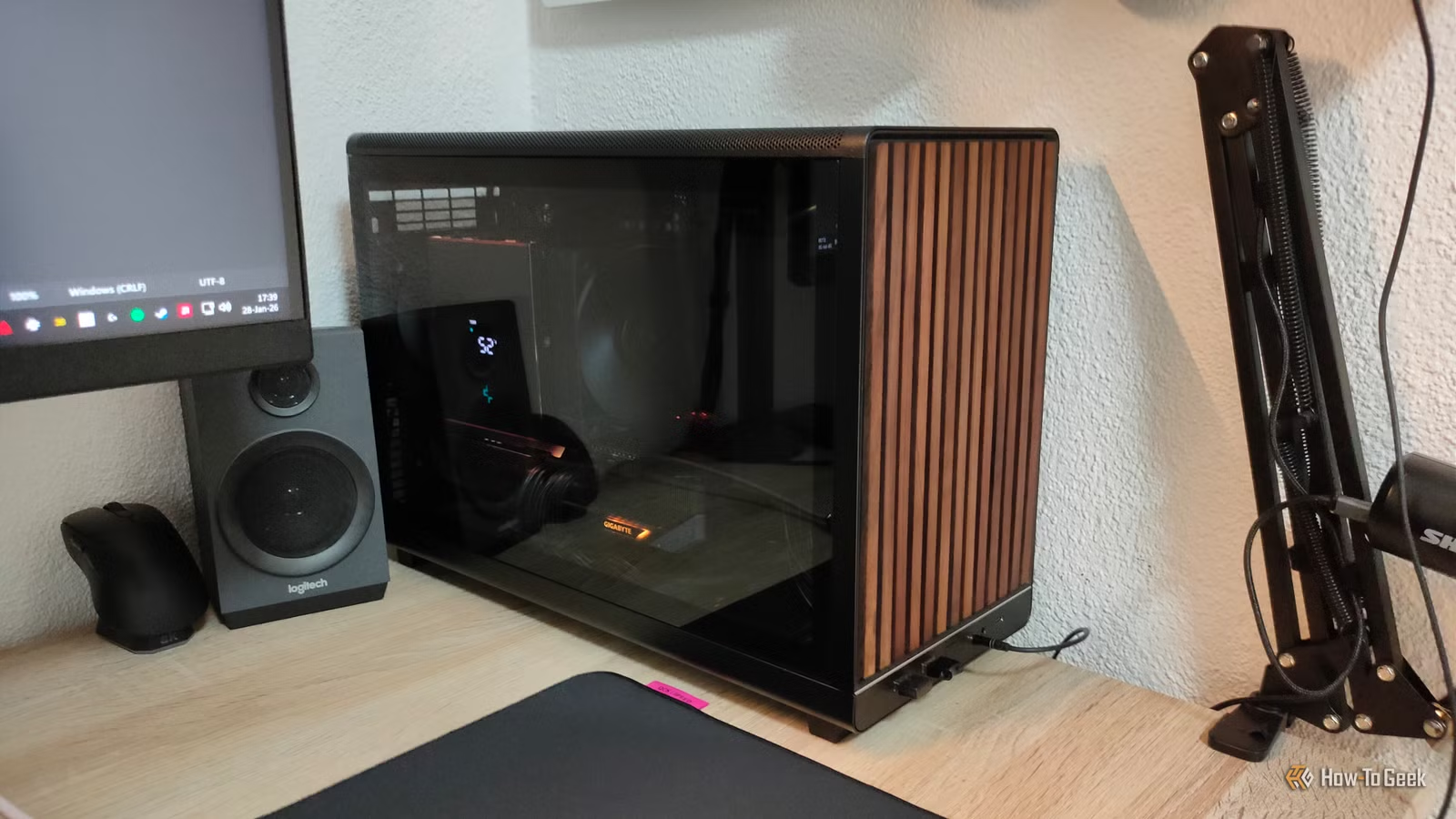
Monica J. White, a tech journalist who has built PCs for 20 years, decided to find out which approach actually works. She took three broken computers and asked ChatGPT, Claude, and Gemini to diagnose them. The results were illuminating.
The Experiment Setup
White's test wasn't theoretical. She used actual broken hardware with real symptoms. This matters because AI models trained on internet text can sound confident about problems they've never encountered in practice.
"The results show that while LLMs are becoming surprisingly capable of nuanced hardware analysis, they are not a replacement for domain expertise, especially regarding safety," White wrote.
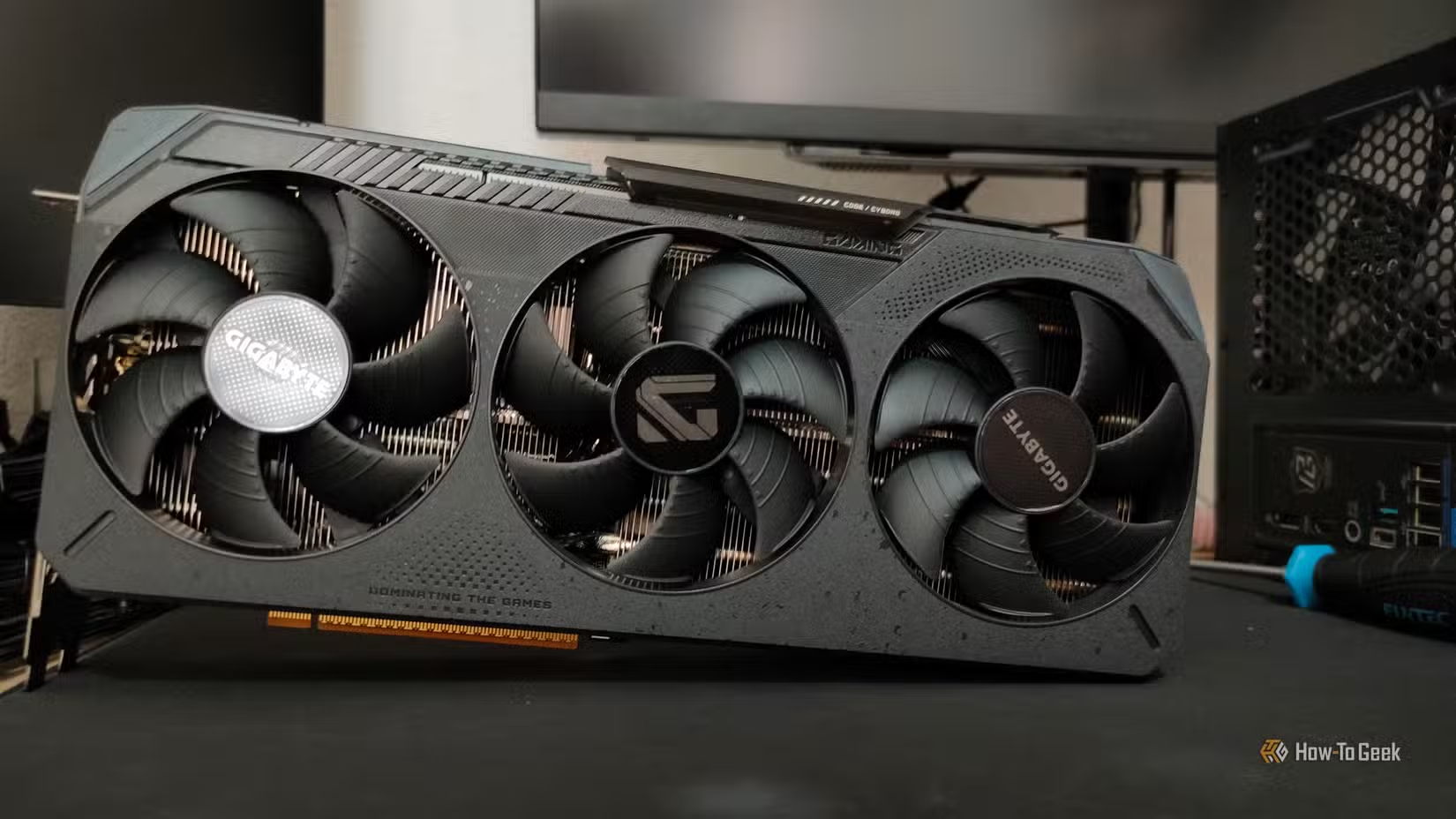
The testing came at an interesting moment for AI-assisted tech support. A recent Secure Data Recovery study found that up to 62.5% of AI responses to HDD data recovery queries were inaccurate. That's a coin flip with your data on the line.
Claude Takes the Lead
The clear winner was Anthropic's Claude. White found it provided more methodical, step-by-step diagnostic guidance than its competitors. More importantly, Claude was more cautious about safety, particularly when dealing with power supply issues where incorrect advice could be dangerous.
ChatGPT and Gemini both showed promise but had a tendency to jump to complex solutions for simple problems. This matches what the r/buildapc community has observed. Users there frequently complain that AI models suggest BIOS updates or driver reinstalls when the actual issue is a dead component.
“We are seeing a major shift where reliability and proactive maintenance are finally overtaking simple automation as the primary development priority for IT leaders.”
— Senior Analyst, Hardware Reliability Research Group
Where AI Troubleshooting Falls Short
The HackerNews discussion around this experiment raised a critical point. LLMs operate as black boxes. They can suggest you check your PSU voltages, but they can't see your hardware, smell burning capacitors, or hear the click of a dying hard drive.
High-voltage diagnostics remain particularly risky territory. Power supplies can hold lethal charges even when unplugged. An AI that confidently suggests opening one up without proper safety warnings isn't being helpful. It's being dangerous.
| Model | Diagnostic Accuracy | Safety Awareness | Step-by-Step Guidance |
|---|---|---|---|
| Claude | High | Strong | Methodical |
| ChatGPT | Moderate | Variable | Sometimes jumps ahead |
| Gemini | Moderate | Variable | Occasionally overly complex |
The Real Value of AI Tech Support
Despite the limitations, AI chatbots do offer real value for PC troubleshooting. For beginners especially, they can help structure the diagnostic process. Instead of randomly swapping parts, a user can follow a logical sequence: check power, verify connections, test components one by one.
The AI-driven hardware diagnostics market is growing at a projected 28.2% CAGR between 2025 and 2026. Real-world implementations of AI-based anomaly detection have achieved 30% reductions in industrial downtime within six months.
The gap between adoption and infrastructure is telling. Engineers are using these tools. They're just doing so without the guardrails that would make them truly reliable.
Practical Takeaways
- Use Claude for PC troubleshooting when you want methodical, safety-conscious guidance
- Never trust AI advice for power supply or high-voltage component work without human verification
- Treat AI suggestions as a starting framework, not a definitive diagnosis
- Cross-reference AI recommendations with manufacturer documentation
- If an AI suggests a complex fix for a simple symptom, be skeptical
White's experiment confirms what many experienced builders suspected. AI can be a useful first step in troubleshooting. It can save you time sifting through forums. But it's not ready to replace the judgment that comes from actually touching hardware, smelling burnt electronics, and knowing when something just sounds wrong.
Learn more about the company behind Claude's development approach
More PC troubleshooting shortcuts that don't require AI assistance
Logicity's Take
Frequently Asked Questions
Which AI is best for PC troubleshooting in 2026?
Claude currently provides the most methodical and safety-conscious hardware diagnostic guidance, outperforming ChatGPT and Gemini in real-world broken PC tests.
Can AI chatbots accurately diagnose hardware failures?
Sometimes. Studies show up to 62.5% of AI responses to hardware queries can be inaccurate. AI works best as a starting framework rather than a definitive diagnostic tool.
Is it safe to follow AI advice for power supply problems?
No. Power supplies hold lethal charges even when unplugged. Always verify AI suggestions with human expertise before working on high-voltage components.
Why do AI chatbots suggest complex fixes for simple PC problems?
AI models are trained on internet text, which includes many discussions of complex edge cases. They sometimes default to sophisticated solutions when basic troubleshooting would suffice.
Need Help Implementing This?
Source: How-To Geek
Huma Shazia
Senior AI & Tech Writer
Produced with AI assistance and reviewed by the Logicity editorial team. Learn more in our Editorial Policy.