Key Takeaways
- ChatGPT's third-party app ecosystem now includes Tubi, making it the first major free streamer with AI-powered discovery
- Natural language search reduces the 20+ minute browse time that kills viewer engagement and ad revenue
- This integration model signals how AI assistants will become distribution channels for content platforms
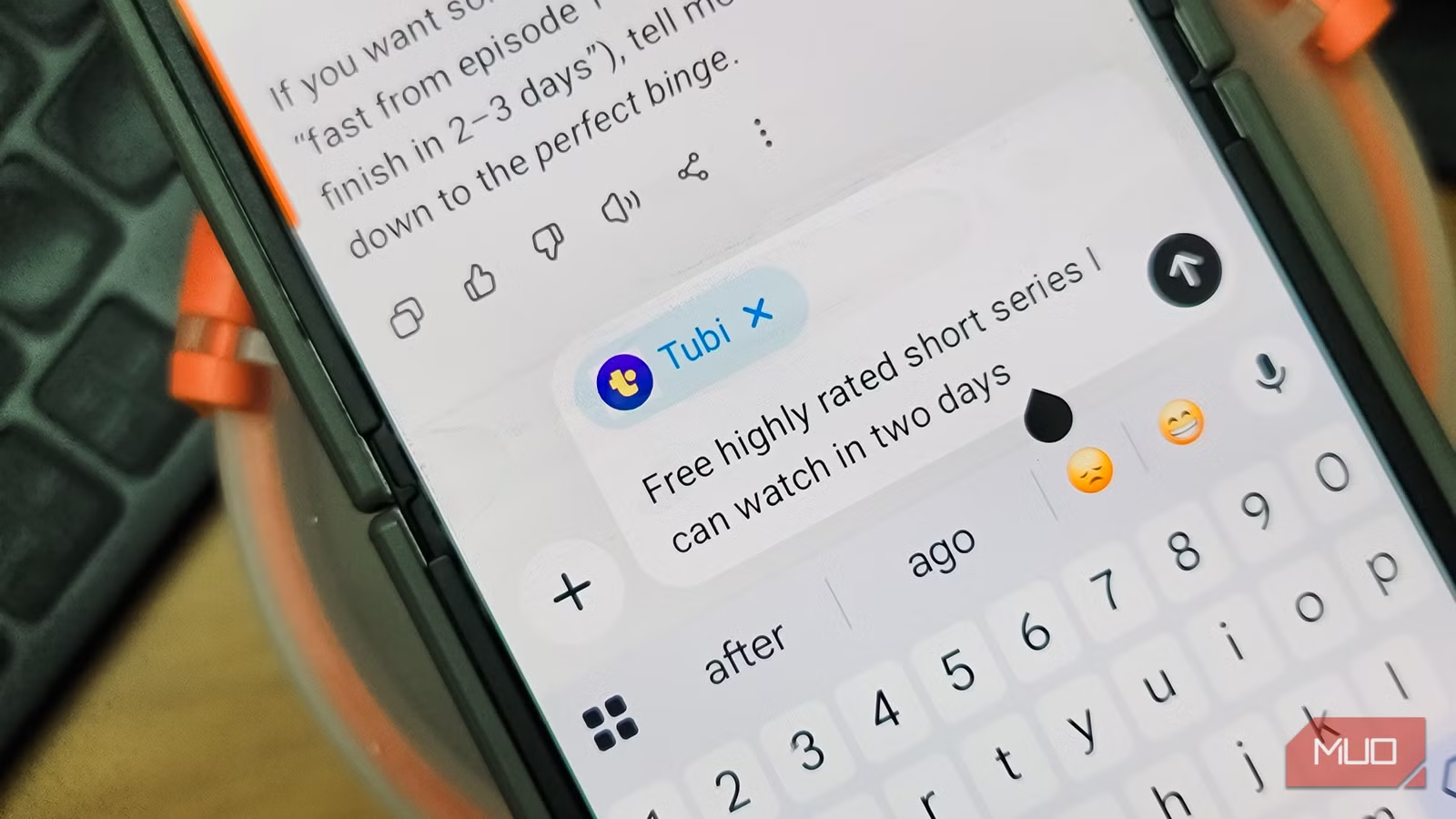
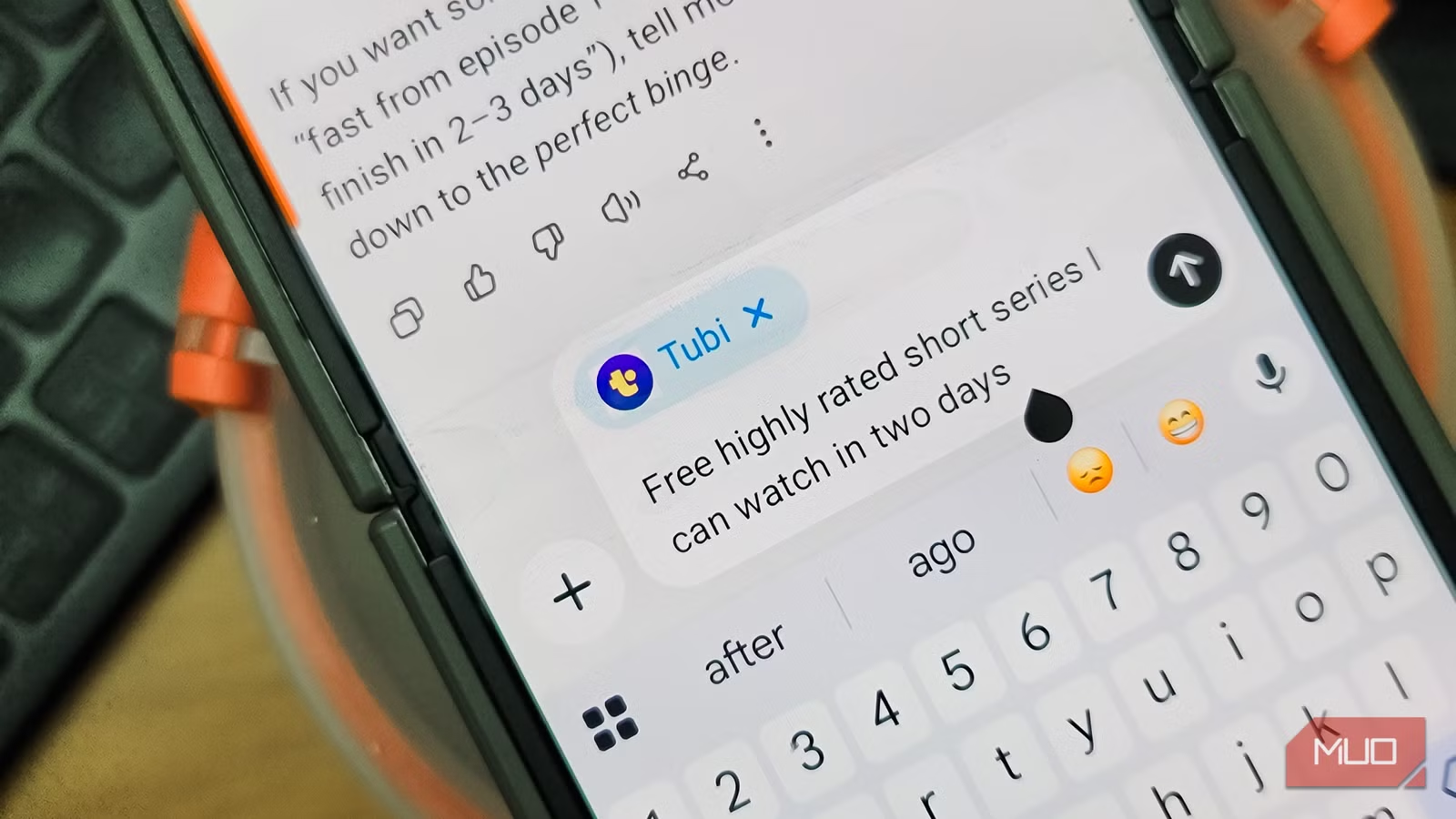
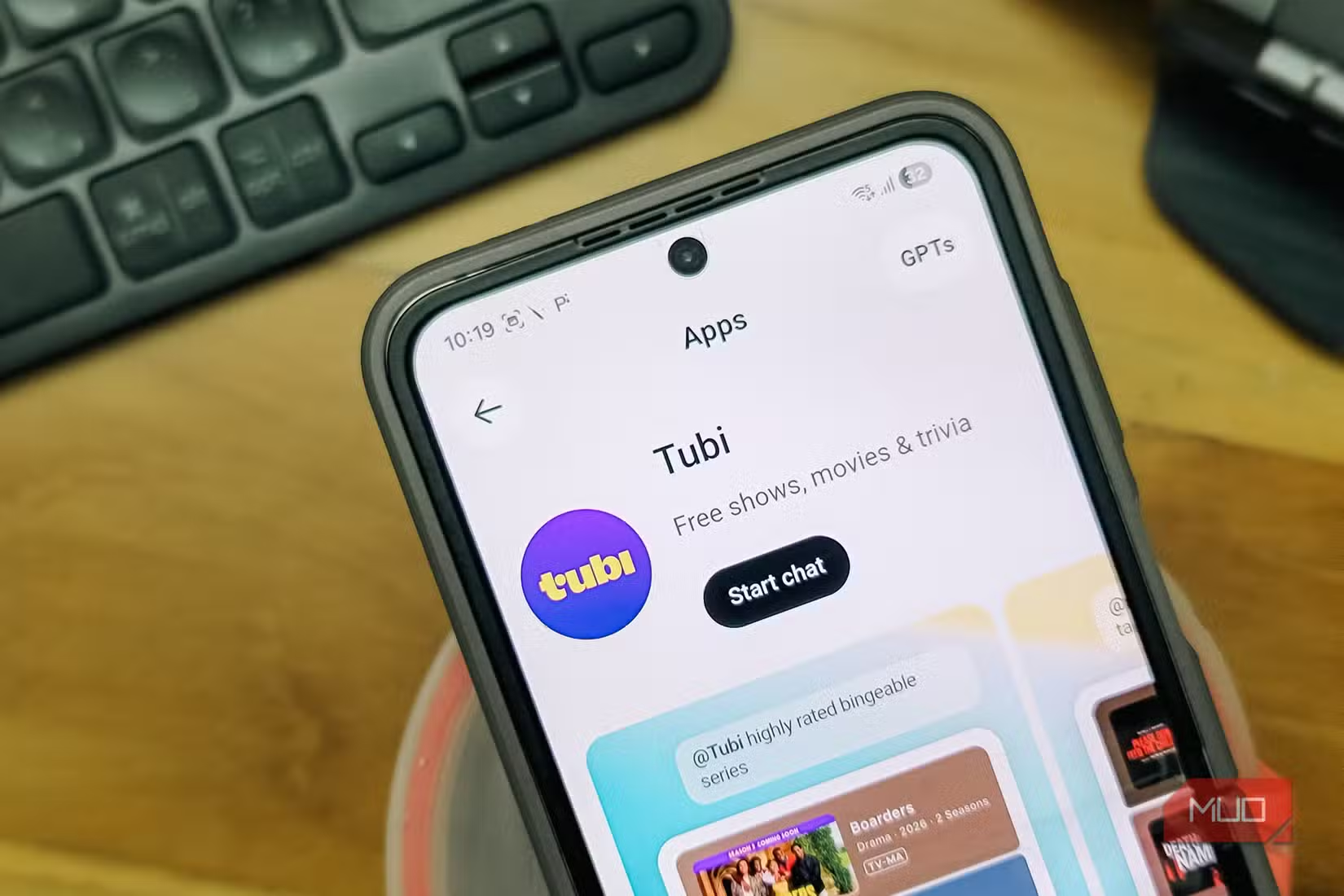
According to [MakeUseOf](https://www.makeuseof.com/asked-chatgpt-free-movie-recommendation-tubi/), Tubi has quietly joined ChatGPT's growing ecosystem of third-party apps, allowing users to search the free streaming service's entire catalog using natural language instead of scrolling through endless carousels. This integration makes Tubi the first major ad-supported streaming platform to offer AI-powered discovery through OpenAI's assistant.
For business leaders watching the streaming wars, this isn't just a convenience feature. It's a preview of how AI assistants will reshape content discovery, viewer engagement, and ultimately, advertising revenue models across the $544 billion global streaming market.
Why Does ChatGPT Tubi Integration Matter for Streaming?
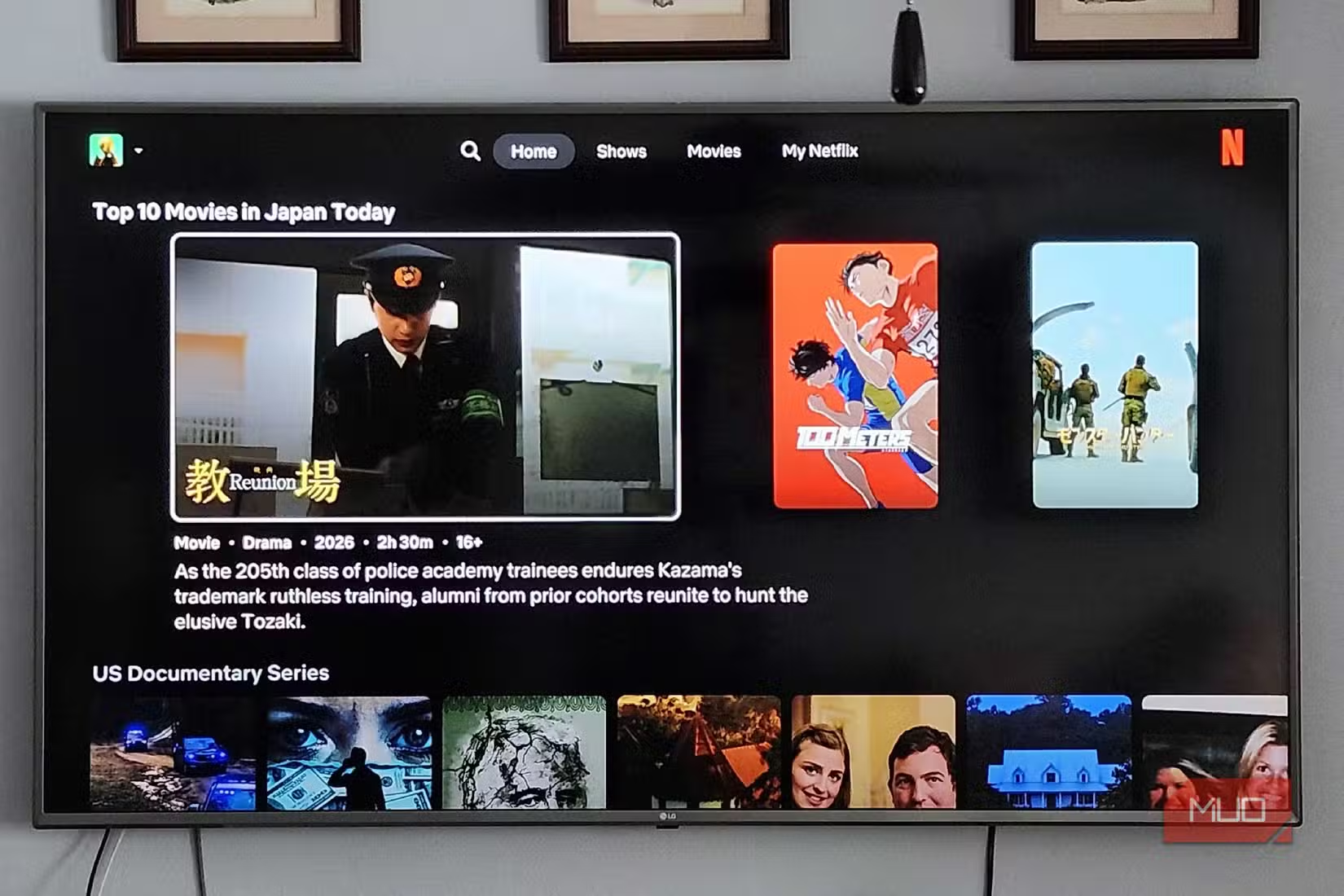
The discovery problem in streaming has reached a breaking point. Every streaming executive knows the numbers: users spend more time browsing than watching. Netflix's own research shows that if a viewer doesn't find something in 90 seconds, they're likely to abandon the session. For ad-supported platforms like Tubi, every minute of scrolling is a minute without ad impressions.
ChatGPT's integration changes this dynamic. Instead of relying on algorithmic carousels that show "the same six titles" in different arrangements, users can describe what they want in plain English. Ask for "a 90s action movie with a female lead" or "something like The Departed but free," and ChatGPT queries Tubi's catalog directly.
The Business Case
Faster discovery means faster ad delivery. If AI can cut browse time from 20 minutes to 2 minutes, ad-supported streamers could see significant increases in actual viewing time per session. That's the metric advertisers pay for.
How AI Streaming Recommendations Actually Work
The technical implementation is straightforward but worth understanding. Tubi built an app connector for ChatGPT's third-party ecosystem. When you ask ChatGPT for a movie recommendation on Tubi, it translates your natural language query into a structured search against Tubi's database, then returns results with direct links to watch.
This is different from asking ChatGPT for general movie recommendations. Without the Tubi integration, ChatGPT might suggest films that aren't available for free, or aren't on any streaming service at all. The integration ensures every recommendation is something you can actually watch right now, at no cost.
- Natural language queries bypass the limitations of genre tags and keyword search
- Results include only content currently available on Tubi's catalog
- Direct links eliminate the need to search again inside the Tubi app
- Conversational follow-ups let you refine recommendations without starting over
For media companies, this represents a new kind of search optimization. Traditional SEO focused on Google. Now there's a parallel challenge: making your content discoverable through AI assistant queries. The companies that figure out AI-assistant optimization first will have a significant advantage.
Another major streaming UX shift happening in 2026
What This Means for Free Streaming Service Strategy
Tubi's parent company, Fox Corporation, made a smart move here. By integrating first, Tubi gets positioned as the default free streaming answer when users ask ChatGPT for movie recommendations. That's valuable real estate.
Consider the competitive dynamics. When someone asks ChatGPT "where can I watch free movies legally," Tubi now has a structural advantage. This is similar to how brands fought for Google's featured snippets, except the stakes are higher because AI assistants don't show ten blue links. They give one answer.
| Discovery Method | Time to Content | Recommendation Quality | Business Impact |
|---|---|---|---|
| Traditional Browse | 15-20 minutes | Algorithm-dependent | High abandonment, fewer ad views |
| In-App Search | 3-5 minutes | Keyword-limited | Moderate engagement |
| AI Assistant | 1-2 minutes | Context-aware | Faster to ads, higher completion rates |
ChatGPT Third Party Apps: The New Distribution Channel
The bigger story here isn't about streaming. It's about how AI assistants are becoming distribution platforms. ChatGPT's third-party app ecosystem is growing rapidly, and being integrated means being discoverable to 200+ million ChatGPT users.
This mirrors the early app store dynamics. Companies that moved fast to build quality apps for iOS and Android captured lasting market share. The same race is happening now with AI assistant integrations. Tubi moved first in free streaming. Others will follow, but the first-mover advantage in user habits is real.
For CTOs and product leaders, the question becomes: should your platform have an AI assistant integration? If your product involves any kind of discovery, search, or recommendation, the answer is increasingly yes. The cost of building these integrations is relatively low compared to the distribution upside.
Integration Costs
Building a ChatGPT plugin or GPT connector typically requires 2-4 weeks of developer time for a basic implementation. The API documentation is public, and the approval process for third-party apps has become faster as OpenAI scales the ecosystem.
How AI tools are reshaping product development workflows
The Ad Revenue Implications
Here's where it gets interesting for media executives. Ad-supported streaming lives and dies by two metrics: time spent watching and ad completion rates. Anything that increases actual viewing time relative to browse time improves the economics.
Traditional recommendation algorithms optimize for engagement, but they've created a paradox. The more content a platform has, the longer users scroll, and the more frustrated they become. Netflix famously estimates that their recommendation system saves $1 billion annually by reducing churn, but free streamers face a different challenge. They need users watching ads, not scrolling past thumbnails.
- AI-powered discovery could reduce browse-to-watch ratios by 50% or more
- Faster content selection means more ad impressions per session
- Personalized recommendations through conversation may increase completion rates
- Data from AI queries provides new insights into viewer intent
The data angle matters too. When users describe what they want in natural language, they reveal intent signals that traditional clickstream data can't capture. "I want something my kids and I can watch together" tells you more than a click on the "Family" genre tab.
Limitations and What's Missing
The integration isn't perfect. Based on early testing, ChatGPT's Tubi recommendations work best for straightforward queries. Complex requests like "movies similar to this obscure 1970s Italian film" may not yield great results because they depend on metadata depth that free streaming catalogs don't always have.
✅ Pros
- • Eliminates scroll fatigue for common viewing needs
- • Conversational refinement beats yes/no filters
- • Direct links reduce friction to watching
- • Works across devices through ChatGPT's apps
❌ Cons
- • Limited to Tubi's catalog, no cross-platform comparison
- • Quality depends on Tubi's metadata accuracy
- • Requires ChatGPT access, not built into Tubi app yet
- • No deep personalization based on viewing history
The biggest limitation is that this lives inside ChatGPT, not inside the Tubi app. Users have to know the feature exists and actively use ChatGPT for discovery. The real opportunity would be bringing this natural language interface directly into streaming apps.
What Should Media Companies Do Now?
If you're a media or content company, this is a signal to start building AI assistant strategies. The integration patterns that work for Tubi can work for any content catalog. News archives, podcast libraries, video courses—anything with a searchable database can benefit from natural language discovery.
- Audit your content metadata. AI discovery is only as good as your tags and descriptions.
- Explore ChatGPT's GPT builder or plugin frameworks for a proof of concept.
- Track how competitors are appearing in AI assistant responses.
- Consider voice interfaces, as Alexa and Google Assistant integrations follow similar patterns.
The companies that treat AI assistants as a new distribution channel, not a novelty, will be better positioned as these interfaces become primary ways people interact with content.
The API patterns that make these integrations possible
Frequently Asked Questions
Frequently Asked Questions
How do I access ChatGPT's Tubi integration?
Open ChatGPT (Plus or free tier with GPT-4o access) and simply ask for Tubi recommendations. ChatGPT will use the Tubi connector automatically when you mention the service or ask for free movie recommendations.
Does this cost anything to use?
The integration itself is free. Tubi is a free ad-supported service, and ChatGPT's basic access includes the ability to use third-party app connectors. You'll need a ChatGPT account but not necessarily a paid subscription.
Will other streaming services add ChatGPT integrations?
Likely yes. Tubi is the first major streamer, but the competitive pressure to appear in AI assistant results will push others to follow. Expect announcements from other ad-supported services in the coming months.
How accurate are the AI recommendations compared to Tubi's built-in algorithm?
Early reports suggest AI recommendations are better for specific requests ('90s action movies') but the built-in algorithm still has an edge for personalization based on viewing history. The ideal is probably both working together.
What's the business case for building an AI assistant integration?
For content platforms, it's about distribution. Being discoverable through AI assistants puts you in front of 200+ million ChatGPT users. The development cost is relatively low (2-4 weeks for a basic integration), and the upside is appearing as the answer when users ask for recommendations in your category.
Logicity's Take
We build AI agent workflows for clients using Claude and n8n, so we see integrations like this from a developer's perspective. The Tubi-ChatGPT connector is straightforward technically—it's essentially a well-documented API wrapped in a conversational interface. What's smart is the business positioning. For Indian startups and media companies, this signals an important shift. AI assistants are becoming discovery layers that sit above your product. If you're building any kind of content platform—video, audio, educational content—you need to think about how users will find you through AI, not just through Google or app stores. The implementation isn't complex. We've helped clients build similar connectors for their content databases in under two weeks. The harder part is metadata quality. AI discovery only works if your content is tagged well enough for natural language queries to return good results. Most companies underinvest in this and then wonder why their AI integrations feel broken. Start with your metadata, then build the connector.
Need Help Implementing This?
Logicity builds AI assistant integrations and content discovery systems for media and technology companies. If you're exploring how to make your platform discoverable through ChatGPT, Claude, or other AI assistants, we can help scope the technical requirements and build a proof of concept. Reach out at logicity.in to start a conversation.
Source: MakeUseOf
Huma Shazia
Senior AI & Tech Writer
Produced with AI assistance and reviewed by the Logicity editorial team. Learn more in our Editorial Policy.