Key Takeaways
- ChatGPT Pro subscribers can now link bank accounts via Plaid to view balances and transactions in chat
- Anyone with access to your ChatGPT account could potentially see your complete financial history
- OpenAI retains connected financial data for up to 30 days even after deletion
What the New Feature Does
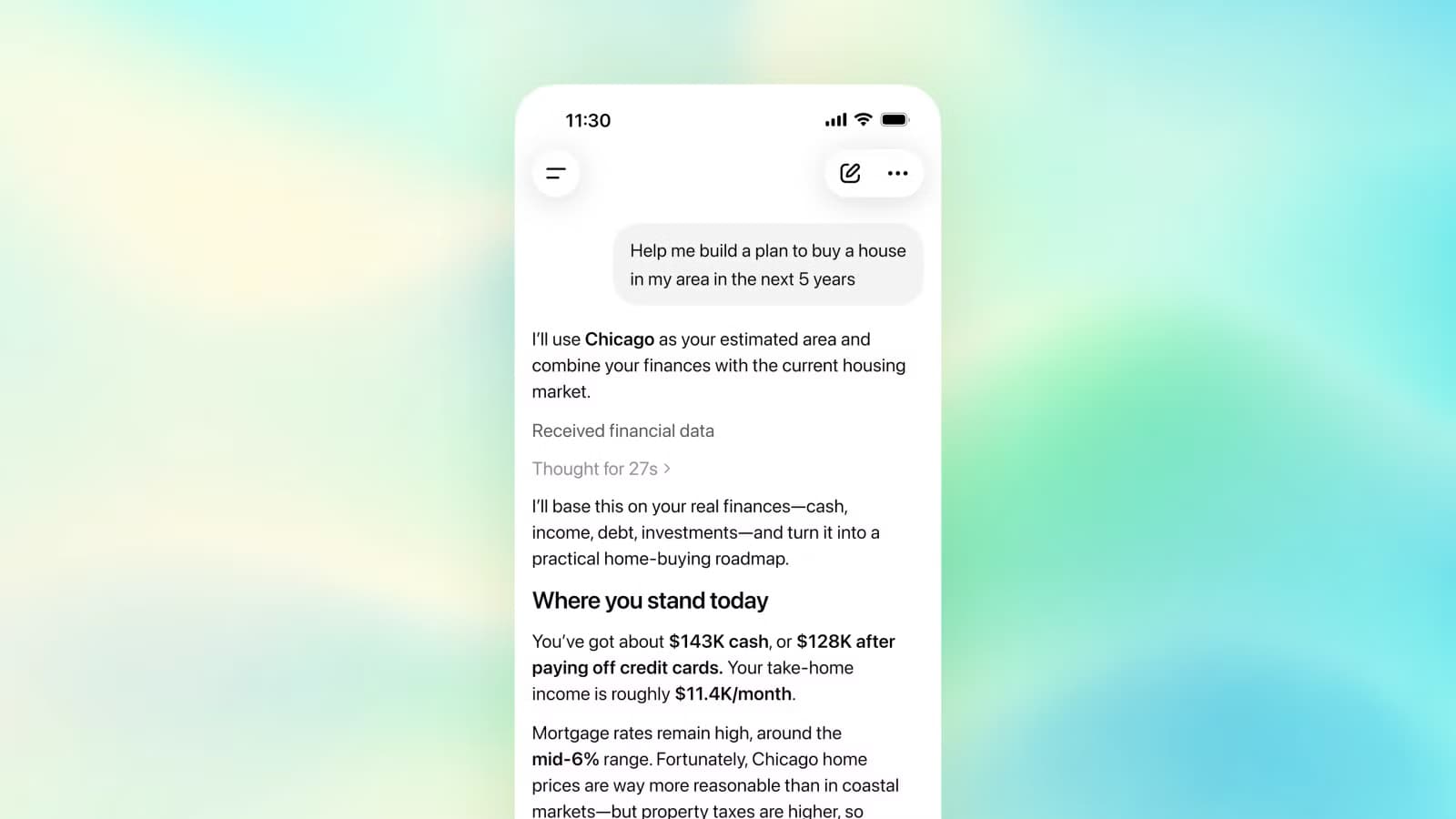
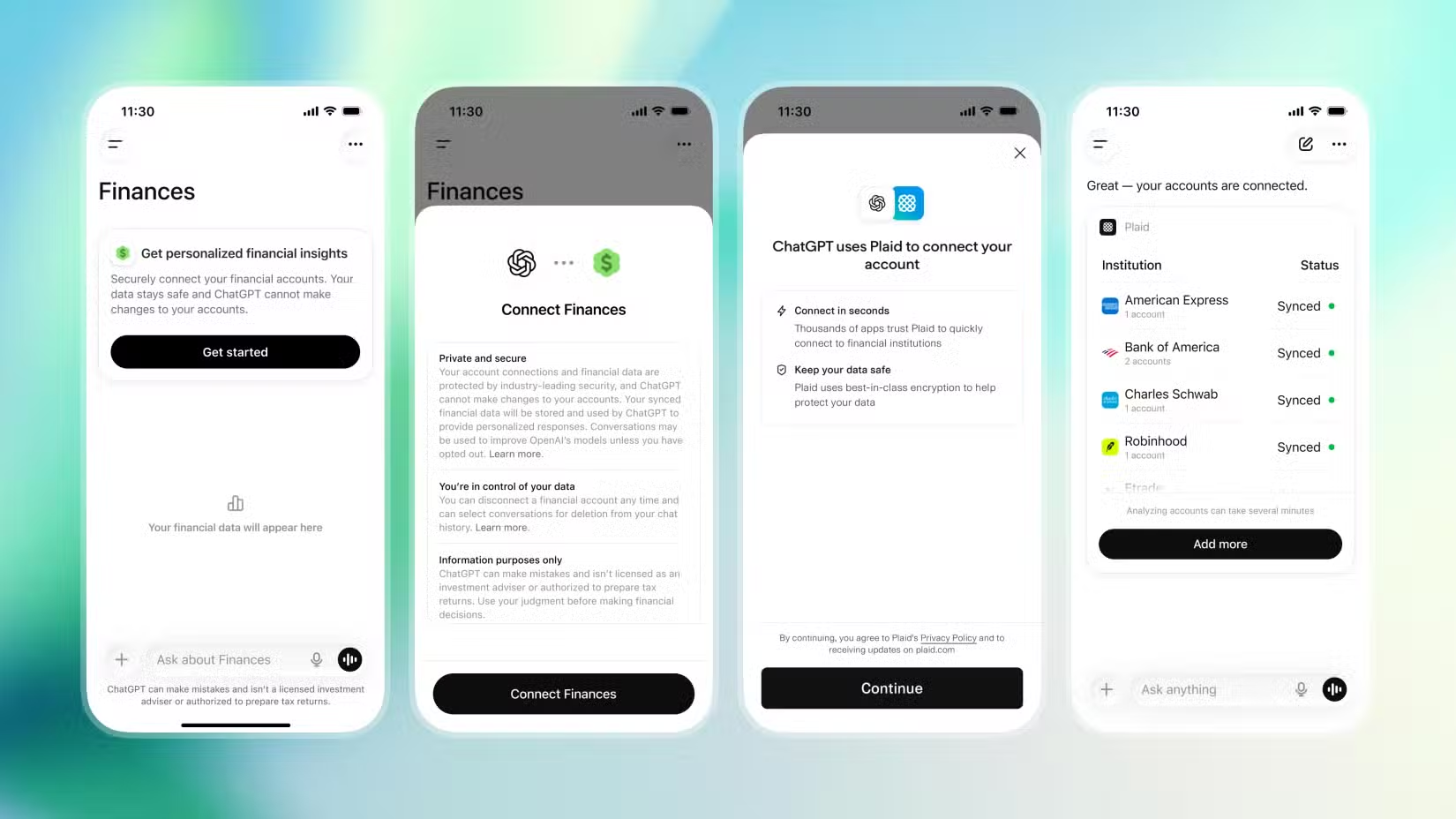
OpenAI announced a new ChatGPT feature that connects directly to your bank accounts. The integration uses Plaid, a financial services platform already used by thousands of apps including Venmo, Cash App, and most fintech startups.
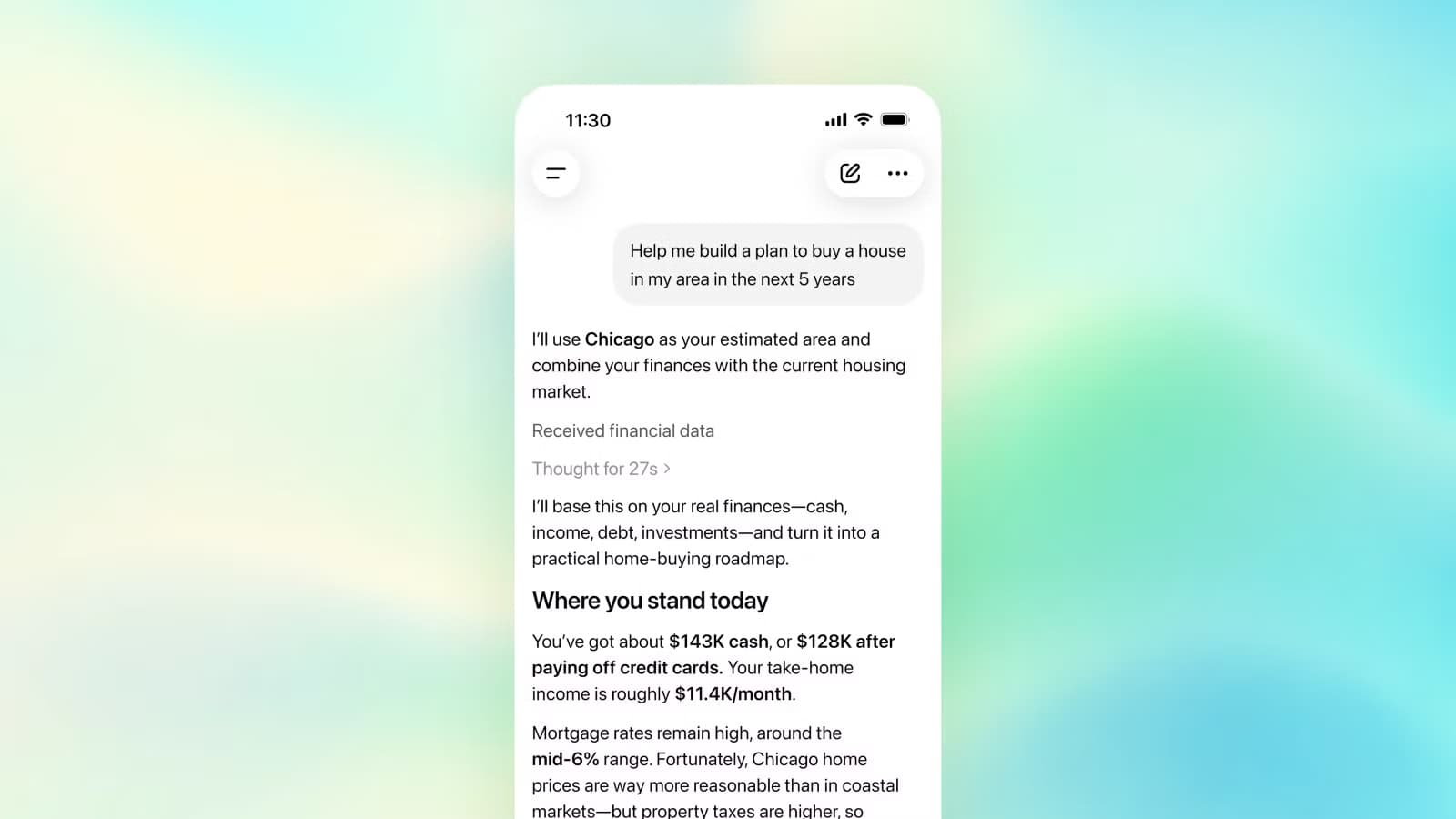
Right now, only ChatGPT Pro subscribers can access the feature. Once connected, you can ask ChatGPT to pull your account balances, review recent transactions, and analyze your spending patterns. The pitch is straightforward: if you're already using ChatGPT to build budgets or manage finances, why not give it direct access to your actual numbers?
On paper, it sounds useful. Instead of copying transaction data into a spreadsheet and then pasting it into ChatGPT, you could just ask "Where did my money go last month?" and get an instant breakdown. The AI could spot subscription charges you forgot about, flag unusual spending, or help you stick to a savings goal.
The Privacy Problems
Here's where convenience collides with risk. Your transaction history is one of the most sensitive datasets about your life. It shows where you shop, what you buy, where you travel, your medical expenses, your political donations, your subscriptions. Everything.
Once you grant ChatGPT access to this data, several problems emerge.
Account Access Equals Financial Access
Anyone who can log into your ChatGPT account can now see your bank information. That includes a partner who knows your password, a colleague who borrows your laptop, or an attacker who compromises your OpenAI credentials. ChatGPT accounts typically don't have the same security layers as banking apps. No transaction verification codes, no biometric checks, no secondary authentication for sensitive data.
Data Retention Is 30 Days
OpenAI says it offers controls to delete your financial data. But even after deletion, the company retains data for up to 30 days. That's a month where your transaction history sits on OpenAI's servers, potentially accessible to employees, subpoenas, or breaches.
Training Data Questions
OpenAI's privacy policies around training data have shifted multiple times. While the company states that connected financial data won't be used for model training, policies change. And once data is shared, you're trusting a company's future decisions, not just its current ones.
More ways to protect your online privacy
Plaid Is Secure, But That's Not the Point
OpenAI's use of Plaid provides legitimate security for the actual bank connection. Plaid is used by major financial apps and undergoes regular security audits. Your bank credentials aren't stored by ChatGPT. Plaid handles the handshake.
But Plaid's security doesn't address the downstream risks. Once your data flows through Plaid into ChatGPT, it's sitting in OpenAI's infrastructure. The weakness isn't the pipe. It's what happens after the water arrives.
Who Should Actually Use This
For most users, the risk-benefit calculation doesn't favor this feature. If you're serious about budgeting, dedicated apps like YNAB, Copilot, or Monarch Money offer similar AI-assisted analysis with privacy practices built specifically for financial data.
The ChatGPT integration makes sense in narrow cases: users who already trust OpenAI with sensitive data, who use strong unique passwords with 2FA, and who genuinely need conversational flexibility that standalone budget apps don't offer.
That's a small group.
✅ Pros
- • Conversational interface for budget questions
- • Plaid integration is industry-standard and secure
- • Combines financial data with ChatGPT's analytical capabilities
❌ Cons
- • Anyone with ChatGPT account access can view your finances
- • 30-day data retention even after deletion
- • Transaction history reveals sensitive personal information
- • Standalone budget apps offer similar features with better privacy practices
What Controls Exist
OpenAI does provide some safeguards. You can disconnect your bank at any time. You can request deletion of financial data. The company's privacy dashboard shows what's connected and lets you revoke access.

These controls are necessary but not sufficient. They require users to actively manage their privacy, check their settings, and remember what they've connected. Most people won't. And the 30-day retention window means deletion isn't instant.
Logicity's Take
The Bigger Pattern
This feature fits a broader trend: AI companies expanding into increasingly sensitive data categories. ChatGPT already has access to conversations, uploaded documents, and browsing history for Plus users. Financial data is the next frontier.
Each expansion makes the service more useful and the privacy stakes higher. At some point, the accumulated access creates a single point of failure that traditional banking never had. Your bank doesn't know your search history. Google doesn't know your account balance. ChatGPT could know both.
Why security vulnerabilities matter for connected services
Frequently Asked Questions
Is ChatGPT's bank connection secure?
The connection uses Plaid, an industry-standard service that doesn't share your bank login with ChatGPT. The security concern isn't the connection itself but what happens to your data after it reaches OpenAI's servers.
Can I delete my financial data from ChatGPT?
Yes, you can disconnect your bank and request deletion through OpenAI's privacy dashboard. However, OpenAI retains data for up to 30 days after deletion requests.
Who can see my bank information in ChatGPT?
Anyone who can access your ChatGPT account can view your connected financial information. This includes anyone who knows your password or gains access to a device where you're logged in.
Is this feature available to all ChatGPT users?
No, the bank connection feature is currently limited to ChatGPT Pro subscribers. Free and Plus tier users don't have access.
Are there safer alternatives for AI-powered budgeting?
Yes, dedicated financial apps like YNAB, Copilot, and Monarch Money offer AI-assisted budgeting with privacy practices designed specifically for financial data.
Need Help Implementing This?
Source: MakeUseOf
Huma Shazia
Senior AI & Tech Writer
Produced with AI assistance and reviewed by the Logicity editorial team. Learn more in our Editorial Policy.