Key Takeaways
Best Social Media Management Tools 2026? Metricool vs Buffer vs Hootsuite vs Typefully 🫣
- Buffer offers a free tier with 3 accounts and 10 scheduled posts; Hootsuite starts at $99/user/month with no free option
- Hootsuite includes social listening across 150 million websites and 30+ channels on every plan
- For customer service workflows and DM management, Hootsuite is the only viable choice between the two
Buffer and Hootsuite dominate the social media management category, but they target different users. Buffer works best for solo creators and small teams who need straightforward scheduling at low cost. Hootsuite is built for larger organizations that require granular permissions, social listening, and a unified inbox for customer interactions. The price gap reflects that split: Buffer starts free, while Hootsuite's cheapest plan runs $99 per user per month.
Disclosure
Some links in this post are affiliate links — Logicity earns a commission if you sign up, at no extra cost to you. We only link products we have used or actively recommend.
Operations and RevOps teams often inherit social media tooling from marketing without a clear audit. The result is either an under-powered free tool that can't handle compliance and approvals, or an enterprise seat license draining budget for features nobody uses. This comparison lays out where each platform excels so you can match the tool to the actual workflow.
How do Buffer and Hootsuite compare on pricing?
Buffer's free plan includes three social media accounts and ten scheduled posts per channel at any given time. Paid plans start at $5 per month per channel when billed annually. That model scales affordably for small teams managing a handful of profiles.
Hootsuite has no free tier. Its entry point is $99 per user per month, also billed annually, and covers up to ten social accounts. Add more team members and the bill climbs fast. For a five-person RevOps team, that's nearly $6,000 per year before you touch advanced add-ons.
| Feature | Buffer | Hootsuite |
|---|---|---|
| Free plan | Yes (3 accounts, 10 posts/channel) | No |
| Paid plan starting price | $5/month/channel (annual) | $99/user/month (annual) |
| Social accounts on entry plan | Per-channel pricing | 10 |
| Unlimited team members | Yes (Team plan) | No (pay-per-seat) |
| Social listening | Not available | Included on all plans |
| Unified inbox for DMs | No | Yes |
| Native integrations | 20+ | 100+ |
| Zapier connection | Yes | Yes |
| AI features | Basic assistant | Platform-wide AI layer (Wisdom) |
Which platform handles scheduling and posting better?
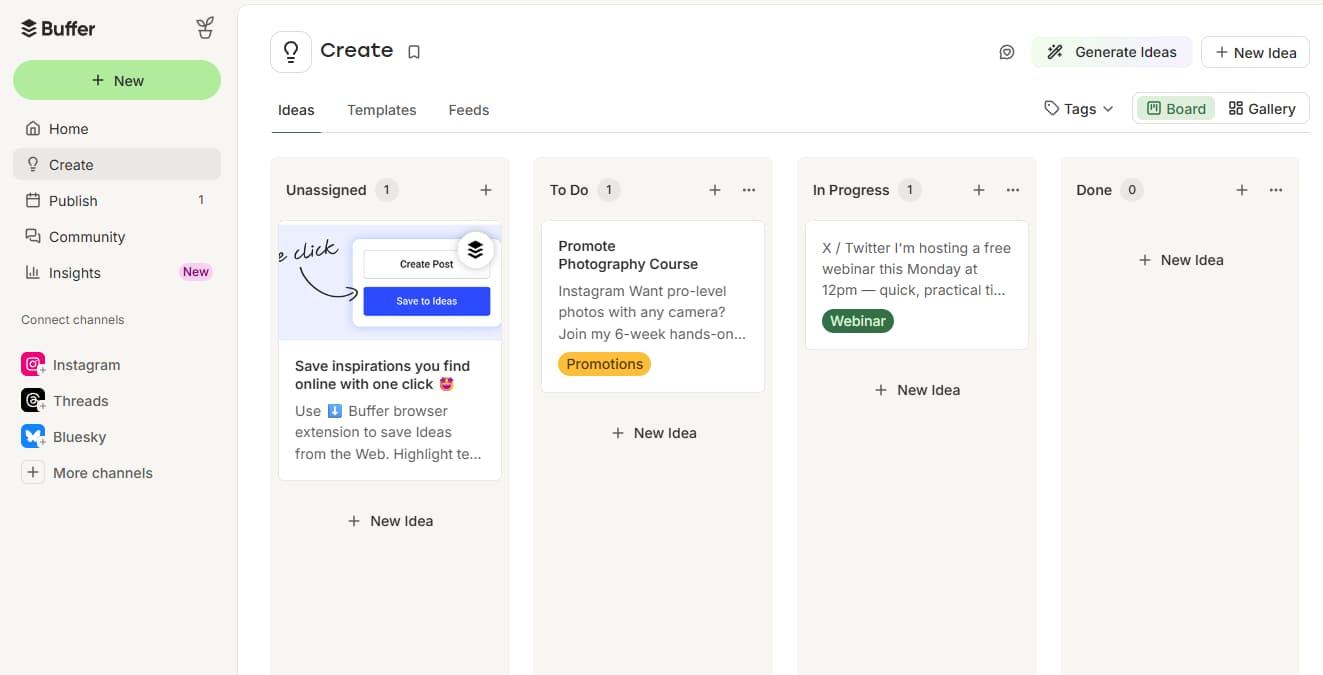
Both platforms cover the basics: queue posts, auto-schedule for optimal times, and bulk-upload content. Buffer adds a small but useful feature: you can schedule a comment on your own post, handy for dropping a link or call-to-action without cluttering the caption.
Hootsuite integrates Canva and Adobe Express directly into its composer, so designers and marketers can create assets without switching tabs. For teams that already standardize on those tools, the workflow is tighter. Buffer lacks native design integrations, though you can paste in assets created elsewhere.
How do analytics differ between Buffer and Hootsuite?
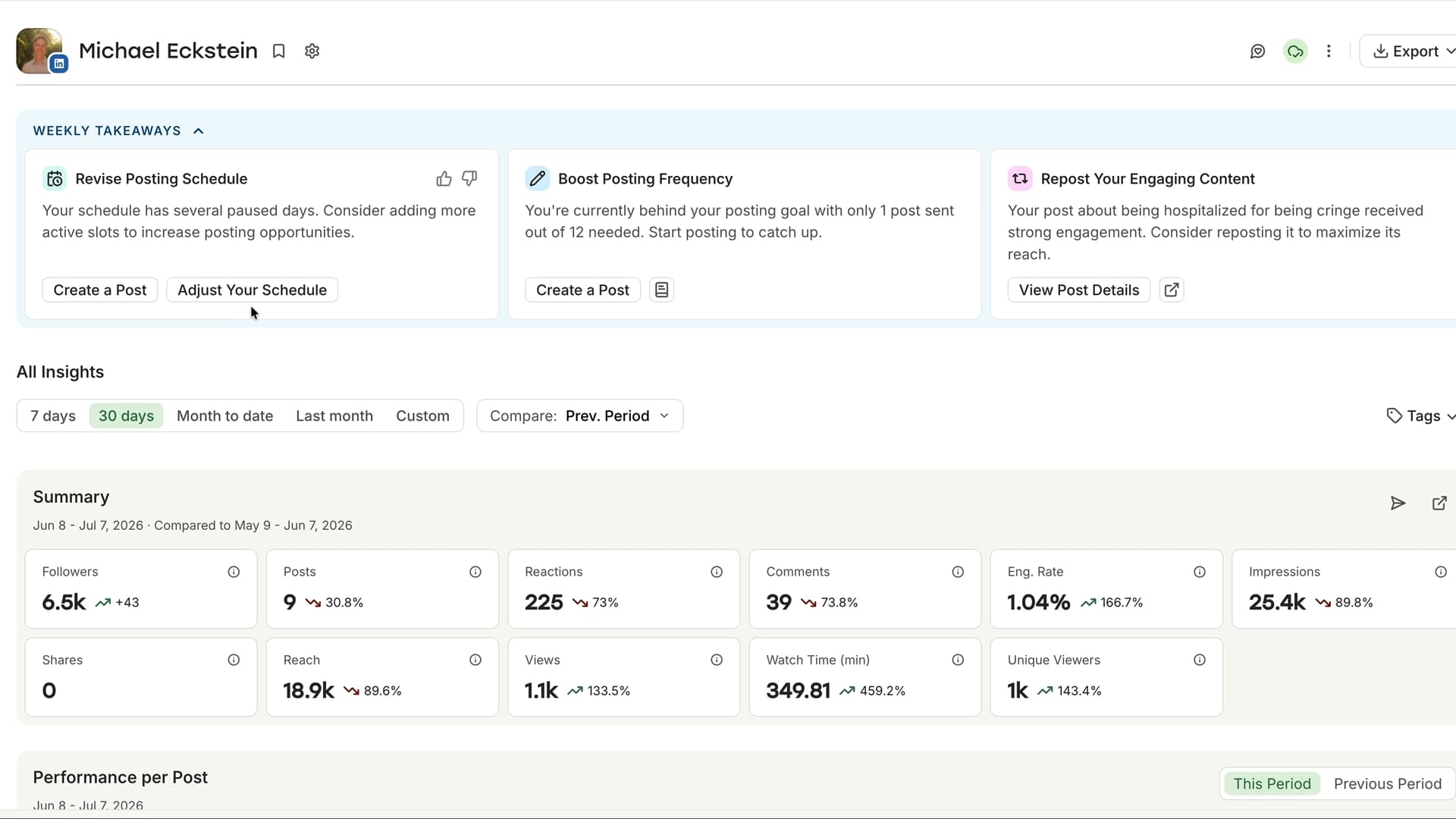
Buffer recently rebranded its analytics feature as Insights. You get cross-channel performance views, customizable reports, and practical recommendations. If a post performs well, Buffer suggests reposting it. The tool distills data into next steps rather than raw numbers.
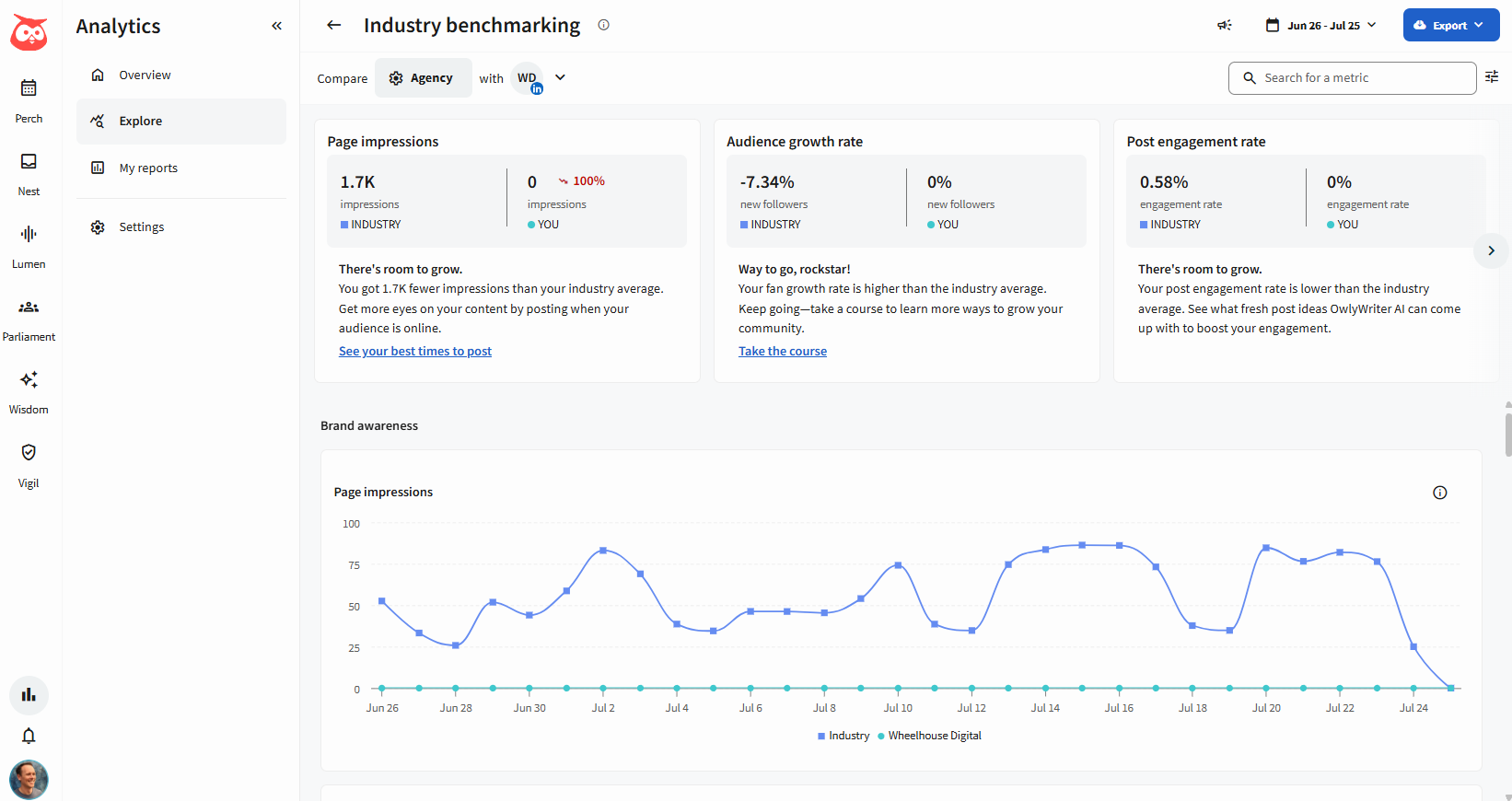
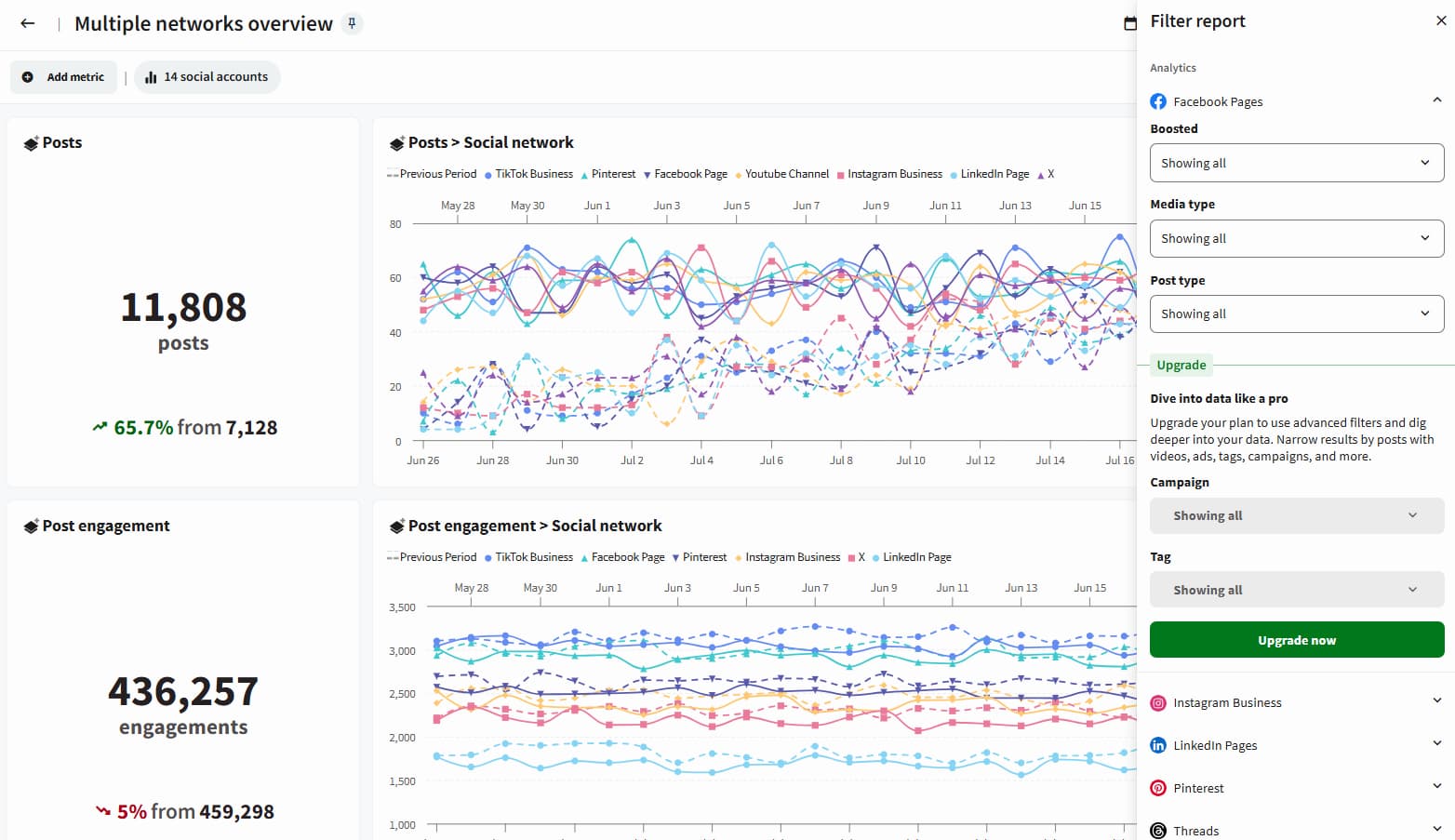
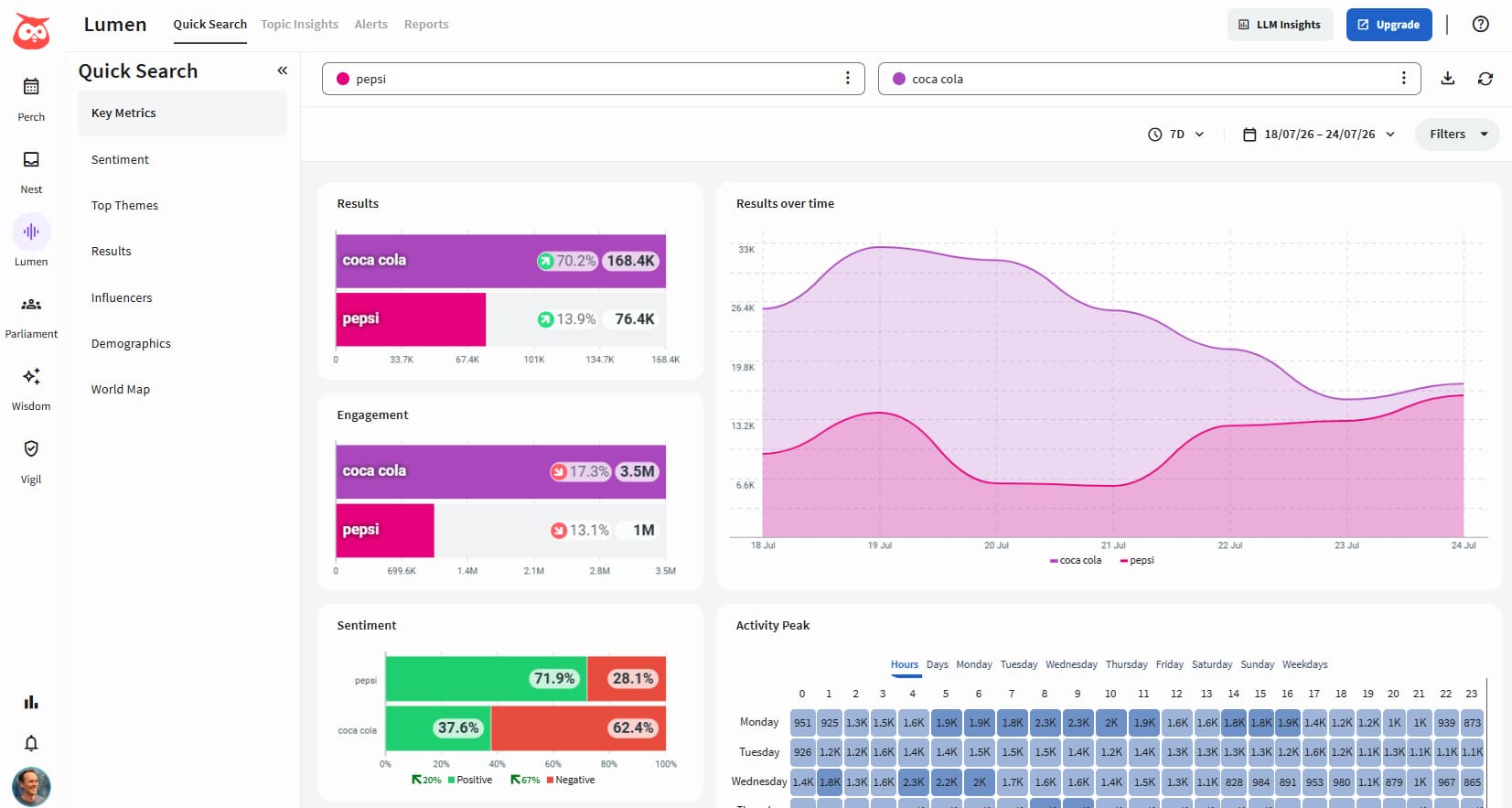
Hootsuite's analytics go deeper. You can handpick metrics, build dashboards, and benchmark against competitors. The real differentiator is social listening: Hootsuite monitors brand mentions and industry conversations across 150 million websites and more than 30 social channels. That capability is included on every paid plan, not gated behind an enterprise tier.
For RevOps teams tracking sentiment around product launches or pricing changes, social listening provides signal that pure engagement metrics miss. Buffer has no equivalent feature.
What about team collaboration and permissions?
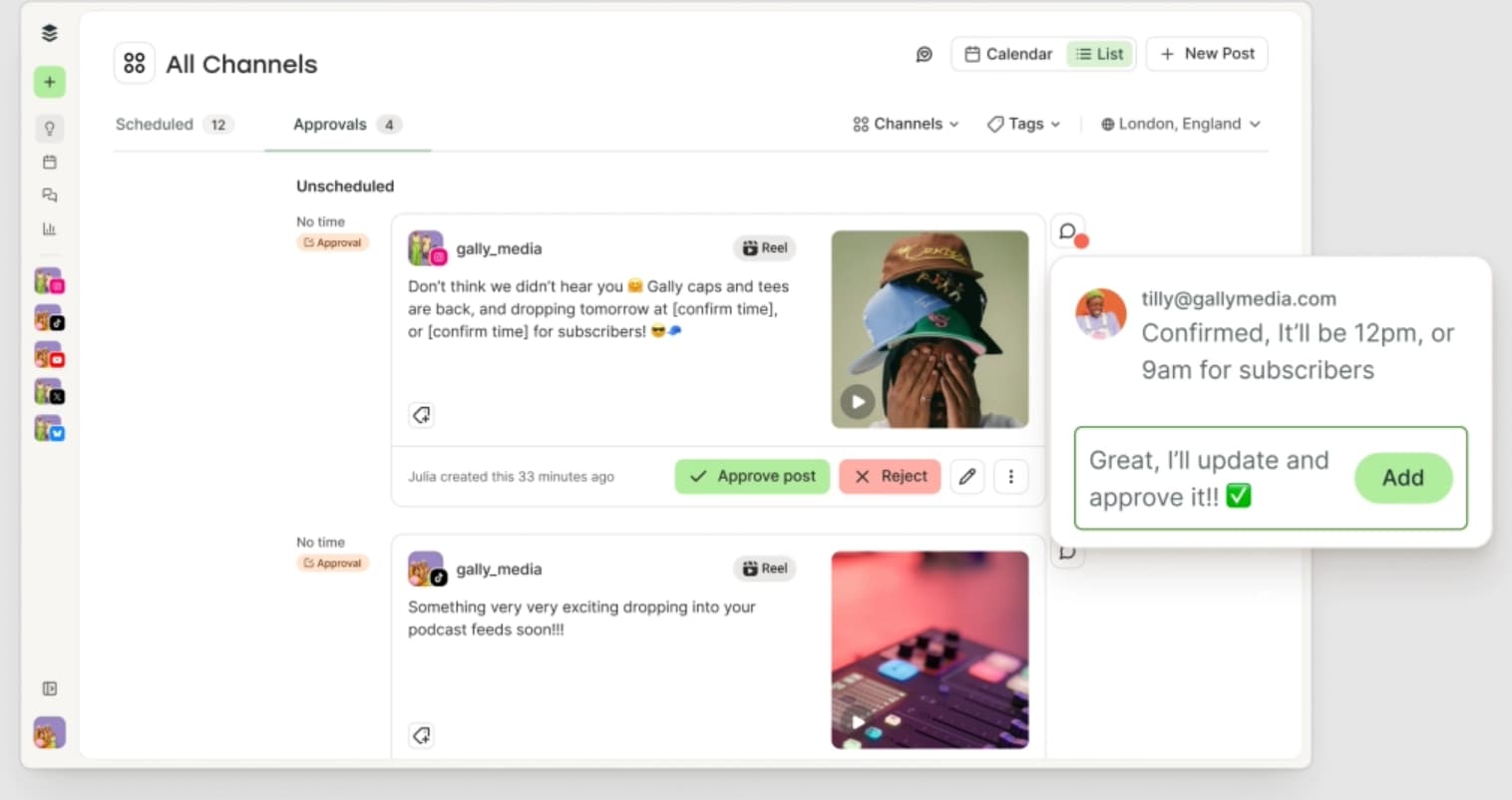
Buffer's Team plan allows unlimited users. Collaboration is straightforward: teammates can draft posts, request approvals, and edit content. Permissions are relatively flat, though. You won't find org-level or channel-level access controls.
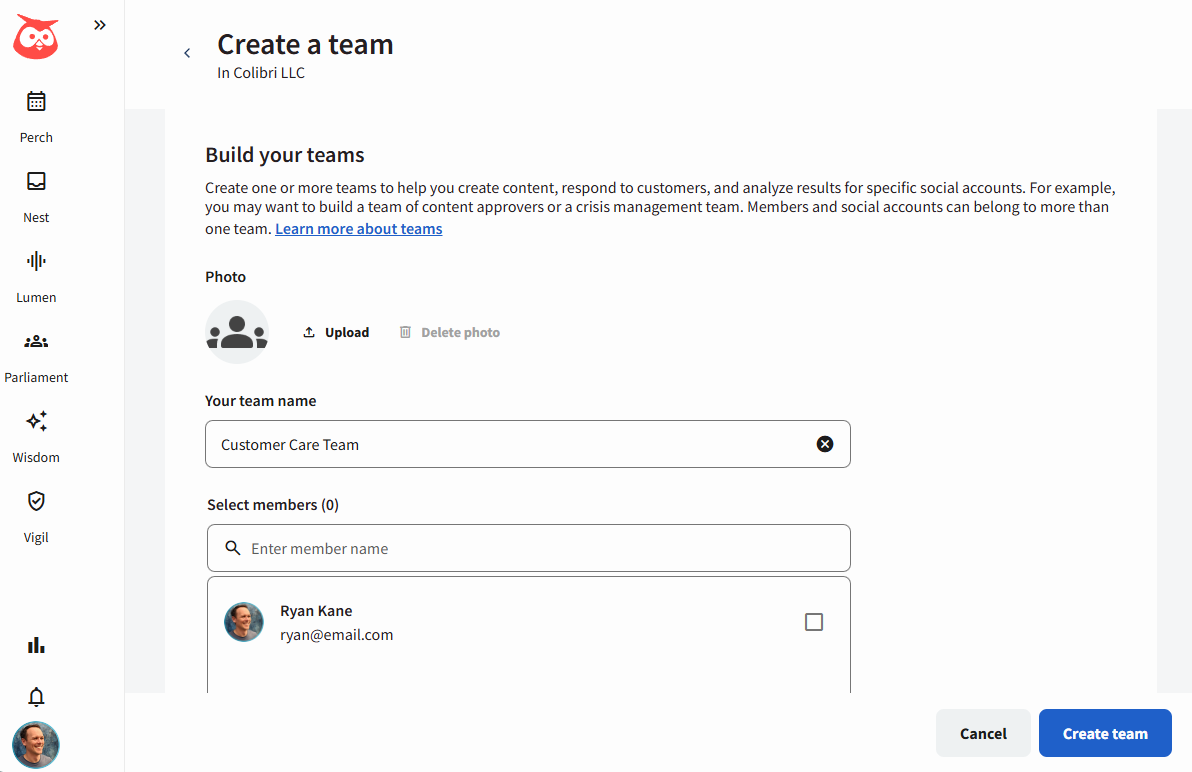
Hootsuite charges per seat, but that cost buys granular permissions at the organization, team, and channel level. Large teams with compliance requirements or strict brand governance will find Hootsuite's model more defensible, even if the per-seat math stings.
Choosing between social tools often depends on how they connect to your broader automation stack.
Can either tool handle customer service via social?
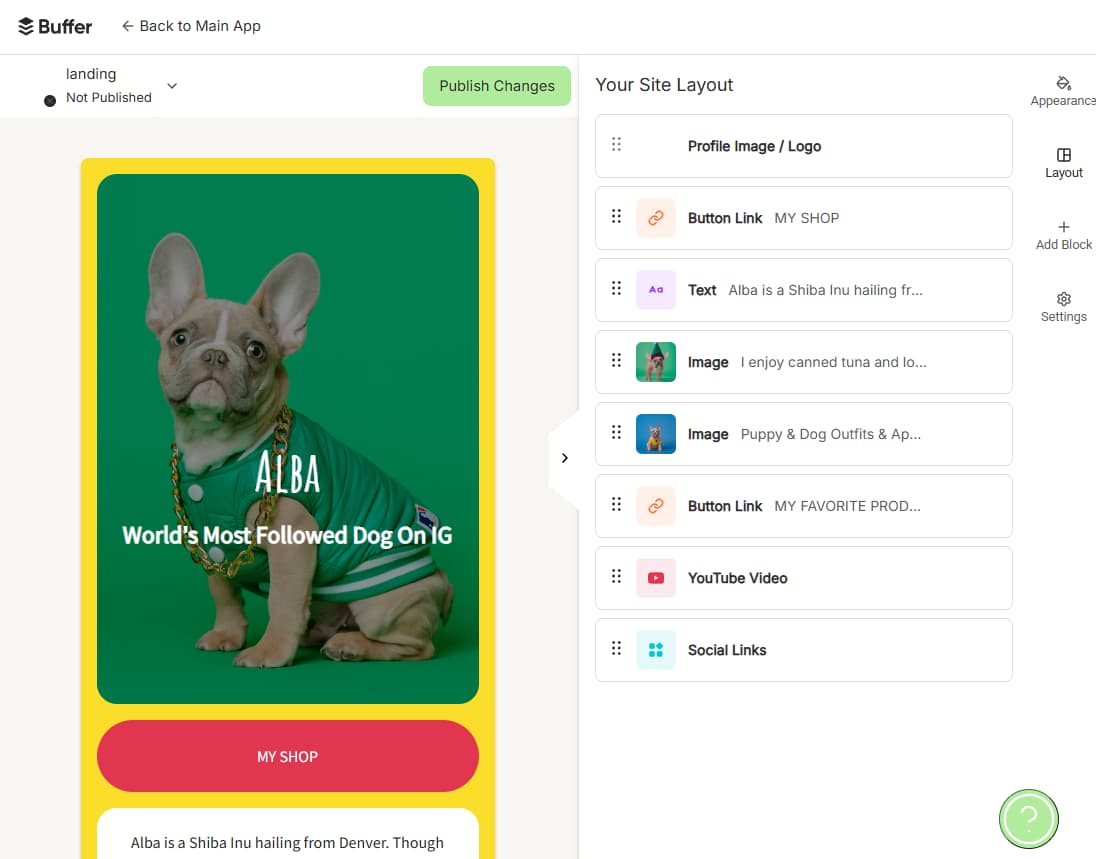
Buffer offers a hub for replying to comments across accounts, but it stops there. No DM management, no ticket routing, no Zendesk-style workflows.
Hootsuite provides a full unified inbox. You can manage DMs, assign conversations to reps, and build workflows that mirror a help desk. If your support team fields requests through Instagram or X, Hootsuite is the only viable option between these two.
How do AI features stack up?
Buffer's AI assistant generates post drafts, rephrases captions, and summarizes content. It's functional but limited to content creation.
Hootsuite's AI layer, called Wisdom, spans the entire platform. Beyond post generation, Wisdom surfaces strategic insights, identifies trends, and suggests actions based on your analytics. For teams that want AI embedded in planning, not just drafting, Hootsuite's approach is more ambitious.
Which integrations matter for automation teams?
Buffer lists 20+ native integrations and an MCP server. Hootsuite claims over 100 native integrations. Both connect to Zapier, which means either tool can trigger workflows in your CRM, project tracker, or data warehouse.
If your RevOps stack relies on HubSpot or Salesforce, check each platform's native connectors first. Native integrations typically offer richer data sync than a Zapier bridge. Hootsuite's larger integration library gives it an edge here, but Buffer's Zapier support closes the gap for most use cases.
For workflow automation beyond social, tools like Make and n8n also connect to both platforms and can handle more complex branching logic than Zapier's linear Zaps.
Which platform supports more social networks?
Buffer connects to more social platforms out of the box, though Hootsuite has been closing that gap. Both cover the major channels: Instagram, X, LinkedIn, Facebook, TikTok, Pinterest, and YouTube. Niche networks may tip the decision; check each platform's current integration list if you manage accounts on Mastodon, Threads, or regional networks.
Logicity's Take
For RevOps teams, the decision often comes down to two questions. First, do you need social listening and customer service routing? If yes, Hootsuite is the only real contender here, and the $99/seat cost is the price of admission. Second, how many people actually need write access? Buffer's unlimited-user Team plan avoids per-seat scaling, but its flat permissions won't satisfy compliance-heavy orgs. If your social presence is brand awareness, not support, Buffer at $5/channel offers 90% of the scheduling value at a fraction of the cost. Consider pairing it with a dedicated listening tool like Brandwatch or Sprout Social if you outgrow its analytics.
AI-powered features like Hootsuite's Wisdom layer raise questions about data governance and trust that apply across enterprise tooling.
When should you pick Buffer over Hootsuite?
Choose Buffer if you're a small team or solo operator, budget is a constraint, and your needs stop at scheduling, basic analytics, and comment replies. The free plan is generous enough to run a meaningful presence without spending anything.
Choose Hootsuite if you manage a high-volume account, need social listening, require customer service workflows, or must enforce granular permissions across a large team. The price premium buys capabilities Buffer simply doesn't offer.
Frequently Asked Questions
Does Buffer have a free plan in 2026?
Yes. Buffer's free tier includes three social media accounts and up to ten scheduled posts per channel at any time.
How much does Hootsuite cost per month?
Hootsuite's cheapest plan is $99 per user per month when billed annually, covering up to ten social accounts.
Can Hootsuite replace a help desk for social support?
Partially. Hootsuite's unified inbox handles DMs, comment replies, and rep assignments with Zendesk-style workflows, but it's not a full ticketing system for email or chat.
Does Buffer support social listening?
No. Buffer does not include social listening. Hootsuite offers it on every paid plan, monitoring 150 million websites and 30+ social channels.
Can I connect Buffer and Hootsuite to Zapier?
Yes. Both platforms integrate with Zapier, allowing you to trigger workflows in CRMs, project trackers, and other apps.
Need Help Implementing This?
If you're evaluating social media management tools for your RevOps stack, Logicity's consulting team can map your workflows, compare vendor pricing, and recommend integrations. Reach out at consulting@logicity.in.
Source: The Zapier Blog
Manaal Khan
Tech & Innovation Writer
Produced with AI assistance and reviewed by the Logicity editorial team. Learn more in our Editorial Policy.