Key Takeaways
- Bain & Company builds AI-generated replicas of target companies' software to assess replicability before acquisitions
- One PE investor walked away from a deal after a Bain-vibecoded prototype showed the analytics platform could be easily reproduced
- Private equity tech deals collapsed 69% in Q1 2026 vs Q4 2025, partly due to AI risk concerns
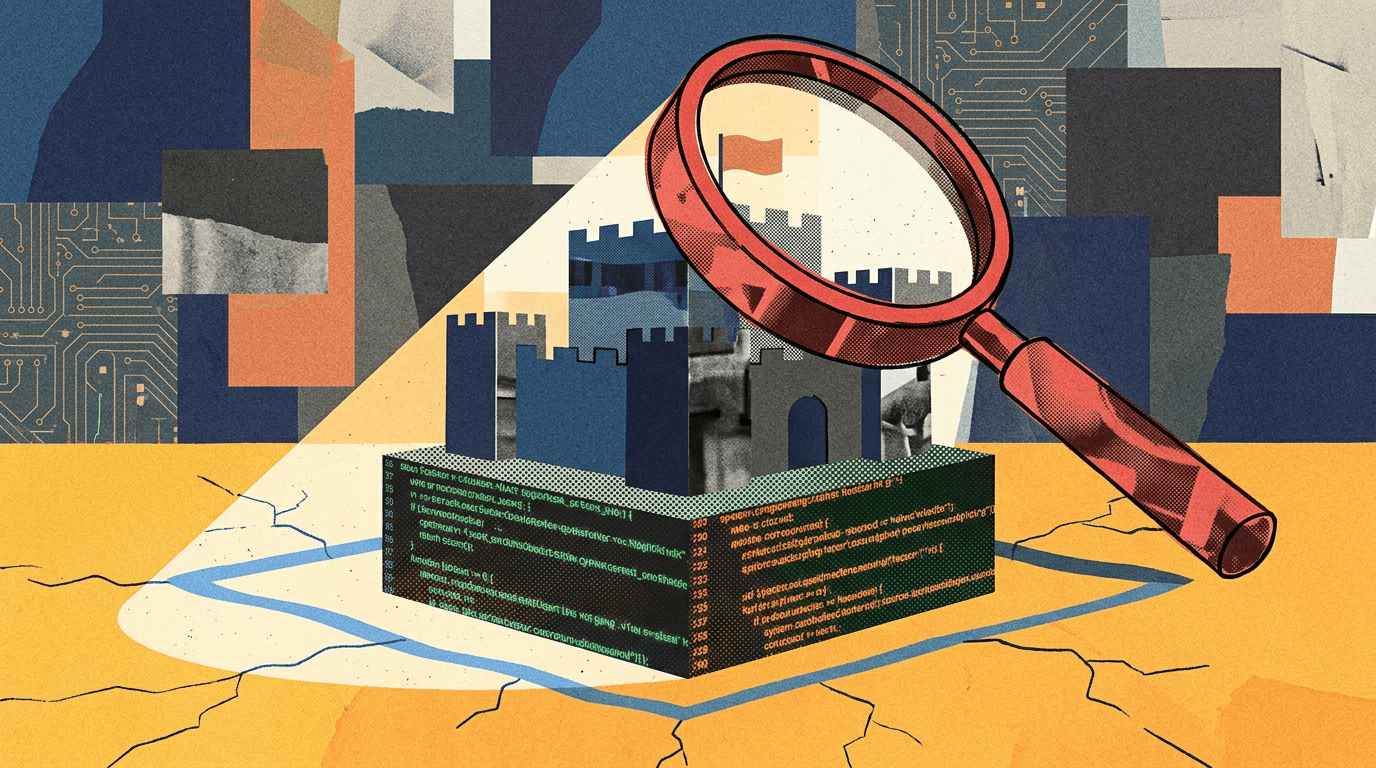
Bain & Company is building AI-generated replicas of software companies it evaluates for acquisition. The vibecoded prototypes show potential buyers whether a target's technology can be recreated quickly, a question that increasingly determines whether deals happen at all.
According to the Financial Times, Bain has already vibecoded hundreds of rough prototypes as part of its AI due diligence work. The practice started in 2023 with a dedicated engineering team. Now rank-and-file consultants run these tests themselves.
At least one deal has already died because of it. A Silicon Valley private equity investor told the FT that a Bain-vibecoded recreation of an analytics platform contributed directly to their decision to walk away from bidding.
Why vibecoding matters for software valuations
The core question in any software acquisition is defensibility. Is the code itself the competitive moat, or does the company's value lie elsewhere, in data, distribution, or customer relationships?
Vibecoding answers this by attempting to rebuild the product using AI coding assistants. If a prototype can replicate core functionality in days instead of months, the target's code is not the asset buyers thought it was.
"It's kind of the difference between seeing something in 2D versus 3D," Rebecca Burack, head of Bain's global private equity practice, told the FT. Bain uses the technique "to show what a software company can and can't do, to understand where it fits in the value chain and to understand whether it is the actual code that is the defensible part of the business or something else."
The implications are stark. When an acquirer can spin up a working replica of your product using natural language prompts, your asking price needs a different justification.
PE investors are pulling back from software deals
Public markets have already priced in AI disruption to enterprise software. Salesforce and ServiceNow have both lost more than a third of their value in 2026. Private markets are following.
KPMG data shows the total value of private equity-led tech, telecom, and media deals collapsed by 69 percent in Q1 2026 compared to Q4 2025. Two Silicon Valley PE executives told the FT they had slowed dealmaking and increased AI risk scrutiny on every target.
“If it's in the question box, we're not going to touch it.”
— Silicon Valley private equity executive, to the Financial Times
That "question box" is whether AI can replicate the target's core product. If the answer is unclear, the deal does not move forward.
What vibecoding reveals about software moats
Andrej Karpathy, former Tesla AI Director and OpenAI founding member, popularized the term "vibecoding" in early 2025 to describe using natural language prompts to generate functional code through AI assistants. What started as a developer productivity technique has become a strategic threat assessment tool.
The test is simple but brutal. If consultants without deep engineering backgrounds can rebuild meaningful chunks of your software in a few days, your code is not your moat. The defensibility must come from somewhere else: proprietary data, network effects, regulatory positioning, or customer switching costs.
This reframes due diligence entirely. Traditional technical assessments examined code quality, architecture, and technical debt. Vibecoding asks a more fundamental question: why does this code need to exist at all?
How software companies should respond
For founders and CTOs expecting an exit, the message is clear. You need to articulate your moat in terms that survive a vibecoding test.
- Data assets: proprietary datasets that cannot be recreated by prompting an AI
- Integration depth: embeddedness in customer workflows that creates switching costs
- Network effects: value that increases with user count, not code complexity
- Domain expertise: specialized knowledge baked into the product that AI cannot easily replicate
- Speed of iteration: the ability to ship improvements faster than a vibecoded clone
Companies whose primary value is "we wrote this code and it works" face a harder path. As AI coding assistants improve, the bar for code-as-moat keeps rising.
The bigger picture for tech M&A
Vibecoding is not the only factor driving PE caution. Rising interest rates, uncertain public market comps, and regulatory scrutiny all contribute. But the replicability question is new, and it cuts deep.
If an acquirer can test whether your product survives AI disruption before making a bid, that test will happen. Bain is offering this service now. Others will follow.
For the software industry, this means a reckoning. Code quality still matters for maintenance and scale. But code alone is no longer a sufficient answer to the question investors care about most: why can't someone else build this?
Frequently Asked Questions
What is vibecoding in M&A due diligence?
Vibecoding in M&A due diligence refers to using AI coding assistants to build functional replicas of a target company's software. Consultants use natural language prompts to generate code, testing whether the product can be quickly recreated and whether the code itself represents a defensible competitive advantage.
Why are PE firms using vibecoding to evaluate software companies?
Private equity firms use vibecoding to assess AI disruption risk. If a target's core product can be replicated quickly using AI tools, the code may not be a durable moat, affecting the company's valuation and the acquirer's willingness to bid.
How has vibecoding affected software deal volume?
PE-led tech deals fell 69% in Q1 2026 compared to Q4 2025, according to KPMG. While multiple factors contribute, increased scrutiny of AI replicability risk, including vibecoding tests, has slowed dealmaking and caused some investors to walk away from bids.
What should software companies do to protect their valuations?
Software companies should identify and document moats beyond code: proprietary data, network effects, deep customer integrations, regulatory positioning, and domain expertise. These assets are harder to replicate through AI coding tools and provide more durable competitive advantages.
Logicity's Take
This is not a consulting gimmick. It is the logical endpoint of a trend that started when GitHub Copilot shipped. If junior consultants can rebuild core functionality of enterprise software in days, the entire valuation framework for software M&A needs updating. The companies that survive this shift will be those who understood early that code is a delivery mechanism, not a moat. Expect acquirers to demand vibecoding tests as standard diligence within 18 months.
Need Help Implementing This?
Logicity helps technology teams assess AI risk exposure and build defensible product strategies. If you are preparing for acquisition or evaluating how AI affects your competitive position, reach out to discuss how we can help.
Source: The Decoder / Maximilian Schreiner
Huma Shazia
Senior AI & Tech Writer
Produced with AI assistance and reviewed by the Logicity editorial team. Learn more in our Editorial Policy.